Why Denver chemical plants face a different DAF-vs-clarifier math in 2026
Denver chemical plants in 2026 should choose a DAF system when the stream carries emulsified oils, solvents, or fine colloids (typical 80–95% FOG removal, 60–90% TSS), and a lamella clarifier when it carries dense metal hydroxide or sulfate precipitates (typical 85–95% TSS at 20–40 m/h surface loading). Most sites benefit from a DAF-then-clarifier hybrid because Colorado CDPS permits and 40 CFR Part 414 require both low oil/grease AND low TSS before discharge.
Three drivers make this a local problem, not a generic one. First, 40 CFR Part 414 OCPSF (Organic Chemicals, Plastics, and Synthetic Fibers) caps BOD, TSS, and oil/grease by subcategory — most subparts land in the 50–300 mg/L effluent range with FOG commonly held to 100 mg/L (per EPA 40 CFR Part 414). Second, the Colorado CDPS general permit program requires self-monitoring, toxicity testing, and Best Management Practices that propagate upstream into primary clarification. Third, Denver Metro Wastewater Reclamation District imposes BOD, TSS, and FOG surcharges above domestic-strength thresholds, which converts every kilogram of residual solids into recurring OPEX.
Climate in the Mile High region reshapes the mechanical design envelope. Sub-freezing winters (Denver's January mean is −2.2°C / 28°F) force the DAF saturation tank indoors or under heat-tracing — ice fouling at the needle valve destroys micro-bubble formation below about 5°C. Low winter humidity (often below 30% RH) drives evaporative loss in uncovered clarifiers, which can drop mixed-liquor temperature and trigger density-driven short-circuiting.
The typical Denver chemical-plant wastewater profile is the reason the binary choice fails: TDS of 2,000–15,000 mg/L, pH swings of 2–12 across batch campaigns, and a mixed stream of emulsified oils plus precipitated metal hydroxides. About 70% of local sites produce both phases in the same day. For those sites, the right answer is a DAF-then-lamella series, not an either/or decision. Hybrid DAF + clarifier configurations are explicitly validated in industry guidance (per the 2026 Ecologix DAF-vs-clarifier selection guide).
How DAF and clarifiers actually remove contaminants
DAF — dissolved air flotation — saturates a pressurized side-stream (typically 4–6 bar / 60–90 psig) with air, then releases it through a needle or breakout valve into the contact zone. The pressure drop nucleates 10–100 µm micro-bubbles that attach to coagulated floc and float it to the surface, where a skimmer flights the float layer into a sludge hopper. DAF captures low-density material: free oil, emulsified oils, light colloids, and any floc whose bulk density is below that of water (per the 2026 Ecologix selection guide and VanAire's MicroAire aeration design).
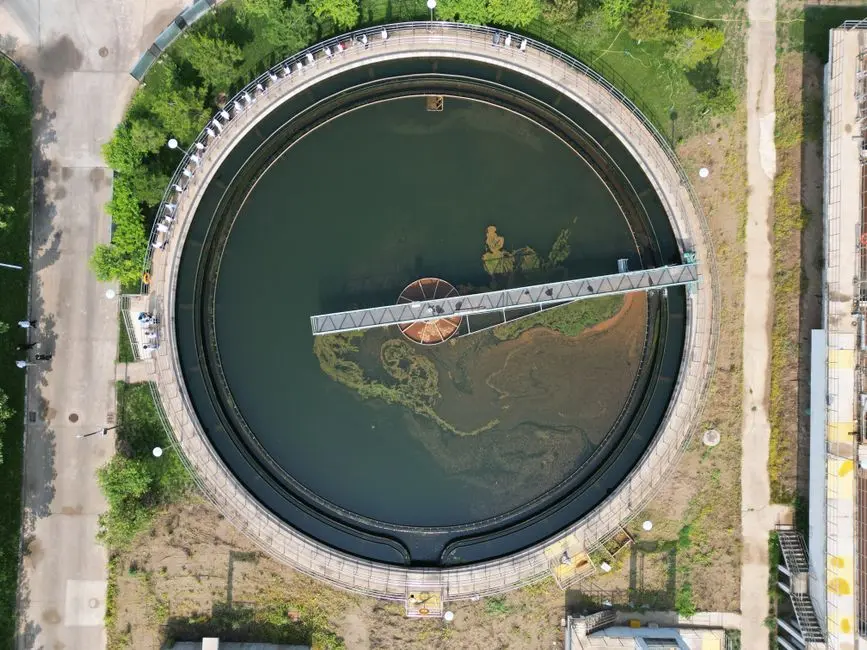
Gravity and lamella clarifiers do the opposite. Floc settles in a quiescent basin under Stokes' law; the sludge is scraped or pumped from the floor. A lamella clarifier adds a stack of 60° inclined plates spaced at 50–80 mm, which cuts the effective settling distance, raises the surface loading rate to 20–40 m/h, and shrinks the basin footprint to roughly one-third of an equivalent rectangular clarifier (per HydropureWater product data).
Both technologies require upstream coagulation/flocculation — without it, particles are too small for either separator. Coagulation using aluminium or ferric salts plus a flocculant aid promotes particle attachment into aggregates large enough for separation (per Green and Sustainable Chemistry, 2013, Section 2.2). The practical asymmetry: DAF wins on low-density contaminants (oils, solvents, light colloids), clarifier wins on high-density contaminants (metal hydroxides, biological floc, grit). That asymmetry is the whole reason a hybrid flowsheet exists.
DAF vs clarifier: parameter comparison for chemical wastewater
Below is the side-by-side engineers will screenshot. Ranges reflect industry-typical performance; the high-end FOG and TSS values mirror the 95%/70%/90% benchmarks published in the 2026 Ecologix DAF-vs-clarifier selection guide.
| Parameter | Dissolved Air Flotation (DAF) | Lamella / Gravity Clarifier |
|---|---|---|
| Removal mechanism | Micro-bubble flotation (10–100 µm bubbles attach to floc) | Gravity sedimentation (inclined plates or rectangular basin) |
| Best for | Emulsified oil, FOG, solvents, fine colloids | Dense TSS, metal hydroxides, biological floc, grit |
| Typical FOG removal | 80–95% (up to 95% in food/chemical oily streams) | 40–70% (oil rises poorly in quiescent settling) |
| Typical TSS removal | 60–90% | 85–95% (up to 90% in high-solids mining/chemical streams) |
| Hydraulic loading | 5–25 m/h | 20–40 m/h (lamella), 1–2 m/h (conventional) |
| Footprint (per m³/h flow) | ~0.05–0.10 m² | ~0.03–0.06 m² (lamella) |
| 2026 packaged CapEx (Denver) | ~$80k (4 m³/h) to $400k+ (100 m³/h, SS contact parts) | ~$35k to $250k+ (typically 40–60% of DAF CapEx) |
| Operating cost drivers | Air compressor, recirculation pump, polymer, skimmer drive | Sludge pump, polymer, rake drive (lamella) |
| Polymer demand | 10–30 mg/L (oil-loaded streams) | 5–15 mg/L (HydropureWater product data) |
| Operator skill required | Moderate (air-saturation tuning, bubble cloud control) | Low to moderate (sludge bed management) |
Three takeaways for procurement. First, the DAF high-end FOG number (95%) and clarifier high-end TSS number (90–95%) come from published vendor case studies and are realistic upper bounds — design to the middle of the range. Second, polymer demand is the largest swing variable: a poorly tuned DAF can demand 50+ mg/L, which restabilizes the colloid and breaks the separator. Third, lamella clarifier polymer consumption is typically 30–50% lower than DAF at comparable TSS load because settling does not need as robust a floc.
When a DAF is the right choice for a Denver chemical plant
Pick a DAF when the influent carries free or emulsified oil, surfactants, or solvents that resist settling. Trigger conditions: FOG >100 mg/L, visible oil sheen, pH 6–9, surfactant presence, or concurrent VOC stripping. Sub-sectors that match: specialty organic synthesis (reactor washdowns), surfactant manufacturing, agrochemical formulation, polymer emulsions, and personal-care contract blending.
On 2026 pricing, a packaged dissolved air flotation system for a Denver chemical plant starts near $80,000 for a 4 m³/h unit and scales past $400,000 at 100 m³/h once stainless-steel wetted parts are specified for chloride exposure. OpEx runs moderate: saturated-air compressor duty of roughly 0.5–1.5 kWh per m³ treated, plus the recirculation pump at 2–4 bar.
The Denver climate caveat is non-negotiable: the saturation tank and whitewater piping must be kept above 5°C to prevent needle-valve icing and bubble coalescence. Either house the unit inside or heat-trace and insulate. Micro-bubble control precision matters for chemical streams — VanAire's proprietary breakout valve design, for example, regulates the bubble cloud to keep the size distribution narrow, which improves FOG capture when inlet oil load swings.
DAF is the right pick when the limiter is oil and grease, not bulk TSS. The same logic shows up in the Mojave chemical plant DAF vs clarifier guide, where arid-zone sites face a similar but climate-inverted problem (DAF evaporation instead of DAF freezing).
When a clarifier is the right choice for a Denver chemical plant
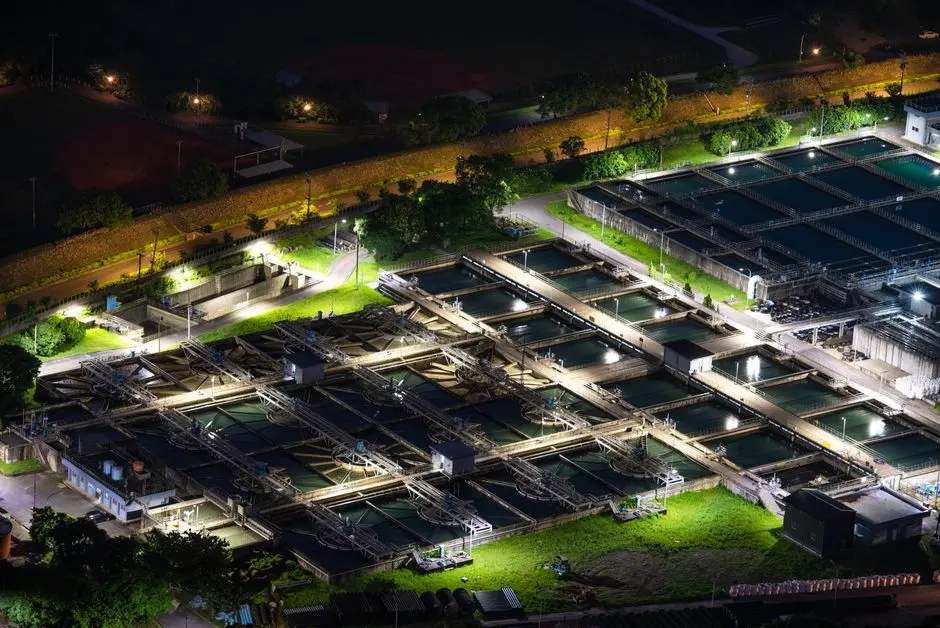
Pick a clarifier when the stream is dominated by precipitated metal hydroxides or sulfate sludges, free oil is absent, flows are steady, and footprint is unconstrained. Trigger conditions: TSS >500 mg/L with negligible FOG, diurnal flow swing <2×, and pH stable enough to hold the metal in precipitated form. Sub-sectors that match: inorganic chemical manufacturing, electroplating and finishing, fertilizer production, and battery-chemical plants (lithium, nickel, cobalt precursor).
Specify a lamella clarifier rather than a conventional rectangular basin — the inclined-plate geometry delivers 20–40 m/h surface loading and cuts polymer demand by up to 30% per HydropureWater product data. Lamella also runs at a 2026 packaged CapEx of roughly 40–60% of an equivalent DAF for the same hydraulic load, which is why inorganic chemical plants with low oil loading default to it.
Denver-specific watch-outs: cover the basin in winter. Low winter humidity drives evaporative cooling of the mixed liquor; once the surface water gets colder than the bulk, a density inversion causes thermal short-circuiting and the sludge blanket rises. A simple roof or floating cover eliminates the issue. OpEx is the lowest of the three options: sludge pump and rake drive only, no compressor or saturation system.
Clarifier is the right pick when the limiter is bulk TSS, not oil. It is also the right pick when a downstream gravity thickener vs DAF thickener comparison points toward gravity thickening of the underflow sludge.
The hybrid DAF-then-clarifier flowsheet most Denver chemical plants actually need
The flowsheet that solves the ~70% case: equalization → pH adjustment to 7–8 → coagulation (ferric or alum) → DAF → pH re-adjust to 8.5–9.5 for metals precipitation → lamella clarifier → polishing filtration. The DAF strips oil and fine colloids first so they do not coat the metal-hydroxide floc and degrade settling; the clarifier then drops the precipitated metals and bulk TSS to discharge-ready levels.
Performance numbers for this configuration: 95–99% FOG across the DAF stage, 85–95% TSS across the clarifier, and a combined effluent typically <50 mg/L TSS and <25 mg/L FOG — well inside the 40 CFR Part 414 OCPSF envelope of roughly 50–300 mg/L BOD/TSS by subcategory with 100 mg/L FOG ceilings. Polymer demand is often 20–30% lower than a single-stage DAF or clarifier doing both jobs, because each stage is dosed for the contaminant it actually sees. Hybrid DAF + clarifier configurations are explicitly endorsed in the 2026 Ecologix DAF-vs-clarifier selection guide, and DAF paired with downstream biological treatment for oily synthetic streams is documented in published academic work (per SSRN, 2024).
The hybrid costs ~30–50% more footprint than either unit alone and roughly 1.5–2.0× the CapEx of a single clarifier, but it pays back through lower polymer dose, lower polymer-related restabilization risk, and reduced Denver Metro surcharges on residual oil and TSS. A polymer dosing skid is essential — operator-driven manual dosing is the single largest cause of hybrid flowsheet failure. Bench-scale and full-scale optimization of this dosing is a documented ROI lever in the AI polymer dosing optimization for wastewater reference.
The same hybrid logic shows up in the chemical plant 40 CFR Part 414 pretreatment compliance guide for Houston, where mixed oil-plus-metals streams are equally common.
2026 cost, footprint, and compliance reality for Denver chemical plants

Denver Metro surcharges convert residual loading into recurring OPEX, which is the main reason a higher-CapEx DAF or hybrid often pays back in 18–36 months. Final effluent targets are set jointly by 40 CFR Part 414 OCPSF subcategory limits, the Colorado CDPS general permit monitoring schedule, and the Denver Industrial Pretreatment Program (IPP) local limits — any one of them can be the binding constraint, so engineer to the strictest.
| System | 2026 Packaged CapEx (USD) | Footprint vs DAF baseline | Typical Denver payback window |
|---|---|---|---|
| DAF skid alone (4–100 m³/h) | $80,000 – $400,000+ | 1.0× | 18–36 months via FOG surcharge reduction |
| Lamella clarifier alone | $35,000 – $250,000+ | 0.5–0.7× | 24–48 months via TSS surcharge reduction |
| Hybrid DAF + lamella clarifier + dosing | $150,000 – $600,000+ | 1.3–1.5× | 24–36 months via combined surcharge reduction |
Two operator-side warnings from the field. Under-dosing polymer to save OpEx causes fines carryover that destroys the downstream clarifier's sludge blanket; over-dosing on the DAF restabilizes the colloid and turns the float layer milky. An automatic dosing skid with feedback control — paired with jar-test calibration quarterly — protects both unit ops. The other side of compliance is downstream solids handling: a plate and frame filter press is the standard dewatering step for the combined DAF float and clarifier underflow, and it ties the whole flowsheet to a target cake dryness of 25–35% DS.
How to choose in 4 steps: a 2026 selection workflow
Step 1 — Characterize. Pull representative composite samples across at least one full production week. Measure FOG (EPA 1664), TSS (SM 2540D), pH, TDS, temperature, and the diurnal flow pattern. Without a week-long profile you cannot distinguish a DAF case from a clarifier case, and you certainly cannot justify a hybrid.
Step 2 — Apply the 80% rule. If FOG >100 mg/L or free oil is visible, DAF is non-negotiable upstream. If TSS >500 mg/L with negligible oil, a clarifier is non-negotiable. If both thresholds are exceeded, plan the hybrid flowsheet described above. This is the filter that exits ~30% of readers before they spend another hour on the decision.
Step 3 — Bench test. Run jar tests using the same polymer family you would dose in production, at three dose points (e.g., 5, 15, 30 mg/L). Pair the jars with a small bench DAF column and a 1-L settling column to confirm the 80–95% FOG and 85–95% TSS removal claims before you commit CapEx. Vendor-published 95% and 90% benchmarks are upper bounds — prove them on your water.
Step 4 — Site survey. Confirm indoor placement for the DAF saturation system, chemical storage footprint, sludge handling tie-in (typically a plate and frame filter press), and headroom for a future polishing filter. A two-hour site visit saves more rework than any spreadsheet. If steps 1–3 point to a hybrid, request a vendor jar-test program and a paid site visit as the final pre-CapEx gate.
Frequently Asked Questions
Should a Denver chemical plant pick DAF or clarifier for oily chemical wastewater in 2026?
For streams with FOG above 100 mg/L or visible free oil, a DAF delivers 80–95% FOG removal versus 40–70% for a clarifier (per the 2026 Ecologix DAF-vs-clarifier selection guide). In Denver, the DAF saturation tank must be kept above 5°C, which means indoor placement or heat-tracing through the sub-freezing winter months.
Why is a hybrid DAF-then-lamella flowsheet the 2026 default for Denver chemical plants?
About 70% of Denver chemical plants run both emulsified oils and precipitated metal hydroxides in the same shift. A DAF-then-lamella series hits both 40 CFR Part 414 OCPSF effluent limits — typically 50–300 mg/L BOD/TSS and 100 mg/L FOG — while running 20–30% less polymer than either single-stage unit doing both jobs (per the 2026 Ecologix selection guide).
How does Denver's climate change DAF versus clarifier design choices?
Sub-freezing Denver winters (January mean −2.2°C / 28°F) require indoor or heat-traced DAF saturation to keep micro-bubbles stable above 5°C. Low winter humidity below 30% RH drives evaporative cooling in uncovered clarifiers, which can trigger density short-circuiting; a simple roof or floating cover eliminates the failure mode.
What polymer dose optimizes a DAF or lamella clarifier on chemical wastewater?
Lamella clarifiers typically demand 5–15 mg/L of flocculant, while DAFs need 10–30 mg/L depending on inlet oil load (per HydropureWater product data). Under-dosing causes clarifier carryover; over-dosing restabilizes the DAF colloid. Automatic dosing with quarterly jar-test calibration protects both unit operations.
Which Denver regulatory triggers decide between DAF, clarifier, and hybrid systems?
The binding constraint is whichever of these is strictest: 40 CFR Part 414 OCPSF subcategory limits, Colorado CDPS general permit monitoring requirements, or Denver Industrial Pretreatment Program local limits. Denver Metro surcharges on BOD, TSS, and FOG above domestic-strength thresholds convert residual loading into recurring OPEX, which often drives the final choice toward a higher-CapEx DAF or hybrid with an 18–36 month payback.