Why Amanda Park Operators Are Sizing Pretreatment in 2026
Mining and metals operations on Washington's Olympic Peninsula sit inside a regulatory geography that almost no off-the-shelf compliance guide covers: dual EPA Region 10 (Seattle) authority and Washington Department of Ecology delegation under WAC 173-216 and WAC 173-220, with a small-tribal-utility and small-municipality POTW footprint around Amanda Park, Lake Quinault, and the Grays Harbor watershed. The local industrial base is dominated by aggregate wash plants, sand-and-gravel operations, log-scale runoff carrying leached metals, and intermittent nonferrous or finishing work that drains to tribal utility infrastructure. The 2026 decision for an operator is not whether to pretreat, but whether to pursue an individual WA Ecology WQM/NPDES direct-discharge permit or to route to a small accepting POTW under 40 CFR 403, and either path is anchored in the federal categorical framework at 40 CFR Parts 420, 421, and 440. Any U.S. mine generating effluent requires an NPDES permit covering water and wastewater treatment scenarios (per Fluence, 2026), and Olympic Peninsula operators are no exception. The receiving POTW's local limits frequently become the binding ceiling because Ecology can adopt water-quality-based effluent limits (WQBELs) on top of the federal categorical floor — a fact that has reshaped equipment sizing on remote coastal sites since the 2024 local-limit cycle.
The 2026 Federal and State Limit Floor
Federal categorical effluent guidelines at 40 CFR Part 420 (iron and steel), Part 421 (nonferrous metals), and Part 440 (ore mining and dressing) set the numeric floor a Washington operator must design to. Subpart B (metals mining) and Subpart J (coal preparation) are the relevant subgroups for any Pacific Northwest site with a coal-history or aggregate-wash profile, and secondary brass mills or nonferrous finishers default to 40 CFR 421. Representative 2026 daily-maximum (DM) and monthly-average (MA) values for self-monitoring are summarized below; daily maximums are not to be exceeded on any single grab, and the monthly average is the geometric mean of valid daily values across the reporting month (per the EPA NPDES industrial wastewater regulatory framework, as referenced in the companion East Finley reference guide).
| Parameter | Daily Maximum (DM) | Monthly Average (MA) | Federal Source |
|---|---|---|---|
| pH | 6.0–9.0 SU at all times | 6.0–9.0 SU at all times | 40 CFR 420/421/440 |
| Total Suspended Solids (TSS) | 45 mg/L | 30 mg/L | 40 CFR 440 Subpart B/J |
| Lead (Pb) | 0.6 mg/L | 0.4 mg/L | 40 CFR 421 |
| Zinc (Zn) | 1.0 mg/L | 0.5 mg/L | 40 CFR 421 |
| Copper (Cu) | 0.5 mg/L | 0.25 mg/L | 40 CFR 421 |
| Oil & Grease | 15 mg/L | 10 mg/L | 40 CFR 440 |
Two practical points apply to this table. First, a Washington POTW can impose a stricter Cu, Zn, oil & grease, or pH ceiling than the federal categorical ceiling, and the local pretreatment program under 40 CFR 403 has independent enforcement authority. Second, federal categorical limits override weaker local rules but never weaker state rules — WAC-based WQBELs can be added on top of categorical ceilings. Minimum self-monitoring cadence is 4 grabs out of any 7 consecutive days, with DM not exceeded on any single grab and MA calculated as the geometric mean across the reporting month.
The Reference Five-Stage Treatment Train
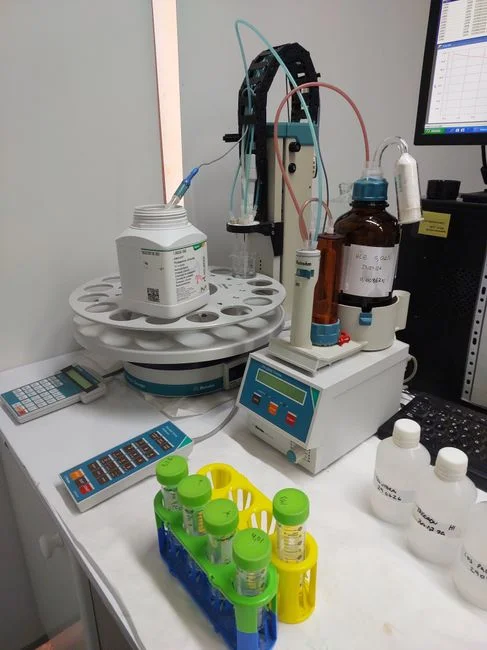
The 2026 reference train for an Olympic Peninsula aggregate wash, log-scale runoff site, or nonferrous finishing operation is a five-stage physical-chemical sequence sized to handle pH and flow spikes from haul-road runoff while keeping a small physical footprint that can be containerized for remote sites. Decentralization — siting treatment near the water source or the demand — is the standard approach for mines with limited site prep (per Fluence, 2026), and the train below is designed to be packaged in a skid or shipping container.
Stage 1 — Equalization. An 8–24 hour HRT basin with mechanical mixing smooths influent flow, equalizes pH swings of 2.5–4.5 typical of acid mine drainage blends, and buffers shock loads from intermittent batch wash cycles. Coarse solids settle here, and decanted supernatant is pumped forward.
Stage 2 — pH adjustment. Lime (Ca(OH)₂) or caustic (NaOH) is dosed to a controlled setpoint of pH 8.5–9.5 with an online probe and a PLC-controlled chemical dosing skid at ±0.2 SU accuracy. Fe³⁺ drops out as ferric hydroxide above pH 4, while Mn²⁺ requires pH ≥ 9, Cu optimum 9.0–10.0, Pb 9.5–10.5, Zn 10.0–11.0 — operators must hold below pH 11.0 to avoid amphoteric re-solubilization.
Stage 3 — Coagulation and flocculation. A rapid-mix chamber at G ≈ 700 s⁻¹ for 30–60 s injects ferric chloride or polyaluminum chloride, followed by a slow-mix chamber at G ≈ 50–100 s⁻¹ for 15–20 min with an anionic polymer. Target floc size is 1–5 mm so the next stage can float them cleanly.
Stage 4 — Dissolved air flotation. Pressurized recycle at 5–7 bar saturates the flocculated stream with air; on release, 20–80 µm micro-bubbles attach to the flocs and float them to the surface, where a skimmer removes the float. A DAF system in the 4–300 m³/h capacity range is the workhorse of mining pretreatment: published field data show 85–95% TSS removal and 70–90% total-metals removal in similar applications (HydropureWater field data, 2025–2026), which is the load reduction that puts the rest of the train comfortably below federal categorical ceilings.
Stage 5 — Multimedia filtration. An anthracite–silica–garnet multimedia filter with anthracite 0.8–1.2 mm (SG 0.55) over silica 0.45–0.55 mm (SG 2.65) over garnet 0.20–0.30 mm (SG 4.0+) polishes DAF effluent to under 5 mg/L TSS and under 1 NTU before pH trim and discharge. The stage-by-stage parameter summary is below.
| Stage | Equipment | Key Parameter | Operating Setpoint |
|---|---|---|---|
| 1. Equalization | Concrete/earthen basin, mechanical mixer | HRT | 8–24 h |
| 2. pH adjustment | Ca(OH)₂ or NaOH dosing, PLC PID | pH | 8.5–9.5 ±0.2 SU |
| 3. Coag/floc | Rapid + slow mix chambers | G, time | 700 s⁻¹ / 30–60 s; 50–100 s⁻¹ / 15–20 min |
| 4. DAF | Pressurized recycle, skimmer | Pressure, removal | 5–7 bar; 85–95% TSS, 70–90% metals |
| 5. Multimedia filter | Anthracite/silica/garnet vessel | TSS, turbidity | < 5 mg/L TSS, < 1 NTU |
Direct Discharge vs. POTW Routing on the Olympic Peninsula
The pathway an operator picks drives equipment scope, monitoring cost, and permit cycle time. Direct discharge under a WA Ecology WQM/NPDES permit is appropriate when no accepting POTW sits within economic haul distance, when flow exceeds roughly 50,000 gpd, and when the receiving water's classification allows discharge. The site carries the full treatment train, an on-site lab, a biomonitoring contract, and whole-effluent toxicity (WET) testing. POTW routing under 40 CFR 403 is appropriate when the site is within 5–10 miles of an accepting POTW, flow is under 50,000 gpd, and the metals load is dominated by Cu and Zn — the smaller pretreatment train is sized to local limits and the hauler pays for downstream treatment. Local ordinance can be stricter than the federal categorical limit (a 1.0 mg/L Cu ceiling is a realistic overlay), and the local pretreatment program has independent enforcement authority under 40 CFR 403. For most Amanda Park and Lake Quinault-area operations, haul economics to the nearest accepting POTW are unfavorable at low flow, so small aggregate wash and log-scale runoff work defaults to direct discharge. The decision framework is summarized below.
| Decision Factor | Direct Discharge (WA Ecology WQM/NPDES) | POTW Routing (40 CFR 403) |
|---|---|---|
| Permit authority | WA Ecology, EPA Region 10 oversight | Receiving POTW; Ecology/EPA on appeal |
| Numeric limit source | 40 CFR 420/421/440 + WQBELs | POTW local limits (often stricter) |
| Flow trigger | > 50,000 gpd typical | < 50,000 gpd typical |
| Haul economics | Site-discharged, no haul | 5–10 mile radius to accepting POTW |
| Monitoring burden | Full categorical + WET, biomonitoring | Categorical; reduced at low flow |
| Capex scope | Full train, on-site lab | Smaller train, hauler pays downstream |
| Olympic Peninsula fit | Aggregate wash, log-scale runoff | Smaller nonferrous finishers near a tribal utility |
Sludge Handling and F006 Disposal
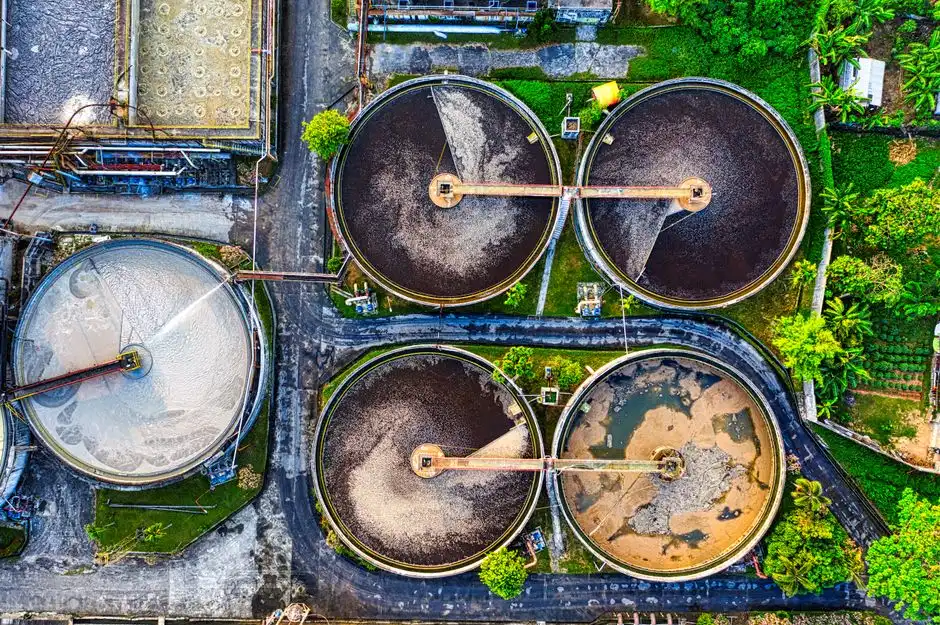
The DAF float and the backwash from the multimedia filter combine into a 1–3% dry solids hydroxide-bearing sludge. If a listed metal (Pb, Cd, or similar) exceeds its RCRA toxicity characteristic at 40 CFR 261.24, the sludge is a F006 wastewater treatment sludge and must be managed under RCRA. The standard dewatering line begins with a lamella pre-thickener that brings the sludge to 5–8% dry solids — a step that cuts polymer demand 30–50% and shortens press cycle time — followed by a plate-and-frame filter press producing cake at 25–35% dry solids, a 10:1 volume reduction over as-produced sludge. Dewatered cake typically goes to a Subtitle D municipal solid waste landfill in western Washington after a TCLP pass; metals recovery and smelter reintroduction is available where the load justifies the freight to a Northwest smelter. For deeper coverage of the F006 trigger and the dewatering sequence, the companion East Finley reference guide walks through the same RCRA pathway under Pennsylvania's program and translates directly into the WAC framework.
2026 Capital and Operating Cost Bands
Installed total for a 2026 mining and metals pretreatment system ranges from $250,000 for a small-scale modular skid to over $2,000,000 for a high-capacity, automated facility, with each tier roughly doubling the prior one. Cost drivers are flow rate (gpm), the specific chemical constituents being removed, and whether sludge dewatering is included in the skid or scoped as a separate line item. Annual OPEX — chemical reagents, power, and F006 disposal fees — typically runs 15–25% of initial capex. The cost band by flow tier is below.
| Flow Tier | Equipment Scope | 2026 Installed Capex (USD) | Annual OPEX |
|---|---|---|---|
| < 25 m³/h | Modular skid, packaged equalization + DAF + filter | $250,000–$500,000 | 15–20% of capex |
| 25–100 m³/h | Mid-range automated train with PLC dosing, on-site lab | $500,000–$1,100,000 | 18–22% of capex |
| > 100 m³/h | High-capacity containerized train, full dewatering line, WET-ready | $1,100,000–$2,000,000+ | 20–25% of capex |
Frequently Asked Questions
What 2026 NPDES pretreatment limits apply to an aggregate wash plant near Amanda Park?
Aggregate wash plants default to 40 CFR Part 440 Subpart B (metals mining) or Subpart J (coal preparation) where coal-history tailings are present, with a representative 2026 daily maximum of 45 mg/L TSS, 0.6 mg/L Pb, 1.0 mg/L Zn, and 0.5 mg/L Cu at pH 6.0–9.0 SU at all times. The receiving POTW's local limits — issued under 40 CFR 403 — often overlay a stricter Cu, Zn, or oil & grease ceiling, and the local pretreatment program has independent enforcement authority. Washington Department of Ecology can also add WQBELs on top of the federal categorical floor under WAC 173-216.
How does an Olympic Peninsula operator decide between direct discharge and POTW routing?
Direct discharge under a WA Ecology WQM/NPDES permit is the default when no accepting POTW sits within 5–10 miles and flow exceeds roughly 50,000 gpd, with the operator carrying the full treatment train, an on-site lab, a biomonitoring contract, and WET testing. POTW routing under 40 CFR 403 is the lower-capex path when flow is under 50,000 gpd, the site is close to an accepting tribal or municipal POTW, and the metals load is dominated by Cu and Zn. For most small Amanda Park aggregate and log-scale sites, haul economics favor direct discharge at low flow because the nearest accepting POTW is outside an economic round-trip radius.
When does hydroxide sludge become F006 under RCRA?
Hydroxide sludge from the DAF float and multimedia backwash becomes a F006 wastewater treatment sludge under RCRA when a listed metal (Pb, Cd, or similar) exceeds its toxicity characteristic at 40 CFR 261.24 on a TCLP extract. A typical Olympic Peninsula dewatering line runs a lamella pre-thickener to 5–8% dry solids followed by a plate-and-frame filter press producing 25–35% dry solids cake, a 10:1 volume reduction over as-produced sludge. The dewatered cake is typically disposed at a Subtitle D municipal solid waste landfill in western Washington after a TCLP pass; metals recovery and smelter reintroduction is available where the load justifies the freight.
What 2026 capital cost should an Olympic Peninsula operator budget for a modular pretreatment skid?
For flow under 25 m³/h, a packaged modular skid with equalization, pH adjustment, DAF, and multimedia filtration runs $250,000–$500,000 installed in 2026, with annual OPEX of 15–20% of capex. Mid-range automated trains in the 25–100 m³/h band run $500,000–$1,100,000, and high-capacity containerized trains above 100 m³/h with full dewatering and WET-ready monitoring run $1,100,000–$2,000,000+ — each tier roughly doubling the prior one. For a deeper DAF-versus-clarifier selection comparison, the DAF vs clarifier selection guide walks through the same flow tiers with side-by-side removal data.