The 2026 Regulatory Frame Eight Mile Mining and Metals Plants Must Clear
Discharge to a US publicly owned treatment works (POTW) is governed by EPA 40 CFR Part 403, the general pretreatment framework that empowers local POTWs to enforce limits stricter than federal categorical standards. For an Eight Mile-area mining or metals facility, three categorical rules usually layer on top of Part 403: 40 CFR Part 421 (Nonferrous Metals Manufacturing), 40 CFR Part 440 (Ore Mining and Dressing), and 40 CFR Part 467 (Nickel). The applicable subcategory is set by the dominant raw material and the process unit, so a facility that mills and smelts in the same building can fall under two categories simultaneously.
Representative 2026 daily-maximum limits under these rules for direct-discharge streams at the sewer manhole look like this:
| Parameter | Daily Maximum (mg/L) | Regulatory Anchor |
|---|---|---|
| Lead (Pb) | 0.69 | 40 CFR Part 421 (Nonferrous Metals) |
| Zinc (Zn) | 2.61 | 40 CFR Part 421 / Part 440 |
| Copper (Cu) | 3.38 | 40 CFR Part 421 |
| Nickel (Ni) | 3.98 | 40 CFR Part 467 (Nickel) |
| Total Suspended Solids (TSS) | 50 | 40 CFR Part 403 baseline |
| pH | 6.0–9.0 | 40 CFR Part 403 |
The local POTW discharge permit layers additional monitoring on top of these numbers. For mining and metals sites, expect flow-proportional 24-hour composite sampling for sulphates (often 500–2,000 mg/L depending on receiving plant), total dissolved solids (TDS ceiling typically 1,000–2,500 mg/L), and individual metals with limits tighter than the federal categorical numbers where the receiving waterworks has industrial dominance. Always pull the local sewer use ordinance before any equipment order, because the POTW limit is the binding number.
Why Mine-Influenced Water Is Hard to Discharge
Mine-influenced water (MIW) consists of any process water that has contacted ore, tailings, or pit walls. That contact loads the stream with dissolved heavy metals, sulphates, and fine suspended solids while pushing pH downward. The same ore contact that generates MIW also produces acid rock drainage (ARD), a low-pH, high-sulphate, high-metals stream that is the single biggest compliance risk for an Eight Mile-area plant sited near abandoned or active workings.
Suspended solids carry adsorbed metals. A turbidity reading that looks acceptable on its own can still be hiding a dissolved metal excursion in the filtrate, so turbidity below the discharge limit is a compliance gate, not an aesthetic metric. The metals that precipitate at moderate pH (lead, copper, zinc, nickel as hydroxides) will re-dissolve if downstream pH slips, which is why equalization and pH control are treated as compliance assets rather than buffer volume.
A single upset, such as a slug of low-pH raffinate from a leach pad, a pump failure on the clarifier underflow, or a stormwater surge through the crushing yard, can blow a daily-maximum limit in minutes. Equalization basins, redundant pH probes, and automatic chemical dosing are sized to absorb that variability before the sewer manhole sees it. For plants with older workings upstream, an acid mine drainage treatment guide covers the additional high-sulphate and high-iron steps that go beyond the standard train.
The Five-Stage Pretreatment Train That Meets 2026 Limits
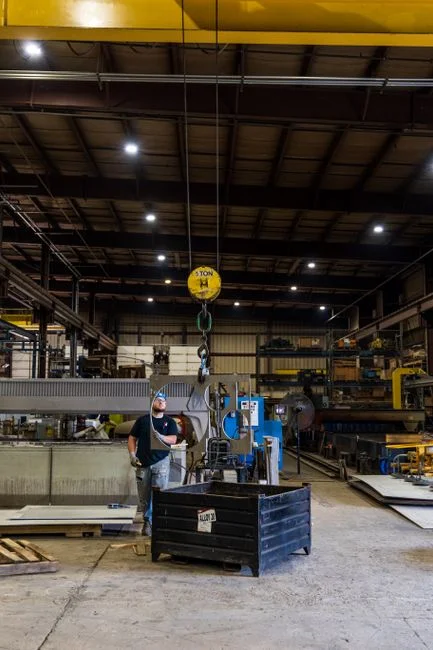
Stage 1 involves screening and equalization. A rotary bar screen at 2–6 mm aperture pulls rags, scale, and oversized ore fragments out of the feed before they reach the chemical stage. Downstream, an equalization basin sized for 8–24 hours of holding buffers hydraulic surges, damps pH swings from upstream batch processes, and gives the dosing system a stable target.
Stage 2 is pH adjustment. Lime slurry or NaOH is dosed through a PLC-controlled chemical dosing skid to pH ≥ 8, the threshold at which most divalent metals (lead, zinc, copper, nickel) form insoluble hydroxides that settle and press well. Two-stage pH probes with redundant pumps are the minimum; one probe and one pump will fail at the worst possible time.
Stage 3 is coagulation and flocculation. A coagulant (typically ferric chloride at 50–200 mg/L or alum) neutralizes colloidal charge, then a flocculant polymer at 1–10 mg/L builds dense, fast-settling floc. Jar tests on the actual feed, not the catalog dose, are the only way to lock these numbers.
Stage 4 is solids separation. The flocculated water routes to either a DAF unit (for oily, colloidal, or low-density streams) or a lamella clarifier (for heavy mineral slurry). Both deliver supernatant in the 20–50 mg/L TSS range, which is the gate to the final polish step before discharge.
Stage 5 is solids dewatering. Underflow at 1–3% dry solids feeds a plate-and-frame filter press. High-pressure builds operating at 15–30 bar produce a 25–35% dry solids cake suitable for dry-stack disposal, with operating cost roughly one-sixth that of a belt press or centrifuge on equivalent throughput.
DAF vs Lamella Clarifier: Choosing the Right Solids-Separation Step
Both units meet the same discharge envelope, but they achieve it through different mechanics. DAF floats suspended material on fine bubbles, which is the right physics for oil, grease, and colloidal fines that won't gravity-settle. Lamella clarifiers use inclined plates at 55–60° to compress the effective settling distance, which is the right physics for dense mineral slurries where the floc already wants to fall.
| Parameter | DAF | Lamella Clarifier |
|---|---|---|
| Single-pass TSS | ≤ 30 mg/L achievable | 30–50 mg/L typical |
| Footprint per m³/h | 0.05–0.10 m² | 0.03–0.05 m² (inclined plates) |
| Polymer consumption | 1–5 mg/L | Up to 30% lower than DAF on mineral slurry |
| Energy use | 0.05–0.15 kWh/m³ (recycle pump + saturator) | 0.01–0.03 kWh/m³ (no recycle pump) |
| 2026 skid price band (50 m³/h) | USD 120,000–220,000 | USD 70,000–140,000 |
| Best feed match | FOG, colloidal fines, low-density floc | Heavy mineral slurry, no oil phase |
Selection depends on the specific influent profile: pick the DAF unit if free oil, grease, flotation chemistry, or a very low residual TSS dominate the permit. Pick the lamella clarifier if you are gravity-thickening a mineral slurry and want lower chemical OPEX and a smaller compressor load. Many Eight Mile sites run a lamella for primary clarification followed by a polish DAF, which costs more in capex but provides two independent compliance barriers.
CAPEX, OPEX, and Payback for a 50 m³/h Mine-Water Pretreatment Train
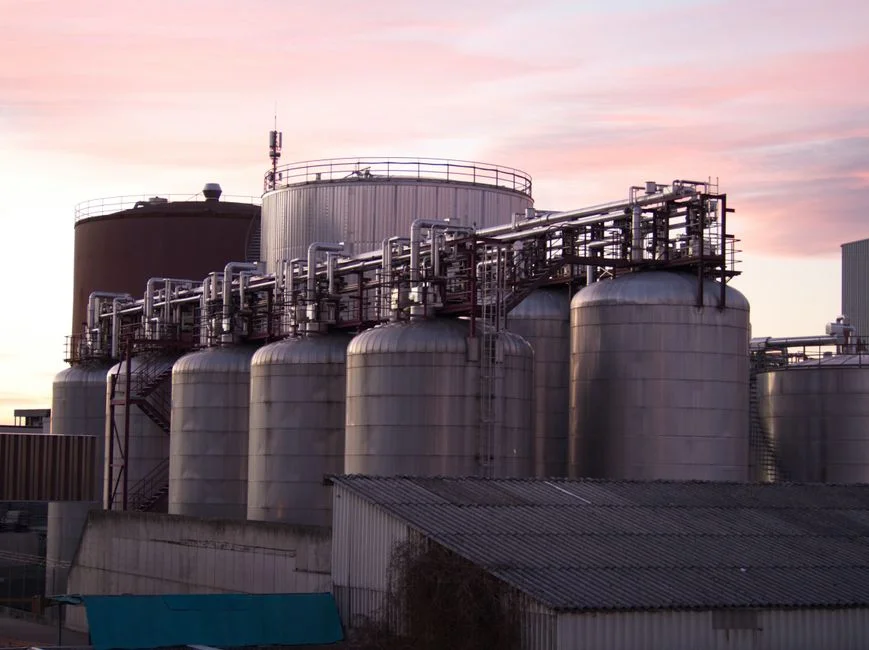
A complete 50 m³/h train in 2026, anchored to a mid-range DAF or clarifier, an equalization basin, a chemical dosing skid, and a 30 m² filter press, lands in a USD 350,000–900,000 capex band. That range is a planning estimate; real pricing depends on metallurgy, basin civil works, and instrumentation scope.
| Cost Driver | 2026 Band (USD) | Notes |
|---|---|---|
| Total capex, 50 m³/h train | 350,000–900,000 | Equipment + installation; civil excluded |
| Opex per m³ treated | 0.40–1.10 | Dominated by lime/NaOH, polymer, press energy |
| Indicative payback | 18–36 months | Versus off-site hauling of liquid waste |
| Lime/NaOH share of opex | 35–50% | Highly feed-dependent |
| Polymer share of opex | 15–25% | Jar-test before quoting |
Variance drivers include influent metal concentration, target discharge limits, and whether the plant reuses clarified water in the process circuit. Reuse cuts both freshwater intake and discharge volume, which compresses the per-m³ cost. For metal-specific chemistry and recovery options, the lead removal process guide, zinc removal process guide, and nickel removal process guide provide the per-metal design parameters in detail.
90-Day Commissioning Checklist for 2026 Compliance
Weeks 1–3 involve pulling the local POTW sewer use ordinance and confirming which 40 CFR subcategory applies. Run baseline sampling across all three shifts for metals (Pb, Zn, Cu, Ni, Fe, Mn), TSS, pH, sulphates, and flow to build a composite-loading profile to size equalization and chemical dosing.
Weeks 4–6 focus on jar tests to lock coagulant, flocculant, and pH setpoints on real feed. Pilot a DAF cell or lamella on a slipstream to confirm single-pass TSS, then size chemical dosing skids and the filter press cycle from the pilot data.
Weeks 7–10 cover the installation of skids, equalization basin upgrades, and the filter press. Loop PLC and SCADA tags for pH, flow, TSS, and press cycle, and validate redundant probes and pump-fail alarms before energizing.
Weeks 11–12 are for operator training against written SOPs. Run tabletop scenarios for a low-pH slug, a polymer pump failure, and a press overpressure, then confirm spill containment and neutralizing-chemical standby.
Weeks 13–14 (day 0 onward) require a parallel-run of the new train with any existing system. Begin the Discharge Monitoring Report (DMR) sampling cadence on day 0 and lock the 2026 compliance baseline against the local POTW's reporting template.
Frequently Asked Questions
Which EPA rule applies to my mine or metals plant near Eight Mile in 2026?
40 CFR Part 403 plus the relevant categorical rule, most commonly Part 421 (Nonferrous Metals), Part 440 (Ore Mining and Dressing), or Part 467 (Nickel). The binding number is the local POTW's sewer use ordinance, which is
Frequently Asked Questions
Which EPA rule applies to a mining or metals plant near Eight Mile in 2026?
Facilities near Eight Mile must comply with the Effluent Limitations Guidelines (ELGs) set forth in 40 CFR Part 440 for Ore Mining and Dressing Point Source Category. By 2026, these plants must align with updated discharge standards that incorporate stricter limitations on heavy metals, including mercury, selenium, and arsenic, as mandated by the Clean Water Act and local NPDES permit renewals.
What pH should I target for metals precipitation in mine-influenced water?
For most mine-influenced water, target a pH range of 9.2 to 9.8 to optimize the precipitation of heavy metals such as copper, zinc, and nickel as metal hydroxides. If amphoteric metals like aluminum or lead are present in significant concentrations, a secondary pH adjustment stage or the addition of sulfide precipitating agents may be required to maintain solubility limits below 0.1 mg/L.
DAF or lamella clarifier for mining wastewater — which is better?
The choice depends on the specific gravity and concentration of the solids; lamella clarifiers are generally superior for dense, inorganic metal precipitates because they utilize inclined plates to increase settling surface area within a small footprint. Dissolved Air Flotation (DAF) is better suited for mining wastewater containing low-density particles, oil, or grease that do not settle readily by gravity, typically requiring chemical flocculants to create a floatable sludge blanket.
How much does a 50 m³/h mine-water pretreatment train cost in 2026?
As of 2026, a fully integrated 50 m³/h pretreatment train, including chemical dosing, rapid mix, flocculation, and clarification, typically costs between $1.2 million and $1.8 million USD. This estimate excludes site-specific civil works, electrical infrastructure upgrades, and advanced tertiary filtration systems like membrane bioreactors or ion exchange units, which can increase the total capital expenditure by 30% to 50%.
How long does it take to commission a new mining wastewater pretreatment system?
The commissioning phase for a mining wastewater pretreatment system typically requires 8 to 12 weeks, following the completion of mechanical and electrical installation. This timeline includes 2 weeks for dry testing, 4 weeks for water-only hydraulic testing and control loop verification, and 2 to 6 weeks for full-scale process optimization and analytical validation to ensure effluent consistency under varying influent load conditions.