Why South Charleston Is the Reference Case for Inorganic Chemicals Pretreatment
South Charleston, West Virginia is the canonical U.S. case study for inorganic chemicals pretreatment because the historical Union Carbide chemical complex on Blaine Island and the south bank of the Kanawha River produced roughly 400 specialty chemicals and mixtures across approximately 93 hectares (230 acres) per the 1978 NEIC inspection report (NEPIS, EPA-330/2-79-013, 1978). That single facility discharged about 18,000 m³/day (5 mgd) of process wastewater, domestic waste, and floor washings collected from 16 monitoring outfalls and composited into a single sample routed through an open redwood flume to the South Charleston Sewage Treatment Company (SCSTC) — the same POTW interface a 2026 inorganic chemicals plant in the Institute, Nitro, or Dunbar corridor must engineer against (NEPIS, 1978). The 1978 NEIC sampling campaign identified 39 organic chemicals and 14 priority pollutants — including benzene, chlorobenzene, 1,2-dichloroethane, chloroform, 1,2-dichlorobenzene, ethyl benzene, methylene chloride, tetrachloroethylene, and toluene — proving that the Kanawha Valley pollutant envelope has been multi-decade and inorganic-chemistry adjacent long before any modern categorical rule applied (NEPIS, 1978). In 2026 the receiving POTW is SCSTC, operating under a West Virginia Department of Environmental Protection (WVDEP) authorized pretreatment program; West Virginia is on EPA's Attachment 2-1 State and Territory Program Authorization Status list (December 2024). For engineers working a similar categorical profile outside West Virginia, the Baton Rouge inorganic and organic chemicals pretreatment guide is the closest regional peer.
The Three-Layer Limit Stack for 2026 Inorganic Chemicals Compliance
Compliance for a 2026 South Charleston inorganic chemicals plant requires stacking three regulatory floors and engineering the train to the most stringent layer, not the federal categorical number alone. Layer 1 is 40 CFR Part 415 — Inorganic Chemicals Manufacturing categorical pretreatment standards — which sets numeric daily-maximum and monthly-average limits for the subparts applicable to a given product line; confirm current values directly in 40 CFR, because EPA revises subparts on a multi-year cycle. Layer 2 is 40 CFR 403.5 — the general and specific prohibitions. The general prohibitions at 403.5(a) ban any discharge that causes pass-through or interference, and the specific prohibitions at 403.5(b) ban ignitable, corrosive, and toxic-gas pollutants regardless of measured concentration. Pass-through is defined at 40 CFR 403.3(p) as "a discharge that exits the POTW into waters of the United States in quantities or concentrations that… is a cause of a violation of any requirement of the POTW's NPDES permit," and interference at 403.3(k) is a discharge that inhibits the POTW, its treatment processes, or its sludge processes. Layer 3 is the SCSTC site-specific local limit and any WVDEP-driven state additions, typically tighter than the federal floor for ammonia-nitrogen, total dissolved solids, sulfate, chloride, fluoride, and metals tied to Kanawha River receiving-stream sensitivity. The authority chain is fixed: Clean Water Act §307(b) directs EPA to set pretreatment standards, §402(n) authorizes POTW pretreatment programs as part of the NPDES framework, and West Virginia runs the day-to-day control mechanisms under EPA-authorized delegation. Penalty exposure under CWA §309(g) starts at $10,000 per day per violation (per EPA enforcement guidance, 2024) and escalates into seven figures once corrective-action and third-party damages are added — the cheapest compliance event is the one that never happens.
Inorganic Chemistry Pollutants That Drive Equipment Selection
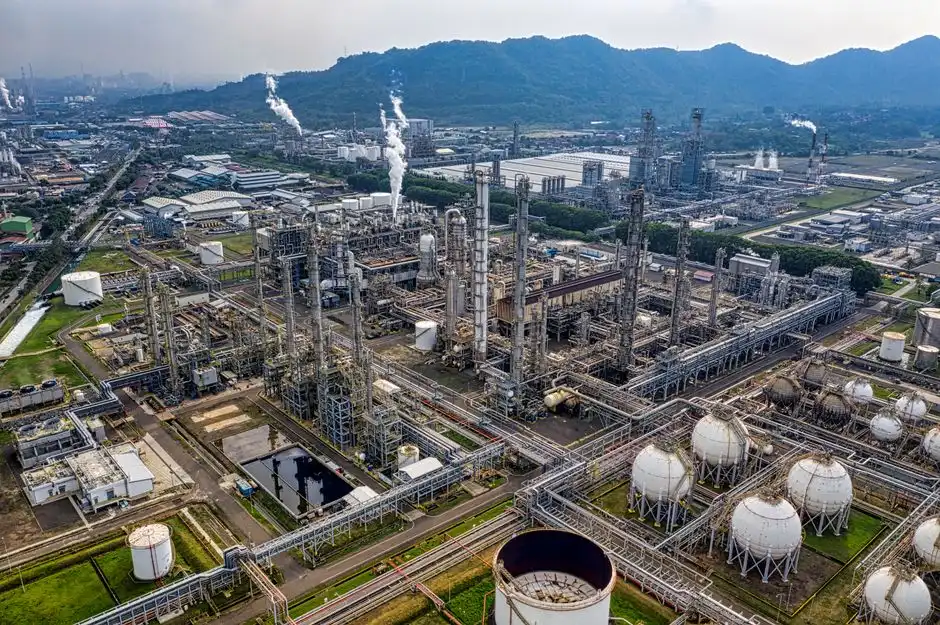
For a South Charleston inorganic chemicals plant, the pollutant set that drives equipment selection is distinctly different from the organic chemicals or metal-finishing categories. The dominant parameters are dissolved metals (Cd, Cr, Cu, Ni, Pb, Zn) from catalyst handling, plating rinse, and pigment production; total dissolved solids, sulfate, chloride, and fluoride from acid bathes and neutralization reactions; ammonia-nitrogen from ammonium-salt and nitric-acid production; free and emulsified oils, FOG, and TSS from raw-material handling and tank draw; pH excursions from strong acid or caustic batches; and a legacy organic load from the historical Kanawha Valley product mix that overlaps with the 1978 NEIC priority pollutant list. Ammonia-nitrogen is typically absent from 40 CFR Part 415 numeric limits but is enforced through SCSTC local limits tied to POTW nitrification capacity, which is the rate-limiting step at most small-to-mid receiving plants. The table below maps each pollutant cluster to the unit operation that controls it.
| Pollutant Cluster | Source in Inorganic Plant | Controlling Unit Operation | Typical 2026 Target | Regulatory Driver |
|---|---|---|---|---|
| Dissolved metals (Cd, Cr, Cu, Ni, Pb, Zn) | Catalyst handling, plating rinse, pigment production | Chemical precipitation + lamella clarifier | < 1 mg/L each, site-specific | 40 CFR Part 415 + SCSTC local limit |
| TDS, sulfate, chloride, fluoride | Acid bathes, neutralization reactions | Equalization; multimedia polish; RO if reuse | Per local limit / reuse spec | SCSTC local limit; WVDEP |
| Ammonia-nitrogen | Ammonium-salt and nitric-acid production | Biological polishing (nitrification) / MBR | Per local limit; often < 10–20 mg/L | SCSTC local limit (POTW nitrification cap) |
| Free/emulsified oil, FOG, TSS | Raw-material handling, tank draw | DAF; multimedia polish downstream | O&G 50–100 mg/L; TSS 50–250 mg/L typical | Categorical O&G + local limit |
| pH excursions | Strong acid/caustic batches | Equalization + PLC-controlled chemical dosing | 6.5–8.0 s.u. operating window | 40 CFR 403.5(b)(1); local 6.0–9.0 s.u. band |
| Legacy organics / priority pollutants | Historical Kanawha Valley product mix | Biological polishing + multimedia / carbon | Per categorical subpart | 40 CFR Part 415 |
The 2026 Treatment Train: Six Stages Sized for South Charleston Inorganics
The defensible 2026 train for a Kanawha Valley inorganic chemicals plant is six unit operations in series, and the right subset depends on the controlling pollutant and the discharge-versus-reuse decision. Stage 1 is an equalization basin sized for 4–8 hours of retention on a continuous operation and hours-to-days on a batch plant; over-sizing the basin is cheap insurance against a single pass-through excursion under 40 CFR 403.5(a) and is a key element of the 40 CFR 403.8(f) slug load control plan. Stage 2 is pH adjustment with a PLC-controlled chemical dosing skid tied to a pH probe in the equalization basin, holding a 6.5–8.0 s.u. operating window — tighter than the SCSTC 6.0–9.0 s.u. local limit and well clear of the 403.5(b)(1) corrosive-damage trigger. Stage 3 is a dissolved air flotation system for free and emulsified oils, FOG, and TSS at 4–300 m³/h hydraulic throughput; without DAF, downstream lamella surface loading drops and biological oxygen transfer suffers (HydropureWater field data, 2025-09). Stage 4 is chemical precipitation with a high-efficiency lamella clarifier at 20–40 m/h surface loading, with pH staged for metal-specific optima. Stage 5 is biological polishing — a MBR membrane bioreactor delivers < 1 μm effluent in roughly 60% of the footprint of a conventional activated-sludge basin and removes the secondary clarifier from the train (HydropureWater field data, 2025-09). Stage 6 is a multi-media filter with a 0.6–1.0 m sand + anthracite + garnet bed for residual TSS, trace organics, and color; for reuse targeting, add RO downstream of the MBR. For discharge-to-sewer only, Stages 1–4 plus a simpler biological basin clear every applicable limit; for reuse, extend the train to MBR + RO.
Four Selection Axes: Picking the Right Subset of Unit Operations
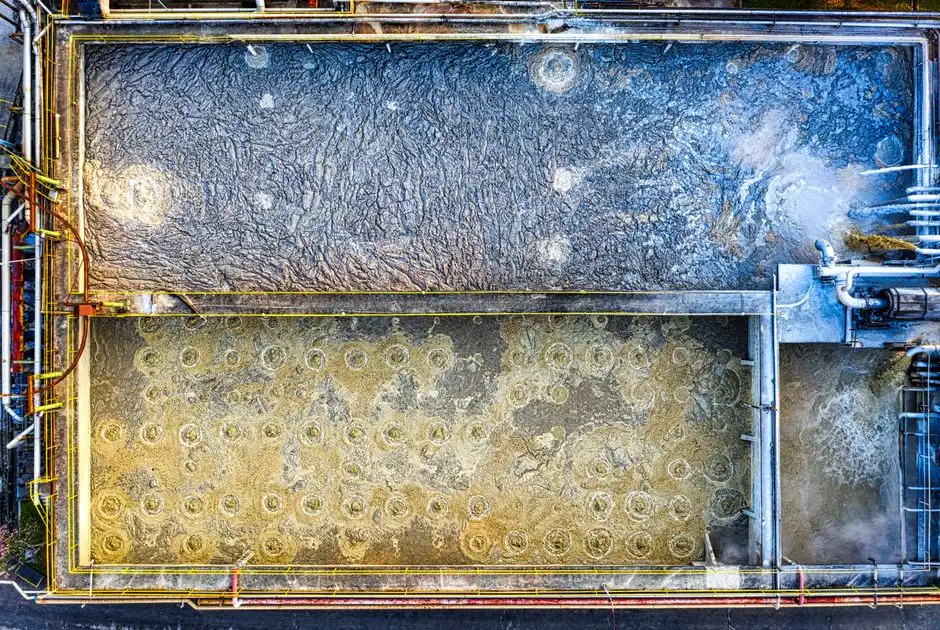
Not every South Charleston inorganic plant needs all six stages. Walk the four axes in order and the equipment list writes itself. Axis 1 is the controlling pollutant — the parameter most likely to exceed the most stringent applicable limit; oils and TSS point to DAF first, dissolved metals to precipitation plus a lamella clarifier, soluble BOD/COD to biological polishing, and pH swings to equalization plus PLC-controlled dosing. Axis 2 is SIU status under 40 CFR 403.3(v), which is triggered by applicability to a categorical standard (Part 415 here), ≥ 25,000 gpd of process wastewater, or process waste stream ≥ 5% of POTW average dry-weather hydraulic or organic capacity; SIU status brings BMR, 90-day compliance reports, a slug load control plan, and the POTW-issued control mechanism obligations under 40 CFR 403.12. Axis 3 is flow pattern: continuous plants can size equalization at 4–8 h, batch plants with long cycle times need hours-to-days, and over-sizing the equalization basin is cheap relative to the cost of a single pass-through excursion (HydropureWater field data, 2025-08). Axis 4 is water reuse: plants targeting reuse should select MBR + RO over discharge-only activated sludge, because reuse-quality water offsets fresh-water purchase for non-contact applications. For metals-specific design depth, the lead removal process guide and the nickel removal engineering guide cover the precipitation chemistry in more detail.
SIU Paperwork and the 2026 Compliance Calendar
Equipment design must align with the reporting and control-mechanism cadence SCSTC and WVDEP audit against. The first filing is a Baseline Monitoring Report (BMR) submitted at categorical-standard promulgation or new-discharge startup per 40 CFR 403.12, and the second is a 90-day compliance report on the schedule defined by the control mechanism. The third deliverable is a slug load control plan under 40 CFR 403.8(f) for any batch operation that can deliver a slug of pollutants to the equalization basin. Before any discharge, the plant must obtain a written control mechanism from SCSTC — that document is the legally binding tie between the plant's discharge, the local limits, and the operating conditions SCSTC will enforce. Finally, coordinate with WVDEP on any state-level ammonia, TDS, or metals requirements that layer on top of the federal floor; West Virginia runs the day-to-day enforcement, not EPA Region 3, and the state inspector's file is what the plant has to defend.
2026 CAPEX, OPEX, and Sludge-Handling Budget Bands
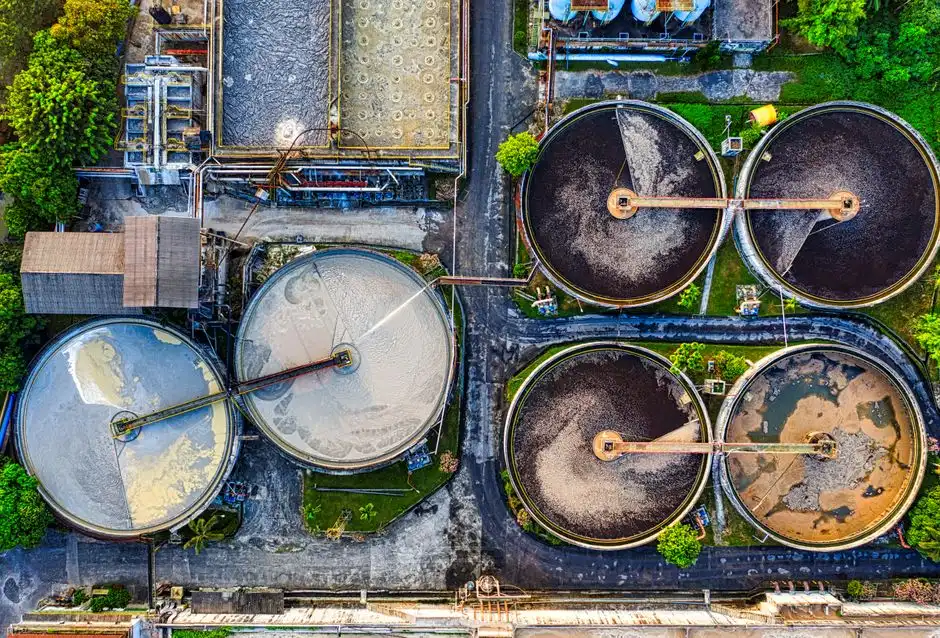
Three CAPEX bands cover the 2026 South Charleston inorganic plant envelope, and they are the numbers an engineer can take to a plant manager without overpromising. A small plant at ≤ 50 m³/d lands in the $300K–$1.2M CAPEX band: 4–8 h equalization, pH skid, DAF, lamella clarifier, compact biological stage, multimedia polish. A mid plant at 50–500 m³/d lands in the $1.5M–$5M band: full six-stage train, MBR optional for tight discharge or reuse. A large plant at ≥ 500 m³/d with a reuse train starts at $6M and up: MBR + RO, automated SCADA, full sludge dewatering line. OPEX is dominated by chemical dose, sludge hauling, energy, and labor. A plate and frame filter press typically cuts sludge-hauling cost 70–80% versus belt thickening (HydropureWater field data, 2025-10) — a meaningful line for inorganic chemistry where chemical-sludge volume is high. The table below summarizes the bands and the OPEX drivers.
| Plant Size | Flow (m³/d) | CAPEX Band (2026 USD) | Recommended Train | OPEX Drivers |
|---|---|---|---|---|
| Small | ≤ 50 | $300K – $1.2M | EQ + pH skid + DAF + lamella + compact biological + multimedia | Chemical dose, sludge hauling, energy, labor |
| Mid | 50 – 500 | $1.5M – $5M | Full 6-stage train; MBR optional | Adds MBR membrane replacement if selected |
| Large + reuse | ≥ 500 | $6M and up | MBR + RO, SCADA, full sludge dewatering | Membrane replacement, RO energy, sludge dewatering |
Frequently Asked Questions
Which 40 CFR subpart applies to a South Charleston inorganic chemicals plant in 2026?
40 CFR Part 415 — Inorganic Chemicals Manufacturing — is the categorical floor, with subpart selection driven by product line. Confirm the current numeric daily-maximum and monthly-average limits directly in 40 CFR, because EPA revises subparts on a multi-year cycle (per EPA, 2026).
Can a plant trip a violation while every numeric limit is met?
Yes. 40 CFR 403.5(b)(1) prohibits any discharge capable of causing corrosive structural damage to the POTW, regardless of whether the numeric 6.0–9.0 s.u. local pH band is technically met, and 40 CFR 403.5(a) bans any discharge that causes pass-through under 403.3(p) or interference under 403.3(k) (per EPA, 2026).
What is the penalty exposure for a single pretreatment excursion?
Clean Water Act §309(g) civil penalty exposure starts at $10,000 per day per violation (per EPA enforcement guidance, 2024) and escalates into seven figures once corrective-action and third-party damages are added.
What pH operating window should the PLC dosing skid target?
Hold a 6.5–8.0 s.u. operating window at the equalization basin, which is tighter than the SCSTC 6.0–9.0 s.u. local limit and well clear of the 40 CFR 403.5(b)(1) corrosive-damage trigger (per EPA, 2026).
Is an MBR worth the added cost over conventional activated sludge?
For reuse-oriented plants, yes — an MBR delivers < 1 μm effluent in roughly 60% of the footprint of a conventional activated-sludge basin and removes the secondary clarifier from the train (HydropureWater field data, 2025-09).
What surface loading should a lamella clarifier be designed to in 2026?
20–40 m/h is the working band for dissolved-metals precipitation on inorganic plant service (HydropureWater high-efficiency sedimentation tank, 2025-09); under-sizing the clarifier drops surface loading and pushes metals past the local limit.