Why Redstone Arsenal's Wastewater Posture Changes the Math for Nearby Plants
Redstone Arsenal covers 38,000 acres and roughly 11.7 million square feet of building space, hosting NASA, the Missile Defense Agency, the FBI, and approximately 40 tenant agencies that together drive an estimated $19 billion per year into the regional economy (per U.S. DOE FEMP, 2019 award summary). That federal density is not a background fact — it is the reason the local POTW enforces stricter local limits than generic 40 CFR Part 403 defaults: cumulative industrial loading into the Tennessee River basin via Indian Creek and Huntsville Spring Branch is treated as a downstream-water-quality problem, not a single-discharger problem.
Regulatory authority runs through the Alabama Department of Environmental Management, not EPA Region 4 alone. Redstone Arsenal operates under NPDES permit AL7 210 020 742 administered under the Alabama Hazardous Waste Management and Minimization Act (AHWMMA) and ADEM Admin. Code ch. 335-6, with a finalized renewal running corrective-action obligations across dozens of Solid Waste Management Units (RSA-003, RSA-053, RSA-054/-055, RSA-057, RSA-058, RSA-083, RSA-139, RSA-201, RSA-242, RSA-247, RSA-252, RSA-269, RSA-275, RSA-280-R-01, RSA-294-R-01, RSA-315, and others) per the EPA permit record dated 2021. For a transportation equipment manufacturer siting a new line next to the Arsenal, that means ADEM's enforcement posture is conditioned by decades of DDT and solvent cleanup — including the EPA-listed Wheeler National Wildlife Refuge contamination with a 1982 cleanup estimate of approximately $90 million (Redstone Arsenal historical record, 1982) — and any new discharger that could re-mobilize legacy contaminants will be evaluated against conservative local limits rather than federal categorical floors.
NAICS 336 transportation equipment manufacturers fall under 40 CFR Part 433 (metal finishing) and, where coil-coated body panels or large military-vehicle painting lines are present, 40 CFR Part 465 categorical standards. The categorical daily-maximum TSS under Part 433 is 60 mg/L, with categorical metal caps on chromium, copper, lead, nickel, and zinc. The receiving POTW — Huntsville–Madison County for most of the Arsenal corridor — layers its own local limits on top, and those local limits, not the federal categorical numbers, are what determine pass/fail at the sampling manhole.
Wastewater Chemistry Unique to Transportation Equipment Plants
Free and emulsified oils from stamping, machining, hydroforming, and parts washing typically load the equalization basin at 500–5,000 mg/L O&G. Free oil separates by gravity in the first 30 minutes; stabilized emulsions from synthetic cutting fluids and water-based coolants need chemistry (typically a cationic breaker plus acid/cracking to drop pH to 4–5) before dissolved air flotation can lift another 90% of the residual load. End-of-pipe targets for non-categorical streams are commonly ≤ 100 mg/L O&G, with some Huntsville-Madison County tributary-shed permits calling for 50 mg/L when discharges pass into drainage laterals that flow past federal installations.
Phosphorus from metal-cleaning detergents and conversion-coating rinses (iron phosphate, zinc phosphate, manganese phosphate) commonly runs 20–80 mg/L as P in spent rinsewater. Alum at 100–200 mg/L or ferric chloride at 50–150 mg/L precipitates PO₄³⁻ as AlPO₄ or FePO₄ at pH 6.5–7.5, with a settled-water residual of 1–5 mg/L as P. Where the receiving stream is on Alabama's 303(d) list for nutrients, local limits tighten to 25 mg/L or less as P.
Hexavalent chromium from conversion coatings and hard-chrome plating is the parameter that drives pretreatment design more than any other. The 40 CFR Part 433 Table 3 categorical daily-maximum is 0.1 mg/L Cr(VI); ADEM-administered local limits often echo that. Reduction to Cr(III) uses ferrous sulfate (FeSO₄·7H₂O) at a stoichiometry of roughly 7–10 mg FeSO₄ per mg Cr(VI) at pH ~2.0, with a 10–20 minute reaction time, followed by a pH raise to 8.5–9.0 to precipitate Cr(OH)₃. Sodium metabisulfite is a viable alternative for plants that want to avoid iron-laden sludge, but stoichiometry is tighter (about 3.0 mg Na₂S₂O₅ per mg Cr(VI) at pH < 3) and the off-gas handling is more involved.
Suspended paint solids from overspray booths and general washdown TSS typically load 200–800 mg/L and need coagulation/flocculation ahead of any DAF or clarifier — anionic polyacrylamide at 1–5 mg/L paired with PAC or ferric chloride is the most common 2026 chemistry. pH excursions are the most under-instrumented failure mode: acid pickling runs pH 1–3, alkaline cleaning runs pH 11–13, and a single uncaught batch dump can take a 200 m³ equalization basin outside the ADEM 6.0–9.0 sewer pH window in less than one HRT.
The 2026 Pretreatment Equipment Train That Hits ADEM Limits
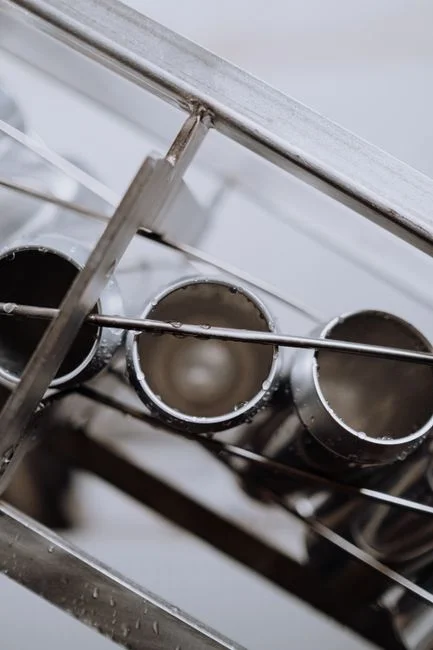
Plants in the 5–25 m³/h range — typical of a single NAICS 336 paint shop or machining line tying into the Huntsville–Madison County sanitary sewer — hit 2026 ADEM-administered 40 CFR Part 403 local limits with a five-stage train. The train is modular: each stage can be sized independently, and the chemistry is paced off equalization-tank level rather than instantaneous influent flow.
| Stage | Unit Operation | Design Parameter | Typical Performance |
|---|---|---|---|
| 1 — Headworks | Rotary mechanical bar screen, 2–6 mm opening | Peak instantaneous flow up to 1.5× average | Removes rags, chips, parts fragments; protects downstream pumps and DAF |
| 2 — Equalization | EQ basin with active pH trim, 24–48 h HRT | Mixing 0.3–0.5 kW/m³; pH probe redundant | Dampens batch dumps; protects Cr(VI) reduction kinetics |
| 3 — Primary separation | DAF with coagulant and flocculant dosing | Hydraulic loading 4–25 m/h; recycle 20–40% | 90–95% O&G removal; 70–85% TSS removal |
| 4 — Metals precipitation | Cr(VI) reduction reactor + pH raise to 8.5–9.0 | FeSO₄ 7–10 mg per mg Cr(VI); 10–20 min RT | Cr(VI) < 0.1 mg/L; total Cr typically < 1.0 mg/L |
| 5 — Polishing | Multimedia filter (sand + anthracite + garnet) + final pH/temp trim | Filtration rate 10–15 m/h | Residual TSS < 30 mg/L; pH 6.0–9.0; temp < 40 °C at discharge |
Stage 1 protects everything downstream; a rotary mechanical bar screen in the 2–6 mm opening range is the standard headworks choice for stamping and machining facilities that shed parts fragments. Stage 2 equalization is non-negotiable: 24–48 h HRT with redundant pH probes is the cheapest insurance against permit excursions from acid-pickling or alkaline-cleaning dumps. Stage 3 is the workhorse — a dissolved air flotation system dosed via an automatic chemical dosing skid (typically 50–150 mg/L PAC or 30–80 mg/L ferric chloride, plus 1–5 mg/L anionic flocculant) hits 90–95% O&G removal in a single stage. Stage 4 handles Cr(VI) reduction and metal precipitation, and Stage 5 polishes to the local TSS and turbidity targets before a flow-paced discharge to the sanitary sewer.
Sludge handling completes the train. Float from the DAF and underflow from the clarifier or precipitation reactor are routed to a plate-and-frame filter press that dewaters to 25–35% dry solids cake for off-site disposal; filter-press selection typically runs 1–500 m² of filtration area depending on solids loading. A 10 m³/h plant generating roughly 60–80 kg DS/day fits a 5–10 m² press; a 25 m³/h plant typically needs 15–30 m².
2026 Alabama ADEM Local Limits Most Transportation Plants Must Hit
For a plant in the Arsenal corridor, the permit you defend to ADEM is built on three stacked layers: federal categorical limits (40 CFR Part 433 for metal finishing, 40 CFR Part 465 for coil coating), 40 CFR Part 403 general pretreatment standards, and Huntsville–Madison County POTW local limits that are usually stricter. The table below consolidates the limits a transportation equipment manufacturer most often has to hit at the sampling manhole in 2026. Always confirm against the current POTW discharge permit — local limits are revised more often than the federal floors.
| Parameter | Federal Categorical (40 CFR Part 433) | Typical 2026 Local Limit (Huntsville–Madison POTW) | Notes |
|---|---|---|---|
| pH | 6.0–9.0 (Part 403 general) | 6.0–9.0 (sometimes 6.5–8.5 with legacy metal load) | Continuous monitoring at sampling manhole |
| TSS | 60 mg/L daily max | ≤ 200 mg/L (non-categorical); ≤ 60 mg/L where categorical applies | Categorical cap governs for metal-finishing lines |
| O&G | — (Part 433 silent) | 100 mg/L daily max; 50 mg/L near federal installations | Hexane-extractable method |
| Cr (total) | 2.77 mg/L daily max (Part 433 Table 3) | 1.0 mg/L | Local typically tighter |
| Cr(VI) | 0.1 mg/L daily max (Part 433 Table 3) | 0.1 mg/L | Reduction step required for hard-chrome or conversion-coating lines |
| Zn | 1.48 mg/L daily max (Part 433) | 1.5–2.0 mg/L | From zinc-phosphate conversion coatings and galvanized steel stamping |
| Ni | 3.98 mg/L daily max (Part 433) | 0.5–1.0 mg/L | Electroplating and some alloy machining |
| Cu | 3.38 mg/L daily max (Part 433) | 1.0–1.5 mg/L | Wiring, brake-line machining |
| Pb | 0.69 mg/L daily max (Part 433) | 0.5 mg/L | Historically from solder and brass alloys |
| Cd | 0.69 mg/L daily max (Part 433) | 0.1 mg/L | Often the tightest non-Cr metal cap |
| Phosphorus (as P) | — (Part 433 silent) | 25–50 mg/L (tighter if 303(d) listed receiving stream) | Indian Creek / Tennessee River basin drives tighter caps |
| Temperature | — (Part 403 silent) | < 40 °C at point of discharge | Quench and rinse water are common excursions |
For a cross-reference on lead and zinc removal chemistries that are typical in the same waste stream, see the lead removal process guide and the zinc removal methods write-ups.
DAF vs Lamella Clarifier: Picking the Right Primary Solids Separator
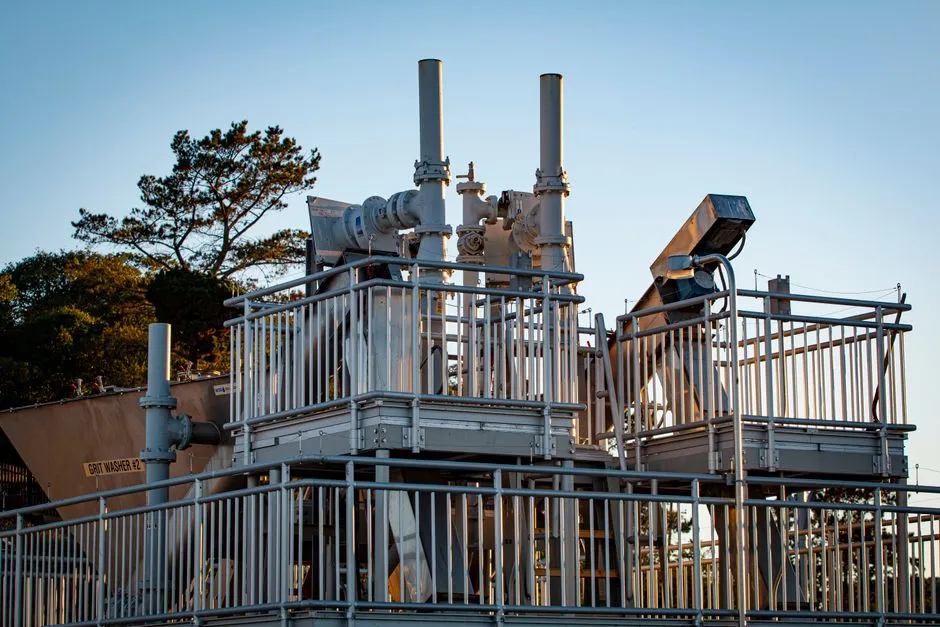
The most common 2026 design question from a NAICS 336 plant in this corridor is whether to lead with a dissolved air flotation unit or a lamella clarifier. The honest answer is that they solve overlapping but different problems, and the right call depends on what fraction of the influent load is oil versus settleable solids.
| Decision Factor | DAF (HydropureWater) | Lamella Clarifier (HydropureWater High-Efficiency Sedimentation Tank) |
|---|---|---|
| Best influent | Free and emulsified oils, low-density paint overspray, FOG | Heavy TSS (> 500 mg/L), grit, metal chips, dense sludge |
| Oil removal | 90–95% in one stage | 40–60% (oil floats but skimming is less efficient) |
| TSS removal | 70–85% with coagulation | 80–90% with coagulation and flocculation |
| Hydraulic loading | 4–25 m/h | 20–40 m/h (equivalent plate area) |
| Footprint at 25 m³/h | ~18 m² | ~6 m² |
| Sludge consistency | Float 2–5% DS, skimmed off top | Underflow 1–3% DS, scraped from plates |
| Operating cost driver | Air compressor, saturator, recycle pump | Polymer, plate-cleaning water |
| Capital cost (2026 USD) | USD 60K–220K skid, 4–25 m³/h | USD 25K–90K package, 4–25 m³/h |
For a transportation equipment plant combining oily wash water, machining coolant, and paint overspray — the typical NAICS 336 mix — a DAF-primary + lamella-polish train gives the lowest capex and the flattest O&G swings through batch-load upsets. Use the dissolved air flotation system as the primary oil-removal stage and a lamella clarifier as a polish step downstream of Cr(VI) reduction if settleable metal-hydroxide floc starts to bleed through the reactor. Use a lamella as the primary only if the stream is grit- and chip-heavy with low oil — for example, a stamping shop with no parts-washing step. Standalone DAF wins on every metric except footprint; standalone lamella wins on footprint and capital but loses on O&G.
Total 2026 turnkey pretreatment capex for a 5–25 m³/h plant typically lands in the USD 180K–520K installed band, broken down as DAF skid USD 60K–220K (or lamella USD 25K–90K), automatic chemical dosing skids USD 30K–80K, plate-and-frame filter press USD 40K–150K, EQ tankage and civil work the remainder. Add 20–30% contingency and a separate line for instrumentation, sampling manhole, and SCADA tie-in to the plant's historian.
Frequently Asked Questions
What are the 2026 ADEM-administered local discharge limits for transportation equipment plants near Redstone Arsenal?
Most plants in the Arsenal corridor discharge under ADEM Admin. Code ch. 335-6 with Huntsville–Madison County POTW local limits layered on 40 CFR Part 433 categorical standards. Typical 2026 manhole limits: pH 6.0–9.0, TSS ≤ 200 mg/L (≤ 60 mg/L where metal-finishing categorical applies), O&G 50–100 mg/L, Cr(VI) 0.1 mg/L, total Cr 1.0 mg/L, Zn 1.5–2.0 mg/L, Cd 0.1 mg/L, and temperature below 40 °C (per ADEM Admin. Code r. 335-6 and 40 CFR Part 403).
Do I need a Cr(VI) reduction step if my plant only runs iron-phosphate conversion coating?
No. Iron-phosphate coatings do not introduce hexavalent chromium into the rinse stream. Cr(VI) reduction with ferrous sulfate or sodium metabisulfite is required only if you run zinc-phosphate lines that use a chromate seal, hard-chrome plating, decorative chrome, or any process that intentionally generates Cr(VI). Even then, segregation of the Cr(VI) wastewater stream from the general plant stream is the lowest-cost design — do not mix it into equalization and try to treat the combined flow (HydropureWater field data, 2026).
How much does a turnkey 2026 pretreatment system cost for a 5–25 m³/h NAICS 336 plant in the Arsenal corridor?
For a 5–25 m³/h plant, turnkey 2026 installed capex typically lands in the USD 180K–520K band: DAF skid USD 60K–220K, lamella package USD 25K–90K if used, automatic chemical dosing skids USD 30K–80K, plate-and-frame filter press USD 40K–150K, plus EQ tankage, civil, instrumentation, and a sampling manhole tied to the plant SCADA. Add 20–30% contingency and a separate line for ADEM permit-engagement and POTW sampling manhole commissioning (HydropureWater field data, 2026).
What is the typical sampling cadence ADEM expects for a categorical 40 CFR Part 403 discharger?
Categorical Significant Industrial Users (SIUs) under 40 CFR Part 403 are typically sampled by the POTW a minimum of twice per year for all categorical parameters, with self-monitoring at frequencies set in the discharge permit — commonly monthly composite sampling for metals and weekly or daily grab samples for pH, temperature, and flow. Plants that handle Cr(VI) are usually required to monitor Cr(VI) at least monthly and to maintain reduction-process logs on file for ADEM inspection for a minimum of three years (per 40 CFR Part 403.12).
When does a plant in this corridor need a biological or MBR polish step?
MBR polish is uncommon for transportation equipment wastewater because the load is inorganic-dominant and high in metals that would foul or poison biomass. MBR makes sense only if a plant is co-treating a sanitary waste stream or has a high-COD organic load (e.g., significant paint-bake oven condensate or significant surfactant loading) that pushes BOD/COD above what chemical precipitation and filtration can carry. Otherwise, the train described above hits 2026 local limits without biology.