Why Fairhope Transportation Plants Can't Skip Pretreatment
Fairhope Utilities runs the local pretreatment program under the EPA National Pretreatment Program framework (40 CFR Part 403), with the Alabama Department of Environmental Management (ADEM) providing state oversight through Admin. Code Chapter 335-6 (source: EPA, 2024-12). Every truck-body, trailer, rail, and marine supplier discharging process wastewater to the sanitary sewer in the Fairhope/Baldwin County corridor needs a treatment train designed against both federal categorical standards and local limits.
The utility is capacity-constrained. The City of Fairhope reported a 41% population increase between 2010 and 2018, against an aging collection system where four of five major pump stations are at or above design capacity (source: City of Fairhope, 2019-02). The plant's flow-through capacity is the limiting factor on what the utility accepts from industrial users. With $8 million committed to sewer upgrades in the Five-Year Capital Improvement Plan, the operational message from Fairhope Utilities is to send weaker, more stable influent rather than slug-driven discharges that force the plant to use limited aeration storage just to stay online.
Categorical industries — those covered by 40 CFR Part 433 (Metal Finishing) and similar subparts — must meet federal effluent limits regardless of where they discharge. Non-categorical plants (most vehicle assembly and trailer fab shops) fall under ADEM Chapter 335-6 and Fairhope's local sewer use ordinance, which adopts local limits where categorical numbers are silent. Both routes require the same engineering approach: prove your effluent, sample it, and report it.
Pollutants That Drive the Treatment Train
Transportation-equipment plants generate a specific pollutant fingerprint that dictates the necessary unit operations. Four families dominate the influent profile.
Free and emulsified oils/grease. Parts-wash skids, floor washdown, and machining coolant drips drive total petroleum hydrocarbon (TPH) loading. Free oil is the easy fraction; gravity separation in a coalescing plate or CPI vessel typically pulls the stream below 50 mg/L. Emulsified oil is the hard fraction, requiring chemical breaking and a dissolved air flotation (DAF) step to reach the 10–25 mg/L range most POTWs enforce at the sewer tap.
pH excursions. Acid pickle tanks, alkaline cleaning stages, and anodizing or passivation rinses swing pH from 3 to 11 across a single shift. PLC-controlled chemical dosing is the only realistic answer for continuous compliance, as the 6.0–9.0 envelope is a hard POTW limit.
Metals. Zinc phosphate from E-coat and galvanizing rinses, hexavalent chromium from passivation, and nickel from plating all appear in this segment. Categorical standards under 40 CFR Part 433 set the federal ceiling, while local limits are typically equal to or tighter than categorical. Hydroxide precipitation at controlled pH handles the bulk; sulfide precipitation is reserved for tight zinc residuals.
High TDS and phosphates. Phosphatizing rinses carry total dissolved solids and total phosphorus in the 20–80 mg/L P range, which feeds both the utility's biological plant and any future reuse scheme. The City of Fairhope has discussed reuse-quality effluent for the Auburn University Experimental Agriculture Station and three local golf courses (source: City of Fairhope, 2019-02); phosphorus and TDS are the parameters that determine whether your effluent is compatible with that future path.
Municipalities often mirror the 3-year retention policy for maintenance and monitoring records, similar to the Fairfax County pretreatment ordinance (source: Fairfax County, accessed 2026). Fairhope Utilities' inspection cycle operates on a similar record-driven model.
The 2026 Unit-Operation Sequence That Hits Local Limits
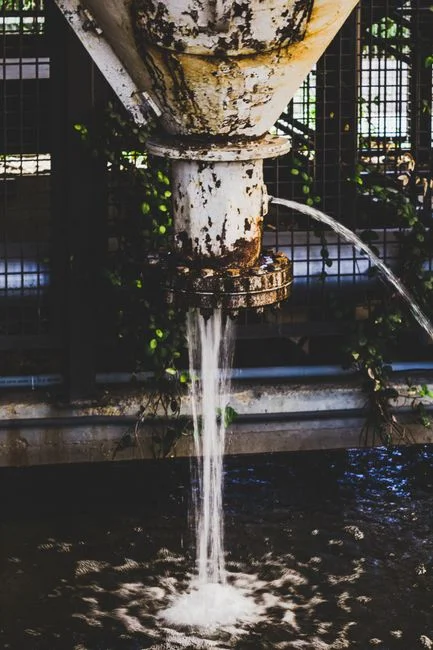
The defensible 2026 process train for a Fairhope-area transportation plant consists of six steps. Each step is justified by a specific discharge target.
Step 1 — Flow equalization. A 6–24 hour residence tank dampens slug loads from batch cleaning, parts-wash dumps, and shift-end rinses. Stable hydraulics downstream allow the rest of the train to hold setpoints. Given the utility's preference for stable discharges and its limited peak-flow storage, this is the most effective insurance on the train.
Step 2 — Oil-water separation. A coalescing plate or corrugated plate interceptor (CPI) removes free oil by gravity. Target influent to the next step is under 50 mg/L free oil, with skimmed oil going to a drum and bottom sludge routing to dewatering.
Step 3 — pH adjustment. A PLC-controlled chemical dosing skid with redundant pH probes feeds caustic or acid to hit the 6.0–9.0 envelope. Underdosing here is the most common cause of failed DAF and clarifier performance, as downstream chemistry only functions within a narrow pH band.
Step 4 — Dissolved air flotation. A dissolved air flotation system handles emulsified oil and TSS. Sized at 15–20 m/h hydraulic surface loading, DAF achieves 80–95% removal of both oil and TSS when upstream chemistry is correct. Float goes to sludge; subnatant moves to polishing.
Step 5 — Metals precipitation and clarification. Hydroxide precipitation (pH 9–9.5 for zinc, 8–8.5 for nickel) plus polymer flocculation, followed by a lamella clarifier for solids separation. Sulfide precipitation is added only when zinc residuals must land below 1 mg/L.
Step 6 — Sludge dewatering. A plate-and-frame filter press produces a 30–40% dry-solids cake for disposal, with filtrate returned to the head of the train. Cake volume and hauling cost drop significantly compared to lagoon or drying-bed handling.
Influent vs. Discharge: Parameter Table for Transportation Plants
The table below consolidates commonly observed influent ranges against the discharge envelope a Fairhope-area plant must hit in 2026. Use it as a starting spec for an RFQ and verify against your 12-month sampling data and your specific Fairhope Utilities permit letter.
| Parameter | Typical raw influent | Discharge target (2026) | Basis |
|---|---|---|---|
| pH | 3.0–11.0 | 6.0–9.0 | Local POTW limit |
| Total petroleum hydrocarbons (TPH) | 200–2,000 mg/L | ≤10 mg/L | Local limit / 40 CFR 433 |
| Free oil (grab) | up to 5,000 mg/L | ≤50 mg/L | Fairhope local limit (typical) |
| Total suspended solids (TSS) | 300–1,500 mg/L | ≤50 mg/L | Local limit |
| Zinc, total | 10–100 mg/L | ≤1.0 mg/L | 40 CFR Part 433 categorical benchmark |
| Hexavalent chromium | 0.5–20 mg/L | ≤0.1 mg/L | 40 CFR Part 433 |
| Nickel, total | 1–30 mg/L | ≤1.0 mg/L | 40 CFR Part 433 |
| Total phosphorus | 20–80 mg/L | Site-specific, often ≤10 mg/L | Local limit / reuse compatibility |
| Flow (gpm, peak) | Site-specific | Per permit | POTW allocation |
Influent values are commonly observed ranges for the transportation-equipment segment, not measured at any single site. Metals discharge targets are anchored in EPA categorical standards for metal finishing (40 CFR Part 433); local Fairhope limits may be tighter, particularly for zinc and chromium, and the controlling number is always the figure in your individual permit letter.
How to Choose DAF vs. Clarifier for Parts-Wash and Phosphate Rinse
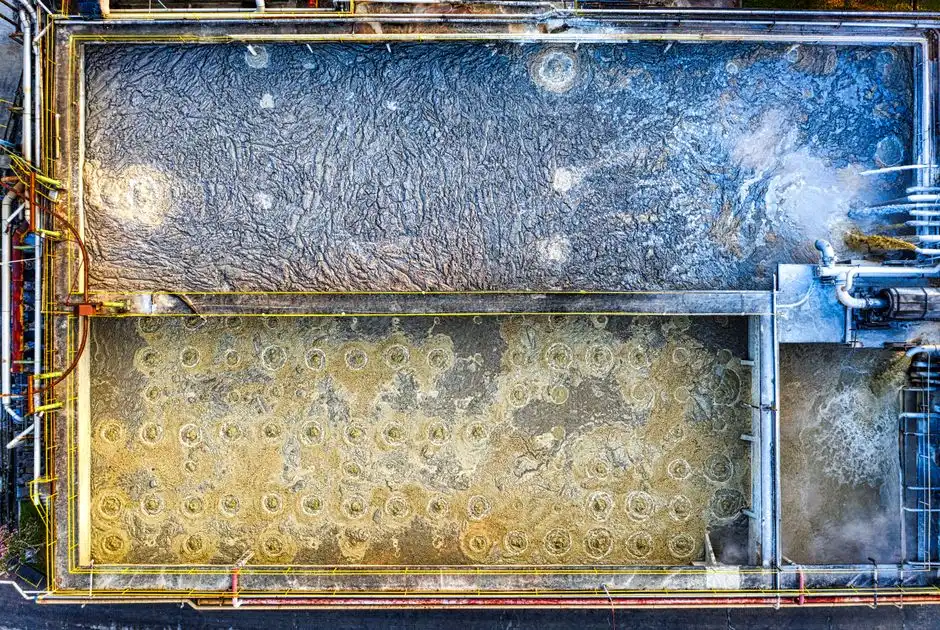
DAF and lamella clarification solve different bottlenecks in this segment. Selecting the correct technology is vital for both oil removal and chemical efficiency.
Pick DAF when free plus emulsified oil is above 100 mg/L and TSS is below 2,000 mg/L. This applies to most parts-wash streams, machining coolant blowdown, and E-coat rinsewater after pH adjustment. DAF at 15–20 m/h hydraulic loading pulls emulsified oil to 10–25 mg/L in one pass, and the float blanket protects downstream clarification from oil reburst. See our DAF vs. clarifier selection guide for transportation equipment plants for the full decision tree.
Pick lamella clarification when the stream is mostly inorganic — such as phosphate precipitation or hydroxide metals precipitation after oil removal — and the oil load is below 50 mg/L. Lamella runs at 20–40 m/h surface loading rate, offering a smaller footprint and eliminating the need for a recycle-water air saturation system. It is the lower-energy, lower-chemical option when oil is not the primary bottleneck.
Decision rule: if oil removal causes permit failure, choose DAF. If TSS reduction is the issue, choose lamella. Many plants run both in series — DAF for the oily front end and lamella for the metals precipitation polish.
2026 Compliance Checklist: Permits, Monitoring, Reporting
This list provides the minimum viable compliance posture for a Fairhope-area transportation plant in 2026.
- Determine SIU status. Significant Industrial User classification is triggered by categorical coverage (40 CFR 433 for metal finishing) or by process flow above 25,000 gpd. SIUs need an individual permit; non-SIUs still require local control mechanisms.
- Submit baseline monitoring report (BMR) and slug control plan. BMRs characterize every process stream, and the slug control plan documents how you prevent batch dumps from reaching the sewer. Typical municipal practice is 90–180 days from SIU notification to submission; check your Fairhope Utilities ordinance for the exact window.
- Install flow-proportional sampling. Automatic composite samplers tied to discharge flow are standard. Retain all records for a minimum of 3 years, with chain-of-custody on every sample (source: Fairfax County, accessed 2026).
- Schedule the annual POTW inspection. Fairhope Utilities inspects SIUs at least annually; submit a non-compliance summary report on the cadence your permit letter specifies. Self-audit quarterly against your own discharge targets.
- Track the 2026 reuse watch-item. Fairhope has discussed irrigation-quality reuse for the Auburn University Experimental Agriculture Station and three local golf courses (source: City of Fairhope, 2019-02). A treatment train that can deliver reuse-quality effluent serves as a hedge if the utility tightens local phosphorus or TDS limits.
For context on how this approach compares to other Gulf Coast segments, see our parallel 2026 pretreatment compliance guide for chemical plants, and for the receiving end of the pipe, the municipal sewage treatment engineering guide.
Frequently Asked Questions
Does every transportation plant near Fairhope need an individual pretreatment permit?
Most do, though not every plant. SIU status is triggered by categorical coverage under 40 CFR Part 433 (metal finishing) or by process flows above 25,000 gpd (per EPA, 2024-12). Even non-SIUs remain subject to local limits and slug-control requirements under ADEM Chapter 3
Frequently Asked Questions
What pretreatment limits apply to transportation plants in Fairhope, Alabama?
Transportation and vehicle maintenance facilities in Fairhope must adhere to local sewer use ordinances designed to protect the Publicly Owned Treatment Works (POTW). While specific limits vary based on individual wastewater characteristics, facilities are generally required to meet categorical pretreatment standards for metal finishing or centralized waste treatment if applicable, alongside local limits for Total Suspended Solids (TSS), Biochemical Oxygen Demand (BOD), and Oil and Grease (O&G), typically capped at 100 mg/L for petroleum-based hydrocarbons.
Do I need a Significant Industrial User (SIU) permit from Fairhope Utilities?
An SIU permit is required if your facility discharges an average of 25,000 gallons or more of process wastewater per day, contributes a process waste stream that makes up 5 percent or more of the average dry weather hydraulic or organic capacity of the POTW, or is designated as such by the Control Authority due to a reasonable potential for adverse impact on the treatment plant. Facilities that handle hazardous waste or have high-strength effluent exceeding local pollutant limits are typically mandated to secure an SIU permit to maintain regulatory compliance.
What is the typical pH range allowed for industrial discharge to the Fairhope POTW?
To prevent corrosion of collection system infrastructure and ensure biological stability at the treatment plant, Fairhope Utilities strictly enforces a pH discharge range of 5.0 to 11.0 standard units. Discharges falling outside this range require continuous monitoring and automated neutralization systems—typically utilizing sulfuric acid or sodium hydroxide—to ensure effluent is stabilized before entering the municipal sewer line.
How does a DAF system work for oil removal in a vehicle or trailer plant?
A Dissolved Air Flotation (DAF) system removes emulsified oils and suspended solids by saturating a portion of the wastewater with air under high pressure and then releasing it into a flotation tank at atmospheric pressure. The resulting microscopic air bubbles attach to oil droplets and solids, causing them to float to the surface as a "float" or sludge layer, which is then mechanically skimmed off. This process is essential for meeting pretreatment limits where gravity-based oil-water separators are insufficient to reach the required 100 mg/L threshold.
What monitoring and reporting does Fairhope Utilities require from industrial users in 2026?
Under 2026 compliance protocols, industrial users are required to submit periodic Self-Monitoring Reports (SMRs) on a quarterly or semi-annual basis, depending on their permit classification. These reports must include certified laboratory results for all regulated parameters, flow data, and documentation of any maintenance performed on pretreatment equipment. Furthermore, facilities must maintain onsite records of all sampling data for at least three years, as these are subject to inspection and audit by Fairhope Utilities' environmental compliance officers.