Why Alexandria Transportation Equipment Plants Face a DAF-vs-Clarifier Decision in 2026
Four NAICS 336xxx wastewater streams converge at the typical Alexandria transportation equipment plant — stamping lubricants and drawing compounds from press shops, water-soluble metalworking fluids from CNC machining, phosphate and nickel rinse water from metal finishing, and paint overspray washwater from coating lines — and each one tilts the DAF-versus-clarifier decision differently. Influent to pretreatment typically runs FOG 200–2,000 mg/L, TSS 500–3,000 mg/L, pH 6–9, with oils almost always emulsified rather than free (per generic metal-finishing categorical pretreatment ranges). The compliance anchor that drives the equipment choice is EPA 40 CFR §433.11, which sets daily maximums of TSS 86 mg/L, O&G 38 mg/L, lead 0.69 mg/L, zinc 2.61 mg/L, nickel 3.98 mg/L, and total chromium 2.77 mg/L for metal-finishing categorical discharges — and AlexRenew enforces these limits through its industrial pretreatment program. Alexandria's local discharge limits on zinc, nickel, and lead are tightening as industrial loadings rise, so any equipment selected today must have headroom for a stricter future envelope.
How a DAF System Actually Treats Transportation Equipment Wastewater
A DAF unit generates a cloud of 30–50 μm microbubbles by supersaturating a recycle stream with air at 60–80 psig in a saturator vessel, then releasing the pressure through a needle valve into the flotation cell (S2). The full treatment train for a typical transportation equipment stream runs coarse screening → pH adjustment to 7–8 → coagulant dosing (PAC 50–150 mg/L or alum 75–200 mg/L) → flocculant dosing (cationic polyacrylamide 1–5 mg/L) via a serpentine floc tube → floc-bubble contact zone → flotation cell where the bubble-floc aggregate floats in 3–5 minutes → paddle skimmer for the floated sludge → bottom auger for any heavy settled solids. On a typical Alexandria metalworking stream, a properly conditioned DAF delivers FOG under 25 mg/L and TSS under 50 mg/L in the clarified effluent. The Clari-DAF reference design reaches surface loading rates up to 20 gpm/ft² (~50 m/hr) and removes over 95% of suspended contaminants in municipal water service (per Wang, Farmerie & Wang, 2019 — Lenox Institute STEAM Vol. 1 No. 8, August 2019), while cutting the equipment footprint by up to 82.7% versus conventional settling. For 2026 small-to-mid plants in the 10–150 GPM range, a packaged dissolved air flotation system skid — single skid at ≤66 GPM, modular two-skid above 66 GPM — is the dominant brownfield format because it ships with PLC control, integrated saturation, and a pre-piped automatic chemical dosing skid upstream.
How Lamella and Circular Clarifiers Treat the Same Stream
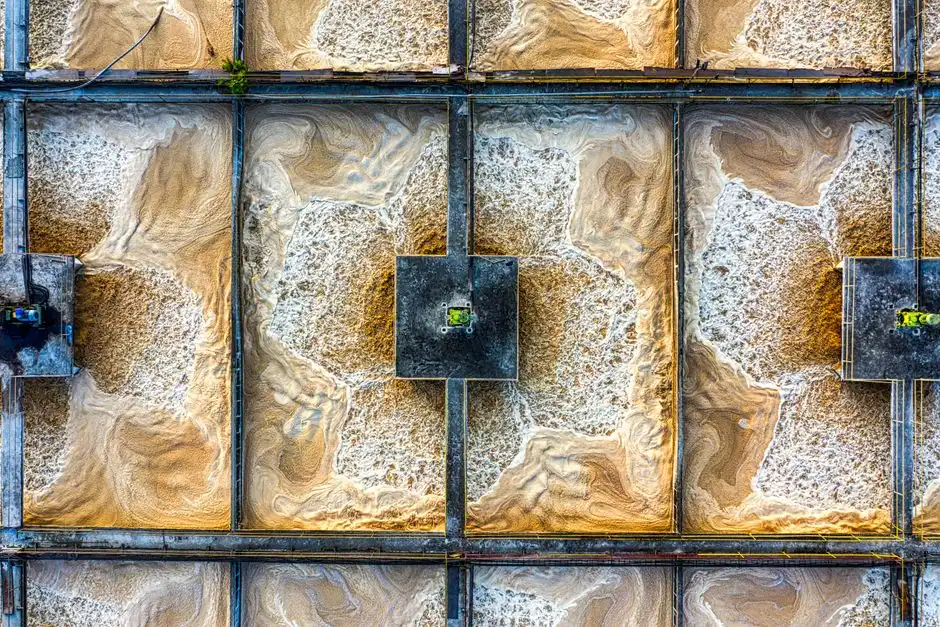
A high-rate lamella clarifier uses a pack of parallel plates inclined at 55–60° to multiply the effective settling area: the projected area equals the plan area divided by cos(θ), so a 1 m² footprint delivers roughly 1.6–2.0 m² of effective settling area. Surface loading on a well-designed high-efficiency lamella clarifier runs 20–40 m/h — about half the rate of a DAF — and the geometry works best on dense, settleable inorganic solids, not on emulsified oil. Free oil coats the plates within hours and fouls the pack; emulsified oil passes straight through because Stokes' Law settling does not apply to sub-20 μm droplets. A plain lamella is normally reserved for post-DAF polishing or for inorganic-dominated streams like the rinse-water bleed from a phosphating line. A circular clarifier is the right pick when TSS sits above 2,000 mg/L, FOG is negligible, and the plant needs a primary thickener with hydraulic capacity to 2,400 GPM (S5 Gulf States product family). The 82.7% footprint reduction that DAF offers (per Wang et al., 2019) is the single biggest reason gravity clarifiers are losing share in 2026 brownfield retrofits around the I-95/495 industrial corridor: a 1 MGD DAF cell fits in roughly 170 ft² where a comparable circular clarifier needs 1,000 ft². For a deeper read on the tradeoffs, the engineering comparison at lamella clarifier vs alternatives in 2026 lays out the same data in procurement terms.
DAF vs Clarifier: Head-to-Head Parameter Matrix
| Parameter | DAF | Lamella / Circular Clarifier | Hybrid DAF + Lamella Polish |
|---|---|---|---|
| Surface loading rate | ~50 m/hr (up to 20 gpm/ft² per Wang et al., 2019) | 20–40 m/hr (lamella); 1–2 m/hr (circular) | ~50 m/hr primary; ~20 m/hr polish |
| Footprint (1 MGD reference) | ~170 ft² — 82.7% smaller than conventional (Wang et al., 2019) | ~1,000 ft² conventional; lamella ~400–500 ft² | ~220–250 ft² |
| FOG / oil removal | 60–90% on emulsified oil; >95% on free oil | <30% — only free oil that rises unaided | 85–95% combined |
| TSS removal | 70–90% with chemical conditioning | 60–85% on settleable solids only | 85–95% combined |
| Sensitivity to flow surges | Robust with equalization basin; recycle damps hydraulic shock | Sensitive — plate pack scours, sludge resuspends | Robust; lamella polishes clarified overflow |
| Capex per GPM (relative) | Higher equipment cost; lower civil cost | Lower equipment cost; higher concrete/tank cost | Highest total; lowest compliance risk |
| Opex drivers | Polymer ($0.02–0.05/lb treated), saturator power, air | Sludge hauling, periodic plate cleaning | Polymer + hauling, offset by drier DAF float cake |
| Best influent range | FOG 200–2,000 mg/L; TSS 500–1,500 mg/L; emulsified oil | TSS >2,000 mg/L; FOG <100 mg/L; no emulsified oil | Mixed FOG + high TSS stamping/drawing streams |
| Footprint fit in <60% clarifier bay | Yes | No | Yes |
When Alexandria Transportation Equipment Factories Should Choose DAF in 2026
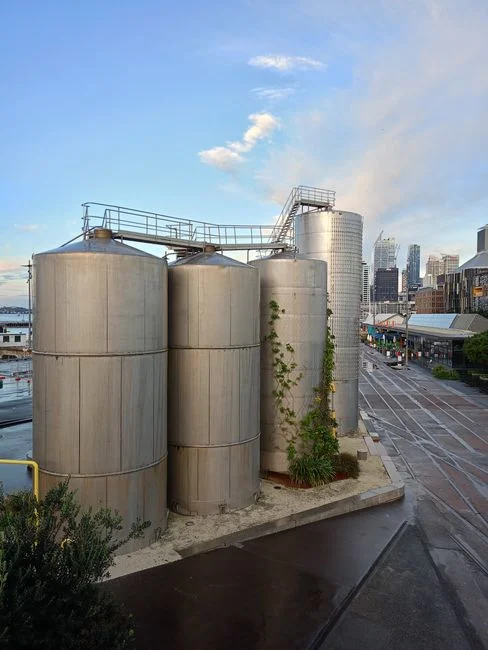
Three plant scenarios cover most of what 2026 RFPs in the Alexandria industrial corridor will look like:
- Scenario A — Parts washing and machining dominated. Influent FOG 500–1,500 mg/L, TSS under 1,000 mg/L, pH 7–9, emulsified oils from water-soluble MWF. Specify a single Compact DAF skid at the design GPM with an upstream automatic chemical dosing skid for PAC and cationic polyacrylamide. Expected effluent: FOG <25 mg/L, TSS <50 mg/L — comfortably under 40 CFR §433.11 daily maximums of 38 mg/L O&G and 86 mg/L TSS.
- Scenario B — Stamping and drawing compound with high TSS. Influent TSS 1,500–3,000 mg/L, FOG 300–800 mg/L, plus tramp drawing compound. Specify a DAF primary (for the FOG and floatable solids) followed by a lamella polish (for the dense inorganic settleables). Two-stage train; the DAF float cake goes to a small plate-and-frame filter press for cake drying, and the lamella underflow thickens before the same press. This is the configuration that meets tightening 2026 local limits on zinc and nickel in Alexandria while staying inside the EPA 40 CFR 433 metal-finishing envelope.
- Scenario C — Small job shop, <30 GPM mixed stream. Specify a packaged Compact DAF with integrated chemical conditioning, equalization basin, and PLC. No separate clarifier. Single-skid installation, plug-and-play, 7–10 day startup.
The 2026 selection logic is simple: if FOG exceeds ~200 mg/L or floor space is constrained, DAF wins; if TSS exceeds 2,000 mg/L with negligible FOG and the plant already has chemical dosing for high-rate settling, a lamella or circular clarifier wins.
Selection Checklist for 2026: Is DAF or a Clarifier Right for Your Plant?
Run this six-question field check before issuing an RFQ:
- Is free or emulsified oil the primary contaminant? If yes, DAF is the only credible primary — clarifiers underperform on emulsified oil (per the parameter matrix above).
- Is TSS >2,000 mg/L with negligible FOG? If yes, a lamella or circular clarifier is the correct primary, and DAF is not justified.
- Is floor space under 60% of what a conventional clarifier needs? If yes, DAF's 82.7% footprint advantage (per Wang et al., 2019) forces the choice.
- Does the plant have a chemical dosing skid, or budget for one? Required for DAF (coagulant + flocculant); not required for plain gravity settling.
- Will AlexRenew accept the proposed effluent quality for direct discharge? Cross-check against EPA 40 CFR 433 categorical limits (TSS 86 mg/L daily max, O&G 38 mg/L, plus metals) and AlexRenew's 2026 local limits for zinc, nickel, and lead.
- Is a sludge dewatering path in place? DAF float cake is typically 4–8% dry solids; route it to a plate-and-frame filter press for 25–35% cake solids and a 70–80% volume reduction versus liquid hauling. The engineering detail for sizing that press is covered in DAF design criteria 2026.
If questions 1, 3, or 4 force a DAF, stop evaluating clarifiers. If question 2 is the dominant driver and the stream is inorganic, stop evaluating DAF. If both apply, the two-stage hybrid is the right answer.
Frequently Asked Questions
What FOG and TSS concentrations point a transportation equipment plant toward DAF versus a clarifier?
Specify DAF when FOG exceeds ~200 mg/L or TSS sits below ~1,500 mg/L with emulsified oil present. Specify a lamella or circular clarifier when TSS exceeds 2,00
Frequently Asked Questions
Should an Alexandria auto parts plant use DAF or a clarifier for oily wastewater in 2026?
For Alexandria-based transportation equipment facilities, Dissolved Air Flotation (DAF) is generally superior for oily wastewater streams due to the high concentration of emulsified oils and greases common in metalworking fluids. While clarifiers rely on gravity settling, which is inefficient for low-density hydrocarbons, DAF utilizes micro-bubbles to float contaminants, achieving significantly higher removal efficiencies for emulsified oils typical in 2026 manufacturing processes.
What is the DAF surface loading rate versus a lamella clarifier?
DAF systems typically operate at a hydraulic surface loading rate ranging from 2.0 to 4.0 gallons per minute per square foot (gpm/ft²), depending on the chemical pretreatment effectiveness. In contrast, lamella clarifiers are designed for heavier suspended solids and operate at lower surface overflow rates, typically between 0.25 and 0.50 gpm/ft² of projected horizontal surface area, making DAF significantly more compact for high-flow, low-density applications.
Does DAF meet EPA 40 CFR 433 metal finishing discharge limits?
Yes, DAF is an industry-standard component for achieving compliance with EPA 40 CFR 433 standards. When paired with appropriate coagulation and flocculation chemistry, DAF systems effectively reduce total suspended solids (TSS) and oil and grease (O&G) to levels that allow downstream processes to meet stringent federal discharge limits for regulated metals like chromium, nickel, and zinc.
What FOG concentration requires DAF instead of a clarifier?
While clarifiers can handle influent Fats, Oils, and Grease (FOG) concentrations below 50 mg/L, concentrations exceeding 100 mg/L typically necessitate DAF technology. At these higher levels, conventional gravity clarifiers suffer from surface scum accumulation and potential carryover, whereas DAF systems are specifically engineered to skim high-concentration FOG from the surface continuously.
How much floor space does a DAF system save versus a conventional clarifier?
A DAF system typically occupies 60% to 80% less floor space than a conventional circular gravity clarifier of equivalent hydraulic capacity. Because DAF units use pressurized aeration to accelerate separation, they eliminate the need for the large, deep basins required by gravity clarifiers to achieve sufficient retention time, allowing for a much smaller physical footprint within constrained factory environments.