Why East Saint Louis Chemical Plants Are Asking the DAF-vs-Clarifier Question in 2026
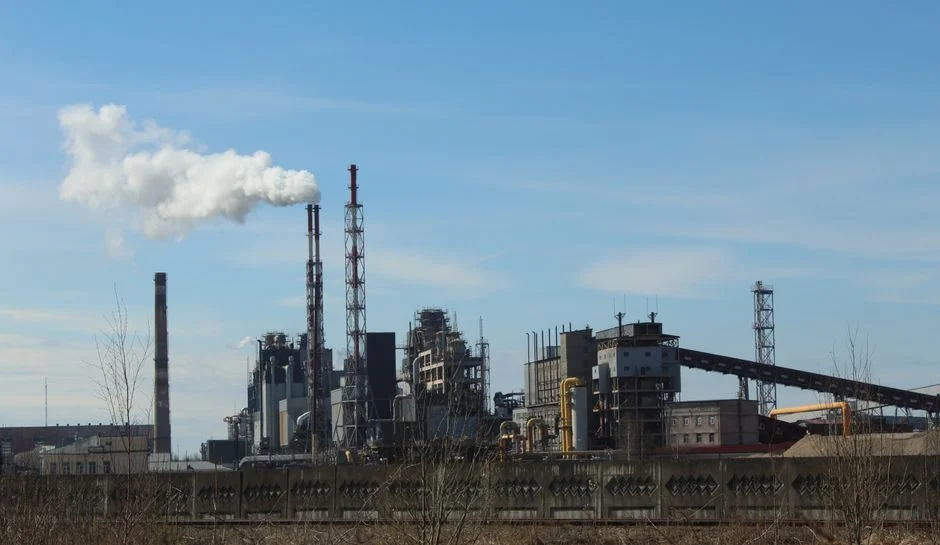
East Saint Louis and the broader Metro-East corridor host a dense cluster of legacy chemical manufacturers — organic intermediates, plastics and synthetic fibers, inorganic acids, and specialty catalysts — sited along the Mississippi for rail, barge, and process-water access. Effluent from these facilities flows to the Metro-East Sanitary District (commonly referenced as the East STP), which layers local POTW limits on top of the federal categorical pretreatment standards in 40 CFR Parts 413 (organic chemicals), 414 (inorganic chemicals), 415 (pesticides), and 433 (metal finishing). Illinois EPA continues to enforce those numeric limits in 2026, and the 40 CFR 403 general and specific prohibitions remain the floor of any defensible compliance program.
The practical question on a 2026 P&ID is no longer "clarifier or DAF?" but "which unit operation handles the bulk of the TSS, O&G, and metal load, and which one polishes?" That is a CAPEX-vs-OPEX-and-footprint call, not a technology preference. The EPA's Detailed Costing Document for the Centralized Waste Treatment Industry (S4, EPA 821-R-98-016, December 1998) treats dissolved air flotation and clarification as distinct unit processes with separate cost curves in Sections 2.2.2 and 2.8, which is the right level of granularity for a chemical plant evaluating a 2026 capital project. Local permitting, real estate cost in the corridor, and the categorical subcategory of the plant determine which curve the project lands on.
How DAF and Clarifiers Actually Work in a Chemical Plant
A dissolved air flotation (DAF) system pressurizes a sidestream of clarified effluent — typically 20–30% recycle — in a saturation tank at 60–80 psig, then releases that recycle through needle-valve nozzles at the inlet of the flotation cell. The pressure drop nucleates a cloud of 10–100 micron micro-bubbles that attach to floc, oil droplets, and fine suspended matter, lifting them to the surface as a float layer that an automatic skimmer sweeps into a trough. Per the academic review by Ross, Smith, and Valentine (S1), 80 psig dissolves 46% more air than 50 psig at 20 °C, and modern recycle systems can deliver up to 230% more dissolved air per unit volume than older full-flow designs. The smaller bubbles generated at higher pressure also carry more surface area per unit gas — which is why a well-tuned DAF routinely exceeds 99% removal on rendering and food-processing streams (S1, Table 1).
A gravity clarifier — conventional circular, rectangular, or inclined-plate ("lamella") — does the opposite: it gives the flow long enough residence time under quiescent conditions that settleable solids drop to a sludge bed under the floor. Lamella designs accelerate the process by stacking inclined plates at 55–60°, shortening the effective settling path and operating at 20–40 m/h surface loading rates versus 1–2 m/h for a conventional clarifier. The mechanism difference matters for chemical-plant feeds because many streams carry emulsified oils, surfactants, latex residues, and colloidal catalyst fines that will not settle under gravity but attach readily to micro-bubbles. The S1 acid-mine-drainage case study is instructive: a single DAF removed iron, manganese, and aluminum by 87–89% and lifted pH from ~3 to 7–9 without a separate neutralization tank. A stand-alone clarifier would not have hit those numbers on the same feed.
DAF vs Clarifier: Head-to-Head for Chemicals Wastewater
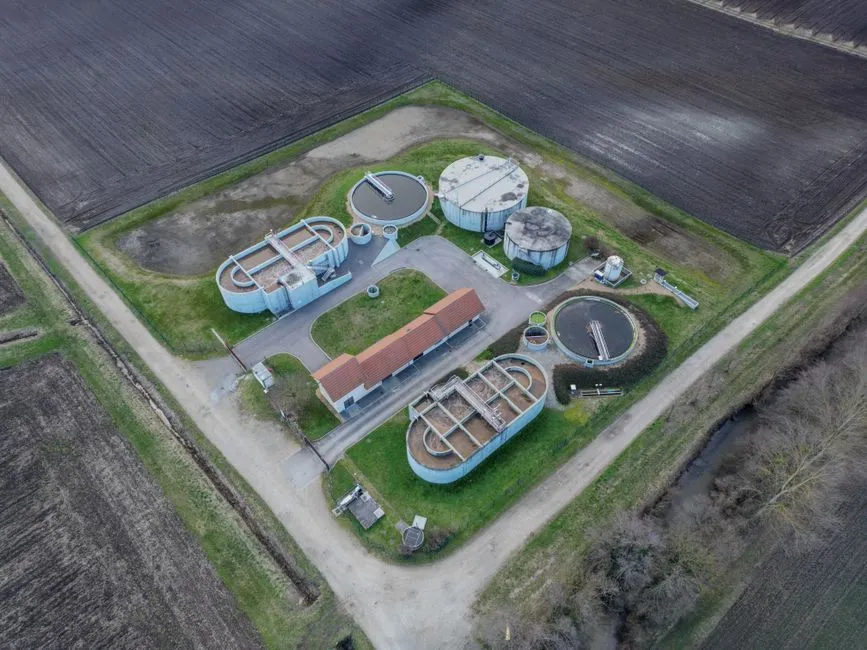
The table below compares the two unit operations on the parameters that drive a 2026 chemical-plant CAPEX decision. Removal numbers are drawn from S1 (poultry further processing, AMD, and corn-dog plants) and S2 (food-processing and mining case studies); operating and footprint bands reflect typical packaged-unit ranges used by Metro-East engineering firms.
| Parameter | DAF (recycle-flow, 60–80 psig) | Gravity / Lamella Clarifier |
|---|---|---|
| TSS removal (chemical-plant feed) | 90–99%+ (S1, S2) | 60–80% |
| O&G / FOG removal | 95–99% (S2: 95% food plant); 99%+ on 8,000 mg/L O&G (S1) | 50–70% (S2: 70% on the same stream) |
| Heavy-metal removal (Fe, Mn, Al) with pH adjustment | 87–89% in a single stage (S1 AMD case) | 40–60% without coagulant aid |
| COD reduction | Moderate (typically 30–50% on raw chemical wastewater) | Low (10–25%) |
| Footprint per m³/h | 0.6–1.0 m² (rectangular packaged units up to 500 ft² surface area per S1) | 0.3–0.5 m² for lamella; 1.5–3 m² for conventional circular |
| Hydraulic sensitivity to flow spikes | Moderate — recycle ratio buffers; but floc blanket can wash out above 1.3× design | Low for lamella; high for conventional |
| Chemical demand | High — coagulant + flocculant required for stable floc (S1) | Low–moderate; polymer often skipped for primary settleables |
| Operator skill | Higher — DAF requires consistent chemistry and bubble management | Lower — sludge raking and bed-height control are intuitive |
| Surfactant / foam sensitivity | High — excess surfactant collapses the bubble blanket | Low |
The S2 case studies frame the gap cleanly: on a high-O&G food-processing stream, DAF achieved 95% O&G removal versus 70% for a clarifier (S2); on heavy mining sediment the same clarifier delivered 90% solids reduction at lower cost. Translated to East Saint Louis chemical feeds — which usually combine both signatures — neither unit operation covers the full envelope alone. That is the technical case for a hybrid train.
When a Clarifier Beats a DAF in a Chemical Plant
Clarifiers are not obsolete in a chemical plant; they are just narrower in duty. A stand-alone lamella clarifier is the right primary when the feed is dominated by settleable inorganics — gypsum from neutralization, catalyst fines, lime slurries, calcium carbonate from scrubbing, or settled silica — and FOG is low (typically under 100 mg/L). In that envelope, a DAF would just float the same particles back into the recycle loop, consuming polymer and air with no removal benefit.
Two clarifier strengths matter for a 2026 Metro-East decision. First, lamella geometry cuts footprint by 60–80% versus a conventional circular clarifier of the same overflow rate, and it pairs cleanly as a polish step after a DAF or after chemical precipitation for metals. Second, clarifier OPEX is dominated by sludge handling, not by compressed air, recycle pumping, or polymer — a meaningful advantage at plants without a dedicated wastewater operator. The EPA CWT document (S4, Section 2.2.2) models clarification as the lower-cost O&M option in Metals Options 2 and 4 for exactly this reason: less mechanical equipment, less chemistry, and a thicker underflow (1–3% solids at the bottom of a lamella, up to ~4% with sludge recirculation) that dewaters more easily than DAF float (2–5% solids). The high-efficiency lamella clarifier is the right reference unit when the primary duty is settleable-solids removal or post-DAF polishing.
The 2026 Default: DAF Primary, Clarifier Polish
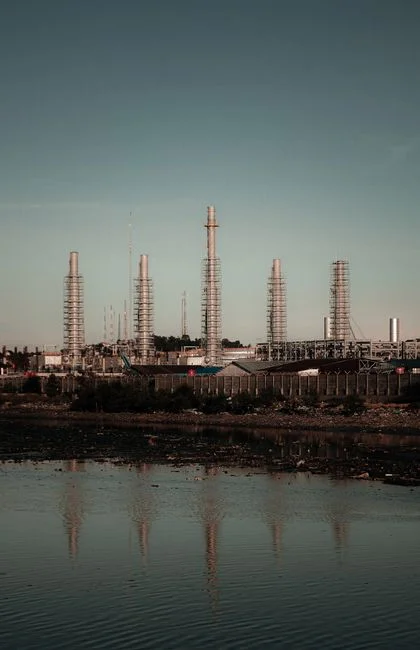
For a generic chemicals-discharge plant in the East Saint Louis corridor, the 2026 defensible default is a DAF primary plus a lamella clarifier polish, with a PLC-controlled chemical dosing skid upstream and a plate-and-frame filter press downstream. Specify the dissolved air flotation system sized to 100% of chemical plant flow plus a 20% peak factor (typical DAF range 4–300 m³/h), with an integrated flocculation tube for coagulant and flocculant addition. The floc tube is the single most important detail S1 flags as the difference between good and poor DAF performance; without it, the bubble blanket collapses under chemical-plant surfactants.
Downstream of the DAF, a high-efficiency lamella clarifier captures any carryover floc and acts as a sludge thickener before the press. This is the same dual-DAF-plus-clarifier layout the ETS poultry plant in S1 used to meet BOD, TSS, O&G, and total-phosphorus limits simultaneously, and it maps directly to a chemical plant that has to clear 40 CFR 413/414 categorical limits plus Metro-East East STP local limits. Upstream of the DAF, install a PLC-controlled automatic chemical dosing skid for pH correction, coagulant (typically PAC or alum at 50–200 mg/L), and anionic flocculant (1–5 mg/L) — jar-tested on the actual plant feed. Solids leaving the lamella underflow drop to a plate and frame filter press for dewatering to 25–35% dry solids, replacing open drying beds and the stormwater permit risk they carry.
CAPEX, OPEX, and Footprint: The 2026 Numbers
The EPA CWT Detailed Costing Document (S4) provides separate capital and O&M cost curves for DAF (Section 2.8, Figures 2-49 through 2-65) and Clarification (Section 2.2.2, Figures 2-28 through 2-32). The S4 curves are dated December 1998, so they should be treated as a structural reference — unit operations, scaling exponents, and O&M factor breakdowns — not as 2026 dollar quotes. Use ENR Construction Cost Index or RSMeans Chemical Plant cost factors to refresh them for 2026 capital planning.
| Cost / performance dimension | DAF (recycle-flow) | Lamella Clarifier |
|---|---|---|
| CAPEX driver | Surface area, recycle pump, saturation tank, skimmer, compressor (S4 Section 2.8) | Plate pack area, tankage, sludge rake; no air system |
| CAPEX band (S4 structural ranking) | Higher unit CAPEX than basic clarifier at equal flow (S4 Fig. 2-49 vs 2-28) | Lower CAPEX; gap narrows once flocculation + chemical dosing are added to the clarifier train |
| OPEX driver | Polymer, compressed air, recycle pump, float disposal (S4 Section 2.8 O&M curves) | Sludge handling, rake torque; minimal chemistry |
| Float / underflow solids | 2–5% solids in float (wetter, harder to dewater) | 1–3% underflow (up to ~4% with sludge recirculation) |
| Footprint, packaged 50 m³/h unit | ~30–50 m² rectangular; needs headroom for skimmer drive | ~15–25 m²; needs more vertical headroom for plate pack |
| Labor factor (S4 Section 2.8, Table 2-54) | Higher — operator attention to chemistry and bubble quality | Lower — visual sludge-bed control |
The directional read: a DAF primary costs more in mechanical equipment but buys the 90–99% TSS and FOG removal that closes the gap with 40 CFR 403 categorical limits. A lamella polish is cheap insurance for the 1–10% carryover and doubles as a sludge thickener in front of the filter press. For a chemical plant without a wastewater operator, the lamella's tolerance to operator error is a real OPEX hedge.
2026 Selection Checklist for an East Saint Louis Chemical Plant
- Pull a 7-day composite of TSS, O&G, COD, and metals. If O&G is above 200 mg/L or the TSS is mostly colloidal (less than 70% settleable in an Imhoff cone), lead with DAF. If settleables dominate and O&G is below 100 mg/L, lead with a lamella clarifier.
- Map the categorical subcategory. 40 CFR Part 413 covers organic chemicals; Part 414 covers inorganic chemicals. The numeric limits in those subcategories — not the 40 CFR 403 general prohibitions — set the design TSS, O&G, and metals targets. Cross-check against the Metro-East East STP local limits, which are typically tighter than the federal floor.
- Jar-test the actual feed. Per S5, jar testing is the standard way to confirm that floc will float before a DAF is purchased; if the floc does not float in the lab, the DAF will not work in the field. Run coagulant (PAC, alum, ferric chloride) and anionic flocculant sweeps; record dose, pH, and float-versus-settle behavior.
- For plants with both emulsified oils and heavy settleables, specify a DAF + lamella hybrid as the 2026 default and budget a downstream plate and frame filter press for solids. This is the same configuration used in the S1 dual-DAF pretreatment case and is the most defensible layout for an Illinois EPA or Metro-East audit.
For cross-regional context, the same selection logic applies in the chemical plant 40 CFR Part 403 pretreatment compliance guide for the Chicago region, the Trenton-area chemical plant pretreatment engineering guide, and the Cordova chemical plant pretreatment limits guide. Equipment selection principles are stable across jurisdictions; only the local limits change.
Frequently Asked Questions
Should a chemical plant in East Saint Louis choose a DAF or a clarifier in 2026?
Choose a DAF as the primary step and a lamella clarifier as the polish step. DAF delivers 90–99% TSS and FOG removal (S1, S2), which is the difference between meeting 40 CFR 413/414 categorical pretreatment limits and a Metro-East East STP permit violation. A stand-alone clarifier typically removes only 60–80% TSS and 50–70% O&G (S2). The defensible 2026 layout is a dissolved air flotation system followed by a high-efficiency lamella clarifier, with an automatic chemical dosing skid upstream and a filter press downstream.
What TSS and O&G removal can a DAF realistically hit on chemical-plant wastewater in 2026?
Well-tuned recycle-flow DAF systems deliver 90–99% TSS removal and 95–99% O&G removal on industrial feeds (S1, S2). On a high-O&G corn-dog plant stream at 8,000 mg/L O&G, a single DAF with an integrated flocculation tube cleared the load without a pre-separation step (S1). On a comparable food-processing stream, DAF achieved 95% O&G removal versus 70% for a clarifier (S2). The keys are 60–80 psig recycle pressure, integrated floc tube, and consistent coagulant/polymer dose.
When is a clarifier the right primary for a chemical plant in 2026?
A lamella clarifier is the right primary when the feed is dominated by settleable inorganics (gypsum, catalyst fines, lime slurries) and FOG is below roughly 100 mg/L. The EPA CWT Detailed Costing Document (S4, Section 2.2.2) models clarification as the lower-O&M option in Metals Options 2 and 4 for that reason. Lamella geometry cuts footprint 60–80% versus a conventional clarifier and produces a 1–3% underflow (up to ~4% with sludge recirculation) that dewaters more easily than DAF float at 2–5% solids. See the lamella clarifier 95%+ TSS removal selection guide for sizing detail.
How do 40 CFR 403 categorical standards drive the DAF-vs-clarifier decision in East Saint Louis?
40 CFR 403 sets the general and specific prohibitions that apply to all industrial discharges to a POTW; 40 CFR Parts 413 (organic chemicals) and 414 (inorganic chemicals) layer numeric effluent limits on top of 403 for chemical-plant subcategories. Those numeric limits — typically expressed as daily maximum and monthly average TSS, O&G, and metals — are what the DAF or clarifier has to clear. A stand-alone clarifier rarely meets the categorical O&G limit on a chemical feed; a DAF with chemical precipitation for metals does, which is why the 2026 default is a DAF primary plus a clarifier polish rather than either unit alone. Local Metro-East East STP limits can be tighter than the federal floor and must be checked against the categorical subcategory before equipment is selected.