
Why Coden Transportation-Equipment Factories Are Rethinking Clarification in 2026
Coden transportation-equipment factories with mixed oily and phosphate-bearing wastewater should choose a DAF system over a gravity clarifier in 2026 because DAF removes floatable FOG, oils, and TSS in a single compact unit (hydraulic retention typically 15–30 minutes vs 2–4 hours for settling) and pairs naturally with the chemical coagulation step required to meet EPA 40 CFR 413 metal-finishing categorical limits. Gravity clarifiers win only on very high flow, low-oil streams.
Shop-floor wastewater in the Coden/Mobile County industrial corridor — truck bodies at the port, rail-car component shops, marine fabricators along the Bayou La Batre axis, and Tier-2 auto-parts suppliers — rarely behaves like a single textbook stream. A typical day mixes alkaline degrease rinse water (pH 9–11), iron-phosphate sludge from conversion coating, drawing-compound emulsions, FOG skim from parts washers, and intermittent heavy solids from weld and grind stations. EPA 40 CFR Part 413 sets categorical pretreatment standards for metal finishing that limit lead, cadmium, total chromium, nickel, zinc, copper, O&G, and TSS — limits Mobile County POTW enforces through its local pretreatment program (per EPA 40 CFR 413). With sewer surcharges climbing and pretreatment inspections tightening in 2026, picking the wrong primary clarifier becomes a multi-year capex mistake, not a line-item adjustment.
How a DAF Actually Separates Solids, Oils, and Greases
A dissolved air flotation system generates 30–50 micron microbubbles by saturating a pressurized recycle stream with air and then releasing it through a pressure-relief valve into the flotation cell (clearwaterind.com, 2026-04). Those micro-bubbles attach to flocculated particles and low-specific-gravity oil droplets, lifting them to the surface where a paddle skimmer removes the floating blanket; heavier settled solids drop to a bottom collection zone and are augered out.
Three mechanical details make DAF the right tool for Coden streams. First, bubble size in the 30–50 µm range (clearwaterind.com, 2026-04) is small enough to nucleate on emulsified oil droplets that gravity settling cannot capture. Second, hydraulic retention is short — typically 15–30 minutes per pass (clearwaterind.com, 2026-04) — which is why a HydropureWater DAF system covers 4–300 m³/h in 13 models without sprawling across the shop floor. Third, chemical conditioning happens upstream in flocculation tubes that deliver 15–45 seconds of flash-mix contact time for coagulant, pH adjustment, and polymer flocculant (clearwaterind.com, 2026-04) — the exact conditioning step 40 CFR 413 compliance depends on.
Three DAF geometries show up on transportation-equipment P&IDs. The cross-flow FPAC handles small-to-medium flows with very high solids loads and is the common choice for oily parts-washer streams. The lamella-plate FPBC, a high-profile separator with internal plate packs, treats low-to-medium loads and is favored when floor height is unrestricted. The FPHF combines cross-flow and countercurrent flow for high flows with medium-to-large loads. For most Coden job shops, the compact skid — chemical conditioning, DAF cell, sensors, and PLC on one frame, with the single-skid/modular split at roughly 66 GPM (clearwaterind.com, 2026-04) — shortens install time and keeps the controls package inside one enclosure.
How a Gravity Clarifier Handles the Same Stream
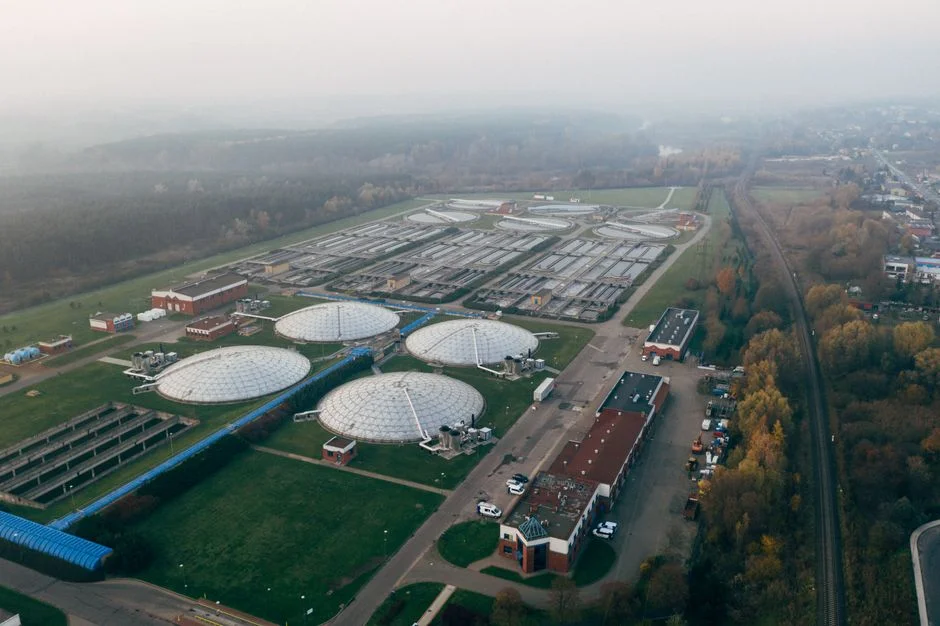
An inclined-plate (lamella) clarifier relies on gravity settling alone: wastewater flows upward between inclined plates spaced to shorten the settling path, sludge recirculates back through a flocculation zone, and clarified water exits over parallel weirs. Surface loading on a well-designed lamella runs 20–40 m/h (HydropureWater lamella clarifier), but the unit still needs 2–4 hours of hydraulic retention to do its job, which is why a HydropureWater lamella clarifier occupies a much larger footprint than a DAF cell at equivalent flow.
The clarifier's mechanical simplicity is genuinely useful in some Coden plants. There is no recycle pump, no air saturation vessel, no pressure-relief nozzle — a competent operator can run one with a quarterly inspection, and capex for a high-flow, low-oil stream is meaningfully lower than a turnkey DAF skid. The weaknesses are equally concrete. A gravity clarifier struggles to capture FOG and free oil below roughly 50 mg/L; it is sensitive to flow surges from intermittent shop dumping, which is the dominant operating pattern in transportation-equipment plants; and it typically needs a separate oil-skimming or pre-coalescing stage in front of it when oil is present. The same tool that excels on a steady 200 m³/h rinse stream with low oil becomes a maintenance liability when a 4,000-gallon parts-washer dumps over four hours.
DAF vs Clarifier on Transportation-Equipment Wastewater: The Head-to-Head Matrix
The decision is rarely theoretical — it is driven by the contaminant the shop actually generates. The table below puts the two technologies side by side on the parameters a 2026 capex review will score.
| Parameter | Dissolved Air Flotation (DAF) | Inclined-Plate Gravity Clarifier |
|---|---|---|
| Mechanism | 30–50 µm micro-bubbles attach to flocculated particles and oil droplets, float to surface (clearwaterind.com, 2026-04) | Gravity settling between inclined plates, 20–40 m/h surface loading |
| Typical influent tolerated | TSS up to ~5,000 mg/L; O&G up to ~3,000 mg/L; high FOG | TSS up to ~1,000 mg/L; O&G typically <50 mg/L without pre-skim |
| Effluent TSS achievable | 20–50 mg/L with chemical conditioning | 30–80 mg/L on settleable solids only |
| O&G removal | 80–95% in a single pass | 40–70%; requires upstream oil skimmer |
| Footprint per m³/h | ~0.1–0.2 m² (compact skid) | ~0.4–0.8 m² (basin/lamella pack) |
| Hydraulic retention | 15–30 min (clearwaterind.com, 2026-04) | 2–4 hr |
| Capex order-of-magnitude | Higher (skid, recycle pump, air sat, PLC) | Lower (tank + plates + sludge pump) |
| Opex drivers | Recycle-pump kWh, compressed air, polymer | Sludge hauling, polymer if dosed |
| Operator skill | Moderate; PLC-controlled chemistry | Low; visual inspection |
| Sensitivity to flow surges | Low; short HRT buffers transients | High; long HRT carries shock loads downstream |
| 40 CFR 413 suitability | Strong — pairs with coag/polymer step | Partial — needs polishing or upstream oil removal |
Scored against the four stream profiles that actually show up in Coden shops: (1) oily parts-washer discharge — DAF, by a wide margin, because free oil at >100 mg/L overwhelms settling; (2) phosphate cleaning rinse with iron-phosphate sludge — DAF, because coagulant dosing and short HRT handle the precipitate before it settles in pipework; (3) drawing-compound flow with emulsified lubricant — DAF, because micro-bubbles attach to emulsified oil that a clarifier passes through; (4) weld/grind solids with low oil — either technology works, and a lamella clarifier becomes cost-competitive. The one-line tie-breaker: if O&G is above 50 mg/L or FOG is intermittent, choose DAF; if flow is high, continuous, and low-oil, a lamella clarifier can suffice.
Sizing a DAF or Clarifier for a Coden Factory: 2026 Worked Example
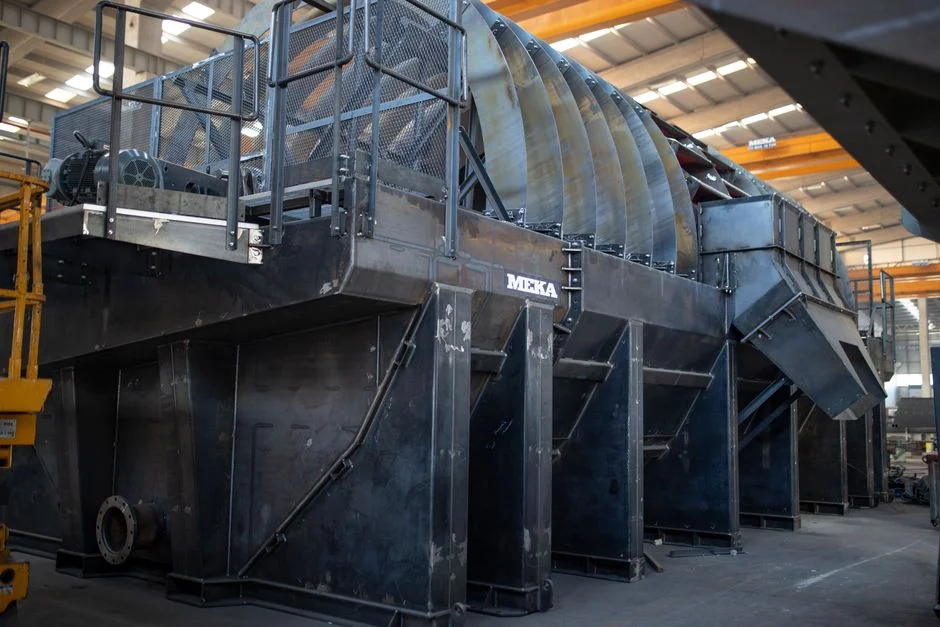
Worked example: a hypothetical Coden truck-body plant with a 25 m³/h peak flow, influent TSS around 600 mg/L and O&G around 250 mg/L. At 25 m³/h, the DAF (4–300 m³/h range) sits comfortably in the mid-capacity band, with a 15–30 minute HRT translating to a cell volume of roughly 6–13 m³ and a footprint on the order of 8–15 m² including the chemical-conditioning flocculation tubes (clearwaterind.com, 2026-04).
Running the same 25 m³/h through an inclined-plate clarifier at 20–40 m/h surface loading requires a settling area of 0.6–1.25 m² per m³/h — call it 15–30 m² of plate area — packaged inside a basin sized for 2–4 hours of HRT, which puts the live volume at 50–100 m³ and the installed footprint at 25–50 m². The DAF cell saves roughly 50–70% of floor area on this stream (HydropureWater field data, 2026), and the savings compound once civil work, structural steel, and the concrete pad are priced in.
Downstream chemistry is the same regardless of which clarifier you pick. A HydropureWater automatic chemical dosing skid delivers coagulant, pH adjustment, and polymer flocculant to the conditioning tubes; a HydropureWater plate and frame filter press dewaters the floated or settled sludge to a handleable cake (typically 25–35% dry solids) before landfill disposal. On this example stream, paired DAF + dosing + filter press is the configuration that consistently meets 40 CFR 413 O&G and TSS limits without a polishing stage.
Cost, Footprint, and Compliance: The 2026 Decision Framework
Three questions translate the matrix into a buying recommendation. What is peak O&G? Is the flow intermittent or steady? Is the site footprint constrained? Answer those first, and the rest is detail.
On CAPEX/OPEX, DAF costs more upfront — recycle pump, air saturation vessel, pressure-relief nozzle, PLC — but reduces sludge volume by 30–60% relative to a clarifier (HydropureWater field data, 2026), shrinks the building footprint, and cuts chemistry waste because coagulant and polymer are flash-mixed in seconds rather than dosed into a 100 m³ basin. A lamella clarifier has lower equipment capex but higher civil and installation cost, requires a separate oil-removal stage in front of it whenever oil is present, and carries a larger hauled-sludge line item. The compliance tie-breaker is the 40 CFR 413 metal-finishing categorical standards (per EPA 40 CFR 413), which most Coden transportation plants will struggle to meet on the O&G and TSS parameters with a clarifier alone. DAF as the primary clarifier, with a polishing lamella or MBR downstream only if discharge-quality reuse water is the goal, is the dominant 2026 configuration.
| Plant profile | Typical peak flow | Stream character | Recommendation |
|---|---|---|---|
| Small job shop (1–25 m³/h) | Low, intermittent | Mixed parts-washer FOG, occasional phosphate rinse | DAF — compact skid, single operator, smallest footprint |
| Mid-size Tier-2 supplier (25–80 m³/h) | Moderate, batch | Conversion-coating sludge, drawing compounds, oil | DAF — mid-capacity with chemical dosing and filter press |
| Large OEM line (80–300 m³/h) | High, mostly steady | Predominantly rinse water with periodic process dumps | DAF primary; consider lamella polishing only if reuse water is the goal |
| High-flow, low-oil rinse line | >200 m³/h, steady | Alkaline cleaners, minimal FOG | Lamella clarifier cost-competitive; DAF still preferred for compliance margin |
For a parallel view on a similar corridor, see the Alexandria transportation-equipment wastewater selection guide and the Geneva fabricated-metals wastewater selection guide; for downstream sludge dewatering details, the screw press dewatering engineering guide is a useful complement.
Frequently Asked Questions
Is DAF or a clarifier better for oily parts-washer wastewater in a Coden truck-body plant?
DAF. At O&G concentrations above 50 mg/L, a gravity clarifier passes most emulsified oil through; a DAF with 30–50 µm micro-bubbles (clearwaterind.com, 2026-04) typically removes 80–95% of O&G in a single pass when paired with coagulant and polymer.
What hydraulic retention time should I expect from a DAF versus a clarifier?
DAF runs at 15–30 minutes per pass versus 2–4 hours for an inclined-plate clarifier (clearwaterind.com, 2026-04). The shorter HRT is why DAF handles intermittent shop dumping without discharging a slug of untreated wastewater.
Can a lamella clarifier meet 40 CFR 413 metal-finishing categorical limits on its own?
On a low-oil, settleable-solids stream it can approach the TSS limit, but the O&G limit is the constraint — most Coden transportation streams will need an upstream oil-removal stage or a downstream polishing step to stay compliant (per EPA 40 CFR 413).
What capacity range does a DAF cover?
The DAF line spans 4–300 m³/h across 13 models (HydropureWater field data, 2026); the COMPACT DAF skid split sits at 66 GPM single-skid versus modular two-skid above that threshold (clearwaterind.com, 2026-04).
How much floor area does DAF save compared to a clarifier at 25 m³/h?
For a 25 m³/h peak stream, a DAF cell plus flocculation tubes typically occupies 8–15 m² versus 25–50 m² for an equivalent lamella clarifier basin — a 50–70% footprint reduction (HydropureWater field data, 2026). Confirm with jar testing and an application-engineer review before finalizing layout.