
Sugar Mill Wastewater Streams That Need Dewatering
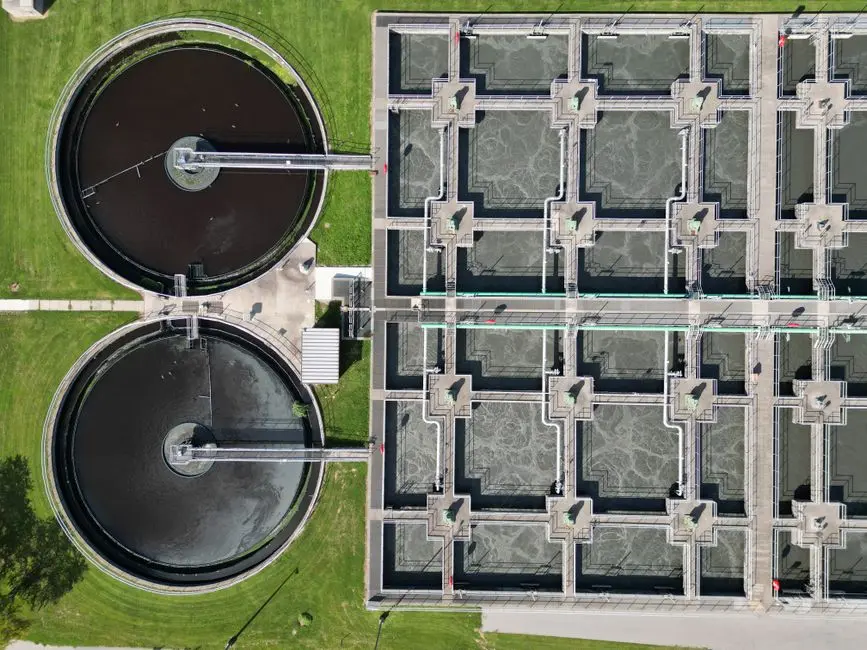
Sugar mills generate four dewatering-relevant waste streams during a 120-180 day campaign, each with distinct solids concentration, abrasivity, and fiber content that drive equipment selection. Primary clarifier underflow runs 1-3% TS with high inorganic loading — soil, sand, and grit entrained during cane washing create a slurry that wears screen baskets in 3-5 years of campaign service (per S3 abrasivity guidance). Aerobic polishing generates biological waste activated sludge (WAS) at 0.5-1.5% TS, often filamentous with poor settleability; this stream typically demands 5-8 kg polymer per tonne DS to reach acceptable cake dryness (per S3). Bagasse and pith fines from mill house washdown arrive at 2-5% TS, highly fibrous and lignin-rich — S3 documents that screw presses outperform centrifuges on this stream because the open-channel geometry does not plug on coarse fiber. Mills with biogas plants add a fourth stream: anaerobic digestate at 1.5-3% TS, partially stabilized with higher fiber retention; ClearFox field data shows 30-40% dry solids achievable on fibrous feeds (S5). All four streams must be characterized separately before equipment sizing — blended feed assumptions are the most common source of procurement failure. A DAF system for primary sugar mill wastewater treatment typically precedes the press to remove floatable solids and reduce hydraulic load.
Why Screw Press Geometry Fits Fibrous Sugar Mill Sludges
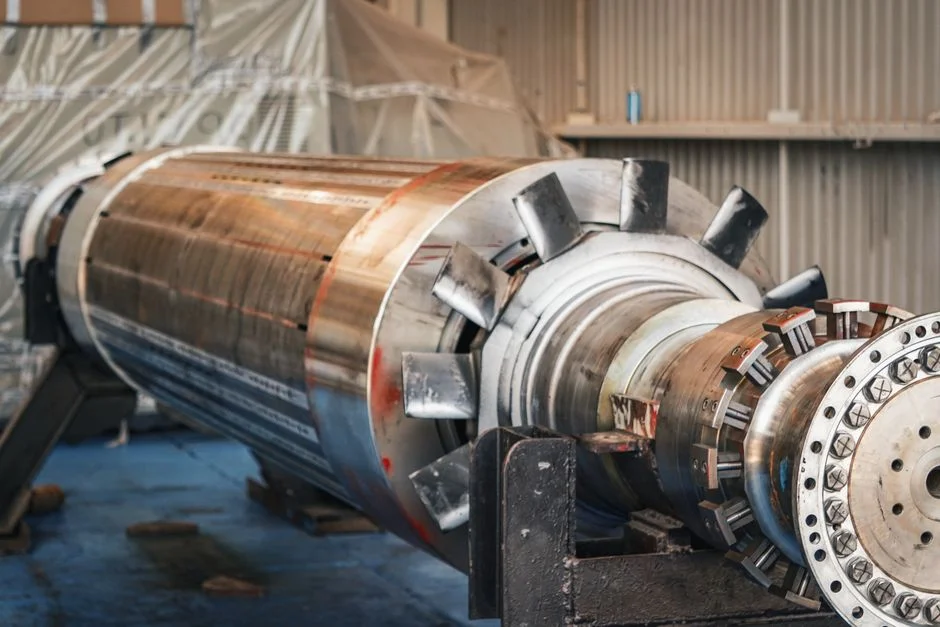
The screw press mechanism is a direct fit for the fibrous, abrasive, and variable sludge that defines sugar mill campaigns. Open-channel screw geometry — derived from the Archimedean principle — transports bagasse fibers and pith through the press without the narrow passages that cause centrifuge plugging; S3 explicitly states screw presses "handle coarse fibrous material without plugging and vibration problems" where centrifuges fail. The self-cleaning ring/screen principle in ClearFox designs (S5) prevents blinding on lignin-rich pith, a failure mode that plagues filter press cloth media on fine bagasse particles. Cone pressure control allows the operator to tune back-pressure across the campaign: primary sludge (inorganic, easily compacted) tolerates higher pressure than WAS (compressible, biological), and the Vincent KP-16 operating at 80psi (S2) demonstrates the range available in commercial units. Continuous 24/7 operation matches the sugar mill shift schedule — no batch cycle downtime, no cloth washing intervals, no restart surge loads. Gentle shear through the screw preserves fiber structure in the cake, which has direct revenue implications: Vincent's sugar beet installation sells press cake as cattle feed at $12/ton (S2), a revenue stream destroyed if the press shatters fiber into filtrate. Integration with an automatic polymer dosing system for screw press operation keeps flocculation consistent across the 24-hour cycle.
Performance Benchmarks: Screw Press vs Filter Press vs Centrifuge for Sugar Mills
Equipment selection in a sugar mill is not a generic municipal decision — fibrous feed, campaign hydraulics, and cake end-use all shift the calculus. The table below compares the three dominant dewatering technologies against criteria that matter at a sugar mill: cake dryness for boiler fuel or compost, energy cost per ton DS, tolerance for fibrous feed, footprint in an existing mill house, polymer demand, idle tolerance during 6-8 month shutdowns, and capital cost relative to hydraulic capacity.
| Criterion | Screw Press | Filter Press (Chamber/Membrane) | Centrifuge (High-Speed) |
|---|---|---|---|
| Cake solids (% TS) | 15-22% (S3) | 25-35% | 20-28% (S3) |
| Energy (kWh/t DS) | 0.5-2.0 (S3) | 5-15 | 30-80 (S3) |
| Fibrous sludge handling | Strong — open channel passes fiber (S3) | Moderate — cloth wear/blinding risk on pith | Weak — plugging and vibration (S3) |
| Footprint (per unit) | 1.5-4 m L × 0.5-1.5 m D (S3) | 2-3× larger for equivalent throughput | Similar footprint; requires vibration isolation |
| Polymer (kg/t DS) | 3-8 (S3) | 2-5 | 2-5 (S3) |
| Seasonal idle tolerance | High — simple preservation protocol | Moderate — cloth degradation if unwashed | Low — bearing/seal risk after idle |
| CapEx (relative) | Baseline | +10-15% for equivalent hydraulic capacity | +20-30% for equivalent capacity |
| Operation mode | Continuous 24/7 (S5) | Batch cycle; cake discharge interval | Continuous; high-speed rotating elements |
Filter press wins on cake dryness — a plate and frame filter press for higher cake solids delivers 25-35% TS, useful when the cake goes to a boiler fuel blend requiring low moisture. Screw press wins on energy, continuous operation, and fiber handling. For deeper specification context, the sludge dewatering system design criteria 2026 engineering guide covers design loads and hydraulic margins.
Sizing for Seasonal Campaign Peaks — Avoid the 3-6x Undersizing Trap
The most expensive specification error in sugar mill dewatering is sizing the screw press for 24-hour average sludge flow instead of peak blowdown rate. Municipal plants draw secondary clarifier sludge over a 4-8 hour window, producing instantaneous flows 3-6× the daily average; sugar mill primary clarifier blowdown cycles during campaign reproduce the same hydraulic shape. A 5,000 TCD (tonnes cane per day) mill generates 500-800 m³/day of wastewater, with primary sludge averaging 20-40 m³/day — but during a 6-hour blowdown window, instantaneous sludge flow hits 60-120 m³/day equivalent. Specify the screw press at peak blowdown hydraulic capacity, not at the daily average, and include a variable speed drive to throttle back during low-flow periods between blowdowns. Redundancy matters: two 50% units or three 33% units provide campaign protection and allow single-unit operation off-season when only digestate needs dewatering. For capacity check, ClearFox models handle up to 420 kg DS/hr (S5); a blended feed of 100 m³/day at 2% TS equals 2,000 kg DS/day or ~83 kg DS/hr — a single mid-range unit covers the load with margin for peak surges.
Polymer Program: The Hidden Cost Driver (50-65% of Variable O&M)
Polymer is the single largest variable operating cost on a screw press — S3 places it at 50-65% of variable O&M — and generic jar tests on municipal sludge will not predict the optimal program for a sugar mill. Sludge blend varies during campaign: primary clarifier underflow (inorganic, low charge demand) behaves differently from WAS (high charge demand, filamentous) and bagasse fines (fiber interference with floc formation). S3 states explicitly that the "optimal polymer type (cationic charge density and molecular weight) and dose for a given sludge cannot be predicted reliably from generic literature." The procurement-grade protocol is bench-scale screening: test 3-5 candidate polymers at 3 dose points each on fresh blended sludge sampled at campaign start, mid-campaign, and end. Dosing system precision is the second lever: an automatic polymer dosing system for screw press operation maintaining ±2% dose accuracy prevents overdosing. Digestate dewatering typically requires 30-50% less polymer than raw biosolids — factor this into the blended feed optimization before specifying pump capacity.
Integration with Anaerobic Digestion — Digestate Dewatering Specifics
More than 60% of large sugar mills operate anaerobic digesters for biogas recovery, and digestate dewatering has different design targets than municipal biosolids. Digestate feed typically arrives at 1.5-3% TS with 60-70% VS and high fiber retention; screw presses reach 20-25% TS cake on this stream (ClearFox reports 30-40% on highly fibrous feeds per S5) at lower polymer demand of 2-4 kg/t DS. Filtrate quality is critical because it returns to the digester head — specify screen basket opening at 0.5-1.0 mm to balance solids capture (TSS <500 mg/L, COD <2,000 mg/L target) against blinding risk on pith fiber. A heat-recovery opportunity is often missed: screw press filtrate exits at 35-40°C and can pre-heat digester feed, recovering 15-20% of digester heating energy. Cake end-use drives moisture target: a 65-75% moisture cake (Vincent KP-16 achieved 76-78% per S2) suits boiler fuel blending or compost. Mills evaluating biological treatment upstream should reference the DAF design criteria for industrial wastewater guide for primary clarification integration. For high-organic load streams requiring a downstream biological step, an MBR integrated wastewater treatment configuration upstream of the digester tightens the overall mass balance.
Procurement Checklist: 10 Specifications Your RFQ Must Define
A complete RFQ prevents scope gaps, change orders, and post-commissioning performance disputes. The table below distills the specification set every sugar mill screw press RFQ must define before vendor selection.
| # | Specification | Requirement to Define |
|---|---|---|
| 1 | Design hydraulic capacity | Peak campaign m³/hr (not daily average), with 20% margin |
| 2 | Design solids loading | kg DS/hr at peak; specify sludge blend ratio (primary:WAS:bagasse:digestate) |
| 3 | Target cake solids | % TS minimum — 18% for boiler fuel blend, 22% for landfill, 25%+ requires filter press |
| 4 | Screen basket opening | mm (0.5 / 0.75 / 1.0) — require blinding test on actual sludge |
| 5 | Cone pressure range | psi/bar; Vincent KP-16 reference at 80psi (S2) |
| 6 | Materials of construction | 304 / 316 / duplex for chloride exposure (molasses); abrasion-resistant coatings for grit |
| 7 | Polymer dosing integration | Neat polymer make-down, aging tank, dosing pump redundancy |
| 8 | Controls and monitoring | Torque / speed / pressure feedback, remote monitoring (ClearFox S5), SCADA interface (Modbus/Profibus) |
| 9 | Maintenance access | Screen basket removal <2 hr, screw flight inspection port |
| 10 | Preservation protocol | Nitrogen purge, lubrication schedule, seal protection for 6-8 month off-season idle |
Each line item maps to a vendor scope decision; omitting any of them creates a bid clarification cycle that delays procurement. The 20% hydraulic margin and the bench-scale blinding test are the two items most often skipped — both are the leading causes of post-installation underperformance.
Frequently Asked Questions
Can a screw press handle bagasse pith without clogging?
Yes — open-channel screw geometry and self-cleaning rings (ClearFox S5) prevent plugging on fibrous material. Centrifuges fail on this stream; S3 explicitly notes the plugging and vibration problems that shorten centrifuge maintenance intervals on coarse fiber feeds.
What cake solids can I expect on sugar mill primary + WAS blend?
15-22% TS typical on a blended primary + WAS feed (per S3). Digestate alone reaches 20-25% TS; 25%+ combined dryness requires a plate and frame filter press for higher cake solids. For high-organic waste streams with similar dryness targets, the filter press sizing for high-organic wastewater guide covers the alternative technology.
Frequently Asked Questions
Can screw press handle bagasse pith without clogging?
Yes, modern screw presses are engineered to handle high-fiber loads like bagasse pith, provided they are equipped with high-torque, variable frequency drives (VFDs) and specialized wedge-wire screen profiles. The mechanical design utilizes a tapered screw geometry that exerts progressive compression, preventing the fibrous material from bridging or blinding the screen surface.
To ensure consistent operation, machines processing high-pith influent should utilize automated spray-bar systems and internal screen-cleaning brushes to remove residual fines that can cause drainage resistance. Operating at lower screw speeds—typically between 0.5 and 2.0 RPM—is essential to prevent premature fiber matting and clogging during high-solids loading scenarios.
What cake solids percentage for sugar mill primary + WAS blend?
For a typical blend of primary sludge and Waste Activated Sludge (WAS) derived from sugar mill wastewater treatment, a screw press will generally produce a cake solids content ranging from 18% to 26%. The final result is highly dependent on the ratio of WAS to primary solids, as WAS is significantly more difficult to dewater due to its extracellular polymeric substance (EPS) content.
In scenarios where the primary sludge component exceeds 60% of the total mass, cake solids often reach the higher end of the 22-26% range. If the blend is WAS-dominant, operators should expect lower throughput and cake solids closer to 16-18%, necessitating precise chemical conditioning to maintain consistent discharge quality.
How to size screw press for seasonal sugar campaign peaks?
Sizing for seasonal peaks requires a design based on the maximum daily hydraulic and solids loading rates encountered during the peak crushing season, rather than annual averages. Engineers should calculate the peak flow rate using a peaking factor of 1.5 to 2.0 times the average flow to ensure the screw press capacity is not exceeded during high-throughput periods.
It is standard practice to implement a modular installation approach, utilizing at least two parallel units to ensure redundancy. This allows the facility to run a single unit during off-peak periods for energy efficiency, while activating the second unit during the campaign peak to maintain solids capture rates without compromising discharge quality.
Is polymer dosing mandatory for sugar mill screw press?
Polymer dosing is essential for achieving acceptable capture rates and cake dryness in sugar mill applications, particularly when dealing with biological solids or fine colloidal particles. Without chemical conditioning, the small particles in sugar mill effluent will pass through the screen openings, resulting in high filtrate suspended solids and poor dewatering performance.
Cationic emulsion polymers are typically required, with dosage rates ranging from 3 to 8 kg of active polymer per dry metric ton of solids. Precise dosing control via an automated feed system is mandatory to account for the fluctuating solids concentration characteristic of seasonal sugar production cycles.
Screw press vs filter press for bagasse boiler fuel preparation?
The choice between a screw press and a filter press depends on the required dryness for boiler combustion efficiency. A filter press typically achieves 35-45% cake solids, which is superior for immediate boiler feed, but it operates as a batch process, requiring significantly more labor and space for installation.
A screw press provides a continuous process with lower energy consumption and minimal operator intervention, usually yielding 20-28% solids. While the screw press produces a wetter cake that may require supplemental drying, its ability to integrate into a continuous production flow makes it the preferred choice for facilities prioritizing high-volume throughput and reduced maintenance over maximum instantaneous dryness.