
Why This Decision Matters for Nanafalia Mining Operations in 2026
Most Alabama mining permits are currently undergoing renewal cycles, with the 2026 design window serving as the critical juncture for facilities to lock in long-term compliance strategies. For operations in Marengo County, the Nanafalia area necessitates a precise understanding of ADEM Admin Code r. 335-6-6, which mandates strict effluent quality for discharges into the Tombigbee River basin. Typical discharge requirements include a monthly average TSS of ≤30 mg/L, Total Iron (Fe) ≤3.0 mg/L, and Total Manganese (Mn) ≤2.0 mg/L, with a pH range strictly maintained between 6.0 and 9.0.
Selecting the wrong primary treatment technology carries significant financial risk. A misaligned process can lead to permit violations, which carry potential civil penalties ranging from $25,000 to $50,000 per day. Beyond regulatory exposure, choosing a system incompatible with your specific solids profile can increase operational expenditures (OPEX) by 200–300% due to the need for excessive chemical coagulants to force separation. The ALR00000 general permit requires that facilities account for stormwater commingling, often necessitating a design that accommodates a 10-year/24-hour storm event. Engineers evaluating these systems should consult a comprehensive US mining pretreatment compliance guide to ensure that their selected equipment aligns with both current ADEM standards and future loading projections.
Mining Wastewater Physics: Why Metal Hydroxides Behave Differently Than FOG
Metal hydroxide flocs, such as Fe(OH)₃ and Al(OH)₃, exhibit a specific gravity ranging from 2.5 to 4.0, which dictates a rapid settling velocity governed by Stokes' Law. Dissolved air flotation (DAF) systems utilize micro-bubbles (30–50 µm) designed specifically for low-density contaminants like Fats, Oils, and Grease (FOG) with a specific gravity typically <1.2. Because metal hydroxides are hydrophilic and high-density, DAF micro-bubbles demonstrate a bubble-particle attachment efficiency of less than 20%, rendering them fundamentally unsuitable as a primary removal mechanism for dense mining precipitates.
Acid mine drainage (AMD) treatment typically involves pH adjustment to the 8.5–10.5 range using lime or caustic, which induces the precipitation of metal hydroxides. This process generates dense, crystalline flocs that thrive in a lamella clarifier for mining wastewater. These units operate effectively at surface loading rates of 20–40 m/h. Unlike DAF systems, which often struggle when influent TSS exceeds 2% solids, a clarifier with an integrated sludge hopper can manage the high-solids loading characteristic of mine dewatering, which frequently fluctuates between 500 and 5,000 mg/L. By utilizing internal sludge recirculation, operators can achieve a 30% reduction in coagulant consumption, as the recycled solids act as seed nuclei to promote faster, larger floc growth compared to the single-pass chemistry required by flotation systems.
Head-to-Head: DAF vs Lamella Clarifier for Mining Applications
The choice between a gravity-based system and a flotation-based system is primarily determined by the density and buoyancy of the target pollutants. While a DAF system for low-SG contaminants is superior for emulsified oils, the lamella clarifier remains the standard for metal hydroxide removal due to lower mechanical complexity and superior solids handling at high density.
| Parameter | Lamella Clarifier | DAF System |
|---|---|---|
| Primary Removal Mechanism | Gravity + Plate Settling | Micro-bubble Attachment |
| Target Specific Gravity | > 2.0 (Hydroxides) | < 1.2 (FOG/Organics) |
| Footprint (250 GPM) | ~400 ft² | ~750 ft² (incl. pressurization) |
| Sludge Concentration | 2–5% (High Density) | 1–3% (High Volume) |
| Chemical Dosing | Lower (Recirculation) | Higher (Polymer-dependent) |
| Moving Parts | Minimal (Rake only) | High (Pumps/Skimmers) |
From an OPEX perspective, a 250 GPM clarifier typically costs $45,000–$65,000 annually to operate, covering basic chemical dosing and power. A DAF system of similar capacity often incurs $70,000–$100,000 annually, driven by the continuous operation of 15–25 HP pressurization pumps and the higher polymer requirement to maintain float stability. For facilities in Nanafalia, where winter temperatures can drop to 38°F, the lamella clarifier provides more stable performance; DAF efficiency can be negatively impacted by temperature-induced viscosity changes that reduce bubble rise rates.
Three Nanafalia Flow Scenarios: Which Technology Fits
Matching the equipment to the specific mining flow and load ensures that capital expenditures remain aligned with operational necessity. For small-scale quarry operations (Scenario A, 50 GPM), a package lamella unit provides a cost-effective ($120K range) solution that meets ADEM limits with minimal maintenance. In medium-size processing facilities (Scenario B, 250 GPM), the integration of a PLC-controlled chemical dosing skid allows for precise control of lime and polymer, ensuring that the clarifier underflow is consistently thick enough for efficient processing in a sludge dewatering filter press.
| Flow Scenario | Recommended Tech | Rationale |
|---|---|---|
| Small (50 GPM) | Package Lamella | Low footprint, minimal operator attention. |
| Medium (250 GPM) | Lamella + Recirculation | 30% coagulant savings; high-density sludge. |
| Large (600 GPM) | Lamella + Equalization | Handles storm surge without CAPEX bloat. |
Large-scale operations (Scenario C, 600 GPM) should prioritize a clarifier paired with a bypass equalization tank. Attempting to manage 600 GPM peaks with DAF would require multiple parallel flotation units, increasing the capital investment by a factor of three compared to a single large-footprint clarifier. DAF should be reserved only for secondary polishing in facilities where truck wash or vehicle maintenance generates significant emulsified oils.
Integration Touchpoints: Upstream Precipitation and Downstream Polishing
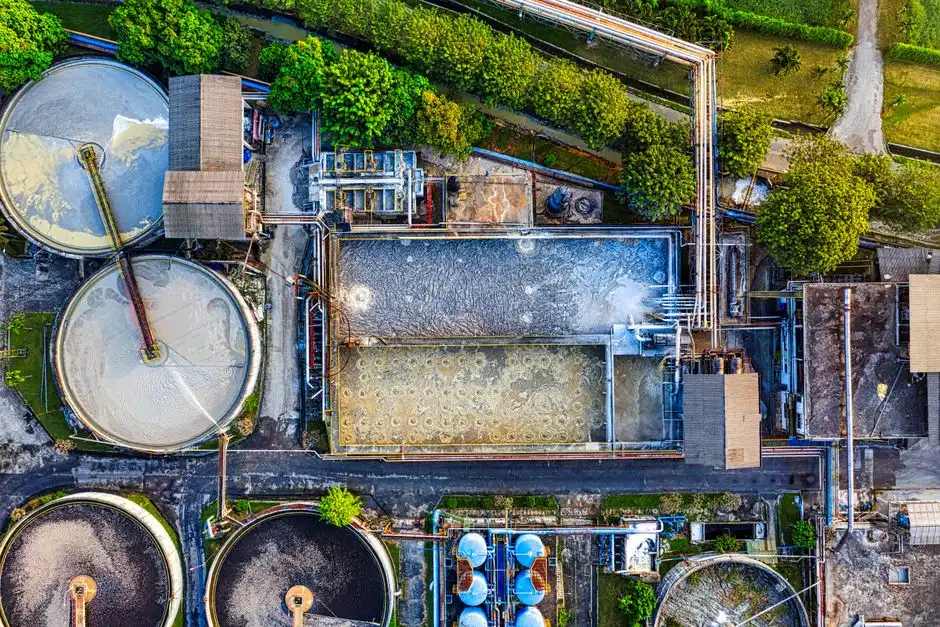
A primary clarifier is only as effective as the chemical conditioning that precedes it. Upstream of the clarifier, raw wastewater must undergo rapid mixing followed by 15–45 seconds of flocculation. The use of a PLC-controlled chemical dosing skid is essential for managing the variable pH swings typical of mining processes, ensuring accurate injection of ferric chloride or polymers. For downstream polishing, clarifier effluent can be passed through a multimedia filter to achieve an SDI <3, preparing the water for potential reuse or final discharge. The underflow from the clarifier should be thickened to 8–12% solids before being processed through a plate and frame filter press. This approach minimizes landfill disposal volume and ensures the facility remains well within the ADEM-mandated metals discharge limits.
Vendor RFP Checklist: What to Specify for Alabama Mining Service
Procurement managers should ensure that any vendor RFP includes specific performance and environmental requirements to avoid lifecycle cost surprises. Key specifications include:
- Design Flow: Clearly define average, peak, and storm-surge GPM, including anticipated influent TSS and metal concentrations for each scenario.
- Materials of Construction: Specify 304 or 316 stainless steel for any equipment exposed to acid mine drainage (AMD) to prevent premature corrosion.
- Controls: Require a PLC with Modbus/TCP compatibility for integration into existing plant SCADA systems.
- Performance Guarantee: Demand a guarantee of TSS ≤15 mg/L at design flow and metals removal at ≤50% of the permit limit.
- Support: Require a 2-year recommended spare parts list and a commitment to domestic stocking for critical components.
Frequently Asked Questions
What is the typical TSS removal efficiency for a lamella clarifier in mining applications?
A properly operated lamella clarifier can consistently achieve 85–95% TSS removal for metal hydroxide precipitates. By maintaining surface loading rates between 20–40 m/h and utilizing proper flocculant dosing, facilities can reliably meet the ADEM TSS limit of 30 mg/L, even during high-flow events.
Can a DAF system handle the high-density solids produced by lime-based metal precipitation?
No. DAF systems are designed for solids with specific gravity <1.2. Metal hydroxides (SG 2.5–4.0) will settle in the bottom of a DAF tank rather than float, leading to sludge accumulation and potential mechanical failure of the skimmer or recirculation pumps. Gravity sedimentation is the industry standard for these high-density wastes.
How does sludge recirculation affect chemical dosing in a lamella clarifier?
Sludge recirculation introduces pre-formed floc into the reaction zone, which acts as a catalyst for larger, denser particle growth. This process typically allows for a 30% reduction in coagulant dosage compared to non-recirculating systems, significantly lowering the annual chemical expenditure for the facility.
Related Equipment
- lamella clarifier for mining wastewater — specifications, capacity range, and technical data