Why Fabricated Metals Wastewater Demands a Different Primary Treatment Approach
Fabricated metals wastewater contains a complex, three-fraction pollutant profile consisting of heavy settleable solids, light colloidal particles, and dissolved metal ions that cannot be effectively separated by a single conventional sedimentation process (source: EPA-821-R-03-001). For Johnston fabricated metals shops, DAF outperforms gravity clarifiers on emulsified oils, fine metal hydroxides, and chelated metals (92-98% TSS removal vs 85-90%), while lamella clarifiers handle heavy settleable solids at lower OPEX. Most 50-500 GPM facilities choose COMPACT DAF (≤66 GPM single skid) or FPBC with chemical pretreatment to meet Iowa DNR pretreatment limits. When evaluating a DAF or clarifier for fabricated metals wastewater in Johnston, United States: which should factories choose in 2026? The choice depends on matching equipment-level capabilities to the specific physical-chemical makeup of your plant's raw discharge.
Typical fabricated metals wastewater contains three distinct contaminant fractions. The first is the heavy settleable fraction, which includes grinding fines, scale, and heavy metal hydroxides larger than 50 μm. The second is the light or colloidal fraction, comprising emulsified cutting fluids, soaps, and chelated metals ranging from 1 to 50 μm. The third is the dissolved fraction, containing free metal ions such as hexavalent chromium, nickel, zinc, and copper that require chemical precipitation before physical separation. Gravity clarifiers excel at removing the heavy first fraction but fail to capture the light and colloidal fractions. Conversely, dissolved air flotation (DAF) systems capture both the first and second fractions via microbubble attachment, though they require chemical conditioning to handle dissolved metals.
Johnston, Iowa metal shops (typically classified under NAICS 332) generally operate at flow rates between 50 and 500 GPM. These facilities face influent streams characterized by total suspended solids (TSS) of 200 to 2,000 mg/L, fats, oils, and grease (FOG) of 50 to 500 mg/L, and severe pH swings ranging from 2 to 11 caused by batch dumps from acid pickling and alkaline cleaning lines. For shops dealing with heavy grit alongside light oils, installing DAF systems for metal fabrication wastewater ensures both fractions are managed. Conversely, a dedicated lamella clarifier for heavy solids settling is more appropriate when the stream is free of emulsified coolants.
Contaminant Profile: What Johnston Metal Shops Actually Discharge
Typical metal finishing effluent from Iowa machining and assembly operations contains average zinc concentrations of 5 to 50 mg/L and total suspended solids (TSS) ranging from 500 to 1,500 mg/L (source: Iowa DNR pretreatment records, 2025-11). Managing these concentrations requires a clear understanding of the raw influent chemistry. High concentrations of emulsified coolants and lubricating oils generate a stable emulsion that cannot settle by gravity alone, requiring chemical emulsion breaking prior to clarification.
the presence of chelated metals—often bound by ethylenediaminetetraacetic acid (EDTA), nitrilotriacetic acid (NTA), or citric acid complexes from cleaning baths—prevents standard hydroxide precipitation. These complexes require specialized treatment, such as breakpoint chlorination or organosulfide precipitant dosing (e.g., dithiocarbamates), to break the metal-ligand bonds before the metals can be floated or settled. Because metal fabrication facilities operate on batch production schedules, waste streams are highly variable. Process lines typically discharge in 4-to-8 hour cycles, creating hydraulic surges that can reach 3 to 5 times the average daily flow rate. This makes upstream equalization sizing critical to prevent hydraulic short-circuiting in the primary treatment unit.
| Contaminant Parameter | Typical Influent Range (mg/L) | Physical State / Separation Challenge | Primary Treatment Target |
|---|---|---|---|
| Total Suspended Solids (TSS) | 500 – 1,500 | Particulate, colloidal, and precipitated hydroxides | < 50 mg/L |
| Fats, Oils, & Grease (FOG) | 100 – 400 | Emulsified cutting fluids, machine lubes, coolants | < 15 mg/L |
| Zinc (Zn) | 5 – 50 | Dissolved ions and precipitated hydroxides | < 1.5 mg/L |
| Nickel (Ni) | 10 – 100 | Dissolved ions and chelated complexes | < 2.0 mg/L |
| Copper (Cu) | 2 – 20 | Dissolved ions and chelated complexes | < 1.0 mg/L |
| pH Range | 3.0 – 11.0 Standard Units | Fluctuates based on acid/alkaline wash dumps | 6.0 – 9.0 Standard Units |
DAF vs Lamella Clarifier: Head-to-Head Removal Performance
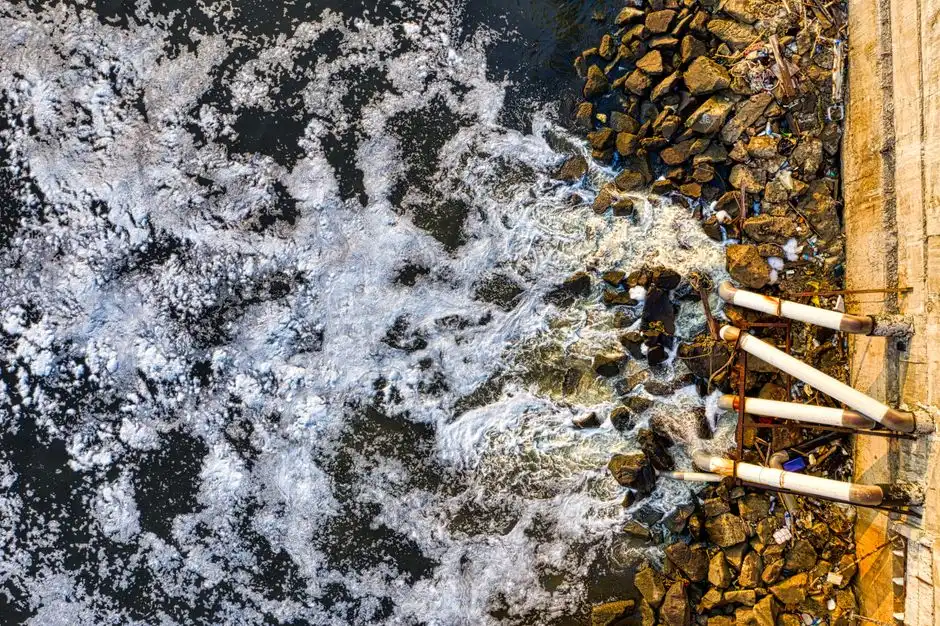
Dissolved air flotation (DAF) utilizing 30-50 micron microbubbles achieves up to 98% removal of emulsified oils and metal hydroxides, whereas standard lamella clarifiers are limited to less than 40% removal for the same emulsified oil fraction (source: Clearwater Industries pilot data, 2026). This performance gap is directly related to the surface loading rates and the physical mechanisms of separation. DAF systems operate at high surface loading rates of 30 to 40 m/h, using microbubbles to decrease the apparent density of the flocs, forcing them to the surface where they are skimmed off.
In contrast, lamella clarifiers rely entirely on gravity settling, operating at surface loading rates of 20 to 40 m/h based on the effective plate area. While lamella clarifiers are highly efficient at removing dense, heavy metal precipitates larger than 20 μm, they suffer from bypass issues when light, poorly flocculated metal hydroxides or free-floating oils enter the plate pack. This often results in pin-floc carryover, which can compromise downstream compliance. Hybrid FPBC (flotation plate separator) units solve this issue by combining lamella plates with microbubble flotation: heavy solids settle to the bottom hopper, while the light, oily fraction is floated to the surface within a single footprint.
Chemical consumption also differs significantly between the two systems. Because DAF systems rely on bubble attachment rather than gravity to lift flocs, they do not require the formation of large, heavy pin-flocs. Consequently, DAF operations typically consume 30% less coagulant (such as ferric chloride or polyaluminum chloride) and polymer than gravity clarifiers to achieve equivalent metals removal. For a broader look at operational parameters, see this detailed DAF model comparison and cost models, or review a parallel comparison for metals wastewater in another US location.
| Performance Metric | Dissolved Air Flotation (DAF / FPBC) | Lamella Clarifier (Sedimentation) | Engineering Impact on Metal Fab Effluent |
|---|---|---|---|
| TSS Removal Efficiency | 92% – 98% | 85% – 95% (heavy particles only) | DAF captures light metal hydroxides that bypass clarifier plates. |
| FOG / Emulsified Oil Removal | 85% – 95% | < 40% (without coalescing media) | Clarifiers require upstream oil-water separation for high-FOG streams. |
| Total Heavy Metals Removal | 90% – 98% (with chemical precipitation) | 70% – 85% (fails on light pin-flocs) | DAF achieves lower residual metal concentrations. |
| Surface Loading Rate | 30 – 40 m/h | 20 – 40 m/h (based on projected plate area) | DAF handles higher hydraulic loads per square foot of physical footprint. |
| Coagulant Dosage Requirement | 50 – 150 mg/L | 100 – 300 mg/L | DAF reduces chemical consumption by 30% due to bubble-assisted flotation. |
Iowa Regulatory Guardrails: Pretreatment Limits That Drive Technology Choice
Under federal rule 40 CFR 433, metal finishing operations discharging to public systems must limit daily maximum zinc discharges to 2.61 mg/L and nickel to 3.98 mg/L (source: EPA eCFR, 2026). However, municipal utilities in Iowa often enforce local limits that are significantly more stringent than federal baselines. For example, facilities discharging to the Des Moines Metropolitan Wastewater Reclamation Authority (WRA), which serves the Johnston area, must comply with strict local limits designed to protect the municipal activated sludge process from heavy metal toxicity.
To consistently meet these tight discharge windows, plants utilize a PLC-controlled chemical dosing for coagulation/flocculation upstream of the clarifier or flotation unit. While a lamella clarifier alone struggles to meet the 1.5 mg/L zinc limit without downstream sand or multi-media filtration, a DAF system paired with proper pH adjustment and organosulfide dosing consistently achieves total metal levels below 0.5 mg/L. the sludge generated from these primary treatment processes is classified as F006 hazardous waste under RCRA guidelines. Sludge management is a major operating cost; DAF systems produce a floated sludge with 2% to 4% dry solids, compared to the 0.5% to 1.5% solids produced by gravity clarifiers, reducing the volume of hazardous sludge that must be hauled and disposed of by 60% to 75%.
| Regulated Parameter | 40 CFR 433 Daily Max (mg/L) | Typical Johnston Local Limit (mg/L) | DAF Performance Capability (mg/L) | Lamella Clarifier Capability (mg/L) |
|---|---|---|---|---|
| Zinc (Zn) | 2.61 | 1.50 | < 0.30 | 1.00 – 2.50 (highly variable) |
| Nickel (Ni) | 3.98 | 2.00 | < 0.50 | 1.20 – 3.00 |
| Copper (Cu) | 3.38 | 1.00 | < 0.20 | 0.50 – 1.50 |
| Chromium (Total) | 2.77 | 2.00 | < 0.10 | 0.40 – 1.80 |
| FOG | N/A | 100.00 | < 15.00 | 40.00 – 80.00 |
| Sludge Classification | F006 Hazardous | F006 Hazardous | 2% – 4% solids (thickened) | 0.5% – 1.5% solids (dilute) |
Sizing Matrix: Matching Flow and Loading to the Right Equipment
Sizing primary treatment units for metal finishing lines requires an equalization capacity designed for a minimum of 4 hours of peak flow to buffer the 3-to-5 times hydraulic surges common during batch tank dumps (source: HydropureWater process engineering standards, 2026). Without adequate equalization, both DAF and gravity clarifiers will suffer from hydraulic bypass and poor chemical reaction times. Engineers can refer to this step-by-step DAF sizing methodology for hydraulic loading calculations.
For small job shops with flow rates under 66 GPM, a COMPACT DAF system mounted on a single skid is the standard approach. These systems are pre-assembled with chemical reaction tubes, pH adjustment sensors, and a PLC control panel within a compact 12x8 ft footprint. For mid-sized operations processing 66 to 300 GPM, modular FPBC systems are utilized. These systems incorporate lamella plates inside the flotation chamber to handle high solids loads (up to 2,000 mg/L TSS) without requiring a larger footprint. For large stamping and welding operations with flows from 300 to 500 GPM, cross-flow FPHF systems or parallel FPBC trains are used to manage variable hydraulic and solids loading.
| Design Flow Rate (GPM) | Recommended System Type | Footprint Dimensions (ft) | Equalization Tank Volume (gal) | Key Equipment Features |
|---|---|---|---|---|
| 50 – 66 | COMPACT DAF (Single Skid) | 12 x 8 | 12,000 – 15,000 | Turnkey skid, integrated polymer feed, 304SS construction. |
| 66 – 300 | FPBC Modular (Two-Skid) | 25 x 12 | 16,000 – 72,000 | Internal lamella packs, dual-shaved sludge scraper, bottom auger. |
| 300 – 500 | FPHF / Parallel FPBC Trains | 40 x 15 | 72,000 – 120,000 | Cross-flow/counter-current design, automated sludge blowdown. |
CAPEX/OPEX Comparison: 10-Year Total Cost for 100-300 GPM Systems
While gravity-settling lamella clarifiers require up to 40% lower initial capital expenditure, their 10-year total cost of ownership often exceeds that of DAF systems due to the high costs of hauling diluted F006 hazardous sludge (source: Iowa industrial waste disposal cost index, 2025-09). A standard lamella clarifier for a 200 GPM flow rate has an installed CAPEX of $80,000 to $250,000, but its dilute underflow (0.5% to 1.5% solids) significantly increases dewatering and disposal costs. To further reduce sludge disposal costs, plants frequently route the settled or floated sludge directly to a heavy-duty filter press for F006 hazardous sludge dewatering.
A skid-mounted DAF or FPBC system has a higher installed CAPEX of $150,000 to $400,000. However, because it produces a much drier sludge (2% to 4% solids) and requires 30% less polymer and coagulant chemistry, its operating costs are significantly lower ($0.85 to $1.20 per 1,000 gallons treated, compared to $1.10 to $1.60 per 1,000 gallons for a lamella system). This operational savings allows most DAF systems to offset their higher initial capital cost within 3 to 4 years of continuous operation. Maintenance costs remain comparable between the two technologies, with DAF mechanical drive and saturator pump maintenance averaging $3,000 to $5,000 annually, compared to $2,000 to $4,000 for clarifier scraper and chain assemblies.
| Cost Component (200 GPM System) | Skid-Mounted DAF / FPBC System | Lamella Clarifier + Chemical Feed | 10-Year Financial Impact |
|---|---|---|---|
| Initial CAPEX (Installed) | $150,000 – $400,000 | $80,000 – $250,000 | Clarifier saves $70K–$150K upfront. |
| Chemical OPEX (per 1,000 gal) | $0.35 – $0.50 | $0.50 – $0.75 | DAF saves 30% on coagulant/polymer costs. |
| Sludge Hauling & Disposal OPEX | $0.40 – $0.55 / 1,000 gal | $0.55 – $0.75 / 1,000 gal | DAF reduces wet F006 sludge volume by 60%–75%. |
| Annual Maintenance & Power | $5,000 – $8,000 | $3,000 – $5,000 | DAF has slightly higher power draw for recycle pump. |
| 10-Year Total TCO (Estimated) | $450,000 – $850,000 | $500,000 – $950,000 | DAF saves $50K–$100K over 10 years. |
Decision Framework: When to Choose DAF, Clarifier, or Hybrid
Selecting the correct separation technology for metal finishing lines depends strictly on the ratio of free-floating emulsified oils to heavy settleable particulate matter in the raw influent stream (source: HydropureWater field application data, 2026). Engineers must evaluate this ratio alongside space constraints and local discharge limits before selecting a system.
- Select a COMPACT DAF System if:
- Your design flow rate is ≤66 GPM.
- Raw FOG concentrations consistently exceed 100 mg/L due to cutting fluids and coolants.
- Your waste stream contains chelated metals that require specialized, low-density flocculation.
- Your facility has limited floor space, requiring a pre-assembled, single-skid system.
- Select an FPBC Hybrid System if:
- Your flow rate is between 66 and 500 GPM.
- The influent contains a mix of heavy grinding fines (settleable) and light, emulsified oils (floatable).
- You require a single-unit process to handle both settling and flotation to simplify operations.
- Select a Lamella Clarifier only if:
- Your flow rate exceeds 500 GPM.
- More than 80% of the suspended solids are heavy, particulate-bound metal hydroxides larger than 50 μm.
- Raw FOG concentrations are consistently below 50 mg/L.
- You have the space and budget to install downstream sand filters or ultrafiltration systems to capture pin-floc carryover.
Frequently Asked Questions
How does a DAF handle chelated metals differently than a gravity clarifier?
Chelated metals do not precipitate out as easily into dense flocs. A DAF system utilizes highly efficient microbubbles (30-50 microns) to float these lighter, complexed organo-metallic flocs to the surface after specialized organo-sulfide or carbamate precipitant addition, achieving 90-98% removal. Gravity clarifiers require much larger, heavier flocs to settle, which is difficult to achieve with chelated chemistry without massive chemical overdosing (source: HydropureWater field data, 2026).
What is the typical moisture content of sludge from a DAF versus a lamella clarifier?
DAF systems produce a thickened surface sludge with a solids concentration of 2% to 4%, meaning less water is trapped in the sludge blanket. In contrast, standard gravity or lamella clarifiers produce an underflow sludge of only 0.5% to 1.5% solids. This difference translates to a 60% to 75% reduction in total wet sludge volume, significantly lowering F006 hazardous waste disposal and dewatering costs (source: DAF Corp engineering data, 2025).
Can a gravity clarifier meet 40 CFR 433 limits without tertiary treatment?
Typically, no. For fabricated metals effluent with mixed heavy and light solids, a standard gravity clarifier alone cannot reliably meet the 40 CFR 433 daily limits for zinc (2.61 mg/L) or nickel (3.98 mg/L) because light metal hydroxides and emulsified oils bypass the settling plates. Meeting these limits with a clarifier usually requires downstream sand filtration or ultrafiltration, whereas a DAF with chemical pretreatment consistently achieves sub-0.5 mg/L levels in a single step (source: EPA pretreatment guidelines).