Why Jeff Mining and Metals Plants Are Rethinking Primary Clarification in 2026
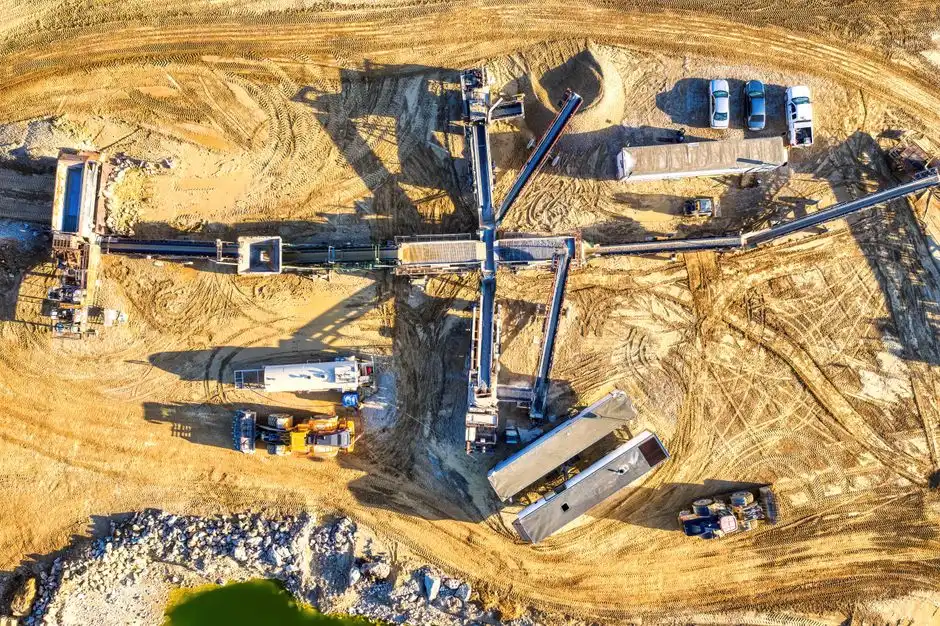
Jeff, US mining and metals plants in 2026 face an influent profile that punishes 1990s-vintage gravity clarifiers: total suspended solids (TSS) routinely above 1,000 mg/L from ore washing, aggregate fines, and cutting operations; tramp oil and fats, oils, and grease (FOG) above 100 mg/L from haul-truck wash bays and equipment sumps; periodic acidic, metal-bearing runoff from stockpile leachate; and seasonal flow swings that can double design flow during storm events. SLR's Statement of Qualifications lists mining and metals as a documented NPDES-permitted industrial sector where DAF is a standard unit operation, with one closed-mine treatment plant in Colorado rated at 0.50 MGD running equalization followed by DAF (S5). NPDES Multi-Sector General Permit (MSGP) renewals in 2025–2026 tightened inspection language around total recoverable metals and oil & grease, and state mining permits are now writing numeric limits on dissolved metals after precipitation — limits a gravity clarifier alone cannot meet.
For a Jeff plant manager, that is the buy-decision moment: capital is available, the existing concrete clarifier is eroding permit margin, and the next DAF or clarifier selection will be on the process flow diagram for the next 15–20 years. Specify DAF as the primary separator for fines and oil, and add a lamella clarifier as a downstream polisher ahead of NPDES outfall. A single clarifier — circular or lamella — is no longer defensible as a standalone primary on heavy-mineral or oily mining streams.
How DAF and Clarifiers Actually Treat Mining Wastewater
DAF is a separation-by-flotation process that uses air bubbles to lift solids to the surface. A pressurized recycle stream is saturated with air at 4–6 bar and then released through nozzles at the bottom of the flotation cell; the pressure drop nucleates 30–50 μm microbubbles (Clearwater/SigmaDAF datasheet, S1) that attach to chemically flocculated particles and lift them to the surface, where a paddle skimmer scrapes the float into a sludge trough. Heavier grit that does not float settles into a bottom collection zone and is augered out. Hydraulic retention is short — the Spracell benchmark cited in academia.edu's DAF chapter (S4) gives about 3 minutes total — and specific clarification capacity runs 4–5 GPM/ft², which is why the skid footprint is small relative to a gravity basin. Effluent TSS lands in the 20–30 mg/L range and the float is already thickened to 2–3% dry solids, so no secondary sludge thickener is required (S4).
A clarifier, by contrast, is a gravity settler. Solids fall to the bottom under their own mass; in a lamella clarifier, inclined plates at 55–60° shorten the effective settling path so surface loading rates climb to 20–40 m/h on the projected plate area — roughly an order of magnitude higher than an old 1 m/h conventional basin. The high-efficiency lamella clarifier cuts coagulant demand by up to 30% compared with a conventional clarifier handling the same flow, because the inclined plates improve floc contact efficiency. The mechanism works well for dense, readily settleable particles, but struggles with low-density mineral fines (clay, talc, fine coal, metal hydroxide floc) and emulsified tramp oil, both of which settle slowly under gravity and attach readily to DAF bubbles. Mining streams with any of these particle classes favor DAF as the primary, with the lamella as polisher rather than primary.
DAF vs Clarifier for Mining/Metals: Head-to-Head Comparison
Engineers must compare these technologies against the parameters a NPDES permit actually measures. The table below pulls DAF row data from the Spracell and Clearwater/SigmaDAF references (S1, S4) and the clarifier row data from the HydropureWater lamella catalog.
| Parameter | DAF (Spracell / SigmaDAF reference) | Lamella Clarifier (HydropureWater spec) |
|---|---|---|
| Primary mechanism | Microbubble flotation of flocculated particles (30–50 μm bubbles) | Gravity settling on inclined plates (55–60°) |
| Typical TSS removal / effluent quality | Effluent TSS 20–30 mg/L on properly flocculated feed (S4) | Effluent TSS 30–60 mg/L without coagulation; <20 mg/L with coagulation and plate polishing |
| Hydraulic retention / surface loading | ~3 min retention; 4–5 GPM/ft² clarification capacity (S4) | 20–40 m/h surface loading on projected plate area |
| Footprint and headroom | Low headroom; single-skid up to 66 GPM, two-skid above (S1) | Larger footprint and headroom; basin + plate pack |
| Chemical demand | Coagulant + flocculant required for >60% oil removal; up to 98.96% oil removal with alum + polyacrylamide (S4) | Up to 30% lower coagulant consumption than conventional clarifier; ineffective on emulsified oil without prior DAF |
| Best-fit mining application | Primary separation of fines, FOG, tramp oil; high-TSS ore wash, smelter support, metal-finishing rinse | Polishing after DAF; low-TSS, low-oil high-flow streams (cooling tower blowdown, reclaim water) |
Neither DAF nor a lamella clarifier removes dissolved metals on its own — both need precipitation (pH adjustment with lime or caustic, sulfide dosing, or coagulant addition) upstream or in a dedicated precipitation stage, followed by solid–liquid separation. For abrasive and mildly acidic mining service, specify 316SS or polypropylene internals rather than standard 304SS (S1).
When to Choose DAF, When to Choose a Clarifier, and When to Use Both
Operators can apply the following rules to the daily composite sample to determine the correct configuration.
| Influent condition | Recommended primary | Polishing step |
|---|---|---|
| TSS >500 mg/L, free oil/FOG >50 mg/L, or low-density fines (clay, fine coal, metal hydroxide floc) | DAF | Optional lamella or multimedia filter if NPDES demands <20 mg/L TSS |
| TSS <200 mg/L, oil <20 mg/L, minimal chemical budget, very high flow (e.g. cooling tower blowdown) | Lamella clarifier | None or multimedia filter |
| High-TSS, high-flow mining line with permit limit <20 mg/L TSS or strict oil & grease cap | DAF | Lamella clarifier as polish stage |
For the third case, the S4 oil-removal evidence is the data point to cite in front of a regulator or a procurement committee: with combined alum plus polyacrylamide coagulant, DAF reaches 98.96% oil removal at 50 ppm inlet oil and 95.5% at 200 ppm. SLR's documented U.S. closed-mine treatment plants (S5) show that operators in the mining sector already run multi-stage trains with DAF in the front end; adding a lamella polish stage is a direct extension of that pattern.
Designing a 2026 Treatment Train for a Jeff Mining or Metals Site
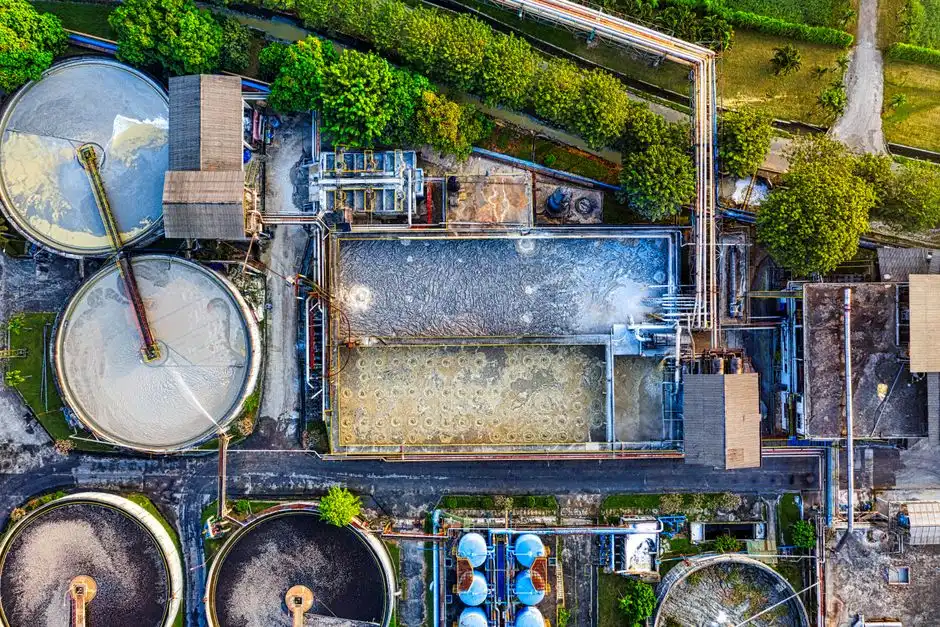
A defensible 2026 specification bundles four stages into one process line: (1) a rotary bar screen or drum screen for rags, scale, and large debris; (2) equalization with pH adjustment to a target of 8.5–9.5 for heavy-metal precipitation ahead of DAF; (3) the DAF system with automatic chemical dosing of coagulant (polyaluminum chloride or alum) and a polyacrylamide flocculant; and (4) a high-efficiency lamella clarifier as the polish step before NPDES outfall or water reuse. Upstream chemical conditioning is handled by an automatic coagulant and flocculant dosing system tied to a flow-proportional signal.
On the sludge side, DAF float arrives at 2–3% dry solids (S4), so a small plate-and-frame filter press produces a handleable cake without a dedicated thickener. Jeff buyers in 2026 are increasingly asking for factory-tested skid delivery so installation time on a tight outage window stays under two weeks; that favors pre-assembled DAF skids of the type documented in the Clearwater/SigmaDAF reference (S1). For ongoing operations, the 2026 mining wastewater plant maintenance guide covers preventive schedules for this exact train, and the parallel Blue River mining/metals DAF vs clarifier buyer's guide benchmarks the same selection logic in a comparable U.S. mining market.
Frequently Asked Questions
When should a mining plant pick DAF over a clarifier in 2026?
Pick DAF as the primary separator when influent TSS exceeds roughly 500 mg/L, free oil or FOG exceeds 50 mg/L, or the stream contains low-density fines such as clay, fine coal, or metal hydroxide floc. In these particle classes, microbubble flotation outperforms gravity settling at the 3-minute retention benchmark documented for Spracell DAF (S4).
Can a lamella clarifier remove dissolved heavy metals on its own?
No. Neither DAF nor a lamella clarifier removes dissolved metals without an upstream precipitation step. The lamella settles precipitated metal hydroxide floc efficiently at 20–40 m/h surface loading, but pH adjustment (typically to 8.5–9.5 with lime or caustic) or sulfide dosing must come first, or the metals will pass through the separator in solution.
How much oil can DAF actually remove from a mining wastewater stream?
With optimized chemical conditioning, DAF reaches 98.96% oil removal at 50 ppm inlet oil and 95.5% at 200 ppm when dosed with a combination of alum and polyacrylamide coagulant (S4). Without coagulant, the same DAF unit removes only about 60% of inlet oil — a useful baseline when justifying a polymer dosing skid in a CAPEX review.