Why Boston Hotel Wastewater Is a Public-Health and Compliance Priority in 2026
A Boston-area hotel or resort in 2026 typically needs a packaged biological treatment system — most often a Membrane Bioreactor (MBR) or an A/O package plant rated 100–250 gallons per occupied room per day — sized for kitchen FOG, laundry lint, and high organic loadings, with effluent meeting MWRA Sewer Use limits (BOD ≤300 mg/L, TSS ≤300 mg/L, FOG ≤100 mg/L) for sewer connection or Massachusetts Title 5 standards for subsurface discharge. Cold-climate siting and tight urban footprints in downtown Boston make the WSZ underground package plant or skid-mounted MBR the most common choices.
Public-health risk, not just regulatory paperwork, is the first reason to take system selection seriously. In 1998, a Norwalk-like virus outbreak at a Bermuda resort hotel sickened at least 448 people, including 122 staff; staff who ate or drank on-property had an OR of 6.0 (95% CI 2.4–15.1), and RT-PCR on a 3 L water specimen recovered a genogroup-II NLV genome with a sequence identical to three ill guests (Epidemiology and Infection, 2001). The authors explicitly called for tourism-dependent regions to evaluate wastewater and drinking-water inspection data regularly. Boston draws roughly 22 million annual visitors and anchors properties like the Forbes Five-Star Boston Harbor Hotel and the 671-key Encore Boston Harbor — a casino, spa, and multi-restaurant complex whose water and sanitation infrastructure is brand-critical. A second driver is the global baseline: roughly 80% of the world's wastewater is discharged untreated (Water, 2023), a figure Boston regulators reference when pressing hoteliers on redundancy and monitoring.
Three regulatory pathways will frame every Boston hotel project in 2026: (1) the MWRA Sewer Use Regulations under 360 CMR 10.000 for any site discharging to the MWRA interceptor; (2) the Boston Water and Sewer Commission (BWSC) local sewer use ordinance, which layers FOG and pretreatment requirements on food-service hotels; and (3) Massachusetts Title 5 (310 CMR 15.000) for any property outside the MWRA service area that needs subsurface or groundwater discharge. The engineering choices downstream depend on which pathway applies — and getting that wrong means redesign mid-permit.
Boston and Massachusetts Wastewater Rules a Hotel Must Clear in 2026
MWRA's Sewer Use Regulations (360 CMR 10.000) set a numerical ceiling for any Significant Industrial User discharging to the MWRA interceptor: BOD ≤300 mg/L, TSS ≤300 mg/L, FOG ≤100 mg/L, pH 5.0–12.0, with no pass-through that interferes with Deer Island Treatment Plant operations. Hotels with on-site grease traps and food-service operations >100 meals/day are routinely classified as SIUs and must report quarterly. Where municipal sewer is unavailable, Massachusetts Title 5 (310 CMR 15.000) governs subsurface discharge, with tighter effluent targets: BOD ≤150 mg/L and TSS ≤30 mg/L for tight soils, and total nitrogen ≤25 mg/L in nitrogen-sensitive areas designated by massDEP (Cape Cod, Martha's Vineyard, Nantucket, and portions of the Ipswich River basin are the current high-priority zones). The Boston Water and Sewer Commission adds local FOG limits — typically 100 mg/L on a grab sample and a 200 mg/L 24-hour composite — plus a mandatory grease interceptor sizing standard (Hydromechanical 100 gpm minimum for hotels; gravity interceptors per BWSC Table A) that often exceeds state minimums. Resorts outside MWRA's 175-member community footprint — outer Cape Cod, the Berkshires, the western MetroWest fringe, and the Boston Harbor islands — may instead need a massDEP groundwater discharge permit, which is State Revolving Fund eligible and typically requires 12 months of hydrogeologic site work before design. The EPA Clean Water Act pretreatment chain-of-responsibility still applies even when the hotel owns its pretreatment; the operator of an on-site package plant on an MWRA-connected site carries the same SIU reporting duties as a factory. Table 1 summarizes the numerical envelope.
| Pathway | Regulating Body | BOD Limit | TSS Limit | FOG Limit | Total Nitrogen | Typical Trigger |
|---|---|---|---|---|---|---|
| MWRA Sewer Use (360 CMR 10.000) | MWRA / BWSC | ≤300 mg/L | ≤300 mg/L | ≤100 mg/L | Not specified | Discharge to MWRA interceptor |
| BWSC Local Ordinance | Boston Water and Sewer | Same as MWRA | Same as MWRA | ≤100 mg/L grab / 200 mg/L composite | Not specified | Food-service hotel in Boston |
| Title 5 (310 CMR 15.000) | massDEP / local BOH | ≤150 mg/L (tight soils) | ≤30 mg/L (tight soils) | ≤15 mg/L (component standard) | ≤25 mg/L in N-sensitive areas | No sewer available |
| Groundwater Discharge Permit | massDEP | ≤30 mg/L (typical) | ≤30 mg/L | Case-by-case | ≤10 mg/L (site-specific) | Resort outside MWRA service area |
How Much Wastewater Does a Boston Hotel Actually Generate?
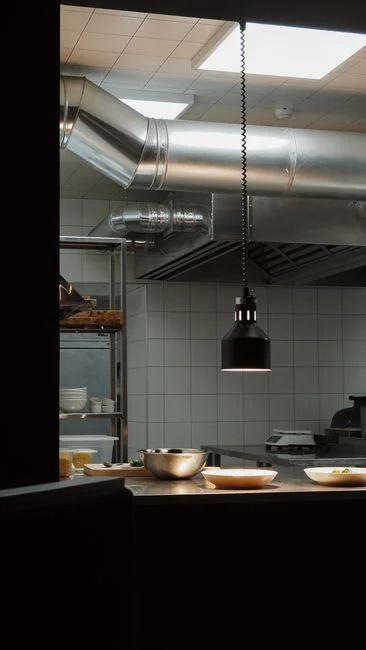
Design flow is the single most-asked question, and for Boston hospitality the defensible benchmark is 130–250 gal per occupied room per day: 130–150 for select-service (Hampton Inn, Courtyard class), 180–220 for full-service with banquet kitchens, and 220–250 for luxury resort properties with spa, casino, and multiple food outlets. Worked example for a 150-room full-service hotel at 80% occupancy: 120 occupied rooms × 180 gal/room-day = 21,600 gpd average daily flow. A 1.4× peaking factor for occupancy-driven lunch and dinner peaks — not the 2.5–3.0× factor used for residential — gives roughly 30,200 gpd peak. This sits inside the 20–40K gpd envelope that drives the system sizing in the next section.
Add separate streams that don't show up in a per-room calculation but routinely overload undersized systems. Kitchen FOG from banquet and room-service operations typically runs 5–15% of total flow but carries the highest organic and FOG load; laundry lint from on-premise laundries adds 8–12 gal/load × 8–15 loads/day; pool backwash discharges 1,000–3,000 gal per cycle, usually 1–2 cycles per week; and spa/hot tub drain events arrive as short, hot, chemically conditioned surges that the biological stage must absorb. For a most-amenity-heavy property (Encore-class resort), the upper bound on per-person water use can be informed by the UAE benchmark of 550 L/person/day (Water, 2023) — useful when the property includes a casino floor with 6,000+ daily visitors, multiple restaurants, and a destination spa. The 0.1% solids composition of domestic wastewater (Water, 2023) holds for hotel service populations: biology is the bottleneck, not solids separation, which is why MBR and A/O package plants dominate and primary-only treatment is not a viable path.
MBR vs WSZ Package Plant vs DAF Pretreatment: Which Fits a Boston Hotel?
The system choice collapses to three practical candidates for the 20–40K gpd envelope that covers most Boston-area hotel projects. The MBR membrane bioreactor system pairs submerged PVDF membranes (0.1–1 µm pore size) with an activated-sludge bioreactor, delivering near-reuse effluent with a footprint roughly 60% smaller than conventional activated sludge — directly relevant to downtown Boston sites where the package plant must be buried or roof-housed. MBR capacities in the 10–2,000 m³/day range cover the entire Boston mid-market. The WSZ underground integrated package plant combines A/O biological contact oxidation, sedimentation, and disinfection in a single buried unit rated 1–80 m³/h, fully automated, and routinely installed below grade with landscaping on top — the workhorse for suburban Boston, outer MetroWest, and Cape Cod resorts where burial is feasible and CAPEX has to be controlled. The DAF pretreatment system (4–300 m³/h) uses micro-bubble flotation to strip FOG and TSS upstream of either an MBR or a WSZ; for hotels with heavy banquet, casino food court, or convention-center kitchen loading, DAF front-end protection is the difference between stable operation and chronic membrane fouling.
Cold-weather performance is the Boston-specific differentiator. MBR membrane flux drops 20–30% below 10°C; Boston winter monthly averages run 29–35°F (Dec–Feb), and the 24-hour mean is below freezing roughly 30 days per year. Below-grade siting is therefore essentially mandatory for both MBR and WSZ — burying a 30,000 gpd WSZ in a single vault ~10 m × 3 m gives 40–50°F operating temperatures year-round and eliminates the freeze-protection plumbing an above-grade MBR would otherwise require. A same-capacity MBR with membrane tanks and a separate skid needs roughly 6 m × 4 m plus the skid footprint; equivalent hydraulic capacity, more mechanical complexity, but the effluent quality supports reuse. Table 2 sets the comparison side by side.
| Parameter | MBR (Membrane Bioreactor) | WSZ Underground A/O Package | DAF Pretreatment |
|---|---|---|---|
| Primary role | Full biological treatment + membrane solids separation | Full biological treatment + sedimentation + disinfection | FOG/TSS removal upstream of MBR or WSZ |
| Capacity range | 10–2,000 m³/day | 1–80 m³/h (24–1,920 m³/day) | 4–300 m³/h |
| Effluent BOD/TSS | ≤5 / ≤5 mg/L (reuse-grade) | ≤20 / ≤20 mg/L (MWRA-compliant) | Reduces influent BOD/TSS by 50–80% |
| Footprint, ~30K gpd | ~6 m × 4 m + membrane skid | ~10 m × 3 m single buried vault | ~3 m × 2 m skid |
| Cold-climate (sub-10°C) | Flux drops 20–30%; burial mandatory | Burying holds biology 40–50°F | Insulated enclosure required |
| Best fit in Boston | LEED, reuse, Title 5, urban infill | MWRA-connected, CAPEX-driven, burial-friendly | Heavy-kitchen or casino food court |
| Indicative 2026 CAPEX, 20–40K gpd | $450K–$900K | $180K–$400K | $90K–$250K |
For a deeper cross-market view of the same engineering question, our work on hotel wastewater treatment in resort markets covers the cold-climate inverse — high-temperature operation, where the failure mode shifts from membrane flux to biological kinetics.
Disinfection, Sludge, and Effluent Reuse for Boston Resort Operations
Downstream unit operations decide OPEX and reuse revenue, and they are easy to under-specify. Disinfection is best handled with an on-site chlorine dioxide generator (50 g/h to 20,000 g/h capacity) rather than bulk chlorine: ClO₂ is generated from sodium chlorite on demand, eliminating bulk-liquid transport through dense Boston neighborhoods, and it is compliant with both EPA Surface Water Treatment Rule CT values and the Massachusetts DBPR (310 CMR 22.00). The ClO₂ residual is also more effective than free chlorine against noroviruses, the pathogen class that drove the 1998 Bermuda outbreak — directly relevant to a hotel brand's risk posture.
Sludge dewatering is the dominant OPEX line for Boston hotels. A package plant sized for 30,000 gpd will generate 30–50 lb dry solids per 1,000 gal treated, or roughly 900–1,500 lb dry solids per day at average loading — which is most cost-effectively handled with a plate-and-frame filter press (1–500 m² filtration area) followed by off-site hauling. For properties reusing treated effluent for landscape irrigation, a high-efficiency sedimentation tank (20–40 m³/h surface loading) upstream of disinfection provides the polishing required by Title 5 nitrogen rules and removes residual solids that would otherwise foul drip irrigation. The reuse revenue case is material: 30,000 gpd of MBR permeate reused for toilet flushing and irrigation at a notional BWSC combined water/sewer rate of $0.012/gallon offsets roughly $130,000/year in charges (illustrative; confirm the local rate with BWSC at design time) and reduces Boston's Deer Island load by an equivalent volume — a useful talking point with regulators.
Decision Framework: Selecting the Right Boston Hotel Wastewater System in 2026
The selection reduces to a small set of site-specific conditions. If the property is connected to the MWRA interceptor and sits in downtown Boston where any above-grade equipment is unacceptable: specify a WSZ underground A/O package plant with DAF pretreatment for heavy-kitchen sites, ClO₂ disinfection, and a plate-and-frame filter press for sludge — the lowest CAPEX combination, and burial handles the cold-climate and footprint constraints in one move. If the project is pursuing LEED certification, irrigation reuse, or a Title 5 groundwater discharge permit: specify an MBR with a lamella clarifier for solids polishing and ClO₂ disinfection. The MBR's higher CAPEX is recovered through ~60% reduction in potable demand for landscape and cooling-tower makeup over a 7–10 year horizon. If the hotel sits outside the MWRA service area (Cape Cod, western suburbs, Boston Harbor islands): the Title 5-conforming MBR needs nitrogen polishing, and 100% hydraulic redundancy is non-negotiable for the July–September seasonal peak when occupancy can double overnight. A defensible 2026 CAPEX envelope for a 20–40K gpd Boston hotel system runs $180K–$400K for the WSZ package plant, $450K–$900K for the MBR, and $90K–$250K for the DAF pretreatment skid — all illustrative, all subject to vendor RFQ and prevailing steel and membrane pricing. Across every option, specify pre-engineered PLC controls with remote telemetry; the Boston Inspectional Services Department and MWRA both expect 24/7 monitoring on any Significant Industrial User discharge point, and a defensible PLC control architecture for wastewater plants is now a permit-condition item, not an option. For international benchmarking on a comparable hotel question under different climate and regulatory drivers, our hotel wastewater system selection in another regulated market walks through the Ankara case in the same engineering format.
Frequently Asked Questions
What is the standard hotel design flow in gallons per room per day for Boston?
Use 130–250 gal per occupied room per day as the 2026 Boston benchmark: 130–150 for select-service, 180–220 for full-service with banquet kitchens, and 220–250 for luxury resorts with spa and casino. Apply a 1.4× peaking factor for occupancy-driven meal peaks, not the 2.5–3.0× residential factor.
Does a Boston hotel need an MWRA permit or a Title 5 permit?
It depends entirely on the sewer connection. If the property can discharge to the MWRA interceptor, the project clears MWRA Sewer Use Regulations (360 CMR 10.000) plus the local BWSC ordinance. If no sewer is available — outer Cape Cod, Berkshires, islands, MetroWest fringe — the project falls under Massachusetts Title 5 (310 CMR 15.000) or a massDEP groundwater discharge permit, both of which are tighter on nitrogen and TSS.
What is the cheapest wastewater system for a 30,000 gpd Boston hotel in 2026?
A buried WSZ underground A/O package plant with DAF pretreatment (for food-service-heavy sites) and ClO₂ disinfection runs $180K–$400K for the 20–40K gpd envelope, before site work and controls. That combination also solves the cold-climate and footprint constraints that drive a downtown Boston site.