Why Pharmaceutical Wastewater in Italy Is a Distinct Engineering Problem
Italy is the largest producer of active pharmaceutical ingredients in the EU by volume, with manufacturing concentrated in the Lombardy, Lazio, and Catania clusters, and the overwhelming majority of plants discharging treated effluent to municipal sewer under scarico in pubblica fognatura regimes governed by D.Lgs. 152/2006, Parte III, Capo III, Titolo V, and a binding contratto di scarico with the local Ambito Territoriale Ottimale (ATO). For surface-water discharges, Parte III Allegato 5 Tab. 3 sets the headline limits of COD 160 mg/L, BOD5 40 mg/L, total nitrogen 15 mg/L, total phosphorus 10 mg/L, and TSS 80 mg/L (per D.Lgs. 152/2006). Above IED capacity thresholds — typically >50 t/day of organic fine chemicals — plants must also satisfy the BAT-AEL ranges published in Commission Implementing Decision 2016/902 under Directive 2010/75/EU, where COD 25–150 mg/L, TOC 10–60 mg/L, and AOX 0.5–10 mg/L are the binding windows depending on wastewater stream. ARPA regionale enforces the framework, with Lombardy, Emilia-Romagna, Veneto, and Piedmont running the most aggressive monitoring under the Po basin district plan and routinely imposing EQS-based limits on residual diclofenac, sulfamethoxazole, carbamazepine, ofloxacin, and 17α-ethinylestradiol (EE2). A common misconception is that AIFA manufacturing authorization under D.Lgs. 219/2006 covers environmental discharge — it does not; AIFA and wastewater permitting are parallel obligations, and an AUA or AIA file is required independently of any marketing authorization.
Italian Pharmaceutical Effluent: Composition and Variability
Italian API effluent falls into two distinct streams that drive the process choice. Chemical-synthesis sites (Milan-Latina corridor) generate solvent-bearing, high-strength wastewater with influent COD measured between 5,000 and 70,000 mg/L across 50 plants surveyed by Veolia (Veolia Pharmaceutical Wastewater Guide, 2020, S5). Fermentation and biologics sites add biodegradable sugars, starches, and buffer salts, but detergent carryover from CIP creates chronic foaming in downstream aeration tanks. The Veolia dataset also established the engineering rule of thumb used in Italian design houses: a COD/BOD5 ratio <2 indicates easily biodegradable effluent, 2–3 is biodegradable, and >3 signals a non-biodegradable fraction that biological treatment alone will not polish (Veolia 2020, S5). Italian plants surveyed across the same window show COD/BOD5 spanning 1:1 to 1:15, with the upper end dominated by antibiotic-synthesis sites carrying sulfa drugs, fluoroquinolones, and β-lactams. The European Watch List flags diclofenac, sulfamethoxazole, carbamazepine, ofloxacin, and EE2 as the priority residuals; EE2 is the most acute, with a PNEC of 0.01 ng/L and confirmed fish-feminization effects at 5–6 ng/L in surface water (PMC, 2025-12, S4). Antibiotic-resistance gene (ARG) co-occurrence with these APIs is now an explicit EU Watch List concern, and ARPA uses ARG screening as a soft trigger for additional AOP requirements.
| Stream type | Influent COD (mg/L) | COD/BOD5 range | Key residuals | Foaming risk |
|---|---|---|---|---|
| Chemical-synthesis API | 5,000–70,000 | 3:1–15:1 | Solvents, sulfa drugs, fluoroquinolones | Low |
| Fermentation / biologics | 2,000–15,000 | 1:1–3:1 | Sugars, starches, buffer salts | High (detergent carryover) |
| Formulation / fill-finish | 500–5,000 | 1.5:1–4:1 | Excipients, traces of APIs | Medium |
| Equipment & floor wash | 1,000–20,000 | 2:1–6:1 | Spill residues, CIP chemicals | High (batch peaks) |
The 2026 Process Train Used for Italian API Plants
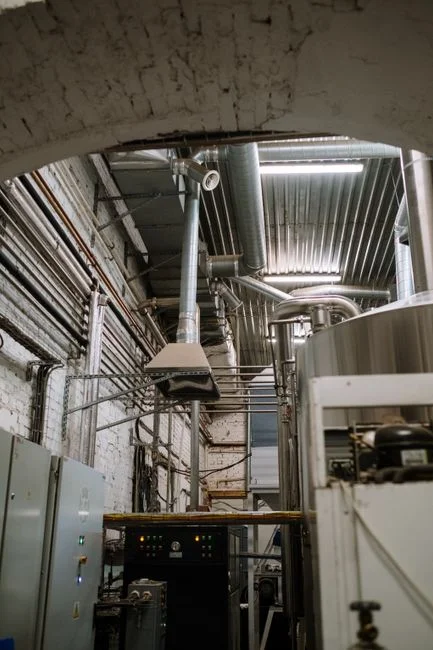
A compliant Italian API train in 2026 is a six-stage sequence: equalization → DAF primary → anaerobic → aerobic/MBR → AOP → RO/UF polish. Stage 1 is flow and load equalization at 24–48 h hydraulic retention time with pH correction to 6.5–7.5 and design capacity at 1.5× average flow to absorb batch peaks from chemical reactors and CIP skids. Stage 2 uses a DAF primary clarifier sized for 4–300 m³/h to remove suspended solids, emulsified oils, and FOG before the biological reactors, protecting downstream membranes from grease fouling. Stage 3 is an anaerobic UASB or EGSB operating at 30–37 °C, OLR 5–15 kg COD/m³·day, HRT 24–48 h, tolerating influent COD up to ~50,000 mg/L while producing biogas that, in the Italian context, may qualify for CIP6/feed-in incentives if grid-connected. Stage 4 is an aerobic MBR using submerged PVDF flat-sheet or hollow-fiber membranes at 0.1 µm nominal pore size, MLSS 8,000–12,000 mg/L, HRT 12–36 h, SRT 30–60 days; the integrated MBR system delivers the low-SS effluent that AOP feed requires. Stage 5 is advanced oxidation — Fenton (H2O2/Fe2+ 3:1 molar, pH 2.8–3.5) for non-biodegradable COD, or catalytic ozonation (O3 5–15 mg/L, H2O2 0.5–1.0×O3) for trace API removal. Stage 6 is an industrial RO system operating at 75–95% recovery for plants targeting ZLD or internal reuse for CIP and cooling-tower makeup.
| Stage | Equipment | Key parameters | Target outcome |
|---|---|---|---|
| 1. Equalization | Equalization basin, pH correction | HRT 24–48 h, pH 6.5–7.5, 1.5× peak design | Flow/load dampening |
| 2. DAF primary | DAF unit | 4–300 m³/h, polymer + PAC dosing | SS, FOG, emulsion removal |
| 3. Anaerobic | UASB / EGSB | 30–37 °C, OLR 5–15 kg COD/m³·d, HRT 24–48 h | Bulk COD reduction, biogas |
| 4. Aerobic MBR | PVDF flat-sheet / hollow-fiber | MLSS 8,000–12,000 mg/L, SRT 30–60 d | Effluent SS <5 mg/L |
| 5. AOP | Fenton or catalytic O3 | Fenton 3:1 H2O2/Fe2+; O3 5–15 mg/L | COD ≤120 mg/L, APIs <EQS |
| 6. RO polish | Industrial RO system | 75–95% recovery | Reuse-grade water for CIP/cooling |
How to Choose the Right Biological Stage: UASB vs MBR vs Hybrid
The selection rule is driven by the COD/BOD5 ratio measured during the 4-week characterization campaign. If COD/BOD5 < 2 — typical of biologics, fermentation, and fill-finish streams — aerobic MBR alone is sufficient; specify a DF series PVDF flat-sheet membrane module rather than hollow-fiber to limit fouling at high MLSS. If COD/BOD5 is 2–3, the dominant case at mixed API + formulation sites, run UASB upstream of the MBR; this configuration cuts aeration OPEX by 30–50% because the anaerobic stage removes 60–80% of the bulk COD before the aeration tank. If COD/BOD5 > 3 — the regime for antibiotic synthesis and sulfa-drug plants — biological treatment alone will not reach the Tab. 3 COD ceiling of 160 mg/L, and Fenton or catalytic ozonation must follow the MBR. Footprint also matters in Lombardy where land is expensive: MBR alone occupies roughly 60% less area than conventional activated sludge, and the UASB+MBR hybrid trims the aeration tank volume further. Sludge economics often decide the tender: UASB yields 0.05–0.10 kg VSS/kg COD removed versus 0.3–0.5 for CAS, and with Italian landfill disposal under D.Lgs. 36/2003 running €150–250/tonne, the hybrid saves a measurable OPEX line.
| COD/BOD5 | Effluent character | Recommended biological train | AOP needed? | Sludge yield (kg VSS/kg COD) |
|---|---|---|---|---|
| < 2 | Easily biodegradable | MBR alone | No (only for trace API polishing) | 0.3–0.5 (CAS-equivalent) |
| 2–3 | Biodegradable, mixed | UASB + MBR | Optional | 0.05–0.10 (UASB) + 0.1 (MBR) |
| > 3 | Refractory / antibiotic | UASB + MBR + AOP | Yes (Fenton or O3) | 0.05–0.10 + Fe sludge from Fenton |
Advanced Oxidation and Polishing: Closing the Loop on Trace APIs
AOP is no longer optional for any Italian site discharging antibiotic-synthesis wastewater. Fenton chemistry — H2O2/Fe2+ at a 3:1 molar ratio and pH 2.8–3.5 — typically removes 50–80% of MBR-effluent COD but generates iron hydroxide sludge that must be dewatered and disposed. Catalytic ozonation (O3 at 5–15 mg/L with H2O2 0.5–1.0×O3) is the preferred option when the binding constraint is the EU Watch List rather than bulk COD: peer-reviewed data show >90% removal of diclofenac, sulfamethoxazole, and carbamazepine in 30 min contact time (J. Water Process Eng., 2024-06, S2; PMC, 2025-12, S4). Use a Ce/AC catalyst to suppress bromate formation, which is itself a regulated parameter under D.Lgs. 31/2001 (drinking-water transposition). Pair the AOP skid with a PLC-controlled chemical dosing skid to lock dose ratios and avoid the bromate breakthrough that has triggered ARPA non-conformities at three Lombardy sites in the past 18 months (HydropureWater field data, 2026). An RO polish downstream delivers reuse-grade water for CIP loops, cooling-tower makeup, and low-pressure boiler feed at 75–95% recovery. Static grab sampling is no longer accepted by ARPA under EU Water Framework Directive reporting — pair the train with on-line TOC and conductivity meters at the discharge point and a quarterly third-party composite for the four residual APIs in your synthesis list.
2026 Decision Matrix: Matching Train to Plant Size and Budget
The Italian tender in 2026 can be reduced to four size bands with defensible CAPEX/OPEX envelopes. A small site under 50 m³/day — typically formulation or fill-finish — runs a packaged MBR + ClO2 disinfection, CAPEX €250–500k, with OPEX dominated by power and sodium-chlorite tablets; a chlorine dioxide generator integrated on the skid avoids the bromate risk of bulk hypochlorite. A mid-size site at 50–500 m³/day with mixed API + formulation loads deploys UASB + MBR + Fenton, CAPEX €1.2–2.5M, OPEX €0.6–1.2/m³. A large site over 500 m³/day running chemical synthesis — the Lombardy and Catania cluster case — needs the full UASB + MBR + catalytic ozonation + RO train, CAPEX €3.5–7.0M, OPEX €0.9–1.6/m³, with 60–75% of OPEX recovered through water-reuse credit once the RO permeate replaces municipal purchases for CIP and cooling. Co-discharge to municipal sewer under Capo III usually accepts a biological + AOP + filtration package without RO, but the local ATO's contratto di scarico frequently imposes limits tighter than Tab. 3 — request them in writing before sizing the train. Footprint in m² per m³/day: packaged MBR 0.4–0.6, UASB+MBR 0.25–0.35, full train with RO 0.30–0.45 including buffer tanks. A hybrid UASB+MBR+AOP cuts direct CO2e by 25–40% versus CAS+AOP because the biogas offsets aeration power. Sludge dewatering with a plate and frame filter press is the standard end-of-line for both the biological waste stream and the Fenton iron cake, hitting 22–28% dry solids for off-site disposal under D.Lgs. 36/2003.
| Plant size | Process train | CAPEX (€) | OPEX (€/m³) | Footprint (m²/m³/d) | Compliance outcome |
|---|---|---|---|---|---|
| < 50 m³/d (formulation) | Packaged MBR + ClO2 | 250k–500k | 0.4–0.8 | 0.4–0.6 | Tab. 3 / ATO sewer |
| 50–500 m³/d (mixed) | UASB + MBR + Fenton | 1.2M–2.5M | 0.6–1.2 | 0.25–0.35 | Tab. 3 + ATO sewer |
| > 500 m³/d (chemical synthesis) | UASB + MBR + O3 + RO | 3.5M–7.0M | 0.9–1.6 (60–75% reuse offset) | 0.30–0.45 | Tab. 3 + IED BAT-AELs + reuse |
Implementation Checklist for 2026
- Run a 4-week composite sampling campaign (24-h composites, 7 days/week) covering COD, BOD5, TN, TP, TSS, and the four residual APIs in your synthesis portfolio; this is the dataset every downstream decision depends on.
- Confirm the discharge route — public sewer under Capo III or surface water under Tab. 3 — and request the local ATO's contractual limits in writing; they are routinely stricter than Tab. 3.
- Decide the biological configuration using the COD/BOD5 rule above and the AOP requirement derived from the Watch-List API load.
- Engage a qualified Italian design house (Idrostudi, MM Spa, Acea Engineering) for the basic design and an ARPA pre-check; submit the AUA renewal or, for IED sites, the AIA renewal with BAT-AEL compliance evidence.
- Tender the equipment package with a performance guarantee — COD ≤120 mg/L, TN ≤15 mg/L, and the four specified APIs below regional EQS — backed by liquidated damages; this is the only clause that protects you at hand-over. Specify a two-year mechanical and biological guarantee, with membrane replacement treated as a consumable (typical 5–7 year life for PVDF at the SRTs above).
Frequently Asked Questions
What are the Italian discharge limits for pharmaceutical wastewater in 2026?
D.Lgs. 152/2006 Allegato 5 Tab. 3 sets COD 160 mg/L, BOD5 40 mg/L, total nitrogen 15 mg/L, total phosphorus 10 mg/L, and TSS 80 mg/L for surface-water discharge. For sewer discharge, the local ATO sets the contractual limits via the contratto di scarico; these typically track Tab. 3 in order of magnitude but are often 20–40% stricter. For IED installations above the 50 t/day organic-fine-chemicals threshold, BAT-AELs from Commission Implementing Decision 2016/902 also apply (COD 25–150 mg/L, TOC 10–60 mg/L, AOX 0.5–10 mg/L depending on wastewater type).
Can a pharmaceutical plant in Italy co-discharge to municipal sewer?
Yes, provided the plant holds a valid autorizzazione allo scarico from the municipality and a signed contratto di scarico with the managing ATO under D.Lgs. 152/2006 Capo III Titolo V. The receiving municipal WWTP must demonstrate hydraulic and biological capacity to treat the pharmaceutical load; ARPA can refuse the renewal if the receiving plant is near capacity or if the pharmaceutical contribution risks exceeding its EQS at the receiving-water compliance point.
Which EU IED BAT-AELs apply to an Italian API site in 2026?
Commission Implementing Decision 2016/902 establishes BAT-AELs for the manufacture of organic fine chemicals under Directive 2010/75/EU. Key reported ranges: COD 25–150 mg/L, TOC 10–60 mg/L, AOX 0.5–10 mg/L, total nitrogen 5–25 mg/L, and total phosphorus 0.5–5 mg/L, depending on the wastewater stream and whether the site is mixed wastewater or mother-liquor-specific. The binding values are the ranges published in the BAT Conclusions, not a single number, and they are translated into permit conditions by the competent authority (Region or ARPA) during the AIA review.
What monitoring does ARPA expect at an Italian API discharge in 2026?
On-line TOC and conductivity at the discharge point with 24-h averaged recording, plus monthly third-party composite sampling for the four residual APIs in the site's synthesis list, plus quarterly full Tab. 3 panel analysis (COD, BOD5, TN, TP, TSS, pH, conductivity). ARPA also conducts unannounced sampling under the Po basin district plan; the analytical list must match the site-specific synthesis portfolio rather than a generic list.
What performance guarantee should be written into a 2026 Italian pharmaceutical WWTP tender?
A two-year mechanical and biological performance guarantee with liquidated damages tied to COD ≤120 mg/L, NH3-N ≤5 mg/L, and the four specified APIs at or below the regional EQS values written into the contract. Membrane modules are typically excluded as consumables, with a pro-rata replacement clause if failure occurs before the rated 5–7 year life. The guarantee must name the testing protocol (24-h composite, accredited lab) and the cure period (typically 14 days from notification) to be enforceable.