Why Ecuadorian pharmaceutical plants need a multi-barrier treatment train in 2026
Reforma Acuerdo 097 to TULSMA Libro VI Anexo 1 sets Ecuador's pharmaceutical discharge ceiling at pH 6–9, COD below 250 mg/L, BOD₅ below 100 mg/L, TSS below 100 mg/L, FOG below 30 mg/L, sulfides below 1 mg/L, and total nitrogen tracked on a case-by-case basis (TULSMA Libro VI Anexo 1, Reforma Acuerdo 097). Typical API synthesis effluent arrives at the plant headworks with COD in the 5,000–50,000 mg/L range, BOD₅/COD ratios of 0.2–0.4, and total nitrogen between 100 and 1,000 mg/L, which means the train has to remove 95–99% of the organic load and most of the suspended solids before discharge. Single-stage activated sludge or a packaged septic-style unit cannot meet those numbers on pharmaceutical effluent alone; the influent is too concentrated, too batchy, and too often loaded with solvents or antibiotics that disrupt biomass. Ecuador's generics manufacturing base in Quito and Guayaquil has expanded steadily since 2023, and the Ministerio del Ambiente (MAE) has tied an increasing share of Acuerdo 097 inspections to discharge-monitoring reports filed under the Registro de Generadores. A defensible 2026 design for an Ecuadorian pharmaceutical ETP therefore starts with a five-stage train: equalization, DAF/chem-physical pretreatment, an EGSB or UASB anaerobic stage, a submerged MBR, and RO polishing for reuse. The sections that follow translate those stages into influent characterization, altitude-corrected sizing, cost benchmarks, and a short RFQ-readiness checklist.
API vs generics wastewater: influent characteristics that drive the design
API synthesis effluent from fermentation-based antibiotics, hormones, and solvents is the most aggressive stream a 2026 Ecuadorian plant will face, with COD of 10,000–50,000 mg/L, total nitrogen above 500 mg/L, and intermittent high-COD wash batches that can swing feed concentration by a factor of three over a single shift. Generic solid-dose lines (tablets, capsules, coated products) generate a much milder stream: COD of 1,000–5,000 mg/L, lower toxicity, and batch peaks tied to cleaning and coating campaigns rather than synthesis reactors. Ointments, syrups, and liquid formulations sit between the two but with FOG of 200–800 mg/L and emulsified oils or surfactants that need to come out before any biological stage, which is why a DAF system for pharmaceutical FOG and TSS removal is almost always the right call in the Ecuadorian context. The table below maps product class to a recommended pretreatment intensity, because that decision is what locks in downstream equipment sizing.
| Product class | Typical COD (mg/L) | FOG (mg/L) | Toxicity / solvents | Recommended pretreatment |
|---|---|---|---|---|
| Synthetic API (fermentation, hormones, antibiotics) | 10,000–50,000 | 50–200 | High (solvents, residual APIs) | DAF + chem + Fenton or ozone |
| Generic solid-dose (tablets, capsules) | 1,000–5,000 | 20–80 | Low–moderate (coating solvents) | DAF + chem |
| Ointments, syrups, liquid formulations | 3,000–12,000 | 200–800 | Moderate (surfactants, oils) | DAF + chem (FOG-focused) |
| Auxiliary streams (boiler blowdown, CIP rinse) | 200–1,500 | <30 | Low (caustic/acid) | pH correction only |
The split is the single most useful piece of context for an EPC consultant sizing a greenfield plant in 2026: a generics-only facility can usually skip the Fenton/ozone step and shrink the anaerobic reactor, while an API plant that includes solvent recovery still needs an ozone or Fenton polishing stage to knock out residual APIs before the MBR.
Reference process train: equalization to RO polishing
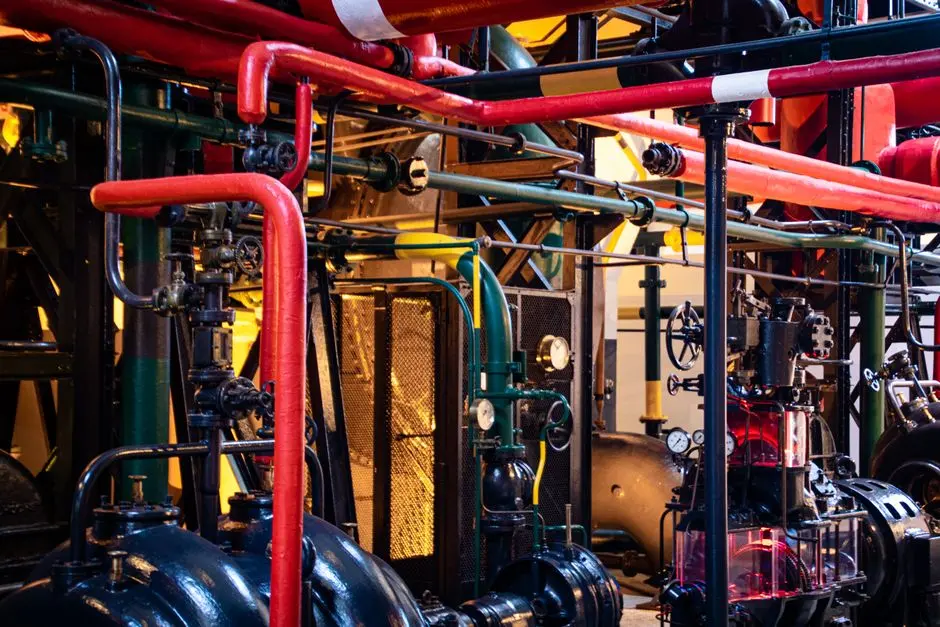
The reference train starts with a 24–48 h equalization basin fitted with coarse-bubble aeration to smooth batch peaks from CIP and synthesis campaigns, which is critical because a 3× COD swing over a few hours is the single biggest reason MBR systems lose flux in the field. From equalization the stream moves to a chem-physical stage: pH correction, coagulant and flocculant dosing through an automatic chemical dosing skid, and a DAF unit that takes out FOG, suspended solids, and colloidal API residues before any biological contact. The anaerobic stage is sized as an EGSB or UASB reactor when the equalized COD stays above 5,000 mg/L; field results on pharmaceutical effluent consistently show 60–80% COD removal and a biogas yield of 0.3–0.4 m³ per kg COD removed, which in 2026 is enough to offset a meaningful slice of the aeration power in a Sierra installation. The aerobic stage is a submerged MBR using PVDF flat-sheet membranes at 0.1 μm, with mixed liquor suspended solids held at 8,000–12,000 mg/L; compared to conventional activated sludge, the same BOD₅ removal fits in roughly 60% of the footprint, which is often the binding constraint on a Quito or Guayaquil brownfield site. The final stage is an RO polishing system for plants targeting cooling-tower make-up, boiler feed, or CIP rinse reuse at 65–75% recovery on high-salinity effluent. For the membrane modules themselves, the most common 2026 selection in Ecuador is the PVDF flat-sheet MBR modules paired with an integrated MBR system skid; flat sheets tolerate the rag and string carryover that shows up in real plant effluent far better than hollow-fibre modules. The logic of the train is that each stage drops a specific class of contaminant — equalization handles time, chem-physical handles colloids and FOG, anaerobic handles load, MBR handles residual organics and TSS, and RO handles dissolved salts — and the 2026 design only works if every stage pulls its weight.
MBR design parameters for Ecuador: altitude and climate adjustments
Most off-the-shelf MBR specs assume sea-level air and 20 °C biology, and that is where a generic design starts to underperform in the Ecuadorian Sierra. At 2,800 m elevation — Quito is roughly 2,850 m and Cuenca around 2,800 m — standard oxygen transfer efficiency (SOTE) drops by about 25–30% versus sea level, so blowers must be sized at 1.3–1.5× the standard figure; this is the single most common mistake EPC consultants make when copying a coastal spec into the Sierra. Ambient temperatures in the Sierra region run 10–18 °C for most of the year, which is well below the 30–37 °C mesophilic range an EGSB or UASB needs to hold its design removal rate; the practical fix is to specify insulated or buried equalization tanks and to use the waste-heat from the compressor room to keep the anaerobic reactor inside its operating envelope. For Ecuador's variable influent — rags, packaging film, occasional CIP surfactant spikes — PVDF flat-sheet membranes are the safer 2026 choice because they tolerate the carryover and the periodic clean-in-place chemistry that hollow-fibre modules do not. The operating envelope to write into the datasheet is flux 12–18 LMH for flat-sheet MBR, MLSS 8,000–12,000 mg/L, and aerobic HRT 6–10 h; anything outside that band in 2026 is a flag to revisit the design.
RO polishing and water reuse: when it pays off in Ecuador
RO pays for itself fastest in Ecuador when the permeate can be reused for cooling-tower make-up, boiler feed, CIP rinse, or landscape irrigation, because each of those targets has a different permeate spec and a different payback profile. On API effluent the RO unit is normally run at 65–75% recovery, compared with 75–85% on low-TDS streams, and the concentrate stream needs a defined disposal path: an evaporation pond with FGD-style mist elimination, a contracted hazardous-waste hauler, or a crystallizer for the largest plants. The engineering target for boiler-feed and cooling-tower reuse is permeate conductivity below 50 μS/cm, which a properly designed two-pass RO can hit consistently off an MBR effluent with conductivity under 1,500 μS/cm. The RO feed must be protected by a multi-media RO pre-filter that holds the Silt Density Index below 3, and a high-efficiency sedimentation tank upstream to drop residual colloids before they foul the membrane. The table below summarizes reuse targets, permeate spec, and the typical payback range seen on 2025–2026 Ecuadorian projects.
| Reuse target | Permit spec | RO recovery | Typical payback |
|---|---|---|---|
| Cooling-tower make-up | Conductivity < 500 μS/cm | 70–75% | 10–14 months |
| Boiler feed (low-pressure) | Conductivity < 50 μS/cm | 65–70% (two-pass) | 12–18 months |
| CIP rinse water | TSS < 5 mg/L, conductivity < 200 μS/cm | 70–75% | 8–12 months |
| Landscape irrigation | TSS < 30 mg/L, no fecal coliforms | 65–70% | 14–24 months |
Equipment sizing and 2026 CAPEX/OPEX benchmarks for Ecuador
For Ecuadorian pharmaceutical plants in the 5–50 m³/day range, the 2026 design almost always lands on a containerized MBR + RO skid because it shortens the on-site installation window and makes the MAE permit path easier to defend. Headworks protection should start with a rotary bar screen headworks to keep packaging film and rags out of the equalization basin, and the dewatering side of the line should finish on a plate and frame filter press that takes the waste activated sludge from 1–2% dry solids up to 22–28% cake for off-site disposal. The CAPEX figures below are USD 2026 budgets for an integrated MBR + RO containerized scope, FOB China plus CIF Guayaquil or Quito, and are intended as internal budget anchors rather than catalog pricing; OPEX is dominated by aeration power and the RO high-pressure pump, with a membrane replacement reserve built in. Reuse offsets above 40% of municipal water plus discharge fees are the common case in Quito and Guayaquil industrial zones, and that is what drives the payback band down to 8–14 months for most 2026 projects.
| Flow band | Plant type | CAPEX (USD, 2026) | OPEX (USD/m³ treated) | Payback |
|---|---|---|---|---|
| 5 m³/day | Small generics, solid-dose | 180,000–220,000 | 2.4–3.2 | 10–14 months |
| 20 m³/day | Mid-size API + generics | 280,000–340,000 | 1.9–2.6 | 9–13 months |
| 50 m³/day | Large Ecuadorian plant | 380,000–450,000 | 1.8–2.3 | 8–12 months |
For a useful cross-check on the 2026 cost picture, the same integrated MBR + RO approach is described in our pharmaceutical wastewater treatment in Brazil guide, and the broader economics of advanced oxidation on the back end are covered in the AOP energy efficiency for 2026 reference. The anaerobic digester design primer is worth reading for any project where the EGSB size is being re-checked against a specific wastewater profile. For ETP cost and design in the neighboring Brazilian market — a useful comparator because the regulatory structure is similar — see ETP cost and design in Brazil.
RFQ readiness: questions every Ecuadorian pharmaceutical buyer should ask in 2026
Before issuing an RFQ in 2026, lock the technical scope to four specific items that vendors will otherwise leave vague. First, demand TULSMA Libro VI Anexo 1 performance guarantees tied to a defined test protocol — a 24-h composite sample per Tabla 9 of the regulation — with a clear pass/fail on COD, BOD₅, TSS, FOG, sulfides, and pH. Second, require altitude-corrected aeration sizing whenever the site is in the Sierra above 2,000 m; the blower nameplate and the SOTE must be quoted at site elevation, not at sea level. Third, confirm that CIP and membrane cleaning chemicals are stocked in Ecuador or shipped with the commissioning spares, because an empty CIP shelf in month six is a common cause of membrane fouling. Fourth, ask for a Spanish-language operations manual and a remote-monitoring SCADA package — both are standard in 2026 and both are needed to satisfy MAE inspection cycles without sending a technician to site for every minor alarm.
Frequently Asked Questions
Which Ecuadorian regulation governs pharmaceutical effluent in 2026?
Pharmaceutical effluent in Ecuador is governed by TULSMA Libro VI Anexo 1, as updated by Reforma Acuerdo 097, which sets numeric discharge limits for pH (6–9), COD (below 250 mg/L), BOD₅ (below 100 mg/L), TSS (below 100 mg/L), FOG (below 30 mg/L), and sulfides (below 1 mg/L), with total nitrogen tracked on a case-by-case basis.
What effluent quality can a well-designed MBR deliver on pharmaceutical wastewater?
A properly operated submerged MBR with PVDF flat-sheet membranes at 0.1 μm typically delivers COD of 80–150 mg/L, TSS below 5 mg/L, and turbidity below 1 NTU on equalized and pretreated pharmaceutical influent, which is comfortably inside TULSMA Libro VI Anexo 1 limits before any RO polishing.
Is anaerobic pretreatment viable for a small generics plant in Ecuador?
Anaerobic pretreatment in an EGSB or UASB is only cost-effective when the equalized influent COD stays above 5,000 mg/L; for a small generics plant running closer to 1,000–3,000 mg/L COD, an aerobic MBR alone is usually cheaper to build and easier to operate, and skips the biogas handling and heating load that anaerobic stages require.
How should RO concentrate be handled in Ecuador?
RO concentrate from pharmaceutical effluent in Ecuador is normally sent to a lined evaporation pond fitted with FGD-style mist elimination, or removed by a licensed hazardous-waste hauler under the MAE generator registry; the largest plants sometimes add a crystallizer to recover salts, but that is rarely economic below 50 m³/day.
Where is the treatment system typically installed on an Ecuadorian pharmaceutical site?
The standard 2026 layout is a containerized MBR + RO skid on a reinforced concrete pad adjacent to the production building, with the equalization basin either buried or insulated, the chemical dosing equipment in a separate ventilated room, and the RO skid on a covered slab with at least 1.5 m clearance on the service side for cartridge and membrane replacement.