Why Fabricated Metals Wastewater in Jeffersontown Is a Different Clarification Problem
Jeffersontown's stamping presses, CNC cells, and finishing lines discharge a matrix that defeats a plain settling tank. Stamping and drawing operations generate tramp oil and hydraulic fluid that ride a surfactant-stabilized emulsion; machining and grinding generate emulsified coolants laced with ferrous and non-ferrous fines; surface finishing and rinse water carry cleaners, phosphates, and metals at pH swings from 2 to 12; weldment and wash water add alkaline cleaners and entrained oils. Emulsified oil droplets and metal fines have a specific gravity within roughly ±0.05 of water, so Stokes-law settling is slow, and any hydraulic disturbance re-suspends the blanket.
The compliance envelope is unforgiving. Discharges to Louisville MSD sanitary sewer fall under the Industrial Pretreatment Program, and most fabricated-metals operations map to EPA 40 CFR Part 433 Metal Finishing categorical standards, which set oil & grease, TSS, and metals limits (per EPA 40 CFR 133.102 referencing Part 433). A 50 mg/L FOG spike or a 400 mg/L TSS excursion often triggers a surcharge letter. A correctly sized dissolved air flotation system addresses the emulsion, not just the settleable fraction, which is the root of the problem shops see as oil-coated weirs, sludge re-suspension, and inconsistent effluent.
How a DAF Actually Works (and Why It Suits Oily Metalworking Streams)
A dissolved air flotation unit clarifies wastewater by attaching micro-bubbles to oil droplets and fine solids, then floating that aggregate to the surface for skimming. Clean water is pressurized to roughly 4-6 bar and saturated with air; when that saturated stream is released into the floatation cell at atmospheric pressure, dissolved air comes out of solution as a cloud of micro-bubbles. Clearwater Industries documents a 30-50 µm bubble size in its DAF systems, and DAF Corporation's Micro Bubble Generator produces 20-40 µm bubbles with no coarse air (per DAF Corp product literature).
Coagulant, pH adjustment, and polymer flocculant are dosed upstream through flocculation tubes or staged mix tanks; the conditioned floc has a high surface area, so the micro-bubbles attach efficiently. The bubble-floc aggregate rises in roughly 3-5 minutes, a surface skimmer scrapes the float into a collection trough, and clarified water exits below the sludge blanket. DAF Corp's FC Maximizer is rated at 92-98% TSS removal, with a published FC-150 design case of 500 GPM at 2,000 PPM TSS feed clarified to 50 PPM, and a thickened sludge consistency of 2-4% solids (per DAF Corp, 2025). VanAire notes that smaller, more abundant bubbles float a finer floc with reduced chemical usage, which is the chemistry-efficiency lever for metalworking plants watching polymer cost. Coagulant and polymer feed should be paced by influent TSS and FOG via an automatic chemical dosing system.
How a Conventional (Lamella) Clarifier Works — and Where It Still Wins
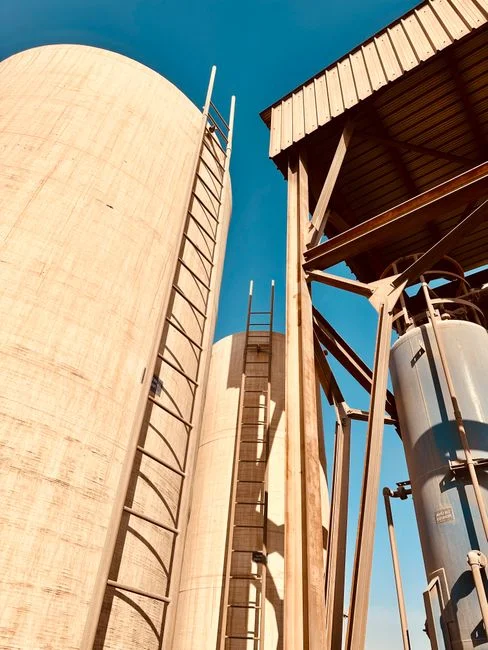
A lamella clarifier (inclined-plate settler) coagulates and flocculates the wastewater, then passes it through a pack of inclined plates at 55-60° from horizontal. The plates multiply the effective settling area inside a small footprint; a typical surface-loading rate is 20-40 m/h, which translates to a 4-6 m² plate-pack footprint for a 50 m³/h unit (per HydropureWater design data, 2026). Solids slide down the plate face into a hopper, clarified water rises through the plate spacing, and the unit delivers a compact basin with up to ~30% lower chemical consumption than a conventional clarifier.
These systems excel at removing settleable suspended solids and metal hydroxides precipitated by pH adjustment. They do not capture emulsified oil droplets (specific gravity ~0.95-1.0) or low-specific-gravity fines, and they have no mechanism for floating free oil. That makes them the right tool for finishing-rinse water after metals precipitation, but a poor primary unit for stamping and machining lines carrying 200-2,000 mg/L of emulsified coolant and tramp oil. Sludge off a lamella is typically 1-2% solids, so a downstream plate and frame filter press is usually required for cake dryness before disposal.
DAF vs Clarifier for Fabricated Metals Wastewater: 2026 Comparison
The table below provides a decision matrix based on your lab data. DAF Corp publishes 92-98% TSS for the FC Maximizer and 85-90% for the RC UniMax (per DAF Corp, 2025); a well-operated lamella clarifier typically delivers 60-80% TSS at comparable hydraulic loading on settleable solids, and substantially less when oil is emulsified. Footprint and HRT numbers below are drawn from HydropureWater and DAF Corp design data (2025-2026).
| Parameter | DAF (e.g., HydropureWater / FC Maximizer) | Lamella (Inclined-Plate) Clarifier |
|---|---|---|
| Mechanism | Micro-bubble (20-50 µm) attachment to floc; surface skimming | Gravity settling on inclined plates; hopper sludge |
| Typical TSS removal | 85-98% (per DAF Corp, 2025) | 60-80% on settleable solids; lower on emulsified streams |
| FOG / oil removal | Removes free and emulsified oil effectively | Removes only already-separated or adsorbed oil |
| Footprint per m³/h | ~0.3-0.5 m² (e.g., 50 m³/h unit in 15-25 m²) | ~0.08-0.12 m² plate pack (e.g., 50 m³/h in 4-6 m²) |
| Typical HRT | ~15-30 min including saturation | ~20-45 min including flocculation |
| Sludge % solids | 2-4% (DAF Corp design data) | 1-2% (requires downstream dewatering) |
| CAPEX posture | Medium-High (skid, saturation, controls) | Low-Medium (tank + plate pack) |
| OPEX posture | Medium (polymer + air; low sludge hauling) | Low chemical, but higher sludge hauling cost |
| Best-fit fabricated-metals stream | Stamping, machining, weldment wash with emulsified coolants, tramp oil, FOG > 50 mg/L | Finishing rinse after metals precipitation; low-FOG polishing step |
| Key risk | Cold-water saturation drop; need to manage oil rags/screens upstream | Emulsified oil passes through; re-suspension under hydraulic upset |
Operationally, the DAF family covers 4-300 m³/h in standard modules, which brackets the mid-sized Jeffersontown shop. For larger or finer-effluent targets, a DAF + lamella polish train is the standard architecture, with the dissolved air flotation system doing the heavy lifting on oil and fines, and the lamella clarifier catching residual floc before discharge or recycle.
Jeffersontown 2026 Compliance and Siting Considerations
Discharges from Jeffersontown's industrial corridor enter the Louisville MSD sanitary sewer under the Industrial Pretreatment Program, and fabricated-metals operations typically fall under 40 CFR Part 433 Metal Finishing categorical standards, which limit oil & grease, TSS, lead, cadmium, chromium (total and hexavalent), copper, nickel, and zinc. A correctly designed DAF alone, taking 2,000 mg/L TSS feed to 50 mg/L effluent (per DAF Corp FC-150 design case), is comfortably within typical IPP daily-maximum TSS for most categories, which is the same envelope a lamella clarifier can struggle to meet on an emulsified stream without polymer-heavy polishing chemistry.
Three siting caveats matter for 2026 retrofits in this corridor. First, finishing shops with hexavalent chromium, nickel, or zinc must route flow through a metals precipitation stage (pH 8.5-9.5 for most divalent metals) before DAF or lamella; the chosen unit is the primary clarification step, not a metals-removal silver bullet. Second, DAF saturation efficiency drops in cold water below about 10°C, so unheated Jeffersontown plants in winter may need partial enclosure, a heated saturation tank, or a downstream lamella polish step. Third, rag and gross-solids loading should be managed upstream with a rotary mechanical bar screen and a paced automatic chemical dosing system to protect the saturation pump and keep the float blanket stable.
How to Choose in 2026: A 3-Step Decision Framework
Step 1 — Characterize the stream. Pull a representative 24-hour composite and measure flow (m³/h), TSS, O&G, pH, and the free-vs-emulsified split. If O&G exceeds 50 mg/L or TSS exceeds 300 mg/L with any measurable emulsified fraction, the answer is DAF as the primary unit; if O&G is below 50 mg/L and the stream is mostly settleable solids or precipitated metal hydroxides, lamella is in the running. Step 2 — Size and footprint. For flows up to 300 m³/h, the DAF family covers the typical mid-sized Jeffersontown shop; for flows under about 20 m³/h with low oil, a lamella clarifier is the more capital-efficient unit and fits on a smaller pad. Step 3 — Decide on the train. DAF alone handles oily streams; DAF + lamella polish is the right answer when you are recycling rinse water or chasing a sub-30 mg/L TSS target; lamella alone is correct for finishing-rinse with metals precipitation upstream. This logic applies in adjacent industries, such as the DAF or clarifier for transportation equipment wastewater in Goshen guide, and the chemicals-sector decision in DAF or clarifier for chemicals wastewater in Troy.
Frequently Asked Questions
When should a Jeffersontown fabricated-metals plant choose DAF over a clarifier?
Choose DAF as the primary clarification step when O&G exceeds 50 mg/L, when TSS exceeds 300 mg/L with an emulsified fraction, or when tramp oil from stamping and drawing operations is present. A dissolved air flotation system typically removes 85-98% TSS and captures both free and emulsified oil (per DAF Corp, 2025).
What effluent TSS can a DAF realistically deliver to Louisville MSD?
Mid-sized DAF systems are routinely designed for 30-100 mg/L TSS effluent from 1,000-2,000 mg/L TSS feed, with the DAF Corp FC-150 design case published at 2,000 PPM down to 50 PPM at 500 GPM. That envelope is comfortably within typical IPP daily-maximum limits under 40 CFR Part 433 for most metal-finishing streams.
Where does a lamella clarifier still make sense in a fabricated-metals plant?
Lamella clarifiers are the right primary unit for finishing-rinse water after metals precipitation, where the load is pH-precipitated metal hydroxides and FOG is below ~50 mg/L, and as a polishing step downstream of a DAF when recycled rinse water needs sub-30 mg