Why Leominster Chemical Plants Are Asking the DAF-vs-Clarifier Question in 2026
For Leominster, MA chemical factories in 2026, choose a DAF when the stream contains emulsified oils, low-density flocs, FOG, or finely suspended solids (microbubbles 30-50 µm lift them in minutes). Choose a lamella clarifier when particles settle readily, the stream is high-flow with moderate solids, and you want a smaller chemical bill and lower OPEX. The right answer is rarely either/or on a batch chemical line — it is which unit, in which slot, sized against which local limit.
Leominster sits inside the North Central Massachusetts specialty and fine-chemicals cluster: contract manufacturers, plastics compounders, dye and pigment houses, polymer intermediates, and surfactant blenders. Their wastewater profiles are not the settleable grit of a metals finisher or the simple TSS of a food plant. They are emulsified, surfactant-stabilized, pH-volatile, and batch-driven. That is why a DAF is best applied to remove materials that normally settle slowly, persist by remaining in suspension, or have a tendency to float (Komline-Sanderson, 2026) — which describes the typical Leominster effluent almost verbatim.
Massachusetts sets the boundary two ways. The MA DEP industrial discharge program operates under 314 CMR 7.00 (the state implementing the EPA pretreatment framework), and the Leominster POTW applies its own sewer-use ordinance on top of that, with local limits on FOG, metals, pH, and flow. Pretreatment equipment that drifts out of spec during a batch dump risks surcharges, a Notice of Violation, or a slug-load pass-through that the POTW will bill back to the discharger. The 2026 pinch is real: coagulant price volatility, rising MA sludge-disposal tipping fees, and tighter audit expectations on jar-test records. That is the operating frame the DAF-vs-clarifier decision actually lives inside.
How a DAF Actually Works: Microbubble Flotation in 30-50 µm Bubbles
A dissolved air flotation unit removes suspended solids and immiscible liquids by attaching fine air bubbles to conditioned floc, lowering the effective particle density so the floe rises to the surface instead of settling. Pressurized recycle water saturated with air is released into the flotation tank, and the dissolved air comes out of solution as microbubbles in the 30-50 µm range (SigmaDAF USA / Clearwater Industries, 2026). Those microbubbles give DAF its speed — a particle that would take hours to settle can be floated in 3-5 minutes of hydraulic residence time.
Mechanically, a DAF is straightforward. Recycle water is pressurized to roughly 4-6 bar in a saturation tank with compressed air; the pressurized stream is then depressurized through needle valves or nozzles into the flotation cell, where the dissolved air nucleates onto chemically conditioned floc. A surface skimmer paddle drives the floated sludge into a hopper; heavier settleable solids drop to a bottom auger or hopper (SigmaDAF FPAC/FPBC/FPHF design family). The clarified underflow exits beneath the float blanket.
Chemical conditioning is not optional for high removals. DAF technology should be paired with proper chemical coagulation and flocculation treatments to ensure optimal performance (SigmaDAF, 2026). A serpentine floc tube or stirred mix tank ahead of the cell builds the floc size and surface charge that the bubbles need to attach to. The dosing system is best handled by a PLC-controlled chemical dosing skid so jar-test ratios translate into repeatable plant operation, especially across batch swings typical of Leominster specialty chemical production.
Standard build is 304 stainless; 316 stainless and polypropylene are available for aggressive chemical-plant streams (SigmaDAF, 2026; WesTech). Utility demand is light: a recycle pump, a skimmer drive, and compressed air for saturation. The DAF is essentially a hands-off machine that requires little operator attention; maintenance usually involves lubrication of drives and bearings and occasional replacement of worn items (Komline-Sanderson, 2026).
How a Lamella Clarifier Works: Gravity, Inclined Plates, and Recirculated Sludge
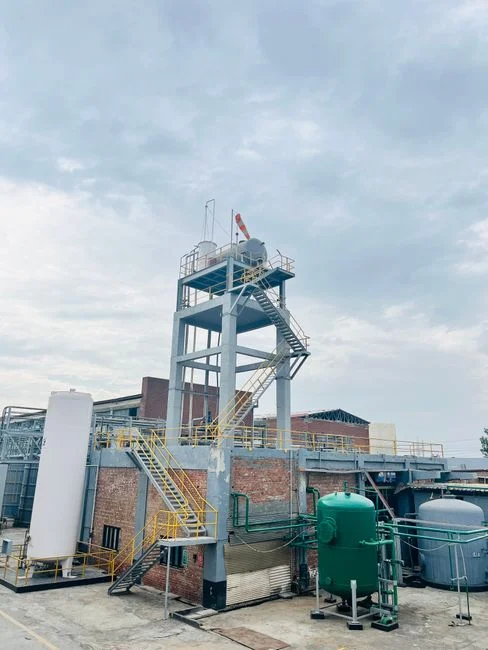
A lamella clarifier — also called an inclined plate settler or high-efficiency sedimentation tank — is a gravity separator whose footprint is compressed by stacking a series of inclined plates inside a rectangular tank. Coagulated and flocculated water flows upward through the plate pack at low velocity; settleable solids slide down the underside of the plates into a hopper at the bottom, while clarified water exits over a launder at the top. The inclined geometry multiplies the effective settling area without multiplying the floor footprint.
The performance lever is surface loading rate. A conventional clarifier runs at roughly 1-3 m/h; a lamella clarifier's stacked-plate geometry pushes the equivalent clarification rate to 20-40 m/h (HydropureWater high-efficiency sedimentation tank), which is the figure buyers should anchor their sizing against. Because the residence time inside the plate pack is short, the upstream coagulation/flocculation step must be tight — poorly conditioned floc simply passes through.
Two design features matter for OPEX. First, sludge recirculation from the hopper back to the floc zone densifies floc and cuts fresh coagulant demand by up to 30% (HydropureWater lamella design data). Second, the unit is mechanically simple: no compressed air, no saturation tank, no recycle pump — only feed pumps, mixers, and a sludge pump. That utility profile is what makes the lamella attractive on high-flow, low-FOG streams where chemical OPEX is the dominant operating cost.
Where it loses to DAF: emulsified oils, FOG, latex, and buoyant colloids will not settle cleanly through a plate pack without aggressive upstream emulsion breaking. A lamella is also less forgiving of flow surges because the inclined plates have a finite capture velocity. For Leominster plants running a steady, settleable-solids stream, the HydropureWater high-efficiency sedimentation tank (lamella clarifier) is the workhorse option.
Side-by-Side Parameters: DAF vs Lamella Clarifier
Buyers evaluating a DAF and a lamella clarifier for a Leominster chemical line should compare the same seven parameters before either unit is quoted. The table below puts the two technologies on a like-for-like basis using 2026 manufacturer figures and the regulatory boundary that drives Massachusetts pretreatment sizing.
| Parameter | DAF (Dissolved Air Flotation) | Lamella Clarifier (Inclined Plate) |
|---|---|---|
| Primary removal target | TSS, FOG, emulsified oils, low-density flocs, surfactants | Settleable TSS, metals co-precipitate, hardness |
| Mechanism / key spec | 30-50 µm microbubbles attach to floc, float to surface (SigmaDAF, 2026) | 20-40 m/h surface loading on inclined plates (HydropureWater) |
| Hydraulic residence time | 3-5 minutes typical flotation zone | 15-30 minutes including plate pack |
| Footprint per m³/h | Larger tank volume, smaller plan area than conventional clarifier | Smallest plan area of any gravity clarifier (inclined plates) |
| Chemical demand | Coagulant + flocculant required for high removals (SigmaDAF, 2026) | Coagulant (+ flocculant); up to 30% reduction with sludge recirculation (HydropureWater) |
| Utilities | Recycle pump, skimmer drive, compressed air for saturation | Feed pump, sludge pump, mixers; no compressed air |
| Operator attention | Hands-off between PM intervals (Komline, 2026); jar-test and float blanket checks | Routine sludge blowdown; periodic plate inspection and wash |
| Build materials | 304 SS standard; 316 SS and polypropylene for aggressive streams (SigmaDAF; WesTech) | Carbon steel with rubber lining; 304/316 SS or FRP available |
| Ideal stream | Emulsified oil, FOG, latex, surfactant-bearing, variable batch effluent | Steady, settleable-solids stream; high flow with moderate TSS |
Two operational notes worth carrying into an RFQ. First, DAF utilities (recycle pump, skimmer drive, compressed air) are a small but constant load — roughly 5-8 kWh per m³ treated at typical recycle ratios of 20-30%. Second, a clarifier needs routine sludge blowdown and visual check of plate condition (Komline, 2026), which translates into a labor line item that a DAF largely avoids. Both numbers belong in the OPEX side of a capital memo.
Decision Framework: When a Leominster Plant Should Pick DAF, Lamella, or a Hybrid Train
Selection between DAF, lamella, and a hybrid train is a stream-property decision, not a brand decision. The framework below translates the mechanism and parameter data above into the three cases a Leominster chemical plant will actually face, with the local regulatory envelope as the design boundary. Always anchor the final pick in a jar test and pilot data; lab or pilot testing is often the best way to determine the correct separation characteristics of a given waste stream (Komline-Sanderson, 2026), and both SigmaDAF and Komline explicitly recommend pilot or lab testing before sizing a DAF.
| If the stream looks like this | Then choose | Boundary condition |
|---|---|---|
| Emulsified oil, FOG, latex, plasticizer, low-density floc that persist in suspension | DAF only — 30-50 µm bubbles will lift what gravity cannot settle (SigmaDAF, 2026) | MA DEP / Leominster POTW FOG and oil limits; jar test confirms floatability |
| Mostly settleable TSS, steady flow, moderate-to-high hydraulic load, OPEX-sensitive | Lamella clarifier — 20-40 m/h surface loading, ~30% lower coagulant demand with sludge recirculation (HydropureWater) | Local TSS and metals limits; bench-scale settling curve confirms capture velocity |
| Both settleable grit/solids AND emulsified FOG (typical batch specialty chemical plant) | Hybrid train: lamella upstream as bulk solids stripper, DAF downstream as FOG/emulsion polish | Combined TSS + FOG envelope; pilot both stages and verify sludge-handling capacity |
For the hybrid case, sizing matters more than choice. The lamella is sized to strip the bulk settleable fraction at the 20-40 m/h surface loading rate, dropping the load and fouling potential on the DAF, which is then sized for the residual FOG and emulsified fraction at its 30-50 µm microbubble range. A properly designed hybrid cuts coagulant dose on the DAF stage, reduces float sludge volume, and protects any downstream biological or RO step from oil fouling. It is also the configuration that survives a MA DEP slug-load audit best, because neither unit is operating outside its design envelope on a batch upset.
Two cautions. First, do not size from a marketing brochure — use the local POTW discharge limits and MA DEP air/toxic limits as the design boundary. Second, if the stream is genuinely unknown, a DAF pilot rental is faster to deploy and gives a 30-50 µm bubble-column answer in days, not weeks.
2026 Cost, Footprint, and Compliance Outlook for Leominster Buyers
In 2026, coagulant and flocculant price volatility plus higher MA sludge-disposal tipping fees push OPEX-sensitive Leominster plants toward the lamella or hybrid-train end of the spectrum. A lamella clarifier's sludge-recirculation design cuts fresh coagulant demand by up to 30% (HydropureWater field data) and produces a denser underflow, which lowers hauling cost per dry ton — a line item that has climbed sharply across Massachusetts in the last 12 months. Footprint also favors the lamella on a per-m² per m³·h basis, which matters inside the older Leominster plant envelopes where headroom and bay length are fixed.
The DAF still wins where the stream would otherwise bypass the clarifier. A DAF's 3-5 minute flotation zone and 30-50 µm microbubble range (SigmaDAF, 2026) handle surges that would re-dissolve or carry settleable solids through a plate pack. On emulsified or surfactant-bearing effluent — common in Leominster polymer, dye, and surfactant work — only DAF-class equipment, or a DAF polish stage, will meet the local POTW's FOG ceiling without pushing coagulant dose to uneconomic levels. A PLC-controlled chemical dosing skid is required on either train to keep jar-test ratios in register with actual plant operation and to satisfy MA pretreatment reporting.
For procurement: budget 2026 capital for the chosen primary separator, the chemical dosing skid, and a downstream biological or membrane step (e.g., MBR) that typically sits after the chosen primary separator regardless of which one is picked. The article DAF vs clarifier for chemicals wastewater in McIntosh (2026 buyer's guide) covers a similar North American specialty-chemicals comparison, and how organic chemicals plants meet EPA pretreatment limits in 2026 frames the regulatory backbone that the Leominster POTW enforces locally. The companion mining context in DAF vs clarifier for mining wastewater in Conroe, TX (2026 guide) is a useful read on the hydraulic-residence-time tradeoff even though the chemistry differs.
Frequently Asked Questions
For a Leominster chemical plant with emulsified oils and FOG, is DAF or a lamella clarifier the correct primary separator?
DAF. The 30-50 µm microbubbles in a dissolved air flotation system attach to emulsified oil and FOG droplets and lift them in 3-5 minutes, while a lamella clarifier cannot capture buoyant colloids in its plate pack. Match DAF chemical conditioning to the Leominster POTW FOG limit and validate with a jar test (SigmaDAF, 2026; Komline-Sanderson, 2026).
What surface loading rate should a lamella clarifier be sized at for a chemical-plant wastewater stream?
20-40 m/h equivalent clarification rate, per the HydropureWater high-efficiency sedimentation tank (lamella clarifier) design data. This is roughly an order of magnitude higher than a conventional clarifier, which is why the inclined plate geometry gives the lamella its footprint advantage on settleable-solids streams.
When does a hybrid lamella-DAF train make sense for a Leominster specialty chemicals plant?
When the influent contains both settleable grit or bulk solids and emulsified FOG — typical of batch specialty chemical, polymer, and surfactant production. The lamella strips the settleable fraction at 20-40 m/h, the DAF polishes the residual emulsion at 30-50 µm bubble size, and both units operate inside their design envelope on a batch upset, which is the configuration that survives a MA DEP slug-load audit most cleanly.
Does a DAF or a lamella clarifier need a chemical dosing skid in 2026?
Yes, for both. DAF requires coagulant and flocculant conditioning for high removals (SigmaDAF, 2026); the lamella relies on coagulation plus optional flocculant with sludge recirculation. A PLC-controlled chemical dosing skid keeps jar-test ratios locked to plant operation and produces the records the Leominster POTW expects during a MA pretreatment audit.