Why Zurich Hotels Need Engineered Wastewater Treatment in 2026
Zurich's Energiestadt Gold label, first awarded in 2001 and renewed in 2020 with an 85% audit score, is the binding municipal expectation for any hospitality operator, not a marketing badge. The city sits inside the 313-member SuisseEnergie "Cités de l'énergie" network, and the audit is graded on energy policy and resource efficiency, not towel cards (source: hotelstgotthard.ch, 2025-08). For a 50–250-room hotel in 2026, the only way to evidence that level of resource discipline in an audit is with a treatment system that can produce numbers, not narratives.
Reputation pressure converges with the federal Gewässerschutzgesetz (GSchV) and its 2018 revision, which sets numeric discharge limits rather than qualitative "no harm" tests. Cantonal enforcement runs through AWEL (Baudirektion Kanton Zürich) and the Einleitbewilligung permit, which any hotel discharging to the Zürich city sewer must hold. A hotel is classified as an indirect discharger under GSchV Annex 3.1, meaning the effluent limits are non-negotiable regardless of the downstream municipal WWTP capacity. Sustainability frameworks such as Swisstainable and the myclimate "Cause We Care" contribution of CHF 3 per overnight stay (source: hotelstgotthard.ch, 2025-08) operate one level above compliance: they turn the same engineering documents into audit evidence, so the same hydraulic balance and self-monitoring plan serves both the regulator and the sustainability auditor.
For 2026 planning, the practical envelope is a fully buried, automated MBR or WSZ-series package plant sized at 0.25–0.40 m³ per guest-night, designed to meet GSchV Annex 3.1 limits of ≤25 mg/L BOD₅, ≤150 mg/L COD, and ≤20 mg/L TSS for discharge to sewer, with a submerged MBR membrane bioreactor system as the default high-performance option for lakefront and 4–5★ properties.
Zurich Hotel Wastewater Characteristics: What the Plant Must Handle
Hotel wastewater is not a textbook domestic curve. Urban hotel benchmarks show per-guest-night loads of approximately 150 L water use, 60–80 g BOD₅, 40–60 g TSS, and 8–15 g fats-oils-grease (FOG) (typical engineering range, HydropureWater field data, 2026). The hydraulic design factor matters more than the average: a Zurich hotel sees a seasonal load factor of 1.6–1.8× in summer from lake and bike tourism, against a Dec–Feb business-travel trough, and the package plant must be selected at peak load, not the annual mean.
Three hotel-specific spikes drive equipment selection. Kitchen FOG surges at dinner service, when plate-waste fats pass through the pre-rinse and arrive at the plant in slugs. Laundry lint is a Tuesday/Friday event in most mid-range hotels, with cotton fibre and microplastic shedding from linen-change cycles. Spa pool backwash contributes elevated TDS, surfactant load, and a free-chlorine residual that can disrupt downstream biology. The standard treatment chain therefore pairs a dissolved air flotation unit for FOG and lint removal upstream of the biological stage, with MBR hydraulic retention time held at ≥18 h to absorb surfactant pulses without foam carry-over. Conventional wisdom of 8–12 h HRT is inadequate for amenity-product and pool-backwash conditions; foaming and pin floc carry-over are the predictable failure modes if HRT is undersized.
| Parameter | Per-guest-night load | Design peak (×1.7) | MBR feed limit |
|---|---|---|---|
| Water use | ~150 L | 255 L | n/a |
| BOD₅ | 60–80 g | 102–136 g | ≤400 mg/L |
| TSS | 40–60 g | 68–102 g | ≤350 mg/L |
| FOG | 8–15 g | 14–26 g | ≤80 mg/L post-DAF |
| Surfactants | 2–4 g | 3–7 g | HRT ≥18 h |
MBR vs WSZ Package Plant vs Conventional SBR: Engineering Comparison
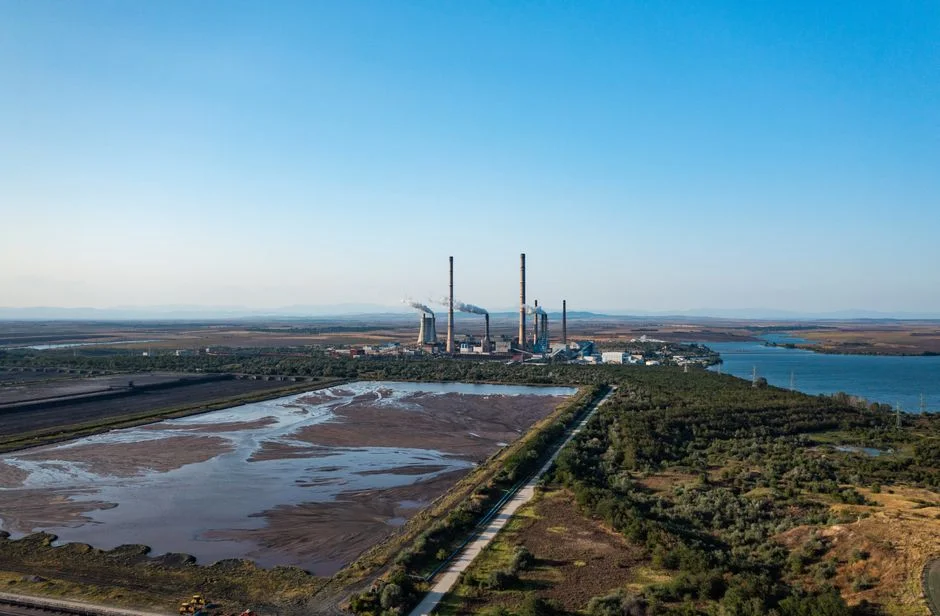
The default technology for a 50–250-room Zurich hotel is between a submerged MBR and a buried WSZ (A/O contact oxidation + sedimentation + disinfection) package plant. Conventional SBR is rarely competitive at this scale: it requires ≥2 basins, a 40–60% larger footprint, and a higher automation burden that single-property hotels cannot justify.
MBR uses DF series PVDF flat-sheet MBR modules with 0.1–0.4 μm pore size after the biological stage, producing effluent of BOD₅ <5 mg/L, TSS <1 mg/L, and NH₄-N <1 mg/L — comfortably inside the GSchV Annex 3.1 indirect-discharge envelope. The trade-off is membrane CIP every 6–12 months, a 2–4 h shutdown, and a CAPEX roughly 50–60% above WSZ. WSZ runs without membranes and uses a buried settling + chlorine contact chamber; effluent typically lands at BOD₅ 15–25 mg/L, TSS 15–20 mg/L, and is at the GSchV ceiling, with NH₄-N non-compliance risk in winter when biofilm activity drops below 8 °C influent. MBR footprint is approximately 60% smaller than WSZ at equal load, but WSZ is fully buried with a landscaped top — important in Zurich, where any above-grade plant will trigger Bauamt planning questions.
| Criterion | MBR (submerged PVDF) | WSZ (A/O + sedimentation) | SBR |
|---|---|---|---|
| Effluent BOD₅ | <5 mg/L | 15–25 mg/L | 10–20 mg/L |
| Effluent TSS | <1 mg/L | 15–20 mg/L | 15–25 mg/L |
| NH₄-N | <1 mg/L | 5–10 mg/L (winter risk) | 3–8 mg/L |
| Footprint at 50 m³/d | ~12 m² | ~20 m² | ~30 m² |
| Operator hours/month | 8–12 | 8–12 | 12–18 |
| Above-grade visibility | None if buried | None (landscaped top) | Often visible |
For a hotel without in-house WWT staff, the operator-hour totals are roughly equivalent because MBR automation offsets the membrane CIP overhead. A defensible selection rule: choose MBR when the property is lakefront, 4–5★, or pursuing Swisstainable Level III; choose buried WSZ package plant when budget is the binding constraint and the discharge goes to a municipal sewer with a biological stage.
Meeting GSchV and AWEL Permit Requirements in 2026
The Einleitbewilligung is issued by AWEL (Baudirektion Kanton Zürich) and, based on current case load in 2026, runs 8–14 weeks from a complete submission. A complete submission pack includes: hydraulic balance, influent/effluent characterization, dimensioning per SIA 190, emergency-storage sizing (typically ≥8 h of average daily flow), and a self-monitoring plan with 24-h composite sampling on a quarterly basis. The design basis must verify the GSchV Annex 3.1 indirect-discharge limits of BOD₅ 25 mg/L, COD 150 mg/L, TSS 20 mg/L, NH₄-N 10 mg/L, and P-total 2 mg/L, all 95-percentile values over the monitoring period (per GSchV Annex 3.1).
Engineering documents serve a dual purpose. The hydraulic balance, monitoring plan, and discharge compliance record that AWEL requires are exactly the artefacts an Energiestadt or Swisstainable auditor will request, so the same file satisfies both regulators. For a hotel pursuing a Zurich-specific sustainability label, a 2026 MBR with documented BOD₅ <5 mg/L effluent covers the compliance margin that auditors look for, rather than a plant designed exactly to the GSchV ceiling.
Greywater Reuse and Lake-Protection Add-Ons for Lakefront Resorts
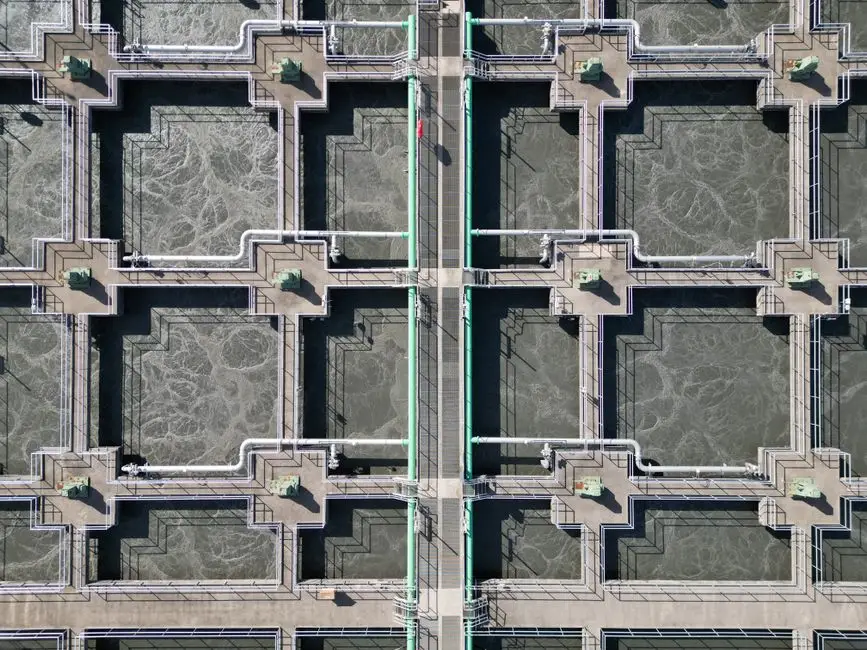
For lakefront and 4–5★ properties, tertiary treatment turns compliance into OPEX savings. Polished MBR permeate passing through UF and either UV or ClO₂ disinfection can be reused for toilet flushing, landscape irrigation, and golf-course watering, cutting fresh-water demand by 30–45%. ClO₂ is preferred over chlorination for reuse loops because it does not form trihalomethanes and is compliant with the EU Drinking Water Directive 98/83/EC for non-potable reuse applications.
The 2026 Zürich combined water-and-wastewater tariff is approximately CHF 3.20/m³, so each cubic meter reused is a direct line-item saving. Heat recovery from greywater is also feasible at 50–200-room scale using a plate heat exchanger on the MBR permeate line, with an expected 4–6% offset of HVAC energy demand. For lake-adjacent resorts, the additional discipline matters beyond the OPEX line: Zürichsee water-quality reporting is increasingly tied to diffuse-source loadings, and a hotel demonstrating closed-loop greywater handling gains both AWEL goodwill and a credible answer for the Energiestadt resource-efficiency module.
2026 Cost, Timeline, and Supplier Selection in Switzerland
The 2026 CAPEX envelope, turnkey, installed, commissioned, in CHF, is: WSZ package 50 m³/d at CHF 140–180k; MBR 50 m³/d at CHF 220–280k; MBR 150 m³/d at CHF 360–420k. The figures include civil works, electrical, AWEL fees, and commissioning, but exclude land and hotel-side plumbing modifications. OPEX 2026 runs at electricity 1.2–1.8 kWh/m³, sludge hauling CHF 180–260/m³, and chemicals CHF 0.15–0.30/m³, for a total OPEX envelope of CHF 8–14/m³ treated. A complementary reference for OPEX drivers is the 2026 municipal wastewater OPEX breakdown.
Plan 8–10 months from kickoff to compliant discharge. Design runs 6–8 weeks, AWEL permit 8–14 weeks (parallelizable against design finalization), fabrication 8–12 weeks, install + commissioning 4–6 weeks. Procurement of consumables — typically a chemical dosing system and a plate-frame filter press for sludge dewatering — should be on the same purchase order as the package plant to avoid split deliveries.
| Item | 2026 CHF range | Notes |
|---|---|---|
| WSZ 50 m³/d turnkey | 140,000–180,000 | Includes civil + electrical |
| MBR 50 m³/d turnkey | 220,000–280,000 | PVDF flat-sheet membranes |
| MBR 150 m³/d turnkey | 360,000–420,000 | For 200–250-room hotels |
| OPEX (per m³ treated) | 8–14 | Energy + sludge + chemicals |
| Permit lead time | 8–14 weeks | AWEL Einleitbewilligung |
Supplier selection checklist: EN 12566-3 or equivalent CE certification for the package plant, documented MTBF for membrane modules (target ≥5 years for PVDF flat-sheet), a Swiss-based service partner capable of AWEL-compliant self-monitoring, and at least two reference hotel installs in Switzerland. For technology and regulatory context outside Switzerland, the Warsaw hotel wastewater treatment 2026 guide and the Lisbon hotel wastewater system 2026 provide useful cross-jurisdiction comparison points, though the GSchV numeric limits and AWEL permit pathway are unique to Kanton Zürich.
Frequently Asked Questions
What are the GSchV Annex 3.1 discharge limits for a hotel discharging to the Zurich sewer?
For indirect discharge to a municipal WWTP with a biological stage, GSchV Annex 3.1 sets BOD₅ ≤25 mg/L, COD ≤150 mg/L, TSS ≤20 mg/L, NH₄-N ≤10 mg/L, and P-total ≤2 mg/L, all as 95-percentile values over the monitoring period. AWEL enforces these numerically, not qualitatively.
Which authority issues the Einleitbewilligung for a hotel in Kanton Zürich?
AWEL (Baudirektion Kanton Zürich) issues the Einleitbewilligung, with a current 2026 lead time of 8–14 weeks for a complete submission. The pack must include hydraulic balance, influent/effluent characterization, SIA 190 dimensioning, emergency storage, and a self-monitoring plan with quarterly 24-h composite sampling.
How do you size a package plant for a Zurich hotel in 2026?
Use 0.25–0.40 m³ per guest-night, with the seasonal load factor of 1.6–1.8× applied to summer peak. A 100-room hotel at 80% occupancy lands at roughly 50 m³/d, which maps to a WSZ or MBR in the 50 m³/d CAPEX band.
MBR or WSZ for a 4-star Zurich hotel — which is the 2026 default?
For a 4–5★ or lakefront property, the MBR is the default: BOD₅ <5 mg/L effluent, NH₄-N <1 mg/L, and a 60% footprint reduction offset the CHF 80–100k CAPEX premium. For a budget-constrained 3★ with sewer discharge only, the buried WSZ at CHF 140–180k turnkey is the defensible choice.
What is the 2026 CHF cost band for a hotel wastewater package plant in Switzerland?
Turnkey installed CAPEX in 2026 runs CHF 140–180k for a WSZ 50 m³/d, CHF 220–280k for an MBR 50 m³/d, and CHF 360–420k for an MBR 150 m³/d, with OPEX of CHF 8–14/m³ treated. Permit and commissioning add 8–14 weeks and 4–6 weeks respectively to the 8–10-month total project timeline.