
Why Auburn Transportation Equipment Wastewater Is a DAF vs Clarifier Question
Lee County's transportation equipment sector — automotive tier-1 stamping, aerospace fastener machining, heavy-truck cab assembly, and powersports components — generates a wastewater signature that generic food-and-mining selection guides do not address. A typical Auburn plant blends four chemically distinct streams: emulsified cutting oils and drawing compounds from CNC cells, phosphate and alkaline cleaners from metal-finishing washers, vibratory finishing solids (ceramic media, steel shot), and paint-shop overspray washwater carrying coagulated lacquer and solvent residues. None of those streams behave like the free-floating FOG that a food plant sends to a dissolved air flotation unit, and none behave like the dense mineral slurry that pulls a mining clarifier into the winner's column.
That mismatch is why a generic 2026 selection matrix misleads Auburn engineers. Ecologix's published case data shows DAF systems achieve 95% removal of oils and greases on emulsified food streams versus 70% for a conventional clarifier (per Ecologix DAF vs. Clarifier selection guide, 2026). On the heavy-sediment side, clarifiers hit roughly 90% TSS reduction, but on emulsified metalworking fluid that number drops sharply because the oil droplets have near-neutral buoyancy — they neither sink nor float without microbubble attachment. Auburn's humid subtropical climate (mean annual temperature ~18°C, mild winters per NOAA Alabama climate normals) keeps any downstream biological stage active year-round, but warm weather does not break oil emulsions, so the primary clarifier still has to do most of the work. The practical result: most Auburn plants will spend 2026 capex on a dissolved air flotation system as the primary separator, with a lamella polishing unit downstream to catch TSS that escapes the float.
How a DAF System Actually Treats Transportation Equipment Wastewater
A DAF unit generates a cloud of 30–50 micron microbubbles by saturating a recycle stream with pressurized air (typically 60–80 psig) and then releasing that pressure at the inlet of the flotation cell (per SigmaDAF/Clearwater Industries, 2026-04-27). The microbubbles attach to oil droplets and to flocculated suspended solids, lowering their effective density and lifting them to the surface, where a paddle skimmer scrapes the float layer into a sludge trough. Heavier settleable solids that do not attach drop into a bottom collection zone and are augered out as a separate underflow. Net effect: oil, FOG, and fine TSS leave the top; sand, metal grindings, and dense vibratory-media fines leave the bottom; clarified water exits the cell center.
DAF without chemical pretreatment collapses in performance. Coagulation (typically a cationic polymer or ferric chloride at 50–200 mg/L) destabilizes the emulsion, and flocculation (anionic polymer at 1–10 mg/L) agglomerates the destabilized droplets into a floc large enough for bubbles to lift. Skip that step and the emulsion passes straight through, which is why every serious DAF specification bundles a PLC-controlled chemical dosing skid upstream of the cell. Material selection matters in Auburn because phosphate cleaners push pH above 10 and chloride-bearing alkaline cleaners attack 304 stainless; specify 316SS for any cell handling chloride-laden washwater, and polypropylene for acidic rinse streams (per SigmaDAF material options, 2026-04).
Three SigmaDAF configurations cover the Auburn flow range. The FPAC is a low-profile cross-flow unit for small-to-medium flows with very high solids and FOG loads — typical of a stamping press room or a single CNC cell. The FPBC adds a lamella pack for low-to-medium solids, useful when influent TSS is moderate but the plant still wants bubble-aided separation. The FPHF is the high-flow workhorse, combining cross-flow and countercurrent hydraulics to push past the lamella plate footprint limitation. The Compact DAF packages conditioning chemistry, sensors, and PLC on a single skid for flows at or below 66 GPM; modular two-skid builds cover everything above that breakpoint (per SigmaDAF, 2026-04).
How a Clarifier Treats the Same Stream — and Where It Falls Short
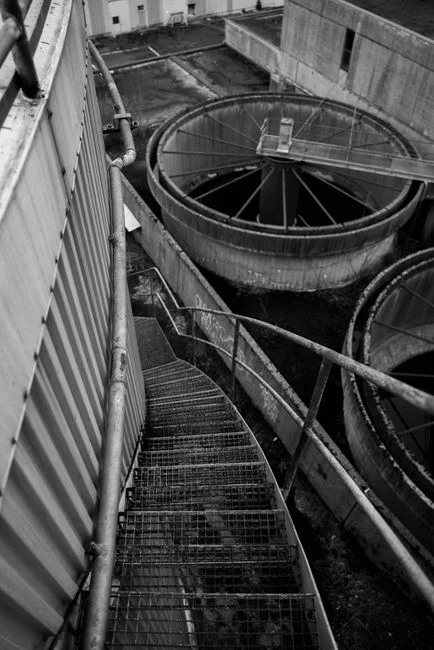
A lamella clarifier, in its most common 2026 form, is an inclined-plate settler: parallel plates at 55–60° steepen the effective settling area and shorten the path a particle must travel before it hits a surface and slides down into a hopper. Many designs recirculate a fraction of the thickened sludge back to the inlet to promote floc maturation, which improves capture on fine solids. Surface loading rates of 20–40 m³/m²·h are typical for well-engineered lamella units in industrial duty, and that rate is what drives the tank footprint down to something a plant can actually site (per HydropureWater lamella clarifier spec, 2026).
Gravity settling is unbeatable on heavy inorganic TSS — Ecologix's mining case hit 90% solids reduction at lower cost than a comparable DAF (per Ecologix, 2026). The weakness appears the moment emulsified oil enters the cell. Oil droplets in a stabilized metalworking emulsion typically run 1–20 microns and have density within ±2% of water, so they do not settle in any reasonable hydraulic residence time. The result: a lamella clarifier alone will pass most of the FOG through, forcing the plant to either pretreat with a chemical break tank or accept an oil-and-grease limit violation. Other transportation-stream pain points: 2–4 hour hydraulic residence time inflates tank volume, the large rectangular footprint is hard to retrofit into an existing press shop, and the unit is sensitive to hydraulic surges from batch washers that scour already-settled floc back into the overflow. For heavy-solids polishing downstream of a DAF, however, a high-efficiency lamella clarifier is hard to beat.
DAF vs Clarifier: 2026 Comparison Matrix for Auburn Plants
The matrix below condenses the operating trade-offs an engineer at an Auburn tier-1 stamping plant, an aerospace fastener machine shop, or a heavy-truck cab assembly facility will use to write a 2026 capex justification. Numbers are drawn from Ecologix's 2026 selection guide and SigmaDAF's 2026-04 product literature; the CAPEX/OPEX columns are expressed as relative bands (Low / Mid / High) because line-item pricing depends on materials, automation, and installation scope, not on the technology itself.
| Parameter | DAF (Compact) | Gravity / Lamella Clarifier |
|---|---|---|
| FOG / emulsified oil removal | ~95% (per Ecologix, 2026) | ~70% (per Ecologix, 2026) |
| TSS removal band | 80–95% (oil-bound and flocculated TSS) | ~90% on heavy inorganic TSS; lower on oil-bound TSS |
| Footprint per m³/h | Compact; 66 GPM single skid breakpoint (per SigmaDAF, 2026-04) | Larger; 2–4 h residence time inflates tank volume |
| CAPEX band | Mid–High (skid + chem dosing + air system) | Low–Mid (tank + scraper) |
| OPEX band | Mid (polymer, air compressor energy, sludge hauling) | Low–Mid (polymer only, lower energy) |
| Operator skill required | Moderate (jar testing, dose tuning) | Low–Moderate |
| Sensitivity to flow surges | Low (short HRT, equalization tolerant) | High (scour of settled floc) |
| Best-fit stream | Emulsified oil, FOG > 50 mg/L, variable flows | TSS > 2,000 mg/L, FOG < 50 mg/L, steady flow |
Two decision rules follow directly from the matrix. If FOG exceeds 50 mg/L or emulsified oils are present, specify DAF as primary. The 95% removal rate is the difference between meeting an ADEM-derived POTW surcharge trigger and paying it every month. If TSS exceeds 2,000 mg/L and FOG is below 50 mg/L, a lamella primary is defensible — typical of a vibratory finishing line that does not share a sewer with machining coolant. For the most common Auburn case (mixed stamping plus machining plus parts washing), the defensible 2026 configuration is DAF primary plus a lamella polishing cell — DAF strips the oil, the lamella catches the breakthrough TSS, and downstream a plate and frame filter press dewatersthe combined sludge to 25–35% dry solids for off-site disposal.
Mapping DAF or Clarifier to Each Transportation Equipment Process
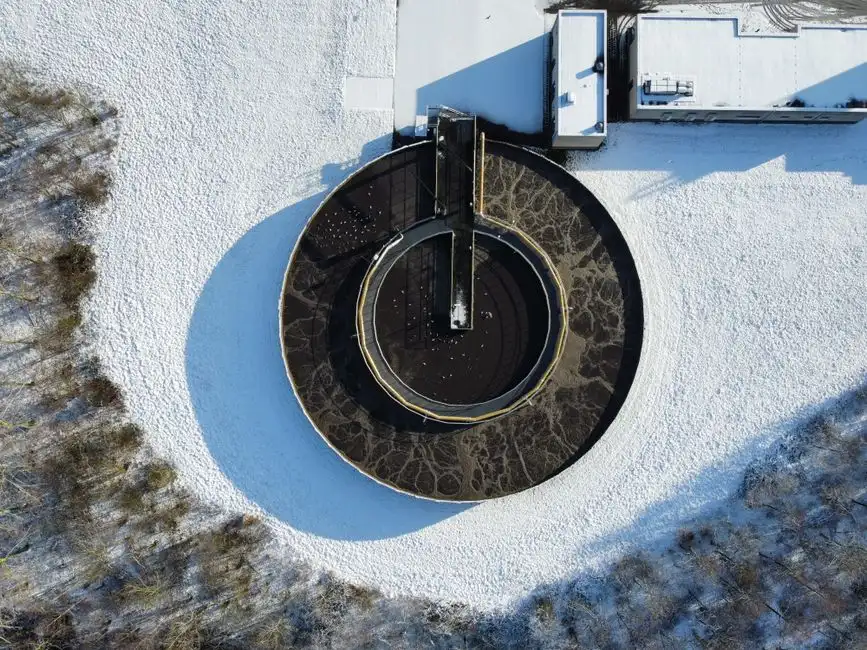
Sub-process selection matters because no Auburn plant treats a single homogeneous stream. The table below maps the dominant unit operation to a primary and a secondary recommendation; treat it as the starting point for a P&ID, not as a substitute for jar testing on the actual plant water.
| Sub-process | Stream character | Primary unit | Secondary / polishing |
|---|---|---|---|
| Stamping (press lubricant, drawing compound) | High free + emulsified oil; moderate TSS | DAF (FPAC or Compact ≤ 66 GPM) | Lamella for TSS breakthrough |
| CNC machining (coolant emulsion, cutting fluid) | Stabilized emulsion, tramp oil, metal fines | DAF with coagulant + flocculant dosing | Bag or cartridge filter for fines |
| Vibratory finishing (ceramic media, steel shot) | High inorganic TSS, low oil | Lamella clarifier | DAF only if washwater carries drawing oil |
| Paint-shop overspray wash | Coagulated lacquer, solvent residues, high coagulant demand | DAF (high polymer dose) | Lamella or multimedia filter |
| Parts washing (phosphate / alkaline cleaners) | Surfactant-laden, pH 9–12, emulsified oil | DAF with break tank upstream | pH adjustment + lamella polish |
Two engineering details cut across every DAF line. First, pair every DAF with a chemical dosing skid sized to the design flow — the PLC-controlled chemical dosing skid is the consistent enabler, and skipping it costs roughly 20–30 percentage points of removal efficiency on emulsified streams. Second, protect the DAF pump with a coarse screen upstream; the GX series rotary bar screen handles the ragging and stringy solids that periodically arrive with washwater baskets, and it prevents pump cavitation events that take a cell offline. The DAF product family covers 4–300 m³/h across 13 models, so a plant can start with one cell on the worst stream and add modules as new lines come up to 2026 production rates (per DAF sizing data, 2026).
Auburn-Specific Compliance, Cost, and Sizing Realities for 2026
Two regulatory frames drive the 2026 decision. At the federal level, EPA Metal Finishing categorical standards at 40 CFR Part 433 set the floor for facilities that electroplate, anodize, or otherwise finish metals — most Auburn aerospace fastener and tier-1 stamping plants trigger this category through at least one operation. At the state level, Alabama Department of Environmental Management (ADEM) holds the NPDES delegation, and the local POTW (Auburn's Water Resource Recovery Facility) applies its own pretreatment limits, typically expressed as surcharge triggers on oil & grease, TSS, and metals (per EPA 40 CFR Part 433; ADEM NPDES delegation framework, 2026). The 2026 EPA wastewater discharge standards USA reference summary captures both layers in one place if you need a single document to attach to the capex package.
Three cost drivers will shape the 2026 budget regardless of which clarifier wins. Polymer flocculant cost has continued to climb as cationic-acrylamide supply tightens, so expect 10–15% OPEX inflation on the chemical line. Compressed-air energy for DAF saturators runs continuously — budget roughly 0.5–1.0 kWh per cubic meter treated depending on air-to-water recycle ratio. Sludge hauling is the line item most often underestimated; the 2026 default is to send combined float and settled sludge to a plate and frame filter press for dewatering, which cuts hauling mass by 70–80% versus liquid disposal. Staging matters as much as sizing: run jar tests on real plant water first, then a pilot DAF on a slipstream at 5–10% of full flow, then commit to full-scale skids using the 66 GPM single-skid / modular two-skid breakpoint (per SigmaDAF, 2026-04). For a peer review of pretreatment economics at a comparable transportation plant, the 2026 pretreatment compliance guide for transportation equipment plants is a useful reference point, and our DAF vs clarifier for petroleum wastewater in 2026 guide applies the same decision framework to a related stream. If the selected DAF ever underperforms in service, the DAF oil water separator troubleshooting guide walks through the seven failure modes we see most often in the field.
Frequently Asked Questions
For an Auburn transportation equipment plant with emulsified cutting oils, is DAF or a clarifier the right primary in 2026?
DAF. Ecologix's 2026 case data shows DAF hits 95% oil and grease removal versus 70% for a clarifier on the same stream, and that gap is the difference between passing and failing a typical POTW oil-and-grease surcharge trigger. Specify DAF with upstream coagulant and flocculant dosing, and add a lamella polishing cell if downstream TSS limits are tight.
When does a lamella clarifier make sense as the primary unit for an Alabama transportation plant?
Only when FOG is below 50 mg/L and TSS exceeds 2,000 mg/L — typically a vibratory finishing line or a steel shot reclaim operation that does not share a sewer with machining coolant. On any stream that contains emulsified oil, drawing compound, or phosphate cleaners, the lamella's 2–4 hour residence time and sensitivity to hydraulic surges will underperform a DAF cell.
What regulatory limits apply to a transportation equipment facility in Auburn, AL in 2026?
The federal floor is 40 CFR Part 433 (Metal Finishing) for plants that perform electroplating, anodizing, or related metal-finishing operations. ADEM holds the NPDES delegation for Alabama, and the local POTW applies pretreatment limits and surcharges on oil and grease, TSS, and metals on top of the categorical standards.
What is the smallest DAF capacity I can specify, and how does it scale?
The SigmaDAF Compact DAF skid handles flows up to 66 GPM as a single pre-assembled unit with chemical conditioning, sensors, and PLC; flows above 66 GPM are built as a modular two-skid system. The DAF product line covers 4–300 m³/h across 13 models, so a plant can start with one cell and add modules as 2026 production scales.