Why Oslo Hotels Need a Dedicated Treatment Strategy in 2026
An Oslo hotel or resort in 2026 needs a packaged biological wastewater treatment system sized for high peak hydraulic factors (3–5× average) from spas, pools, and conference peaks — typically an MBR membrane bioreactor (10–2,000 m³/day) or a buried WSZ underground integrated plant (1–80 m³/h) — followed by UV or chlorine dioxide disinfection to meet Norwegian Forurensningsforskriften Chapter 11 effluent limits (BOD₇ ≤ 25 mg/L, COD ≤ 125 mg/L, total-P ≤ 1.0 mg/L for sensitive recipients) while operating year-round in freezing Scandinavian conditions.
A luxury Nordic hotel's wastewater profile is not residential sewage. Properties such as Sommerro (231 keys, 56 residences, 15,000 sq ft Vestkantbadet subterranean spa with rooftop heated pool) and The Well (10,500 m², 10 pools, 15 saunas, day pass NOK 890) discharge spa-grade flows containing body oils, hair, cosmetics, and high-temperature backwash streams that a domestic-scale package plant cannot handle (source: thewell.no, 2026; spabusiness.com, 2022). Add laundry lint, FOG from restaurants, and the diurnal spikes of conference groups, and the influent reads more like a small food-and-beverage plant than a hotel.
Forurensningsforskriften Chapter 11 (urban wastewater) requires secondary biological treatment for any discharge above 50 PE, and properties on the Oslofjord watershed — which covers most of Frogner, Tjuvholmen, and Barcode — are routinely classified as sensitive recipients, triggering P-removal obligations. In 2026, several kommune reviewers now expect bundled hotel-resort developments to provide on-site polishing or a documented reuse loop, not just a sewer connection. Sommerro's published commitment to 100% renewable energy, zero single-use plastics, and EV-only supplier transport shows that sustainability decisions in this segment now include the wastewater train (source: spabusiness.com, 2022).
Oslo Climate and Site Constraints That Shape the Equipment Choice
Ground frost depth in the Oslo region reaches 1.5–2.0 m in a typical winter, so any buried equipment like the WSZ underground package plant must be installed below the frost line or supplied with heat-tracing and insulation on the inlet and access shafts. The same constraint shaped the architecture at Sommerro, where the Vestkantbadet spa is subterranean and extends up to the roof terrace rather than sitting in a shallow above-grade plant room.
Lot coverage in Frogner, Tjuvholmen, and the Barcode district pushes developers toward below-grade installations to preserve landscaping and rooftop amenities — Sommerro's rooftop heated pool, the Thief's waterfront terraces, and Hotel Continental's courtyard all consume the surface area that a treatment building would otherwise take. A buried or semi-buried unit also keeps the plant out of the architect's sightlines and out of the wind-driven odor envelope that Oslo kommune monitors.
Temperature is the controlling biological variable. Standard activated sludge loses roughly 50% of its nitrification rate below 10 °C, and Oslo annual average wastewater temperature sits at 6–8 °C. MBR with enclosed tanks or IFAS carriers maintains stable nitrification across that range; a CAS basin sitting outdoors at Tjuvholmen in February will under-perform on NH₄-N even if the rest of the train is correctly sized. Noise and odor rules add a second filter: enclosed, buried, or odor-controlled systems are preferred in mixed residential zones, which is why most 2025–2026 Oslo hotel retrofits are choosing packaged buried units over open-tank concrete works.
MBR vs WSZ Underground Package vs IFAS vs SBR: Process Comparison
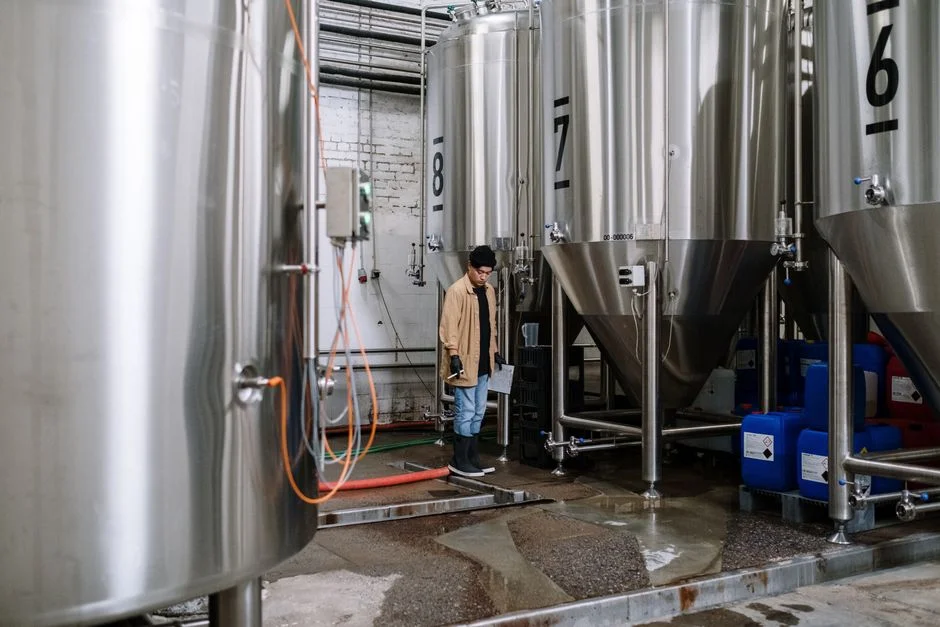
Four packaged technologies dominate Norwegian hospitality bids in 2026. The HydropureWater MBR membrane bioreactor for hotel effluent pairs submerged PVDF membranes at 0.1 μm with a biological reactor, delivering BOD₅ <5 mg/L, TSS <1 mg/L, and NH₄-N <1 mg/L on a footprint about 60% smaller than an equivalent CAS plant (HydropureWater product specification, 2026). It scales from 10 to 2,000 m³/day and is the default choice when reuse-quality permeate is part of the brief — toilet flushing, irrigation, or laundry. The WSZ underground package plant for boutique Oslo hotels combines A/O contact oxidation, sedimentation, and disinfection in a single buried tank rated 1–80 m³/h, needs no full-time operator, and sits in the lowest CAPEX band — a clean fit for 50–200-key properties without a reuse mandate.
IFAS (hybrid moving-bed biofilm plus activated sludge) is the cold-climate compromise: biofilm carriers sustain nitrification down to about 6 °C without enlarging the tankage, and the parallel IFAS for hotel wastewater 2026 engineering guide documents the design parameters. SBR (sequencing batch reactor) handles cyclical peak flow intrinsically and has a smaller footprint than CAS, but its batch hydraulic profile is a poor match for the constant high-volume, low-BOD discharge from a spa circuit. For a 200-room hotel with a 1,500 m² spa, the practical choice usually narrows to MBR (when reuse is in scope) or WSZ (when it is not), with IFAS considered where winter effluent NH₄-N is the binding constraint and reuse is not required. The DF-series PVDF flat sheet membrane modules are the standard replacement element in the MBR train and are stocked for hospitality service intervals.
| Parameter | MBR | WSZ underground | IFAS | SBR |
|---|---|---|---|---|
| Flow range | 10–2,000 m³/day | 1–80 m³/h | 50–5,000 m³/day | 20–2,000 m³/day |
| BOD₅ effluent | <5 mg/L | <20 mg/L | <10 mg/L | <15 mg/L |
| NH₄-N effluent | <1 mg/L | <8 mg/L (winter) | <3 mg/L | <5 mg/L |
| TSS effluent | <1 mg/L | <20 mg/L | <15 mg/L | <20 mg/L |
| Cold tolerance (6–8 °C) | Excellent (enclosed) | Good (buried, insulated) | Excellent (biofilm) | Fair |
| Footprint vs CAS | ~40% | ~50% (buried) | ~70% | ~60% |
| Reuse-ready permeate | Yes | No | No (needs tertiary) | No (needs tertiary) |
| Operator skill | Low–medium | Minimal | Medium | Medium |
| CAPEX band (per m³/day) | High | Low | Medium–high | Medium |
Sizing an Oslo Hotel Plant: Hydraulic and Organic Loading Math
Start with a base of 0.20–0.30 m³ per occupied-room-day for room-driven flow. Add 0.05 m³/m² of spa floor for wellness properties — a The Well-class facility at 10,500 m² would generate roughly 525 m³/day from the spa alone on a peak summer day, which is why destination spas need surge equalization rather than a simple equalization tank. Restaurants and conference groups add 30–50 L per cover-day, and laundry can contribute another 50–80 L per occupied room at full-service properties.
Peak factor is the controlling design number. Norwegian hotel projects typically design for 3–5× average; conference-driven properties (Clarion Hub, Clarion Oslo) push to 5× because morning breakfast, mid-morning break, and evening reception stack; spa resorts sit at 2–3× sustained with evening spikes from thermal circuit drainage. BOD₅ loading is roughly 60 g per person-day residential equivalent, with hotel guests adding 30–40 g from toilet, shower, and laundry combined; spa backwash is high-volume but low-BOD (typically <30 mg/L once chlorinated) and is often segregated and dechlorinated before joining the biological stream.
Worked example for a 200-room Oslo city hotel with 1,500 m² spa and a 200-cover restaurant: average daily flow ≈ 200 × 0.25 + 1,500 × 0.05 + 200 × 0.05 = 110 m³/day, peak at 4× ≈ 440 m³/day. A WSZ unit at 80 m³/h handles the peak through equalization (3,000 L surge tank), while an MBR-200 sized at 200 m³/day average carries the base load with margin for the surge. Either way, the equalization basin is sized for at least 6 hours at average flow to smooth the morning breakfast-to-shower-to-spa transition that defines the hospitality load curve.
Pretreatment, Disinfection, and Sludge Handling for Hospitality Effluent
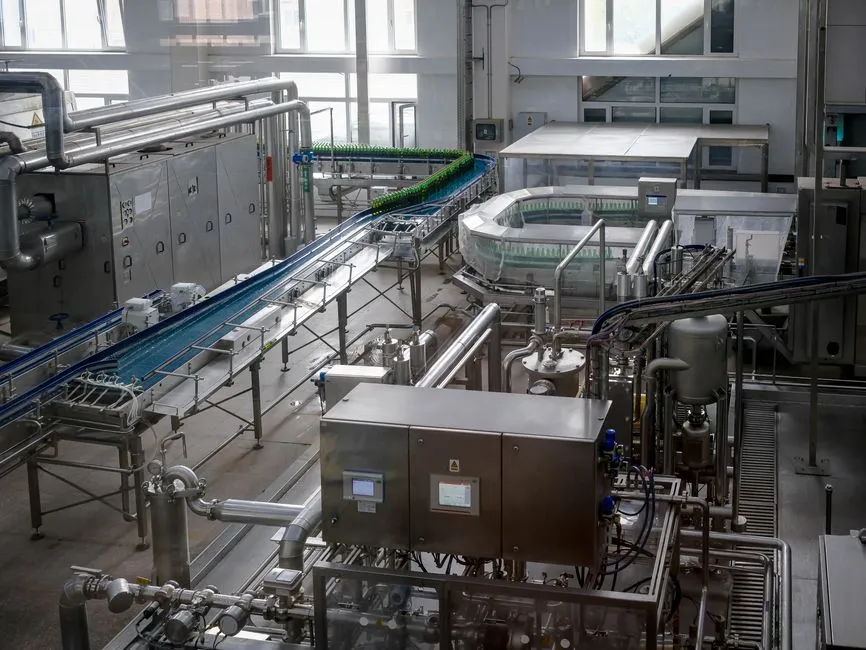
Headworks protects the biological stage from the spa and laundry streams that carry hair, lint, and microplastics. A rotary mechanical bar screen with at least 2 mm aperture — the GX series is the standard 2026 reference — is the first unit on the flow stream and the cheapest insurance against membrane fouling on an MBR (HydropureWater product specification, 2026). FOG from full-service kitchens (Thon Rosenkrantz, Sommerro's restaurants) needs a DAF upstream of the biological stage; the DAF system for hotel kitchen FOG removal is rated 4–300 m³/h and prevents foam events and clarifier blanket washout that would otherwise consume operator hours.
Disinfection closes the train to meet Chapter 11 microbiological targets. The chlorine dioxide generator for hotel effluent disinfection is sized from 50 g/h to 20,000 g/h, provides reliable microbial control at low dose, and avoids the residual chlorine problem that complicates Oslofjord discharge compliance under EU Drinking Water Directive 98/83/EC. UV is a credible alternative where there is no reuse loop, but ClO₂ is the standard pick when the same skid also feeds a polishing unit for reuse. Sludge handling for hospitality plants is small — typically a plate-and-frame filter press in the 1–50 m² range — and the hauled cake is normally removed by a contracted service rather than processed on site.
Compliance, Reuse, and the 2026 Sustainability Mandate
Forurensningsforskriften Chapter 11 sets the effluent floor: BOD₇ ≤ 25 mg/L, COD ≤ 125 mg/L, total-P ≤ 1.0 mg/L in sensitive-recipient areas, SS ≤ 35 mg/L (per Norwegian Environment Agency, 2024 consolidation). Both WSZ and MBR can hit these targets with chemical P-precipitation using polyaluminium chloride dosed at 5–15 mg/L as Al, though MBR's lower TSS makes the P-precipitation step more efficient. A JY integrated water purification unit downstream of an MBR brings the permeate to a level suitable for toilet flushing, landscape irrigation, and laundry — directly aligned with the published sustainability commitments at Sommerro-class properties.
Reporting is non-trivial. Any on-site discharge requires an annual report to the kommune and a recipient-monitoring plan; packaged plants with full SCADA and data logging simplify that obligation and are favored in 2026 municipal reviews. CAPEX for the Oslo 2026 market sits in a €28.5M–€50M+ band for full plants according to the parallel Oslo 2026 wastewater treatment plant cost guide, with a packaged MBR or WSZ representing the lower portion of that range for a single hotel asset. Reuse typically adds 15–25% to CAPEX but reduces purchased water by the same band, and at current Oslo water tariffs the payback sits in the 4–7 year range for a 200-key property with high laundry throughput.
Decision Framework: Which System Fits Which Oslo Property
The technology choice follows the property archetype more than the room count. A boutique 50–120-key city hotel with no spa (Amerikalinjen, Hotel Oslo Guldsmeden) does not need reuse-quality permeate and does not justify MBR CAPEX — a single buried WSZ unit with no operator is the correct answer. A mid-scale 150–300-key business hotel with a full restaurant (Clarion Hub, Thon Rosenkrantz, Radisson RED Økern) generates FOG and conference-driven peaks that point to MBR with equalization, DAF pretreatment, and ClO₂ disinfection.
A luxury 200–300-key resort with a full spa (Sommerro, Lysebu) needs MBR plus a JY polishing loop sized for the spa-driven base load, with reuse feeding laundry and toilet flushing. A large destination spa (The Well class, 10,000+ m² spa floor) is essentially a water utility with bedrooms attached: MBR with surge equalization sized for 0.05 m³/m²/day, reuse for cooling makeup and toilet flush, and full SCADA reporting to kommune. The matrix below maps the four archetypes to the packaged train.
| Oslo property archetype | Example | Recommended packaged system | Key add-ons |
|---|---|---|---|
| Boutique city hotel, 50–120 keys, no spa | Amerikalinjen, Hotel Oslo Guldsmeden | WSZ underground package | Bar screen, surge tank |
| Mid-scale 150–300-key business hotel with F&B | Clarion Hub, Thon Rosenkrantz, Radisson RED Økern | MBR with equalization | DAF for FOG, ClO₂ disinfection |
| Luxury 200–300-key resort with full spa | Sommerro class, Lysebu | MBR + JY polishing + reuse loop | DAF, ClO₂, sludge press |
| Large destination spa (10,000+ m²) | The Well class | MBR with surge equalization | Reuse for cooling/flush, full SCADA |
Frequently Asked Questions
What size packaged plant does a 150-room Oslo hotel need?
A 150-room Oslo hotel typically needs 80–150 m³/day average and 300–500 m³/day peak. An MBR-200 or a WSZ-80 with a 6-hour equalization basin is the standard match for a property in this size band, with DAF pretreatment if a full-service kitchen is on site.
Can an underground package plant survive an Oslo winter?
Yes. The WSZ series is engineered for buried installation below the 1.5–2.0 m frost line, with factory insulation on access shafts and optional heat-tracing on the inlet. Properly buried units at Sommerro-class sites have run through multiple Oslo winters without biological performance loss.
What effluent limits apply to Oslo hotel discharges?
Forurensningsforskriften Chapter 11 sets the floor at BOD₇ ≤ 25 mg/L, COD ≤ 125 mg/L, SS ≤ 35 mg/L, and total-P ≤ 1.0 mg/L in sensitive-recipient zones around the Oslofjord. Both WSZ and MBR meet these with chemical P-precipitation; MBR does so with tighter margins and lower chemical consumption.
Is on-site water reuse worth the extra cost for a Nordic hotel?
Yes, when the property has high laundry or irrigation demand and a published sustainability commitment. MBR plus JY polishing typically delivers a 15–25% reduction in purchased water and a 4–7 year payback at Oslo water and sewer tariffs, while supporting the green narrative that groups like Nordic Hotels & Resorts now require in their brand standards.
How is spa-pool water handled differently from blackwater?
Spa backwash is high-volume, low-BOD, and chlorinated; it is typically segregated from the blackwater stream, dechlorinated (GAC or sodium bisulfite dosing), and then blended upstream of the biological stage. Direct discharge of chlorinated spa water to an MBR will damage the PVDF membranes and is the single most common design error in Nordic spa-hotel packages.