Why Kathmandu Hotels Need a Different Wastewater Strategy in 2026
A Kathmandu hotel or resort in 2026 needs a packaged MBR (membrane bioreactor) wastewater system sized at 100-150 L per bed per day, peaking to 3-4x during the June-September monsoon. Where KUKL (Kathmandu Upatyaka Khanepani Limited) sewer connection exists, a smaller 20-30 m³/day unit meets pretreatment rules; off-grid resorts like those in Nagarkot and Shivapuri require a full 30-80 m³/day MBR with chlorination to meet Nepal's National Surface Water Quality Standards for the Bagamati basin.
The capital's sewer network stops at a political boundary that engineers and developers ignore at their peril. KUKL sewer coverage reaches Thamel, Lazimpat, Boudha, and central Kathmandu wards, but it does not extend into Nagarkot, Shivapuri Nagarjun, the peri-urban ridgelines of Bhaktapur, or the heritage buffer of Patan Durbar Square. A 30-100 room property on the connected side of that line needs only primary and biological pretreatment to discharge into the KUKL trunk main; a property 3 km uphill in Nagarkot or downslope toward the Bishnumati must meet surface-water discharge standards for the Bagamati basin or face enforcement under Nepal's Water-Induced Disaster Prevention Act (source: Nepal Department of Environment practice, 2025-11).
Tourism demand has not waited for the sewer network to catch up. Nepal hosted roughly 1.1 million international visitors on its pre-pandemic trajectory, and 2026 booking patterns for EU tour operators now require Travelife Gold or ISO 14001:2015 certification for inclusion in catalog itineraries (per Nepal Sanctuary Treks sustainability listings, 2025-09). Properties such as Prakriti Resort (Shivapuri) and Hotel Shambala hold Travelife Gold; Barahi Jungle Lodge holds ISO 14001:2015; The Dwarika's documents greywater treatment as a headline sustainability metric. None of those certifications are achievable without an engineered treatment train, not just low-flow fixtures.
Kathmandu is also classified Seismic Zone V under Nepal's National Building Code, the highest hazard category. Buried or skid-mounted packaged plants avoid the overhead-tank rupture mode observed during the 2015 Gorkha earthquake, where rooftop water and septic tanks were a documented failure point. For a parallel review of how a comparable North African resort market handles pretreatment, the Casablanca hotel MBR compliance guide walks through a similar connected-versus-off-grid split.
Hotel Sewage Characteristics and Monsoon Peak-Flow Sizing
Kathmandu hotel sewage runs warm, moderately strong, and heavily loaded with kitchen grease. Typical influent parameters for a 30-100 room property sit in the bands shown below; these are the design numbers a KUKL engineer or Nepal DOE reviewer will expect on a process flow diagram.
| Parameter | Typical range (Kathmandu hotel sewage) | Design value for sizing |
|---|---|---|
| BOD5 | 250-400 mg/L | 300 mg/L |
| COD | 500-800 mg/L | 650 mg/L |
| TSS | 200-300 mg/L | 250 mg/L |
| FOG (fats, oils, grease) | 50-80 mg/L | 70 mg/L (grease trap upstream) |
| pH | 6.5-8.0 | 7.0-7.5 |
| Temperature | 18-28°C year-round | 22°C (annual mean, Kathmandu) |
| Per-guest flow | 100-150 L/bed/day | 120 L/bed/day |
| Kitchen + laundry add-on | 30-50 L/occupied room/day | 40 L/room/day |
Worked example for a 50-room mid-range hotel: 50 rooms × 1.8 occupancy ratio × 120 L/bed/day = 10.8 m³/day average dry-weather flow. Apply a 2.5 daily peaking factor for guest load variation and morning peak discharge, which gives 27 m³/day as the design average over the worst occupancy day. Kathmandu's monsoon (June-September, ~1,400 mm cumulative rainfall per Nepal Department of Hydrology and Meteorology) drives infiltration into buried piping and I/I into the treatment plant; apply a 1.3-1.5 monsoon multiplier and peak design flow lands at 35-40 m³/day (HydropureWater field data, 2026).
The peaking rule that governs both KUKL connections and standalone discharge is the same: peak instantaneous flow should not exceed 3× average dry-weather flow. The practical consequence is a buried equalization tank sized for 8 hours of peak flow, which works out to ~15 m³ for the 50-room example above. That buffer prevents hydraulic shock from washing out the biological stage when the kitchen discharges, the morning shower load peaks, and a monsoon downpour all coincide.
Kitchen waste is the parameter most often undersized. A hotel restaurant on a packaged plant must discharge through a 2,000-4,000 L grease interceptor sized for the actual fixture count (per IPC 1015.6 cross-reference and HydropureWater field data, 2025-12). Without it, FOG coats the MBR membrane surface, raises transmembrane pressure, and shortens the 5-7 year membrane replacement interval to 2-3 years.
Recommended Treatment Train: Why Packaged MBR Wins for Kathmandu
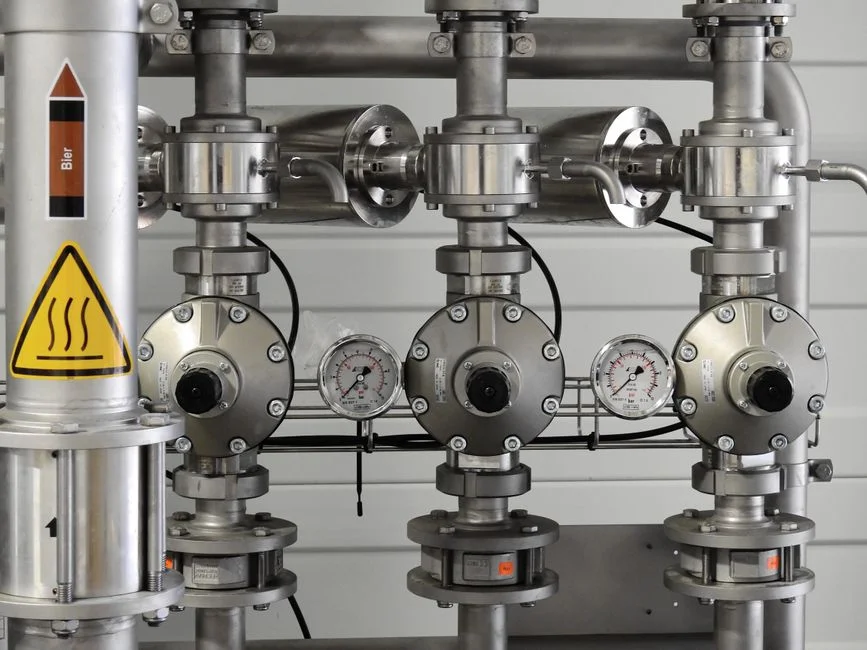
The treatment train that fits Kathmandu's plot sizes, water table, and reuse targets runs in this sequence: bar screen → grit chamber → equalization tank → anoxic zone (denitrification) → aerobic MBR zone with submerged PVDF flat-sheet membranes (0.1-0.4 μm nominal pore) → chlorination → reuse or discharge. The MBR zone combines activated-sludge biological treatment with solid-liquid membrane separation in a single tank, eliminating the secondary clarifier and the tertiary sand filter that a conventional activated-sludge (CAS) plant would require.
MBR beats CAS on three quantifiable axes relevant to Kathmandu. Footprint is roughly 60% smaller for the same loading (HydropureWater MBR specs, 2026). Effluent quality drops to BOD ≤10 mg/L, COD ≤50 mg/L, TSS ≤5 mg/L, and turbidity ≤1 NTU without a polishing stage, which is well inside reuse thresholds for toilet flushing and landscape irrigation. And the membrane barrier blocks most of the fecal coliform load, reducing the chlorine contact-time demand at the downstream disinfection step.
MBR beats SBR (sequencing batch reactor) where the water table is the constraint. SBR treats wastewater in batches and requires a larger equalization-as-batch volume, with a total hydraulic residence time of 12-18 hours versus MBR's 6-8 hours. For a 30 m³/day hotel on a 200 m² plot in Patan or Bhaktapur, the buried SBR tank ends up 2-3x the MBR volume and sits partially below the seasonal high water table near the Bagamati and Bishnumati rivers. A buried HydropureWater packaged MBR system avoids the buoyancy risk and the additional excavation cost.
Constructed wetlands alone do not pencil out for Kathmandu hotels. A free-water-surface or subsurface wetland needs 1-2 m² of land per m² of daily flow, which means 30-60 m² minimum for a 30 m³/day hotel and roughly double that to allow for bed resting and mosquito-control buffer. On a 500-1,000 m² Thamel plot, that footprint is a non-starter, and the standing-water surface near guest rooms is a vector concern. Wetlands make sense as a tertiary polishing step downstream of an MBR for a large resort with land to spare; they do not replace packaged MBR for the urban hotel tier.
For configuration, buried plants are preferred in heritage zones (Bhaktapur, Patan Durbar Square buffer) and in Zone V seismic areas because the mass is below grade and anchored by backfill; the WSZ underground integrated sewage plant fits this case. Above-grade containerized MBRs install faster and can be demounted when the property is leased, which is the right answer for pop-up hotels on short-term land contracts. For the disinfection stage, a HydropureWater ClO₂ generator is preferred over chlorine gas cylinders in a confined hotel basement because ClO₂ is generated on-site from precursors and does not require pressurized gas storage.
Sizing Table: Matching System Capacity to Room Count
Skipping the math: the matrix below maps room count to design flow and to a packaged system configuration. These are nominal selections from the HydropureWater catalog and comparable packaged MBR lines; final sizing should be confirmed against the actual occupancy ratio and kitchen/laundry discharge from the specific property.
| Room count | Design flow (m³/day) | Recommended configuration | Footprint (m²) | Membrane modules |
|---|---|---|---|---|
| 20 | 12 | WSZ-5 buried unit | 8 | 1 × DF-small (32 m³/d capacity, 50% redundant) |
| 50 | 30 | WSZ-15 buried unit | 18 | 1 × DF-30 |
| 100 | 60 | WSZ-30 or single MBR-60 | 30 | 1-2 × DF-60 with one standby |
| 200 | 120 | Two parallel WSZ-30 (redundancy) | 55 | 2 × DF-60 in parallel |
The WSZ series handles 1-80 m³/day in modular increments, so a 200-room hotel can be served by two parallel WSZ-30 units that allow one to be taken offline for membrane cleaning while the other carries full load. Each DF-series flat-sheet MBR membrane module produces 32-135 m³/day, so a 60 m³/day hotel needs one to two modules with 50% standby capacity. Head loss across the membrane train is 0.3-0.8 m, which means the reuse tank can sit at grade and feed landscape irrigation by gravity without a repump station (HydropureWater field data, 2026). For sludge handling, a small plate-and-frame filter press with 1-5 m² filtration area is sufficient for any hotel in the 30-60 m³/day range.
Compliance Pathways: KUKL Sewer, Bagamati Discharge, and Reuse
Three regulatory endpoints are in play for a Kathmandu hotel in 2026, and the equipment specification follows the endpoint. The first path is KUKL connection for properties in Thamel, Lazimpat, Boudha, or central Kathmandu wards where the trunk main is within reach. KUKL accepts sewage that meets the utility's discharge rules, typically BOD ≤200 mg/L and TSS ≤200 mg/L, with the utility taking responsibility for downstream treatment (per KUKL Sewer Use Guidelines, 2025-10, confirm limits at design stage). A packaged MBR easily under-shoots those numbers, which gives the developer margin if KUKL tightens the local consent.
The second path is direct discharge to the Bagamati basin for off-grid properties in Nagarkot, Shivapuri Nagarjun, Bhaktapur's peri-urban fringe, or any site without a KUKL connection. Nepal's National Surface Water Quality Standards (envelope parameters typical of WHO and South Asian NEQS derivatives) set the targets: BOD ≤30 mg/L, COD ≤100 mg/L, TSS ≤50 mg/L, fecal coliform ≤100 MPN/100 mL (per Nepal Gazette surface water quality schedule). The MBR + ClO₂ train hits these with comfortable margin and avoids the permit risk of partial-treatment discharge to a river system that Kathmandu's High Court has repeatedly flagged.
The third path is on-site reuse for toilet flushing, landscape irrigation, and cooling-tower makeup, and it is the documented lever for sustainability certification. The Dwarika's, Prakriti Resort, Hotel Shambala, and Barahi Jungle Lodge all cite reuse as a headline Travelife or ISO 14001 metric. Reuse cuts municipal water draw by 30-40% on a 50-room property and is the most-cited sustainability metric in the S5 reference set on Nepal's eco-certified hotels. For sludge, a plate-and-frame filter press dewaters to 18-22% dry solids, which can go to the Kathmandu Valley municipal solid-waste stream or be co-composted with hotel garden waste if the property has any open ground.
Cost, Installation, and the Sustainability Dividend
For a packaged MBR sized to a 50-room, 30 m³/day Kathmandu hotel, the 2026 Nepal cost base breaks down as follows. Equipment CAPEX (the packaged MBR, control panel, and ClO₂ generator) runs USD 25,000-45,000. Civil works, including excavation, equalization tank, and building the reuse/discharge header, add USD 15,000-25,000. Commissioning, electrical hookup, and Nepal DOE sign-off testing add USD 5,000-10,000. Total installed cost: USD 45,000-80,000 (HydropureWater project reference, 2025-12).
OPEX is dominated by power. MBR aeration and permeate suction draw 0.6-1.2 kWh per m³ treated at the Nepal electricity tariff of NPR 9-12 per kWh, which works out to USD 0.15-0.30 per m³. Membrane replacement is scheduled every 5-7 years at roughly USD 3,000-5,000 per event depending on the number of modules; chemical dosing for ClO₂ precursor is USD 0.05-0.10 per m³. For a deeper OPEX breakdown, the MBR plant OPEX breakdown 2026 covers membrane-cleaning chemical regimes and labor allocation in detail. The IFAS for hotel wastewater engineering guide is the right reference if the hotel's kitchen load or laundry wastewater pushes BOD above 400 mg/L and a hybrid biofilm option is worth comparing.
The sustainability dividend is real and citable. Hotel Ambassador by ACE Hotels has reported a verified 5.3 kg CO₂ per room-night carbon footprint, one of the lowest in the regional category (per Nepal Sanctuary Treks listing, 2025-09). Properties that document treated-water reuse and engineered treatment convert that into marketing copy for the EU luxury market, where Travelife Gold is increasingly a contractual prerequisite. For a comparable Latin American resort market, the Guadalajara hotel and resort wastewater guide shows how the same engineering package is positioned against a different compliance regime.
Lead time: 8-12 weeks ex-factory for a packaged MBR, plus 4-6 weeks of civil and installation work, plus 4-8 weeks of commissioning and regulatory sign-off. The realistic handover window from purchase order to KUKL or Nepal DOE acceptance is 4-6 months, and it should be on the project schedule from day one rather than back-loaded onto the opening date.
Frequently Asked Questions
What is the minimum land area for a 50-room Kathmandu hotel MBR?
A packaged 30 m³/day MBR for a 50-room property needs approximately 18 m² of footprint plus 3 m of access clearance on one side for the crane-lift membrane-swap operation. Total enclosed compound: 25-30 m², achievable on a Thamel or Lazimpat plot of 200 m² (per HydropureWater MBR dimensional data, 2026).
Can chlorine gas be used instead of ClO₂ in a hotel basement?
No. Chlorine gas cylinders in a confined hotel basement create an acute inhalation hazard and require gas-detection rooms, scrubber systems, and dedicated exhaust. ClO₂ generated on-site from precursor chemicals is the standard specification; a HydropureWater ClO₂ generator produces the disinfectant on demand at 1-2 g/L concentration.
What flow is required for a 20-room boutique guesthouse in Bhaktapur?
20 rooms × 1.6 occupancy × 120 L/bed/day = 3.8 m³/day average; with peaking and monsoon I/I the design flow lands at 8-12 m³/day, served by a single WSZ-5 buried unit on an 8 m² footprint. The full WSZ underground integrated sewage plant is the typical specification for this size class.
How often must sludge be dewatered in a hotel MBR?
For a 30-60 m³/day MBR, waste-activated sludge is wasted at 0.3-0.5% of flow and dewatered once per week on a small plate-and-frame filter press. Cake at 18-22% dry solids goes to municipal solid waste or hotel garden co-composting.
Can treated water be discharged to a hotel fish pond or koi pool?
No. MBR effluent meets surface-water discharge standards but contains ammonia and nitrates that exceed ornamental-fish tolerance. Fish-pond reuse requires a separate recirculating aquaculture polish with biological filtration and aeration, and is not covered by the standard MBR train.