Why Kuwait City Hotels Need Their Own Treatment Plant in 2026
Kuwait treats water as a strategic resource, and that framing now reaches the hotel plot line. The Sulaibiya wastewater treatment plant has run reverse osmosis membranes on municipal effluent for indirect potable reuse since the early 2010s, and that operating record set the national baseline for reclaimed water quality (per Sulaibiya WWTP RO characterization, IJESD 2023-02). For a 3-5 star property in Kuwait City or Salmiya, the same logic applies at smaller scale: the hotel's own sewage stream can be polished to irrigation-grade and reused on the lawn, in the cooling-tower makeup line, or for vehicle wash, instead of being shipped off-site as waste. On-site treatment is no longer a sustainability talking point; it is a cost-control decision tied to Kuwait's per-capita water demand, which reached 446 L/c/d in 2020 against a five-year mean of 436 L/c/d, and a corresponding wastewater generation of 253 L/c/d against a 239 L/c/d five-year mean in the Ardiya catchment (per Ardiya catchment 2015-2020 study, JEELM). Two further realities push the design toward packaged plants rather than municipal tie-in only. First, Gulf summers run 40-50 °C ambient, which accelerates biological kinetics, strips dissolved oxygen in collection sumps, and stresses nitrification if hydraulic retention time is too short. Second, peak tourist-season loadings commonly hit 1.5-2× the design average, and laundry and kitchen streams add FOG and surfactant spikes that municipal sewers do not always accommodate. The economic case sits on the reuse side: TSE used for landscape irrigation and chiller makeup at a 3-5 star property can offset 20-40% of municipal water demand, which is the lever that turns a packaged MBR from a compliance cost into a capital line with measurable payback.
Sizing the Plant: Hotel & Resort Influent Characteristics
A defensible sizing starts with a per-guest flow band of 200-350 L/guest/day, which brackets the Ardiya catchment's 253 L/c/d per-capita figure and adds headroom for full-service tourism (laundry, F&B, pool backwash). For a 250-key property at 1.6 occupancy ratio, that puts average daily flow in the 80-140 m³/day range, with peak factor 2.5-3× during short-stay tourism surges. Typical hotel influent concentrations in the Gulf sit at BOD 200-400 mg/L, COD 400-800 mg/L, TSS 200-500 mg/L, FOG 50-150 mg/L from kitchens, NH3-N 20-50 mg/L, and pH 6.5-8.0 (HydropureWater field data, 2026). Laundry streams contribute 15-25% of total COD in full-service hotels, which is why equalization and DAF sit ahead of the biological stage rather than after it. Summer influent temperatures commonly run 30-40 °C, which raises biological reaction rates by a factor of 1.5-2 relative to a 20 °C design but also strips DO in lift stations and pushes nitrification toward inhibition if pH drifts above 8.0. These two effects — faster kinetics and lower DO margin — are why MBR with positive aeration control outperforms conventional activated sludge at Gulf ambient temperatures. Designers should treat 30-40 °C as a design constraint, not an edge case, and size equalization tanks for at least 6-8 hours of HRT at average design flow to damp the tourism peaks before they reach the membranes.
| Parameter | Typical hotel range (Gulf) | Design value for sizing | Notes |
|---|---|---|---|
| Flow per guest | 200-350 L/guest/day | 280 L/guest/day | Brackets Ardiya 253 L/c/d (S4) |
| BOD | 200-400 mg/L | 300 mg/L | Spike from F&B and laundry |
| COD | 400-800 mg/L | 600 mg/L | COD/BOD ≈ 2.0 typical |
| TSS | 200-500 mg/L | 350 mg/L | Rags and lint from laundry |
| FOG | 50-150 mg/L | 100 mg/L | DAF target: <30 mg/L post-DAF |
| NH3-N | 20-50 mg/L | 35 mg/L | MBR target: <5 mg/L |
| pH | 6.5-8.0 | 7.2 | Drift above 8.0 inhibits nitrification |
| Temperature | 25-40 °C | 35 °C summer | Faster kinetics, lower DO margin |
| Peak factor | 2.5-3× | 2.5× | Tourism surge and event load |
The 2026 Process Train That Fits a Gulf Hotel
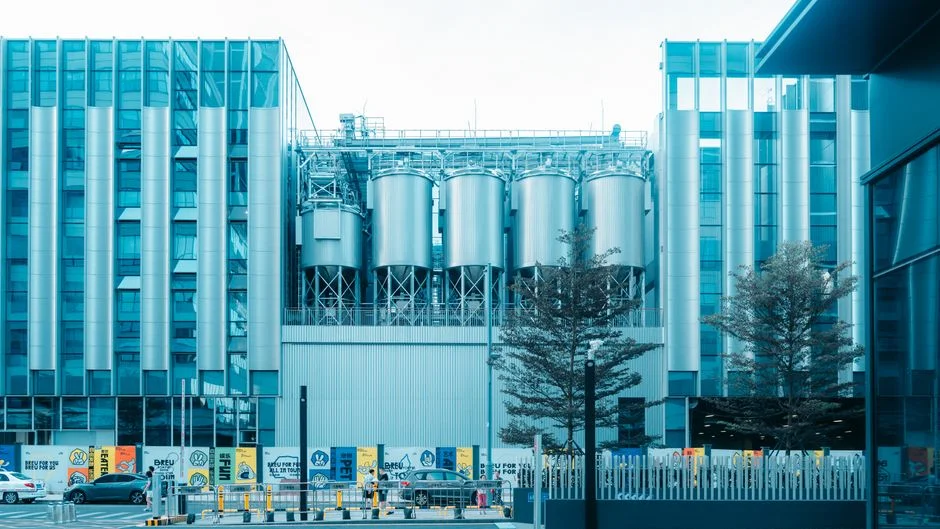
The defensible process train for a 3-5 star hotel in Kuwait City runs screening → equalization → DAF → MBR → ClO2 or UV → TSE storage, with optional RO polish for boiler-feed or cooling-tower quality reuse. Each block has a specific Gulf-climate job to do.
Step 1 — Rotary mechanical bar screen. A GX series rotary mechanical bar screen removes rags, plastics, and fibrous debris from kitchen prep and laundry streams before they reach the pumps. Bar spacing of 3-5 mm protects downstream rotary lobe and submersible pumps from ragging, which is the most common cause of unplanned downtime in hotel lift stations. Self-cleaning rotation is the right choice over manual bar screens because of the FOG and lint load.
Step 2 — Equalization / buffer tank. Sized for 6-8 hours of HRT at average design flow, the EQ tank dampens the 2.5-3× tourism peak factors documented in the sizing section. Aerated equalization is preferred over static because it prevents FOG from forming a surface cap and it strips H2S before it reaches the biological stage. Mechanical mixers at 0.3-0.5 m/s floor velocity keep solids in suspension without shearing flocs.
Step 3 — Dissolved air flotation. A DAF system ahead of the biological stage removes FOG, colloidal suspended solids, and surfactant-bound matter from kitchen and laundry flows. Targeting <30 mg/L FOG and 60-70% TSS removal in the DAF is what protects the MBR membranes from irreversible fouling at 35-40 °C ambient. Skipping DAF and relying on biological FOG removal alone is the most common cause of MBR trans-membrane pressure creep in Gulf hotel plants.
Step 4 — MBR membrane bioreactor. The MBR membrane bioreactor system with DF series PVDF flat sheet membrane modules at 0.1 μm pore delivers near-reuse-quality effluent, runs at MLSS 8,000-12,000 mg/L (roughly 2× a conventional aeration tank), and shrinks the biological footprint by 50-65%. PVDF flat sheet tolerates the high-temperature, high-FOG residual that reaches it from a well-sized DAF, and a relaxed backwash cycle of every 8-12 minutes keeps the cake layer from compacting under Gulf summer load. For a deeper read on membrane-side risks, the MBR troubleshooting guide covers the failure modes this train is designed to prevent.
Step 5 — ClO2 disinfection. A chlorine dioxide generator produces ClO2 on-site at 0.5-1.0 mg/L residual for 15-30 minutes contact time. ClO2 holds biocidal efficiency across the 6.5-8.5 pH range that Gulf hotel effluents drift through, and it does not form trihalomethanes at the levels typical of chlorination. UV is a credible alternative where the hotel wants zero chemical residual in the TSE reuse stream, sized at 30-40 mJ/cm² dose.
Step 6 — TSE storage tank. 1-3 days of retention on the treated side gives the hotel a buffer for irrigation scheduling and chiller demand spikes. TSE goes to landscape irrigation and cooling-tower makeup; for boiler feed, an RO polish step is added. The Sulaibiya RO plant demonstrates that membrane polishing on already-treated effluent is a nationally proven path to higher reuse rates (per S3).
Effluent Targets: Aligning with Kuwait EPA and Reuse Expectations
The Kuwait Environment Public Authority (KEPA) sets discharge limits, and the Sulaibiya RO reject characterization (IJESD 2023-02) found that even the country's flagship reclamation plant met KEPA limits on every parameter except biochemical oxygen demand, total dissolved solids, and total phosphate — three parameters that required additional polishing. For a hotel plant, the practical engineering targets consistent with that national practice are BOD ≤20 mg/L, COD ≤90 mg/L, TSS ≤10 mg/L, NH3-N ≤5 mg/L, FOG ≤5 mg/L, and fecal coliform ≤200 CFU/100 mL. These are state-of-practice targets an EPC can defend against a discharge permit and a biddable reuse agreement, rather than a verbatim quote of KEPA regulations. For landscape irrigation reuse, the typical threshold set is pH 6.5-8.5, TSS ≤10 mg/L, BOD ≤20 mg/L, fecal coliform ≤200 CFU/100 mL, plus salinity control because Gulf irrigation tolerance for turfgrass generally drops off above 2,000-2,500 mg/L TDS. The S3 precedent matters: if the Sulaibiya RO brine still needed additional management on BOD, TDS, and phosphate after a full membrane train, a hotel plant should explicitly design polish capacity for those same three parameters — typically MBR for BOD, RO or brackish desalination for TDS, and chemical precipitation or enhanced biological removal for phosphate. If the spec does not call out a polish step on BOD, TDS, and phosphate, the permit risk is concentrated in exactly the parameters KEPA flags most often. For ammonia-nitrogen design values, the ammonia nitrogen removal technologies buyer's guide covers side-stream and mainstream options that fit a hotel envelope.
| Parameter | KEPA-aligned target | Best polish step | Why it fails if not designed in |
|---|---|---|---|
| BOD | ≤20 mg/L | MBR with DAF upstream | Most-flagged parameter at Sulaibiya (S3) |
| COD | ≤90 mg/L | MBR; RO if boiler feed | Driven by residual FOG and surfactants |
| TSS | ≤10 mg/L | 0.1 μm MBR flat sheet | Clogged sprinklers and drippers |
| NH3-N | ≤5 mg/L | Nitrification in MBR at 35 °C | Toxicity to turf and景观 shrubs |
| FOG | ≤5 mg/L | DAF pre-treatment | Membrane fouling if not removed |
| Fecal coliform | ≤200 CFU/100 mL | ClO2 or UV | Public-health and reuse limits |
| TDS | Site-specific | Optional RO polish | Second-flagged parameter at Sulaibiya (S3) |
| Total phosphate | Site-specific | Chemical precipitation | Third-flagged parameter at Sulaibiya (S3) |
Choosing the Configuration: Buried Package Plant vs. Containerized MBR Skid
The configuration choice turns on site footprint, project phase, and reuse objective. A WSZ series underground package plant rated 1-80 m³/h is fully buried, runs unattended, and leaves the surface free for car parking, gardens, or pool deck — the right answer in built-up Kuwait City or Salmiya where land cost is high and the operator wants the plant invisible. A containerized MBR skid, factory-tested and shipped as 10-2,000 m³/day pre-assembled units, plugs into lift station power and influent piping on day one and is the right answer for resorts under construction, remote beach-front sites on Failaka, or properties planning phased capacity expansion as tourism grows. Both configurations should be sized with a 20-30% hydraulic margin to absorb the 2.5-3× peak factors documented earlier. The decision rule is straightforward: pick the buried package plant when the site is built-up, footprint is constrained, and reuse is for landscape irrigation only; pick the containerized MBR skid when the project is new-build, remote, or expects to be redeployed or expanded within the asset life. EPC firms working across the Gulf — for example, those also specifying hotels in Athens or the Hong Kong hotel wastewater guide — typically run the same decision rule against a Mediterranean or high-density Asian baseline.
| Criterion | Buried WSZ package plant | Containerized MBR skid |
|---|---|---|
| Capacity envelope | 1-80 m³/h | 10-2,000 m³/day |
| Footprint | Fully buried, surface free | Above-grade container, ~30 m² per 100 m³/day |
| Best fit | Built-up Kuwait City / Salmiya sites | New-build resorts, remote beach sites, phased expansion |
| Reuse objective | Landscape irrigation | Landscape, cooling-tower, optional RO polish |
| Civil work | Excavation, concrete, backfill | Slab and lift station only |
| Commissioning | 8-14 weeks on site | Plug-and-play, 1-2 weeks |
| Redeployable | No | Yes |
| Operator requirement | None, remote monitoring | Periodic checks, remote monitoring |
Sludge, Reuse Economics, and Operating Cost in a Gulf Hotel
Sludge handling closes the loop on operating cost. Waste activated sludge from the MBR is routed to a plate-and-frame filter press for dewatering, with target cake dryness of 18-22% DS for off-site disposal or co-composting with landscaping green waste. Sludge yield from a hotel MBR typically runs 0.3-0.5 kg DS per kg BOD removed at long SRT — roughly half the yield of conventional activated sludge at 5-8 day SRT, because the higher MLSS and longer biomass retention push more carbon to oxidation. On the reuse side, TSE used for landscape irrigation and cooling-tower makeup can offset 20-40% of municipal water demand at a 3-5 star property, depending on green area and chiller load. At Kuwaiti municipal tariffs and the cost of tankered potable water for remote landscaping, a 250-key hotel with 2,000 m² of turf and a 500-ton chiller can reasonably expect the reuse side to repay the incremental MBR and disinfection capex within 4-7 years. For the optional RO polish step, the Sulaibiya precedent (per S3) shows the same contingency options that apply to hotel-scale RO reject: surface water discharge where irrigation demand exists, sewer disposal with permit, deep-well injection under KEPA approval, or land application for non-edible landscaping. The operator should pre-select one of these routes before the polish unit is sized, not after.
Frequently Asked Questions
What wastewater treatment system does a hotel or resort in Kuwait City, Kuwait need in 2026?
A packaged MBR system preceded by rotary screening, equalization, and DAF, followed by ClO2 or UV disinfection and a TSE storage tank. Sized at 200-350 L per guest per day with a 2.5-3× peak factor, the train targets BOD ≤20 mg/L, TSS ≤10 mg/L, and fecal coliform ≤200 CFU/100 mL for landscape reuse.
What are the Kuwait EPA discharge limits for hotel wastewater?
Engineering targets consistent with KEPA municipal-discharge practice are BOD ≤20 mg/L, COD ≤90 mg/L, TSS ≤10 mg/L, NH3-N ≤5 mg/L, FOG ≤5 mg/L, and fecal coliform ≤200 CFU/100 mL. The Sulaibiya RO reject study (IJESD 2023-02) found that BOD, TDS, and total phosphate are the parameters most often exceeding KEPA limits, so the spec should include polish capacity for those three.
Is greywater reuse for hotel landscaping allowed in Kuwait?
Treated sewage effluent (TSE) reused for landscape irrigation is typically held to pH 6.5-8.5, TSS ≤10 mg/L, BOD ≤20 mg/L, and fecal coliform ≤200 CFU/100 mL, with salinity controlled because Gulf turfgrass tolerance drops above 2,000-2,500 mg/L TDS. Reuse should be confirmed against the latest KEPA guidance and the hotel's discharge permit.
How much does a packaged MBR cost to operate at a Gulf hotel?
Operating cost is driven by aeration energy (60-70% of plant power), membrane cleaning chemicals, and sludge hauling. Sludge yield of 0.3-0.5 kg DS per kg BOD removed keeps dewatering loads light, and TSE reuse at 20-40% offset of municipal demand typically repays the incremental MBR and disinfection capex within 4-7 years at Kuwaiti tariffs.
What is the difference between a buried package plant and a containerized MBR?
A buried package plant (WSZ series) is fully buried, rated 1-80 m³/h, and leaves the surface free — best for built-up sites. A containerized MBR skid ships factory-tested at 10-2,000 m³/day, plugs into power and influent, and is redeployable — best for new-build resorts and remote sites.