Why Oxidation Ditches Fail Before They Should
More than 9,200 municipal oxidation ditches operate in the United States. A well-tuned basin should deliver BOD, TSS, and ammonia removal above 90% (EPA 832-F-00-013, September 2000). Plants fall short mainly from summer DO collapse above 25°C, clarifier-driven TSS spikes, or SRT too short for cold-weather nitrification. An oxidation ditch retrofit upgrade starts by naming which constraint is binding.
The dominant trigger is dissolved oxygen collapse when mixed liquor climbs above 25°C. Oxygen demand then rises faster than legacy surface rotors can deliver, and the ditch goes anoxic in the corners (Vision Equipment field data, 2026). The same failure often appears at roughly 50% of rated hydraulic capacity. That happens long before hydraulic overload, because original rotors were sized to a 1990s discharge envelope and cannot push DO to today's permit floors.
High effluent TSS is the second common complaint, and the EPA fact sheet lists it as the ditch's main disadvantage. In most retrofits that symptom is not biological — it is a settling problem downstream. Bulking sludge, denitrification in the clarifier, or scoured weirs drive most TSS excursions. That is why retrofit scope often starts at the secondary clarifier rather than in the ditch itself.
The third trigger is the SRT-versus-temperature trade-off. A basin designed for 12°C mixed liquor must hold SRT in the 20+ day range to nitrify at 10°C. Many legacy ditches lack the volume to do that without supplemental aeration or an MLE add-on. When SRT cannot be held, nitrification collapses first, then TSS drifts, then TN exceedance follows. Most plants we size for cold-weather nitrification already run at the lower end of the MLSS band to protect clarifier solids loading.
The Design Envelope a Retrofit Must Respect
Any retrofit scope has to be checked against the EPA's documented design envelope, because that envelope sets the operating window the biology expects. Before sizing supplemental aeration, a full conversion, or an MLE add-on, engineers should cross-check the oxidation ditch design parameters against the plant's current influent and permit. The table below consolidates the parameters needed for that check. Source data is EPA 832-F-00-013, drawing on Metcalf & Eddy and Baker Process references.
| Parameter | Typical range | Retrofit implication |
|---|---|---|
| SRT | 4–48+ days (12–24 for nitrification) | Drives basin volume; cannot be raised by aeration alone |
| BOD loading | Up to 240,000 mg/1,000 L/day (15 lb/1,000 ft³/day design) | Sets oxygen demand |
| MLSS | 1,500–5,000 mg/L | Limits hydraulic push before clarifier overloads |
| RAS recycle | 75–150% of influent flow | RAS piping often needs upsizing during a retrofit |
| Ditch velocity | 0.25–0.35 m/s (0.8–1.2 ft/s) | Floor for mixing retrofit; below this, solids settle |
| Oxygen demand | 1.1–1.5 kg O₂/kg BOD removed + 4.57 kg O₂/kg TKN oxidized | Drives blower and diffuser sizing |
| Oxygen transfer efficiency | 2.5–3.5 lb O₂/Hp-hr (legacy surface rotors) | Fine-bubble retrofits double this number |
| HRT | 6–30 hours | A design output, not a lever — only adjustable by volume expansion |
| Sludge yield | 0.65 kg TSS/kg BOD applied (typical) | Defines downstream plate and frame filter press for sludge dewatering sizing |
HRT is worth flagging on its own. EPA fact sheets report it as a design output (6–30 hours) rather than something the operator can dial. Extending HRT is feasible only if the basin is physically expanded or repurposed, which puts the project into greenfield capex territory. For a typical retrofit, the engineer raises biology and oxygen capacity inside the existing volume and accepts the HRT the basin already has.
Oxidation Ditch Retrofit Upgrade Pathways Compared
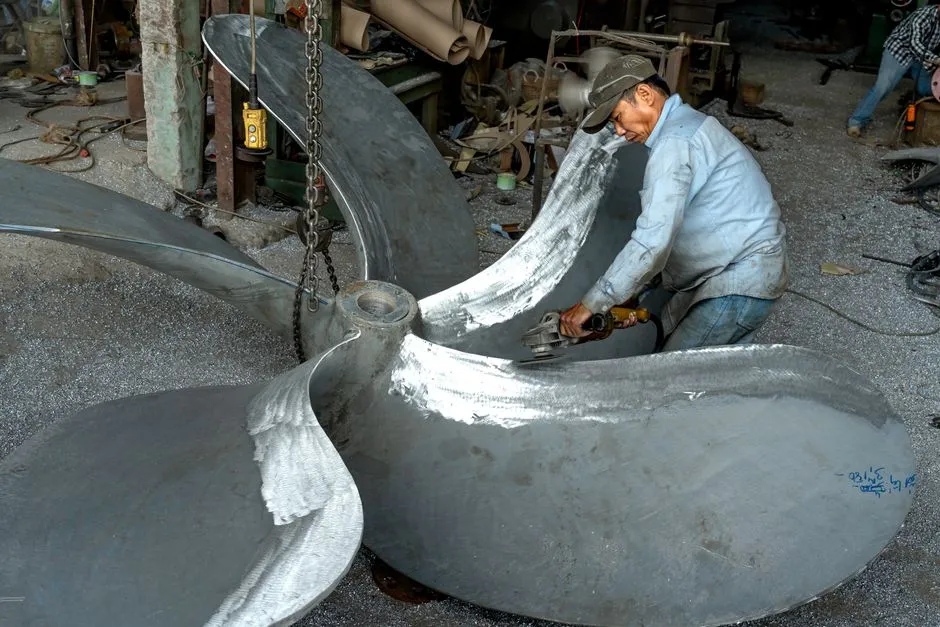
Most oxidation ditch upgrades fall into one of three scopes. The right pick depends on whether the binding constraint is DO, capacity, or nitrogen. The pathway decision is also the single biggest driver of capex, so it deserves a structured comparison. Headworks screening on the influent side should be evaluated at the same time — a rotary mechanical bar screen for headworks is often added in parallel to protect the new diffusers and mixers from ragging.
| Pathway | Scope | Indicative capex vs. greenfield | When it wins |
|---|---|---|---|
| 1. Supplemental aeration | Add submersible aeration mixers (SAMs) and high-efficiency blowers; retain existing aerators as backup | 20–40% | Basin structure is sound; only DO capacity is short; TCEQ 317 prefers removable devices to avoid redundant-basin permitting |
| 2. Full conversion | Replace surface rotors or disc aerators with fine-bubble diffused aeration plus mixers | 40–60% | Capacity or ammonia limits demand more than supplemental oxygen can deliver; basin needs long-term rebuild |
| 3. MLE add-on | Install an upstream anoxic zone with mixed liquor recirculation (3Q–4Q per EPA flow diagram) | 25–35% plus pumping energy | Plant targets TN below 5 mg/L (Casa Grande benchmarks) or has an industrial reuse loop that requires low nitrate |
Pathway 1 is the least invasive and the most common first move. Submersible aeration mixers paired with modern blowers can lift DO by 2–4 mg/L across the ditch without draining the basin. They are removable equipment under TCEQ 317, so the plant keeps its existing basin in service with no redundant side-stream required (Vision Equipment, 2026). Pathway 2 is the right call when aged rotors no longer meet transfer efficiency or influent loads have grown past the original envelope.
Fine-bubble diffusers typically double the oxygen transfer rate of surface equipment. They require basin dewatering for installation, which is a real scheduling risk on a single-train plant. Pathway 3 is the nutrient-removal answer. The Modified Ludzack-Ettinger configuration adds an anoxic zone ahead of the aerobic basin and recirculates 3Q–4Q of mixed liquor to drive denitrification (EPA 832-F-00-013). The Casa Grande, Arizona plant runs exactly this arrangement and has held 5.0 mg/L nitrate-nitrogen on a 270 mg/L BOD, 45 mg/L TKN influent (EPA 832-F-00-013, Table 1). The trade-off is real pumping energy — a 4Q internal recycle at 4 MGD is a non-trivial line item on the opex side.
How Do You Upgrade the Capacity of an Oxidation Ditch?
Capacity upgrades for an oxidation ditch succeed when oxygen transfer, MLSS inventory, and clarifier solids loading are raised together. Aeration alone rarely unlocks more than a modest load increase. Inside a fixed basin volume, the practical levers are higher oxygen transfer efficiency and a controlled rise in MLSS within the 1,500–5,000 mg/L envelope. RAS piping must still deliver 75–150% of influent flow without starving the ditch of return solids.
When hydraulic flow grows but BOD loading stays inside the EPA design band of up to 240,000 mg/1,000 L/day (15 lb/1,000 ft³/day), supplemental aeration (pathway 1) often restores DO headroom first. When both flow and organic load have climbed past the original envelope, pathway 2 full conversion is usually required. Fine-bubble systems move oxygen transfer from the 2.5–3.5 lb O₂/Hp-hr band of legacy surface rotors into roughly double that range. Clarifier and RAS upgrades must be scoped in the same package; otherwise the ditch can nitrify while the secondary clarifier dumps TSS.
Plants that need still more inventory without expanding concrete sometimes add biofilm surface area inside the ditch. That path is covered in the MBBR section below. After mechanical work, oxidation ditch installation and commissioning should lock velocity at 0.25–0.35 m/s (0.8–1.2 ft/s). That keeps solids from settling on the floor while the higher load is accepted.
Can You Upgrade an Oxidation Ditch with MBBR Carriers?
MBBR biomass carriers can upgrade an oxidation ditch when basin volume is fixed and the plant needs more effective biomass than suspended MLSS alone can hold. Carriers add protected biofilm surface area, so nitrifiers and heterotrophs can stay in the system even when hydraulic SRT would otherwise wash suspended solids out of the envelope. The approach is a capacity play, not a substitute for fixing DO collapse or clarifier settling failures.
Carrier retrofits still have to respect ditch velocity of 0.25–0.35 m/s so media stay suspended and floor deposits do not form. Screens and retention sieves must keep carriers in the basin, which is why headworks upgrades often travel with this scope. Oxygen demand still follows the same stoichiometry — 1.1–1.5 kg O₂/kg BOD removed plus 4.57 kg O₂/kg TKN oxidized — so blower and diffuser sizing cannot be skipped just because media were added.
Choose carriers when the structure is sound, HRT is already inside the 6–30 hour design output, and the missing piece is inventory rather than mixing energy. If ammonia limits or TN targets are the real driver and an anoxic zone can be added, pathway 3 MLE usually beats a carrier-only fix. If the basin needs a long-term rebuild anyway, fold carrier evaluation into a pathway 2 diffused-aeration conversion rather than bolting media onto failing surface rotors.
Industrial vs. Municipal: Why the Retrofit Recipe Changes
EPA's municipal benchmarks — 0.1–12 MGD, BOD/TSS/NH₃ above 90% removal, design SRT 12–24 days — do not transfer one-to-one to industrial oxidation ditches. Food, beverage, pharmaceutical, and textile plants see shock loads, inhibitory compounds, and salinities that municipal ditches never face. The retrofit recipe has to start with protection of SRT, not with aeration upgrades. Equalization, often 24–48 hours of hydraulic buffer, is the first scope item, followed by DAF pretreatment ahead of the oxidation ditch to strip fats, oils, and suspended matter before the mixed liquor sees them. Without that, SRT collapses on a slug load and the ditch turns septic within hours.
The biology itself shifts. Municipal influent typically runs a BOD/COD ratio of 1.7–2.0; food and beverage plants fall in the 1.3–1.8 range, and textile effluent often lands below 1.5, with a meaningful share of non-biodegradable COD. That fraction will not respond to aeration or SRT, so the retrofit must include a polishing step. A common industrial pattern is to follow the oxidation ditch with an MBR flat-sheet module as a polishing step, both for TSS and for the residual COD that the ditch cannot metabolize.
This adds capex, but it is the practical path to reuse-quality effluent from a textile or pharmaceutical plant without a greenfield basin. Where nitrification is unstable, engineers should also plan foam control in activated sludge systems in parallel. Industrial ditches with high surfactant loads can foam badly once fine-bubble diffusers are added. Plants sending effluent to a reuse loop may also need final disinfection; an Ozone Generator & Water Tank Sterilization System is one downstream option once the biological train is stable.
When Does MLE Beat a Standalone Oxidation Ditch?
MLE beats a standalone oxidation ditch when the permit or reuse loop requires total nitrogen below about 5 mg/L and the existing basin can accept an upstream anoxic zone with 3Q–4Q mixed liquor recirculation. A ditch alone can nitrify ammonia under adequate SRT and DO, but it does not reliably denitrify to low nitrate without a dedicated anoxic volume and controlled recycle. The Casa Grande, Arizona benchmark of 5.0 mg/L nitrate-nitrogen on 270 mg/L BOD and 45 mg/L TKN influent is the reference point for that decision (EPA 832-F-00-013, Table 1).
Keep the standalone ditch when the binding problem is DO or BOD/TSS only, the basin structure is sound, and TN is not the limiting permit parameter. In that case pathway 1 or 2 delivers more value per dollar than adding recycle pumps. Choose MLE when industrial reuse needs low nitrate, when a regulator has tightened TN, or when anoxic volume can be carved from existing concrete without a full greenfield basin. For opex planning on MLE hardware, the AAO process spare parts and consumables cost benchmark is a useful proxy, since the two configurations share most of the same equipment.
Regulatory Layer: When a Retrofit Triggers Permitting
Changing the aeration device or adding an anoxic zone is treated as a process change in most U.S. states, and that triggers a permit modification. TCEQ's preference for removable aeration technologies under 317 is the right precedent to cite when the regulator pushes back on redundant-basin requirements (Vision Equipment, 2026). The submission typically needs four documents. Include a design basis with influent and effluent envelopes, a BOD/TKN mass balance, diffuser oxygen-transfer proof, and an updated mixing-energy calculation showing the 0.25–0.35 m/s velocity floor is still met.
Outside the U.S., the regulatory layer is increasingly nutrient-driven rather than BOD-driven. The EU Urban Wastewater Treatment Directive (91/271/EEC) tightening and China's GB 18918-2002 TN/TP limits are pushing retrofits toward pathway 3 (MLE) whether or not the basin structure warrants it. A nutrient-removal retrofit may also re-classify the plant under the local regulator. That can pull in monitoring, reporting, and whole-plant capacity re-rating — raise that with the regulator before scoping.
Cost, Energy, and ROI of an Oxidation Ditch Retrofit
EPA's 1991 evaluation of ten oxidation ditch plants gave a $0.52–$3.17/L/day ($1.96–$12.00/gpd) range. The most recent data for 1.0–6.8 MGD plants sits at $0.66–$1.10/L/day ($2.50–$4.00/gpd) (EPA 832-F-00-013). Those are greenfield numbers, and they pre-date the ENR index escalation of the last decade, so treat them as a starting point, not a current bid. As a working order of magnitude, an oxidation ditch retrofit upgrade sits at 20–40% of greenfield capex for pathway 1, 40–60% for pathway 2, and 25–35% for pathway 3. Installation labor and basin dewatering are the swing variables.
The energy case is stronger than the capex case. Tar River documented a 40% energy reduction after ditch conversion versus conventional activated sludge (Ellington, 1999, in EPA 832-F-00-013). Modern fine-bubble diffusers add another 15–25% on top of legacy surface rotors. Oxygen transfer efficiency moves from the 2.5–3.5 lb O₂/Hp-hr band into the 5–6 lb O₂/Hp-hr band. Simple payback typically lands at 4–7 years for a pathway 1 supplemental-aeration retrofit at industrial electricity rates, and 7–10 years for a full conversion.
Sludge handling often determines whether the project actually hits that payback. Pairing the retrofit with a plate and frame filter press for sludge dewatering cuts hauling cost and typically pays for itself inside the same window. For plants adding MBR polishing, MBR troubleshooting if the retrofit ends with an MBR polish is the follow-on article most engineers will need once the polish step is online. Meanwhile, smart monitoring upgrades for a retrofitted plant are the cheapest way to defend the new operating envelope to regulators.
Who This Is For and Next Step
This guide is for plant engineers, EPC contractors, and procurement managers who already run an oxidation ditch and need a scoped retrofit, not a brochure comparison of greenfield processes. Look elsewhere if the basin structure has failed, if you need a new plant on a different footprint, or if the permit driver is something other than BOD, TSS, ammonia, or TN.
Selection checklist before issuing an RFQ:
- Name the binding constraint: DO, capacity, ammonia, or TN.
- Confirm MLSS, SRT, and ditch velocity against the EPA envelope above.
- Decide pathway 1, 2, 3, or carriers before soliciting bids.
- Include clarifier, RAS, and headworks in the same scope package.
- Budget dewatering and permit modification time for pathway 2 or 3.
- Price sludge handling and polishing in the same ROI model.
- Document oxygen-transfer proof and mixing-energy calculations for the regulator.
If you have influent data and a target effluent envelope, request a retrofit sizing review with those numbers attached so the pathway and blower duty can be checked against your basin volume.
Frequently Asked Questions
What is the most cost-effective oxidation ditch retrofit for low DO?
Submersible aeration mixers paired with high-efficiency blowers added to the existing basin — pathway 1 in the matrix above. It restores 2–4 mg/L of DO without draining the basin, qualifies as removable equipment under TCEQ 317, and runs 20–40% of greenfield capex. It is the right first move whenever the basin structure is sound and the binding constraint is oxygen, not capacity.
Can an oxidation ditch meet total nitrogen below 5 mg/L without a new basin?
Yes, via the Modified Ludzack-Ettinger add-on. Installing an upstream anoxic zone with 3Q–4Q mixed liquor recirculation lets a basin hit the 5.0 mg/L nitrate-nitrogen benchmark that Casa Grande, Arizona has held since 1996 (EPA 832-F-00-013). The cost is the 4Q internal recycle pumping energy, which is real but well below the cost of a new basin.
How long does an oxidation ditch retrofit take to install?
A pathway 1 supplemental-aeration retrofit is typically installed in 2–4 weeks per basin, since the equipment is submersible and removable. A pathway 2 full conversion requires basin dewatering and usually runs 8–14 weeks per train, with the secondary clarifier offline for part of that window. A pathway 3 MLE add-on sits in the 10–16 week range, dominated by concrete work and recirculation piping.
Does a retrofit require basin dewatering?
Only for pathway 2 full conversions, where fine-bubble diffuser grids have to be installed in the empty basin. Pathway 1 retrofits use submersible equipment that is lowered into the operating basin — no dewatering, no redundant side-stream, and no permit complication under TCEQ 317. Pathway 3 needs partial dewatering to tie in the new anoxic zone but the aerobic basin usually stays in service.
How does an oxidation ditch compare to MBR for industrial wastewater?
For industrial flows above 0.5 MGD with high variability, the practical pattern is a retrofit oxidation ditch with an MBR polish step, not an MBR-only plant. The ditch handles shock loads and inhibitory compounds that would otherwise destabilize MBR biology; the flat-sheet MBR then strips residual COD and TSS to reuse quality. Standalone MBR is competitive only on small, consistent flows where basin footprint cost dominates.