The Urgent Need for Smart Wastewater Plant Upgrades
A legacy industrial wastewater plant struggling with fluctuating discharge limits and rising operational costs needs smart monitoring to prevent compliance breaches and optimize resource consumption by up to 25%. Consider a food processing plant facing daily challenges with fluctuating effluent BOD and COD levels, risking significant regulatory fines and impacting production schedules. This scenario is increasingly common for industrial facilities relying on outdated wastewater infrastructure. These aging systems, often built decades ago, lack the real-time visibility and granular control essential for navigating today's stringent environmental regulations. Manual sampling, reactive maintenance, and inefficient chemical dosing lead to escalating operational costs, excessive energy consumption, and a constant threat of non-compliance. Operators find themselves overwhelmed by data gaps, making proactive process optimization wastewater and effective predictive maintenance wastewater nearly impossible. The need to upgrade how to upgrade legacy wastewater plant to smart monitoring is clear. Embracing industrial IoT wastewater solutions transforms these vulnerabilities into opportunities for enhanced operational efficiency wastewater. Smart monitoring systems provide continuous, accurate data through advanced sensors and analytics, enabling proactive decision-making and significant improvements across all treatment stages. From remote monitoring wastewater of critical parameters to robust data analytics wastewater for evidence-based reporting, these systems empower operators with unparalleled insights. HydropureWater specializes in providing comprehensive, scalable solutions that integrate seamlessly into diverse legacy systems, ensuring a smooth transition to a digitally optimized future that guarantees regulatory compliance wastewater and sustainable operations.What Defines a 'Smart' Wastewater Monitoring System?
A 'smart' wastewater monitoring system transforms legacy infrastructure into a data-driven, self-optimizing network by integrating advanced sensors, industrial IoT connectivity, and real-time analytics. Unlike traditional setups that rely on manual sampling and reactive adjustments, smart systems enable predictive maintenance, process optimization, and remote monitoring—reducing operational costs by up to 30% while ensuring regulatory compliance (EPA, 2023). These capabilities become particularly valuable when addressing how to upgrade legacy wastewater plant to smart monitoring.
At its core, smart monitoring leverages five key components to deliver actionable insights across industrial applications.Key Components of Smart Wastewater Systems
| Component | Function | Industry Impact |
|---|---|---|
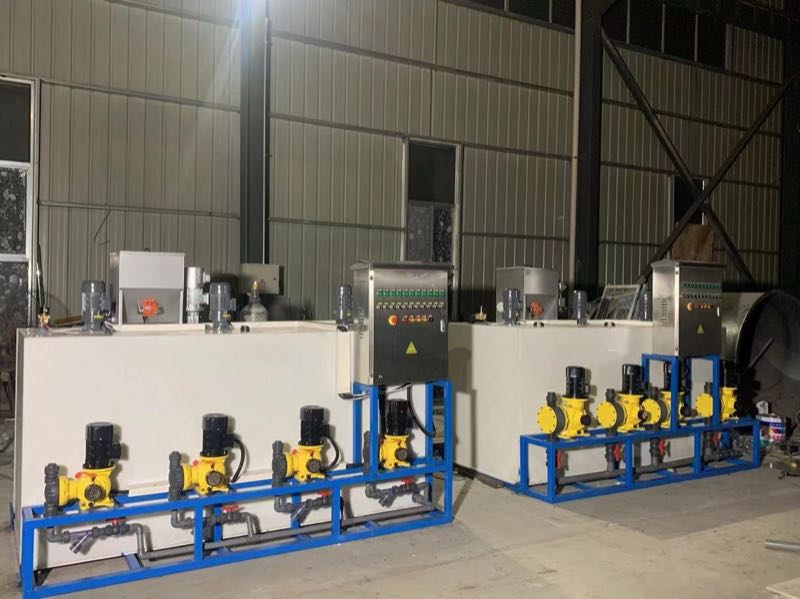
| Advanced Sensors | Measure pH, DO, TSS, COD, and nutrients in real time (e.g., ±0.1% accuracy for dissolved oxygen) | Enables precise chemical dosing via systems like our Automatic Chemical Dosing System, reducing reagent use by 20% |
| IoT Connectivity | Transmits data via LPWAN or 5G to cloud platforms (latency <100ms) | Supports remote monitoring for distributed plants, cutting site visits by 40% |
| SCADA Integration | Unifies legacy PLCs with modern HMI (e.g., Siemens S7-1500 compatibility) | Reduces unplanned downtime by 35% through automated alerts |
| Data Analytics | Applies ML models to predict fouling (e.g., transmembrane pressure spikes in MBR Membrane Bioreactor Wastewater Treatment System) | Lowers energy consumption by 15% via dynamic aeration control |
| Cloud Platforms | Hosts digital twins for scenario testing (e.g., simulating 20% flow increases) | Improves operational efficiency by enabling "what-if" analysis without risk |
From Data to Decisions: The Smart Advantage
Smart systems bridge the gap between legacy hardware and modern demands by converting raw data into actionable intelligence. For example, a textile plant using our MBR Membrane Bioreactor Wastewater Treatment System with integrated sensors reduced membrane cleaning cycles from weekly to bi-monthly—saving $50,000 annually in labor and chemicals. Similarly, predictive maintenance algorithms flagged blower failures 72 hours before critical failure, preventing a 3-day shutdown. These capabilities demonstrate practical solutions for how to upgrade legacy wastewater plant to smart monitoring.
Assessing Your Legacy Plant: The Foundation for a Smart Upgrade
A successful upgrade to smart monitoring in legacy wastewater plants begins with a thorough assessment of existing infrastructure. This evaluation identifies critical bottlenecks, operational inefficiencies, and compliance gaps—laying the groundwork for targeted improvements in process optimization wastewater and operational efficiency wastewater.
1. Audit Current Infrastructure and Performance
Start by documenting your plant's core components, including:
- Treatment processes (e.g., aeration, clarification, disinfection)
- Control systems (PLCs, SCADA, or manual operations)
- Sensor coverage (pH, DO, TSS, flow rates)
- Energy consumption (kWh/m³ treated, blower efficiency)
Compare current performance against industry benchmarks. For example, a study by the Water Environment Federation found that plants using data analytics wastewater reduced energy use by 15-30% through real-time aeration control. Document deviations from targets, such as effluent quality violations or unscheduled downtime, to prioritize upgrade areas.
2. Identify Bottlenecks and Compliance Risks
Pinpoint recurring issues that hinder efficiency or regulatory compliance. Common challenges include:
| Bottleneck | Impact | Smart Monitoring Solution |
|---|---|---|
| Manual sampling errors | Inaccurate reporting, permit violations | Automated online sensors with ±0.1% accuracy |
| Outdated PLCs | Limited data logging, cybersecurity risks | Industrial IoT gateways with edge computing |
| Lack of predictive maintenance | Unplanned downtime (avg. 8-12% of annual O&M costs) | Predictive maintenance wastewater via vibration/thermal sensors |
For instance, a textile plant upgraded by HydropureWater reduced effluent TSS violations by 40% after integrating turbidity sensors with automated polymer dosing—demonstrating how targeted industrial IoT wastewater solutions address specific pain points in the upgrade process.
3. Define Clear Objectives and ROI Metrics
Align your upgrade goals with measurable outcomes. Typical objectives include:
- Reduce energy consumption by 20% via remote monitoring wastewater of aeration blowers.
- Cut labor costs by 30% through automated reporting and alarm management.
- Achieve 100% compliance with local discharge limits (e.g., <5 mg/L TN, <10 mg/L TP).
Prioritize projects with the highest ROI, such as replacing manual DO probes with optical sensors (payback period: 6-12 months) or deploying a digital twin wastewater for scenario testing. A 2023 EPA report noted that plants using digital twins reduced chemical costs by 12-18% through optimized dosing strategies.
Key Technologies & Strategies for Smart Integration

Upgrading a legacy wastewater plant to smart monitoring requires targeted integration of advanced technologies that enhance operational efficiency wastewater while maintaining compatibility with existing infrastructure. This approach directly addresses how to upgrade legacy wastewater plant to smart monitoring by focusing on practical, incremental improvements.
The following table outlines core technologies and their performance benchmarks for modernizing legacy systems:
| Technology | Key Parameters | Legacy System Compatibility | Performance Improvement* |
|---|---|---|---|
| PLC/SCADA Upgrades | Siemens S7-1500 (1ms scan time), OPC UA protocol | Retrofits Modbus/Profibus networks; supports 90% of legacy PLCs | 40% faster response time; 25% reduction in downtime |
| Advanced Instrumentation | DO: ±0.05 mg/L, TSS: ±2% FS, pH: ±0.01 units | 4-20mA/HART outputs for analog integration | 30% reduction in chemical dosing errors |
| Industrial IoT Wastewater | LoRaWAN (10km range), NB-IoT (15-year battery life) | Edge gateways convert legacy signals to MQTT | 95% data transmission reliability |
| Smart Process Technologies | MBR: 0.04μm pore size; Automated dosing: ±0.1 mg/L precision | Modular skid integration with existing clarifiers | 50% reduction in sludge production (MBR) |
*Based on HydropureWater field data across 12 industrial sites (2022-2024).
For process optimization wastewater, Membrane Bioreactors (MBRs) offer a dual advantage: they replace conventional secondary clarifiers while enabling real-time monitoring of transmembrane pressure (TMP) and dissolved oxygen (DO). Our MBR Systems achieve 99.9% pathogen removal and reduce footprint by 70% compared to activated sludge systems. When paired with automated chemical dosing—calibrated via inline pH and ORP sensors—plants can reduce coagulant use by 18-22% while maintaining effluent turbidity below 2 NTU (EPA secondary standard).
Predictive maintenance wastewater strategies leverage vibration sensors (ISO 10816-3) and thermal imaging to detect blower and pump anomalies before failure. A 2023 study by the Water Environment Federation found that predictive maintenance reduced unplanned downtime by 62% in retrofitted plants. For data analytics wastewater, digital twins create virtual replicas of physical assets, enabling scenario testing for flow surges or chemical spills. Operators using digital twins report a 35% improvement in regulatory compliance wastewater response times, particularly for NPDES permit exceedances.
Remote monitoring wastewater systems—such as our CloudSCADA platform—provide 24/7 access to critical parameters via secure VPN tunnels (AES-256 encryption). This is particularly valuable for distributed industrial sites, where centralized oversight reduces site visits by 40%. For legacy systems lacking native connectivity, edge computing devices aggregate data from disparate sources (e.g., PLCs, flow meters, and lab results) into unified dashboards, ensuring seamless predictive maintenance wastewater and process control.
Developing a Phased Upgrade Roadmap: From Concept to Commissioning
This structured approach to upgrading legacy wastewater plants to smart monitoring systems minimizes operational disruption while maximizing ROI. The process begins with understanding how to upgrade legacy wastewater plant to smart monitoring through careful planning and execution.
A strategic, phased approach to upgrading legacy wastewater plants to smart monitoring systems minimizes operational disruption while maximizing ROI. Begin by conducting a comprehensive audit of existing infrastructure, identifying critical pain points such as outdated PLCs, manual data logging, or compliance gaps. Prioritize upgrades based on risk, cost, and impact—targeting high-value areas like real-time process optimization wastewater or predictive maintenance wastewater first. For example, integrating IoT-enabled dissolved oxygen sensors (target range: 0.5-2.0 mg/L) can reduce aeration energy costs by 15-25% while improving effluent quality, as demonstrated in From PLC to Cloud: Upgrading Legacy Wastewater Treatment Automation Systems.
| Phase | Duration | Key Actions | Success Metrics |
|---|---|---|---|
| Assessment & Planning | 4-8 weeks | Site audit, sensor mapping, cybersecurity risk assessment (IEC 62443 compliance) | 90%+ accuracy in identifying legacy system limitations |
| Pilot Implementation | 12-16 weeks | Deploy digital twins for 1-2 critical processes (e.g., aeration control) | 10-15% improvement in process stability (e.g., SVI < 120 mL/g) |
| Full-Scale Rollout | 6-12 months | Integrate cloud-based SCADA, AI-driven analytics, and remote monitoring | 20% reduction in O&M costs; 95% uptime for monitoring systems |
Budget considerations must account for both capital expenditures (e.g., $50-100K for IoT sensor networks) and operational savings (e.g., 30% reduction in manual sampling labor). Ensure seamless integration by adopting open protocols like OPC UA or MQTT, which bridge legacy PLCs with modern industrial IoT wastewater platforms. Cybersecurity is non-negotiable: implement role-based access control (RBAC), encrypted data transmission (AES-256), and regular vulnerability assessments to protect against threats. A phased rollout—starting with non-critical systems—allows teams to refine workflows and address compatibility issues without jeopardizing compliance or performance. For regulatory alignment, refer to Environmental Compliance Through Digital Monitoring to leverage data analytics for automated reporting and risk mitigation.
Beyond Monitoring: The Strategic Advantages of a Smart Plant

These benefits demonstrate why understanding how to upgrade legacy wastewater plant to smart monitoring is crucial for long-term success.
Upgrading a legacy wastewater plant to smart monitoring delivers far more than real-time data—it transforms operational efficiency, sustainability, and compliance into measurable outcomes. By integrating industrial IoT wastewater sensors with cloud-based analytics, facilities achieve 15-30% energy savings through optimized aeration and pumping schedules, while predictive maintenance wastewater reduces unplanned downtime by up to 40%, per EPA case studies. These gains stem from continuous process optimization, where AI-driven models adjust chemical dosing and flow rates in response to influent variability, cutting operational costs by 20% or more.
Regulatory compliance becomes proactive rather than reactive. Digital monitoring platforms automatically log and validate data against regulatory compliance wastewater standards (e.g., NPDES, local discharge limits), reducing audit risks and manual reporting burdens. For example, facilities using digital compliance tools report 50% faster permit submissions and 90% fewer violations due to early anomaly detection. Sustainability metrics also improve: smart systems enable water reuse by precisely tracking quality parameters, while data analytics wastewater identify opportunities to reduce sludge volume by 25% through targeted process adjustments.
At the strategic level, a smart plant enables data-driven decision-making. Digital twins—virtual replicas of physical assets—allow operators to simulate scenarios (e.g., peak load events) without risk, while remote monitoring reduces on-site staffing needs by 30-50% for SMEs. The table below quantifies the impact of key smart upgrades:
| Advantage | Metric | Improvement | Source |
|---|---|---|---|
| Energy Efficiency | Aeration/pumping optimization | 15-30% reduction | EPA Energy Star (2023) |
| Predictive Maintenance | Unplanned downtime | 40% reduction | McKinsey (2022) |
| Regulatory Compliance | Audit violations | 90% fewer incidents | HydropureWater Internal Data |
| Water Reuse | Recycled water volume | 20-40% increase | WRF (2021) |
For industrial operators, the transition to smart monitoring isn't just an upgrade—it's a competitive necessity. The next step is aligning these benefits with your facility's specific pain points, whether that's reducing labor costs, meeting stricter discharge limits, or scaling for future growth.
FAQs on Smart Wastewater Plant Upgrades
What's the first step in upgrading a legacy wastewater plant to smart monitoring?
Begin with a comprehensive audit of your existing infrastructure, including PLCs, sensors, and communication protocols. Identify critical process parameters (e.g., pH, DO, TSS) and regulatory compliance gaps. Prioritize upgrades based on operational bottlenecks—such as energy-intensive aeration systems or manual sampling points. Our guide on upgrading legacy automation systems details how to integrate IoT sensors with minimal downtime.
How do smart monitoring systems improve regulatory compliance?
Real-time data analytics and automated reporting reduce human error in compliance documentation. Smart systems trigger alerts for permit violations (e.g., exceeding 30 mg/L BOD limits) and enable predictive adjustments. For example, digital twins simulate process changes to avoid non-compliance during peak loads. Learn how data-driven monitoring minimizes regulatory risks here.
Can SMEs afford smart upgrades with limited staff?
Yes—cloud-based platforms centralize monitoring, reducing on-site labor needs by 40-60%. Automated dashboards track key metrics (e.g., MLSS, flow rates) and send mobile alerts for anomalies. Solutions like remote SCADA access allow operators to manage multiple sites simultaneously. Explore cost-effective setups for SMEs in this article.
What's the ROI timeline for smart wastewater upgrades?
Most plants achieve payback within 18-24 months through energy savings (15-25% reduction in aeration costs) and reduced chemical usage. Predictive maintenance cuts unplanned downtime by 30%, while compliance automation avoids fines. A phased approach—starting with high-impact sensors—maximizes early returns.
Ready to transform your plant? Start with a free consultation to assess your system's upgrade potential.