Why Milan Hospitality Needs Its Own Wastewater Playbook in 2026
A Milan hotel or resort in 2026 typically needs a compact biological treatment plant sized to its occupancy — most often an A/O package unit for flows under 50 m³/day, or an MBR membrane bioreactor when the site targets reuse for garden irrigation or toilet flushing under D.Lgs. 152/2006 Part III. Discharge to Milan public sewer must meet EU Urban Waste Water Directive 91/271/EEC limits, and reuse must meet Italian DM 185/2003 microbiological standards.
Italy's primary water-protection driver is D.Lgs. 152/2006, Part III. Tables 1, 3, and 4 of that decree set discharge ceilings for BOD₅, COD, TSS, total nitrogen, and total phosphorus, with the numeric limit depending on whether the effluent goes to municipal sewer (Tab. 1) or to surface water (Tab. 3/4). On top of that, the Lombardy Regional Plan (PTUA) layers stricter nutrient and micropollutant targets in the Po-basin catchments that include Milan. The EU Urban Waste Water Directive 91/271/EEC remains the Europe-wide benchmark: 91% COD/BOD removal, nitrification in sensitive zones, and a population-equivalent trigger at 2,000 PE that the same engineering logic used for the medical series also satisfies for small hotels.
Milan's hotel demand is also event-driven. Design Week, Salone del Mobile, and Fashion Week push peak-to-average occupancy ratios to 2.5–3.5×, which means a properly sized biological plant must buffer a daily average of, say, 18 m³/day against peak evening loads north of 50 m³/day. The Milano Scala retrofit in Brera — water-to-water heat pumps, 99% biodegradable toiletries, and a working roof garden supplied by treated water — proves that a 19th-century central-Milan building can run a zero-emission water loop. That precedent is the practical floor every permit reviewer now expects.
The Three Technology Classes That Fit a Milan Hotel
Three biological platforms dominate the 5–80 m³/day hospitality band in Lombardy: A/O contact oxidation, MBR, and SBR. Each has a defensible use case, and the choice is driven by discharge route, footprint, and reuse ambition rather than brand.
A/O biological contact oxidation — delivered as a buried A/O package plant in the WSZ series — handles 1–80 m³/h (per HydropureWater product sheet), fully automated, no operator, and is the default pick when effluent goes to Milan public sewer and reuse is not on the table. A 150-room full-service hotel typically discharges 8–25 m³/day, well inside this envelope. MBR — the integrated DF + MBR platform — runs 10–2,000 m³/day with PVDF 0.1–1 µm membranes, cuts footprint by roughly 60% versus conventional activated sludge, and produces near-reuse effluent that meets DM 185/2003 with downstream disinfection. SBR / sequencing batch reactors are flexible enough for low, intermittent flows typical of small agriturismi and seasonal lakeside properties (the kind of operating profile a Passalacqua or Grand Hotel Tremezzo on Lake Como would see, even outside Milan proper).
Pre- and post-treatment matter as much as the biology. DAF pre-treatment (4–300 m³/h) is the right add-on when a hotel kitchen pushes FOG above ~50 mg/L in influent — common in full-service Italian hospitality with on-site pastry, gelato, or banquet operations. A lamella clarifier running at 20–40 m/h surface loading rate can polish pre-treated effluent before disinfection or a reuse tank. On the sludge line, a plate-and-frame filter press sized at 1–15 m² filter area handles the 0.3–0.6 kg DS/m³ of dry solids that Italian hospitality typically generates, keeping haulage frequency and cost under control.
| Technology class | Flow range (m³/day) | Footprint vs CAS | Effluent quality (BOD₅ / TSS, mg/L) | Reuse-ready? | Typical hotel fit |
|---|---|---|---|---|---|
| A/O package (WSZ) | 1–80 m³/h (≈24–1,920 m³/day per train) | ~0.7× | ≤ 20 / ≤ 20 | No (sewer discharge) | ≤150 rooms, sewer-only, central Milan |
| MBR (DF + MBR) | 10–2,000 | ~0.4× | ≤ 5 / ≤ 5 | Yes (DM 185/2003 with ClO₂) | Space-constrained, reuse-targeted, 80–400 rooms |
| SBR | 5–500 | ~0.8× | ≤ 20 / ≤ 20 | Optional with polishing | Seasonal agriturismi, lakeside resorts, low-load profiles |
Compliance Targets a Milan Hotel System Must Hit
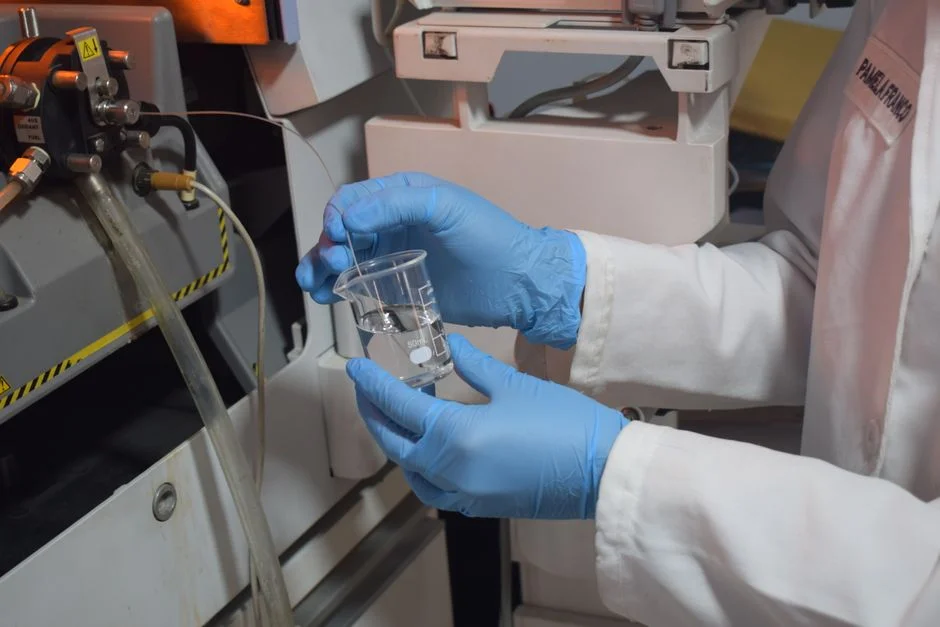
D.Lgs. 152/2006 Tab. 1 caps municipal-sewer discharge at BOD₅ ≤ 250 mg/L, COD ≤ 500 mg/L, and TSS ≤ 200 mg/L; tighter site-specific caps routinely apply inside Milan's CAP. EU UWWTD 91/271/EEC sets a 91% COD/BOD removal baseline — the same compliance anchor the medical line cites for small flows, and the same logic governs hotel plants. The Lombardy PTUA adds nitrate < 50 mg/L and phosphate < 0.5–1.0 mg/L in surface-water-sensitive Po-basin zones, which forces real biological nitrification/denitrification or MBR polishing on any hotel close to the Lambro, Olona, or Naviglio channels.
For sites that reuse effluent, DM 185/2003 is the binding standard: E. coli ≤ 10 CFU/100 mL, BOD₅ ≤ 10 mg/L, TSS ≤ 10 mg/L, plus legionella control on any spray irrigation or toilet-flush loop. The cleanest engineering path is MBR followed by an on-site ClO₂ generator (50 g/h to 20,000 g/h, compliant with EU 98/83/EC drinking-water norms and WHO guidance for residual disinfection).
| Standard | Scope | Headline limit | Engineering implication |
|---|---|---|---|
| D.Lgs. 152/2006 Tab. 1 | Discharge to municipal sewer | BOD₅ ≤ 250 mg/L, COD ≤ 500 mg/L, TSS ≤ 200 mg/L | A/O package plant with primary settling |
| D.Lgs. 152/2006 Tab. 3/4 | Discharge to surface water | BOD₅ ≤ 40 mg/L, COD ≤ 160 mg/L, TSS ≤ 80 mg/L; nutrients tightened | MBR or SBR + tertiary polishing |
| EU UWWTD 91/271/EEC | Europe-wide baseline | ≥ 91% COD/BOD removal | Standard biological design |
| Lombardy PTUA | Po-basin sensitive zones | NO₃ < 50 mg/L, PO₄ < 0.5–1.0 mg/L | Nitrification/denitrification or MBR |
| DM 185/2003 | Reuse for irrigation / toilet flush | E. coli ≤ 10 CFU/100 mL, BOD₅ ≤ 10 mg/L, TSS ≤ 10 mg/L | MBR + ClO₂ disinfection + Legionella control |
How to Choose Between A/O and MBR for Your Site
Pick the buried A/O package plant when the project discharges to Milan public sewer, has the room for a buried tank or a trailer-mounted skid, has no reuse target, and the capex envelope is tight. A 100-room hotel typically lands in the low-to-mid five-figure EUR capex range on this path. Pick MBR when the site is space-constrained (a rooftop plant room in central Milan, a basement under a Brera palazzo), when the operator wants to reuse effluent for garden or rooftop irrigation or toilet flushing, or when the Lombardy PTUA nutrient caps apply. Expect MBR capex at roughly 1.8–2.5× the A/O baseline because of the membrane modules and the higher instrumentation count (HydropureWater field data, 2026).
The sizing rule of thumb is consistent across the segment: plan for 200–250 L per guest-night at full-service hotels, add 30–50 L per cover for restaurant service, and apply a peak factor of 2.5–3.5× over the daily average. A high-efficiency sedimentation tank upstream of biology smooths peak loads and protects downstream kinetics. When FOG from kitchens, pastry, or in-house gelato operations exceeds ~50 mg/L in influent, a DAF pre-treatment unit becomes mandatory, not optional. On the sludge line, a small plate-and-frame filter press sized 1–15 m² handles 100–200-room properties without external hauling contracts running out of control.
| Decision criterion | Pick A/O (WSZ) | Pick MBR |
|---|---|---|
| Discharge destination | Milan public sewer | Surface water, reuse, or both |
| Footprint | Buried tank available, ≥ 30 m² | Site < 20 m², rooftop, basement |
| Reuse target | None | Irrigation, toilet flush, cooling tower makeup |
| Effluent BOD₅ target | ≤ 20 mg/L (Tab. 1) | ≤ 5 mg/L (Tab. 3/4, DM 185/2003) |
| Capex weighting | Lower (baseline) | 1.8–2.5× baseline |
| OPEX hot spots | Sludge haulage | Membrane CIP, periodic replacement |
2026 Cost, Reuse, and ROI Considerations for Milan
A buried A/O package plant for a 100-room Milan hotel typically lands in the low-to-mid five-figure EUR capex range; an MBR of equivalent capacity runs 1.8–2.5× higher because of the membrane modules and the more complex controls. Both run fully automated, so operator labor is not the differentiator — MBR adds periodic clean-in-place cycles that the GM should budget into OPEX from day one rather than discover mid-season.
The real Milan capex lever in 2026 is reuse. Toilet flushing plus landscape or rooftop irrigation can offset 30–50% of hotel freshwater demand when the system is designed to DM 185/2003 limits, and the MBR + ClO₂ pairing is the simplest way to hit those limits reliably. An automatic chemical dosing system keeps residual chlorine and pH inside the reuse envelope without operator intervention. Permit timelines are real: CAP/ATO fognatura approval typically runs 60–120 days, and reuse-for-irrigation requires separate Comune di Milano authorization, so sequencing these on the project critical path is the difference between an opening on schedule and a six-month delay. For comparison on Mediterranean hospitality engineering, the Budapest hotel wastewater engineering guide and the Athens hotel wastewater treatment guide show similar reuse-driven ROI patterns across Europe, and the MBR troubleshooting guide covers the operational failure modes any Milan operator should expect.
Frequently Asked Questions
What discharge limits apply to a hotel discharging to Milan's public sewer in 2026?
D.Lgs. 152/2006 Tab. 1 sets the headline caps: BOD₅ ≤ 250 mg/L, COD ≤ 500 mg/L, TSS ≤ 200 mg/L. Milan's CAP routinely tightens these site-specific values, and a well-tuned buried A/O package plant comfortably stays under them. The EU UWWTD 91/271/EEC 91% removal baseline is the parallel Europe-wide check (per Italian decree, 2026).
Which standard governs reuse of treated wastewater for hotel garden irrigation in Italy?
Italian reuse is governed by DM 185/2003, which sets E. coli ≤ 10 CFU/100 mL, BOD₅ ≤ 10 mg/L, and TSS ≤ 10 mg/L, with legionella control on spray irrigation. MBR effluent polished by an on-site ClO₂ generator is the most defensible path to compliance for a Milan hotel (per Italian reuse standard, 2026).
How is a Milan hotel's wastewater treatment plant sized in 2026?
Plan for 200–250 L per guest-night at full-service properties, add 30–50 L per cover for restaurant service, and apply a peak factor of 2.5–3.5× over the daily average. A 100-room hotel typically lands at 18–25 m³/day average, well inside the WSZ A/O or MBR envelope. For a 150-room peak-week load, expect 50–80 m³/day during Salone del Mobile or Fashion Week (HydropureWater field data, 2026).
Related Equipment
- MBR membrane bioreactor — specifications, capacity range, and technical data