
Why Bandung Hotels Need Their Own Wastewater System in 2026
Centralized municipal sewerage does not reach the majority of Bandung's hospitality footprint, and a packaged on-site ETP sized at 100-200 L per guest per day is the de facto procurement path for any 2026 hotel or resort project. Firdayati et al. (2015) state directly that "lacking in centralized wastewater treatment plant exist in all Indonesian cities" — Bandung included — which means a 60-room Lembang resort cannot assume a sewer connection is coming (Firdayati et al., 2015, Jurnal Teknik Lingkungan, doi:10.5614/jtl.2015.21.2.1). The same paper notes that the Anaerobic Baffled Reactor (ABR) is a credible Indonesian alternative where land and budget limit constructed-wetland deployment.
Bandung city proper — Dago, Braga, the Trans Studio Mall corridor — typically has partial sewer access, but Lembang, Dago Highland, Ciwidey, and the Pangalengan highland belt are fully off-sewer. Any discharge to river, irrigation channel, or on-site soak pit must satisfy PP 82/2001, the Indonesian water-quality and water-pollution-control regulation that classifies receiving waters and sets the parameter ceilings a DLH (Dinas Lingkungan Hidup) inspector will check. Lembang averages 1,500-2,000 mm of rainfall per year, which dilutes effluent in receiving ditches but does not waive the compliance obligation, and high-rainfall inflow & infiltration is a sizing variable that vendors routinely under-count.
Even mid-tier Indonesian resorts operate under formal SOP regimes — Permana, Putra, and Burhany (2020) document exactly this at Bandung Giri Gahana Golf & Resort, demonstrating that a hospitality wastewater system sits inside an audited operational framework, not a backyard improvisation (Universitas Widyatama, doi:10.33197/jabe.vol6.iss1.2020.464). For a Bandung owner in 2026, the engineering answer is therefore an on-site, packaged, MBR- or ABR-based system sized for highland seasonality. A regional comparison is in the Budapest hotel wastewater treatment 2026 guide.
Bandung Hotel Wastewater Characteristics: What Comes Out of the Pipe
Bandung hotel influent is greywater-dominant, surfactant-heavy, and FOG-loaded — and the designer who treats it as municipal-strength sewage will oversize the biological stage by 30-50%. Greywater (showers, laundry, kitchen, pool backwash) typically contributes 150-200 L per guest per day at a 3-4 star Bandung property, while blackwater (toilet) adds another 30-50 L per guest per day. For a 60-room resort at 1.5 guests per room average occupancy, the design flow lands in the 12-20 m³/day band; push weekend occupancy to 2.0 guests per room and instantaneous flow can spike above 30 m³/day on a Saturday night.
Firdayati et al. (2015) report Indonesian greywater COD of roughly 200-800 mg/L and BOD in the 100-400 mg/L range, with Linear Alkylbenzene Sulfonate (LAS) surfactant concentrations consistently between 10-30 mg/L — and LAS is the parameter that defeats under-designed biological trains because it is recalcitrant under short HRT. The table below summarizes the design envelope a vendor proposal should be benchmarked against.
| Parameter | Typical Bandung hotel influent | Design envelope (60-100 room) | Source |
|---|---|---|---|
| COD | 400-800 mg/L | ≤ 1,000 mg/L (worst case) | Firdayati et al. 2015; Metcalf & Eddy |
| BOD₅ | 200-400 mg/L | ≤ 500 mg/L (worst case) | Firdayati et al. 2015 |
| TSS | 150-300 mg/L | ≤ 350 mg/L | Metcalf & Eddy typical greywater |
| LAS (surfactant) | 10-30 mg/L | 15-40 mg/L (peak laundry) | Firdayati et al. 2015; Soewondo & Indiyani 2007 |
| FOG (kitchen) | 50-150 mg/L | Up to 200 mg/L pre-DAF | Hospitality FOG range |
| Daily flow | 150-200 L/guest greywater + 30-50 L/guest blackwater | 12-20 m³/day (60 rooms) | Metcalf & Eddy; Firdayati 2015 |
| Peak factor | 1.5-2.0× average on weekends | 30+ m³/day peak for 60-room resort | Lembang occupancy pattern |
FOG from kitchens and laundry surfactants are the two parameters that most often push a Bandung hotel ETP out of PP 82/2001 compliance — both are addressable with upstream screening plus a DAF unit, but only if the designer accounts for them at the proposal stage, not after the DLH inspection fails.
Three Process Trains That Work for Bandung Resorts in 2026
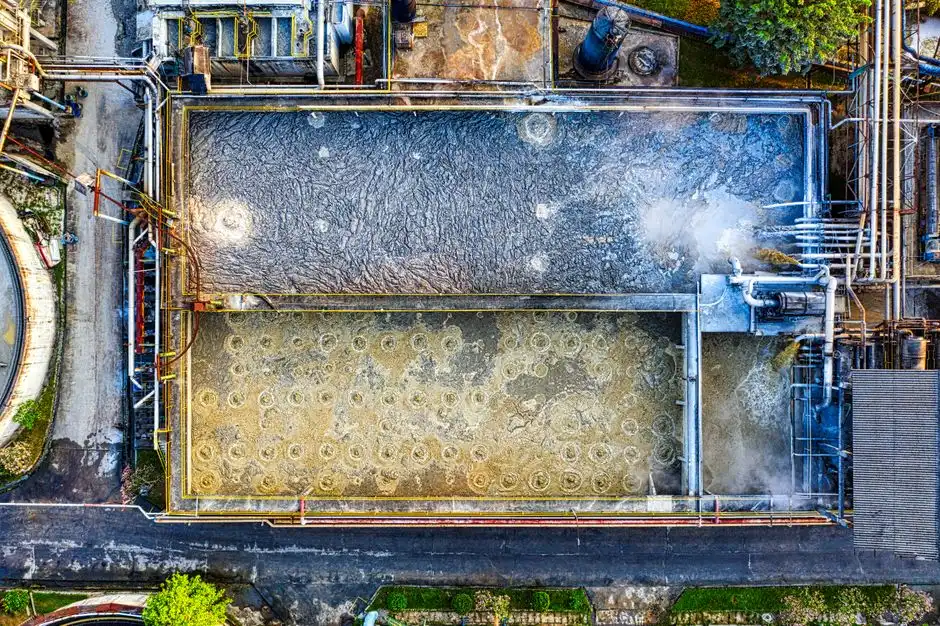
Three defensible process trains cover roughly 90% of Bandung hospitality procurement decisions in 2026: an underground packaged A/O for tight city-center footprints, an ABR + MBR hybrid for the Lembang mid-size segment, and an ABR + constructed-wetland train for estate-scale Ciwidey properties. The right choice is a function of land, occupancy, and reuse intent, not vendor preference.
Option A — Underground Package A/O (WSZ-style). A factory-built, fully buried A/O plant with capacities from 1-80 m³/h in the HydropureWater WSZ catalog fits compact city-center Bandung hotels under 80 rooms where above-grade landscaping matters. The footprint is small, the skid arrives pre-commissioned, and the discharge can hit PP 82/2001 Class 2 with a polishing stage — see the underground packaged A/O sewage treatment plant specification. The trade-off is surfactant removal: a basic A/O chain treats LAS poorly and may need ABR pre-treatment or a polishing MBR if laundry load is heavy.
Option B — ABR + MBR hybrid. The Anaerobic Baffled Reactor handles LAS and BOD in a single robust vessel — Firdayati et al. (2015) report 60-94% BOD reduction in Indonesian ABR trials, citing Soewondo and Indiyani (2007) and Indriani and Herumurti (2010) — and the submerged MBR then polishes effluent to irrigation or toilet-flush reuse quality. This is the 2026 default for Lembang mid-size resorts of 50-150 rooms. The packaged train pairs an MBR membrane bioreactor wastewater treatment system with a pre-engineered ABR and typically uses a PVDF flat sheet MBR module for the polishing stage, which tolerates Bandung's TSS variability better than hollow-fiber.
Option C — ABR + Constructed Wetland. Lowest opex, plant- and gravel-media-driven, achieves the same 60-94% BOD reduction in Indonesian trials, but requires 5-10 m² of land per m³/day of flow (Firdayati et al. 2015). Only viable for Ciwidey or Lembang estate-style resorts on multi-hectare grounds where the wetland doubles as a landscape feature.
All three trains must end with disinfection. A chlorine dioxide disinfection generator is preferred over chlorine gas for Bandung hotels because ClO₂ is generated on-site, eliminates gas-cylinder handling, and inactivates viruses at lower residual CT — important for reuse applications. Sludge handling stays simple: a small plate-and-frame filter press sized for the daily waste-sludge volume is the practical choice, because Bandung's hospitality plants produce too little sludge to justify a belt press or centrifuge.
ABR + MBR vs Constructed Wetland: Which Fits a Bandung Site?
ABR + MBR wins on footprint, effluent consistency, and reuse-readiness; constructed wetlands win on capex-per-m³ and on the eco-marketing narrative. The selection comes down to whether the resort can spare 5-10 m² per m³/day of land and is willing to accept variable TSS. Firdayati et al. (2015) put the constructed-wetland footprint at 5-10 m² per m³/day; the ABR + MBR footprint is roughly 0.3-0.5 m² per m³/day including the bioreactor tank, MBR cassette, and disinfection contact chamber — about 15-20× denser.
On effluent quality, an ABR + MBR train reliably delivers COD <50 mg/L, BOD <20 mg/L, and TSS <5 mg/L, which is suitable for landscape irrigation, toilet flushing, and pool make-up after a polishing step. Constructed wetlands achieve 60-94% BOD reduction in Indonesian trials but produce variable TSS and cannot match MBR turbidity without sand filtration. Capex tells the opposite story: the wetland's earthworks and plant stock are cheaper per m³ than factory-built MBR cassettes, but the land cost in Lembang — where 1,000-3,000 m² parcels are still the norm — erases that advantage unless the property already has unused grounds.
| Criterion | ABR + MBR | ABR + Constructed Wetland |
|---|---|---|
| Footprint | 0.3-0.5 m² per m³/day | 5-10 m² per m³/day (Firdayati 2015) |
| BOD removal | 60-94% in ABR stage; MBR polish to <20 mg/L | 60-94% across wetland (Firdayati 2015) |
| Effluent TSS | < 5 mg/L (MBR) | Variable, 10-40 mg/L |
| Reuse-ready | Yes — irrigation, toilet flush, pool make-up | Irrigation only; flush reuse requires sand filter |
| Capex profile | Higher unit cost, lower land cost | Lower unit cost, higher land cost |
| O&M | Membrane clean every 6-12 months, sludge wasting weekly | Plant maintenance, media replacement every 5-8 years |
| Construction time | 8-12 weeks for packaged install | One full growing season to reach design performance |
| Best fit | Lembang mid-size resorts, land-constrained parcels | Ciwidey / estate-scale resorts with spare grounds |
For the Lembang 50-100 room segment, the practical 2026 default is ABR + MBR with a submerged MBR membrane bioreactor and PVDF flat sheet MBR modules. For owners who want a green-marketing angle and have at least 1,000 m² of spare land, the wetland hybrid is defensible — but it should still end in an MBR polish step if reuse for toilet flushing is on the table.
2026 Selection Framework: Choosing the Right System for Your Bandung Property
The decision rule for a Bandung hotel in 2026 is a four-branch framework: footprint, reuse intent, FOG load, and peak flow. Each branch collapses to a specific train so a non-engineer GM can shortlist before vendor RFQs go out. The matrix below is the one to hand to a procurement officer.
| If your property… | Then choose… | Why |
|---|---|---|
| Under 500 m² footprint, no municipal sewer | Packaged WSZ underground A/O or containerized ABR + MBR | Smallest land take; buried installation preserves landscaping |
| 1,000+ m² available, green/eco marketing desired | ABR + constructed wetland with MBR polish | Lowest opex, visible sustainability feature |
| Reuse for landscape irrigation or toilet flushing | MBR effluent is the only safe 2026 option for Bandung hotels | TSS < 5 mg/L protects irrigation emitters and flush valves |
| Heavy kitchen FOG (large F&B operation) | Add a DAF pre-treatment unit upstream of biology | Strips FOG to < 30 mg/L before biological stage, prevents sludge bulking |
| Weekend occupancy spikes (Lembang highland resort) | Size for 1.5-2.0× average flow | Absorbs Saturday-night peaks and Bandung rainy-season I&I |
Two engineering notes that owners routinely miss: first, an automatic chemical dosing system ahead of the DAF (or polymer dosing for the MBR stage) is what actually keeps a hospitality plant inside spec, because hotel influent quality swings hour-to-hour. Second, the disinfection stage needs a chlorine dioxide generator sized for peak flow, not average — a common 2026 procurement error is to size the ClO₂ unit on average and then find Saturday-night residuals drop below 0.5 mg/L at the contact-tank outlet.
Compliance, Reuse, and What Bandung Regulators Actually Check
PP 82/2001 sets parameter limits by water class, and most Bandung hotel discharges land in Class 2 or Class 3 depending on whether the receiving water feeds irrigation or a natural river. Class 2 ceilings relevant to a hotel discharge include BOD < 25 mg/L, COD < 50 mg/L, TSS < 50 mg/L, and total coliform < 5,000 MPN/100 mL; Class 3 loosens BOD to < 50 mg/L but tightens fecal coliform on irrigation reuse. The receiving-waterbody classification is set by DLH West Java during the AMDAL or UKL-UPL review, and a vendor proposal that does not ask which class the discharge targets is a red flag.
Reuse for landscape irrigation is the lowest-cost disposal path and aligns with Bandung's water-reuse pilots documented by Firdayati et al. (2010, cited in the 2015 review) for vertical gardens and urban agriculture. DLH Bandung and DLH West Java typically inspect larger resorts on a monthly cycle; a packaged automated system with telemetry and an automatic chemical dosing system is the practical way to pass those inspections without a dedicated operator on site. Where municipal sewer is available (rare in Lembang, more common in central Bandung), discharge still requires a pre-treatment permit and a BOD < 100 mg/L at the connection — which an MBR polish stage handles comfortably.
Frequently Asked Questions
What size wastewater treatment plant does a 60-room Bandung resort need?
Plan for 18-25 m³/day average flow and 30-35 m³/day peak. The 150-200 L per guest per day greywater figure plus 30-50 L per guest per day blackwater gives this envelope (Metcalf & Eddy; Firdayati et al. 2015). A packaged 20-30 m³/day train covers both bands.
Does a Bandung hotel have to meet PP 82/2001?
Yes, if it discharges to a receiving water body. PP 82/2001 sets parameter limits by water class; most Bandung hospitality discharges fall under Class 2 or 3 depending on whether the receiving water feeds irrigation. Discharge to municipal sewer still requires a pre-treatment permit and BOD < 100 mg/L at the connection.
Is a constructed wetland enough for a Lembang resort?
Only if the property has 1,000+ m² of spare land and accepts variable TSS. Constructed wetlands achieve 60-94% BOD reduction in Indonesian trials (Firdayati et al. 2015) but require 5-10 m² per m³/day, which is rarely available on Lembang highland parcels. For most 50-100 room resorts, an ABR + MBR packaged train is the 2026 default.
How does Bandung's rainfall affect plant sizing?
Lembang averages 1,500-2,000 mm/year, which drives inflow & infiltration into buried piping and dilutes effluent in open ditches. The dilution does not waive PP 82/2001 compliance, and the I&I volume must be added to peak-flow sizing — typically 1.5-2.0× average dry-weather flow.