Why Slaughterhouse Wastewater Plants Fail Without a Maintenance Program
Slaughterhouse wastewater plant maintenance is a unit-by-unit program covering rotary screens, DAF skimmers, biological reactors, and disinfection systems on defined daily, weekly, and quarterly intervals. Plants that skip fouling control routinely underperform — a 2024 NM-AIST case study of a newly installed African facility reported only 43% ammonium and 65.4% nitrate removal before stabilization (Nelson Mandela African Institution of Science and Technology, 2024). The same study showed the system was already pulling 87.5% BOD5 and 92.2% COD in its initial runs, so the weakness was not the hardware; it was the biological unit running without a stabilization and maintenance routine. A second, more recent risk now sits on top of that operational gap. In April 2026, Massacci et al. confirmed that slaughterhouse wastewater is a reservoir of oxazolidinone resistance genes — cfr in all staphylococci and Mammaliicoccus sciuri isolates, plus optrA and poxtA in enterococci — recovered from a single Italian swine plant (World J Microbiol Biotechnol, 2026-04-18). That finding turns routine microbiological monitoring from a compliance nicety into a maintenance obligation.
Neglect shows up as four recognizable failure modes: discharge-limit breach on nitrogen and FOG, biosolids bulking in the clarifier, foaming events that crash the aeration tank, and proliferation of AMR genes in receiving waters. The maintenance program that prevents all four covers four unit-operation lanes: screening, primary (DAF), biological, and disinfection/sludge handling. Each lane runs on its own cadence and its own spare-parts list, but the alarm logic is shared.
Pretreatment and Screening Maintenance: Bar Screens and Grit Handling
Most unplanned downtime in a meat processing effluent maintenance program starts at the head of the plant. A 5–10 minute daily walk-through is the highest-leverage task a plant engineer can perform. Confirm the rotary rake has cycled since the last shift, watch the spray nozzles for plugged tips, and verify the bypass channel is unobstructed and its isolation penstock is free of debris. These three checks take less time than a coffee break and prevent the rag-and-paunch carry-through that destroys downstream equipment.
Weekly, adjust rake-tension against the manufacturer's gauge mark, inspect brush and scraper segments for uneven wear, and grease the rotor and idler bearings on rotary units such as the GX Series rotary mechanical bar screen. Quarterly, pull the screen for a full teardown: check bar spacing against the design value (typically 6–10 mm for slaughterhouse duty), inspect stainless steel for crevice corrosion under the rake seals, and replace raked-teeth segments before they fracture. The single most common failure mode in this lane is rags and paunch contents bypassing the screen and overloading the DAF — operators see a sudden TSS spike of 200–400 mg/L above the rolling average and a skimmer that cannot keep up. The corrective action is to stop the feed, clear the bar rack manually, and verify the rake controller has not been left in manual bypass after a previous shift.
DAF System Maintenance: The Highest-Load Component
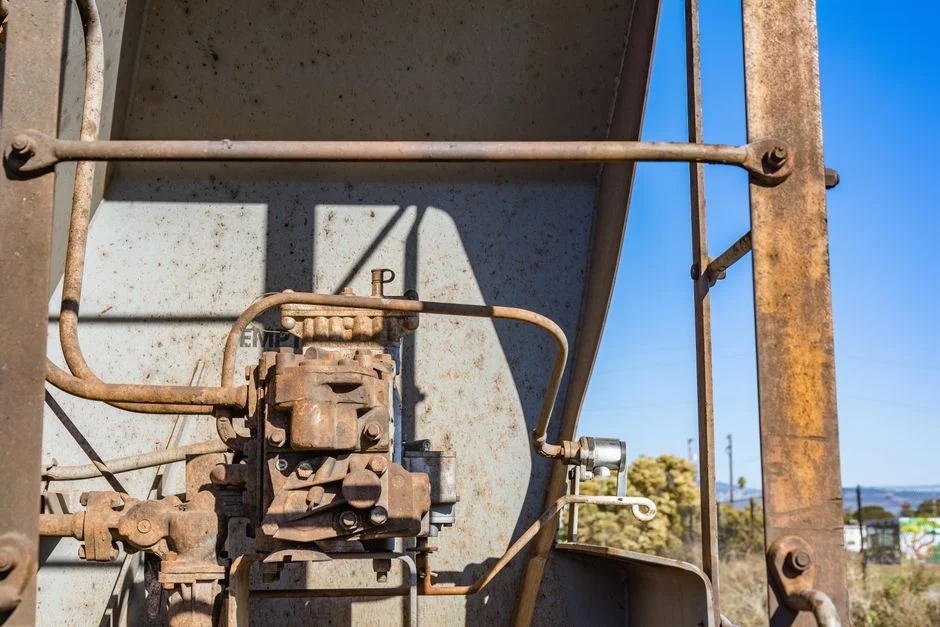
DAF is the workhorse for FOG and suspended solids in an abattoir wastewater treatment plant and the most failure-prone piece of rotating equipment. Design benchmark is high: DAF clarifiers delivering up to 99% suspended-solids removal on properly conditioned slaughterhouse feed (Sigma DAF Clarifiers, 2025). Maintenance has to preserve that envelope or the biological stage inherits a load it was never sized for. A typical HydropureWater DAF system runs four inspection cadences in parallel.
| Cadence | Task | Threshold or Acceptance Criterion |
|---|---|---|
| Daily | Skimmer blade wear, float layer thickness, recycle pump pressure, clarified-water turbidity | Float layer 50–150 mm; turbidity trend < 15% drift over 24 h |
| Weekly | Saturator vessel clean, air-compressor diaphragm inspection, PRV setpoint verification, polymer dosing line | PRV set within ±5% of design; polymer pump prime confirmed |
| Monthly | Recycle-pump impeller rag inspection, pressure-transmitter calibration, automatic dosing interlock vs. flow | Impeller free of rag; interlock response < 5 s on flow cutoff |
| Quarterly | Air-compressor seal replacement, saturator packing inspection, whitewater bubble-size check | Bubble size envelope 40–80 µm; saturator pressure within design band |
Pair the DAF with a properly sized automatic chemical dosing system so coagulant and polymer feed track flow proportionally. Three failure modes dominate the service log. Excessive polymer carryover shows up as a viscous whitewater and a clarifier sludge blanket that rises within hours — fix by lowering polymer dose 10–15% and re-checking the charge demand. A saturated recycle loop manifests as a collapsing float layer and rising effluent TSS — vent the saturator and inspect the compressor diaphragm. A broken skimmer chain dumps float to the sludge hopper; the immediate symptom is a sudden drop in skimmer torque, and the fix is a chain-and-sprocket swap during the next planned stop.
Biological Treatment Maintenance: Biodigester, Aeration, and Clarifier
Biological units are where most compliance failures originate. The Mwanza facility's component list — biodigester (Batch Stirred Tank Bio-reactor), aeration unit, retention tank, clarifier, and constructed wetland (NM-AIST, 2024) — is a reasonable proxy for the standard abattoir train, and it grounds the maintenance tasks in a real configuration. Daily, log dissolved oxygen in the aeration tank against a 1.5–2.5 mg/L target, trend MLSS, and note pH and temperature. A visual check for foaming or bulking at the surface takes 30 seconds and flags filamentous growth before it crashes the clarifier.
Weekly, adjust wasted-activated-sludge rate against the sludge volume index (SVI target 80–150 mL/g), verify return-activated-sludge flow, and inspect biofilm media in MBBR or the MBR module for fouling patches. Monthly, run the diffuser-cleaning cycle and check air-pipe pressure drop against baseline; pull scum from the clarifier launders and re-level the weir. Quarterly, inspect anaerobic-digester gas collection, test the pressure relief and flame arrestor, and check grit blanking in the digester cone. For the HydropureWater MBR membrane bioreactor system, schedule a membrane integrity test or a clean-in-place cycle per the membrane supplier's service interval, and keep the replacement module on the shelf — see the DF-series MBR module as the typical spare.
| Parameter | Operating Band | Alarm Threshold | Action |
|---|---|---|---|
| Dissolved oxygen (aeration) | 1.5–2.5 mg/L | < 1.0 or > 3.5 mg/L for > 30 min | Check blower output, DO probe calibration |
| MLSS | 3,000–5,000 mg/L (conventional); 8,000–12,000 mg/L (MBR) | ±20% drift over 24 h | Adjust WAS rate; check RAS flow |
| SVI | 80–150 mL/g | > 200 mL/g | Antifoam dose; review FOG load on DAF |
| MBR TMP | −0.1 to −0.3 bar (typical) | Rise > 0.05 bar/week or > −0.4 bar | Trigger CIP; verify aeration scour |
| MBR permeability decline | < 5%/week | > 10%/week | Recovery clean; review pretreatment |
| pH | 6.8–7.5 | < 6.5 or > 8.0 | Check nitrification; review caustic feed |
MBR fouling is the specific risk on this lane. Track transmembrane pressure trend, permeability decline rate, and aeration-scour intensity together; a single reading is less informative than the slope. A deeper walk-through of MBR commissioning is in the MBR installation and commissioning guide.
Disinfection, Sludge Handling, and Reuse-Loop Maintenance
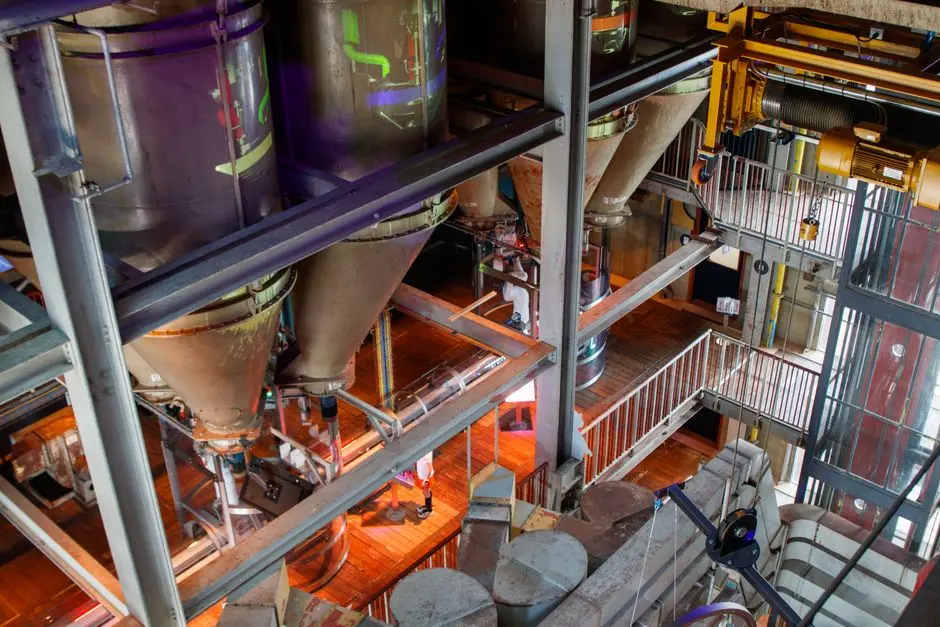
The back end of the plant is where food industry effluent compliance is actually proven or lost. Daily, verify residual chlorine or ClO2 at the contact-tank outlet against a 0.2–0.5 mg/L typical band with a minimum 30-second contact time, and log the turbidity of the final effluent — any value above the rolling 7-day average by more than 30% warrants a feed-water check upstream. Weekly, inspect the chlorine dioxide generator cells, confirm feed chemical inventory, and test the chlorine-room safety shower.
On the sludge side, verify the plate-and-frame filter press cycle and check cake solids against a 22–28% DS target — cake below 20% DS usually means polymer dose is off or feed solids are low. Filter-press filtrate turbidity trending above 200 NTU indicates a cloth breach. For plants that send treated water to scrubbers or yard wash, follow the multi-media filter backwash schedule on differential pressure and schedule RO membrane CIP at the interval recommended by the membrane supplier; flux-loss troubleshooting is covered in the forward osmosis troubleshooting field guide for membrane-heavy reuse loops. Where advanced oxidation is used as a post-secondary polish — UV/H2O2 or photo-Fenton — expect removal efficiencies above 90% on COD and TOC (Sigma DAF Clarifiers, 2025) but budget UV lamp replacement at 8,000–12,000 operating hours and H2O2 dosing-line checks on the same weekly cadence as the chlorine room.
Predictive Maintenance Framework for 2026
Preventive checklists catch the obvious; predictive maintenance catches the trend before the alarm fires. The framework has three tiers: reactive (run-to-failure), preventive (calendar-based), and predictive (condition-based on sensor data). A modern slaughterhouse plant should instrument at least eight channels — DO, pH, temperature, MLSS, flow, transmembrane pressure on the MBR, effluent turbidity, and DAF recycle pressure — and trend them on an IIoT dashboard with weekly review. Alarm-threshold bands should be tighter than the corrective-action bands shown in the biological treatment table; a DO alarm at 1.2 mg/L triggers a phone notification long before the 1.0 mg/L corrective threshold is reached.
| Tier | Trigger Logic | Instrumentation Required | Review Cadence |
|---|---|---|---|
| Reactive | Run until failure | None | Post-failure only |
| Preventive | Calendar interval | Hour meters, cycle counters | Daily/weekly checks |
| Predictive | Condition-based, trend-driven | DO, pH, T, MLSS, flow, TMP, turbidity, DAF recycle pressure | Weekly trend review; monthly asset health report |
Add a fourth lane to the framework after the Massacci 2026 paper: scheduled microbiological and resistance-gene monitoring, on at least a quarterly cadence, sampled at the DAF outlet, biological effluent, and final discharge. Predictive maintenance now extends to AMR — the same way hydraulic performance is trended, oxazolidinone resistance gene markers should be trended, and an upward shift should trigger a review of disinfection efficacy and biosolids handling.
Compliance, Effluent Targets, and the Maintenance-Evidence Trail
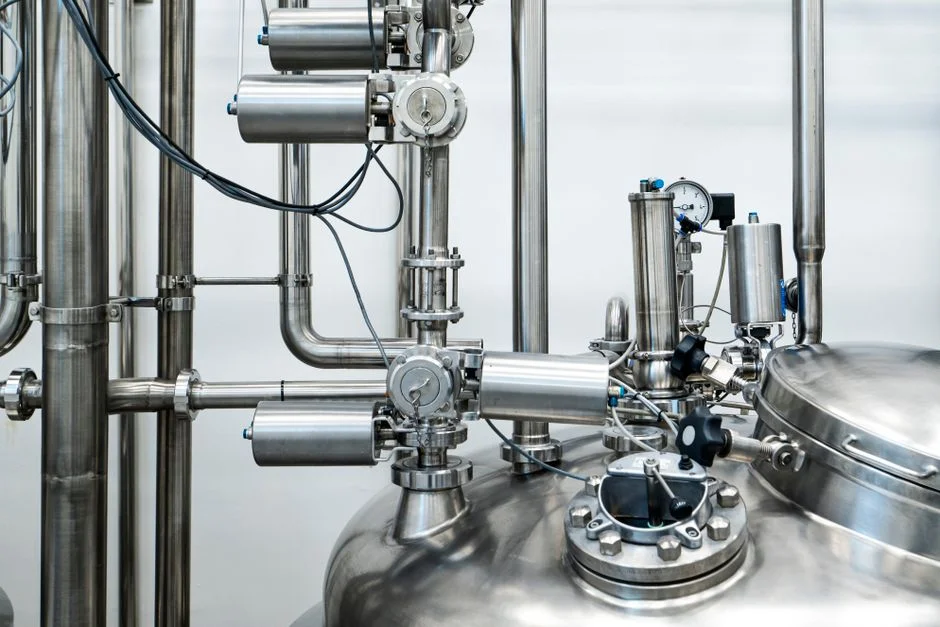
Maintenance records are compliance evidence. Map each routine monitoring parameter to the maintenance log entry that proves the asset was in a known state when the sample was taken. The benchmark numbers to defend are the Mwanza lower-bound design values of 87.5% BOD and 92.2% COD (NM-AIST, 2024), 99% suspended-solids removal on the DAF (Sigma DAF Clarifiers, 2025), and 90%+ COD/TOC removal on advanced oxidation when polishing for reuse (Sigma DAF Clarifiers, 2025).
| Parameter | Maintenance Log Entry That Supports It | Acceptance Reference |
|---|---|---|
| pH (in-process) | Probe calibration record (weekly) | 6.8–7.5 band |
| BOD / COD (final) | DAF polymer dose log, MBR CIP date | ≥ 87.5% BOD, ≥ 92.2% COD removal |
| Total suspended solids | DAF skimmer inspection, clarifier weir level | DAF design 99% removal |
| FOG | Skimmer blade replacement, polymer dose audit | Per local discharge consent |
| Total nitrogen / ammonia | Aeration DO log, SVI trend, WAS rate | Mwanza pre-stabilization: 43% NH4, 65.4% NO3 — maintenance should exceed |
| Microbial load / resistance genes | Disinfection residual log, quarterly AMR sampling | Per Massacci 2026 surveillance scope |
The documentation package an auditor will request is consistent across jurisdictions: instrument calibration records, dated maintenance logs, laboratory data with chain-of-custody, and corrective-action records linked to each non-conformance. Given the Massacci et al. 2026 evidence, expect environmental sampling for cfr, optrA, and poxtA to become a routine ask in inspections within the next 12–24 months. The plants that already have a quarterly AMR sampling slot in their maintenance plan will answer that question in minutes.
Frequently Asked Questions
How often should a slaughterhouse DAF be inspected?
DAF inspection runs on four cadences: daily skimmer and pressure checks, weekly saturator and dosing-line checks, monthly impeller and transmitter calibration, and quarterly seal and bubble-size verification. The saturator bubble-size envelope is 40–80 µm; drift outside that band is the leading indicator of saturator problems.
What dissolved oxygen level should I hold in the aeration tank?
Target 1.5–2.5 mg/L for conventional activated sludge treating slaughterhouse wastewater. Alarm at less than 1.0 mg/L or greater than 3.5 mg/L sustained for more than 30 minutes. The Mwanza facility's 43% ammonium removal before stabilization is a useful lower bound — better than that requires stable DO and SVI in the 80–150 mL/g band.
Is antimicrobial-resistance monitoring now part of routine wastewater plant maintenance?
It should be. The April 2026 Massacci et al. study detected cfr in all staphylococci and M. sciuri isolates, plus optrA and poxtA in enterococci, from a single Italian swine slaughterhouse. A defensible 2026 maintenance plan includes quarterly resistance-gene sampling at the DAF outlet, biological effluent, and final discharge, linked to the disinfection residual log.
What cake solids should I expect from a plate-and-frame press on slaughterhouse sludge?
Target 22–28% dry solids. Cake below 20% DS usually indicates polymer dose is off, feed solids are too low, or press cycle time is too short. Trend filtrate turbidity alongside cake solids; values above 200 NTU point to a cloth breach rather than a chemistry problem.