Why Distillery Wastewater Challenges Any Aerobic Reactor
Cane molasses spent wash exits the column at 30,000–80,000 mg/L COD with a BOD/COD ratio of 0.4–0.6, while grain ethanol plants run 5,000–15,000 mg/L COD — the lower range is closer to a strong brewery effluent (HydropureWater field data, 2026, per the MBBR for distillery wastewater engineering guide). Raw stillage arrives at 60–90 °C with a pH of 3.5–5.0, carrying the deep brown color characteristic of melanoidin Maillard polymers and sulfite residues from boiler-feed chemical treatment. A single batch dump swings influent COD by 3–5× over a few hours, and the raw organic load is 50–100× higher than municipal sewage.
For sequencing batch reactor design on this duty, the constraint is not subtle: SBR cycle phases, especially fill and react, must be sized for the peak, not the average. An SBR fed raw 30,000+ mg/L spent wash will see biomass washout and foam within hours, the same failure mode documented for MBBRs on raw stillage. That is why an SBR for distillery wastewater is positioned as a post-anaerobic polishing stage, or as the main aerobic step only for grain-ethanol plants that already operate at municipal-strength COD after pH and nutrient correction.
SBR Process Anatomy and Where It Fits in a Distillery Train
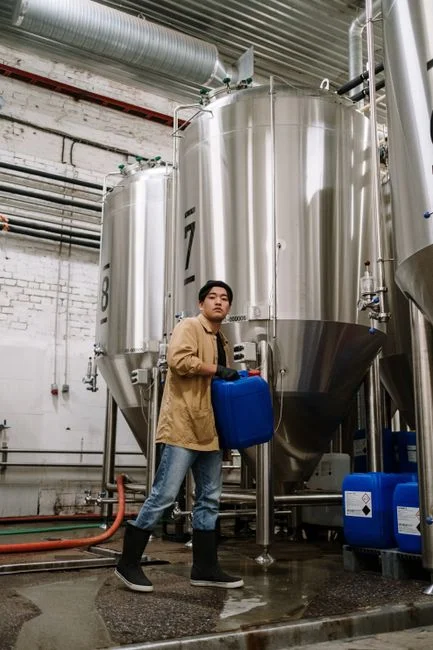
An SBR runs five timed phases per cycle: anoxic fill, aerated react, settle, decant, and idle. During fill, mechanical mixing distributes influent through the mixed liquor without aeration, which denitrifies residual nitrate and reduces color. The react phase bubbles air through coarse-bubble or fine-bubble diffusers and runs 60–90 minutes minimum, typically 6–10 hours on distillery duty. Settle is the same duration as aeration in most municipal designs (per the SBR reference, S5), although distillery polishing reactors extend settle to 60–90 minutes to lock in a clear supernatant. Sludge is wasted during the settle phase to control SRT, and the decanter — floating or swing-arm — draws the top 20–30% of clear liquor to the polish step.
The 2026 reference train for an SBR-led distillery design is: cooling and equalization, then pH correction and nutrient dosing via an automatic chemical dosing system, then a UASB or anaerobic digester that takes the bulk COD and converts it to biogas, then the SBR or MBBR for residual COD and ammonia, then tertiary polish (DAF, MBR, or activated carbon), then sludge dewatering (process flow per the MBBR for distillery wastewater engineering guide). For cane molasses, the SBR sits downstream of the UASB; for grain ethanol, the SBR can sit directly after equalization with proper nutrient dosing. The Otter Brewery SBR install returned over 80% of treated effluent to a sensitive watercourse, a useful real-world benchmark for what a brewery-strength SBR can deliver when feed COD is well below 10,000 mg/L.
SBR Design Parameters for Distillery Duty in 2026
For a post-anaerobic SBR polishing UASB effluent from a cane molasses distillery, total cycle time runs 8–24 hours; for direct treatment of grain ethanol wastewater at 5,000–15,000 mg/L COD, plan for 12–48 hours. The fill phase runs 1–2 hours under anoxic mixing, which doubles as a denitrification and color-reduction step on melanoidin-bearing feed. The react phase runs 6–10 hours continuously, with coarse-bubble diffusers delivering 0.8–1.2 kg O₂/kg BOD applied — the same oxygen demand band used on distillery MBBRs. Settle runs 60–90 minutes, with clear water occupying the top 20–30% of the tank; decant runs 30–60 minutes through a floating or swing decanter.
MLSS targets 3,000–5,000 mg/L with an MLVSS/MLSS ratio of 0.7–0.8. F:M ratio sits at 0.05–0.15 kg BOD/kg MLVSS·d for post-anaerobic polishing and up to 0.3 kg BOD/kg MLVSS·d for direct grain ethanol treatment. OLR ceiling is 0.3–0.8 kg COD/m³·d post-anaerobic and up to 1.5 kg COD/m³·d for grain ethanol. DO setpoint is 2.0–3.0 mg/L during aeration — above 3.5 mg/L wastes blower energy with diminishing returns on nitrification. Reactor temperature must stay in the 25–35 °C mesophilic window; below 15 °C, nitrification efficiency drops sharply and a heat exchanger on the SBR feed or a covered reactor is required. The SBR operating window for distillery duty is summarized below.
| Parameter | Post-anaerobic SBR (cane molasses) | Direct SBR (grain ethanol) |
|---|---|---|
| Total cycle time | 8–24 h | 12–48 h |
| Fill (anoxic) | 1–2 h | 1–2 h |
| React (aeration) | 6–10 h | 10–20 h |
| Settle | 60–90 min | 60–90 min |
| Decant | 30–60 min | 30–60 min |
| MLSS | 3,000–5,000 mg/L | 3,000–5,000 mg/L |
| MLVSS/MLSS | 0.7–0.8 | 0.7–0.8 |
| F:M | 0.05–0.15 kg BOD/kg MLVSS·d | 0.15–0.30 kg BOD/kg MLVSS·d |
| OLR ceiling | 0.3–0.8 kg COD/m³·d | ≤1.5 kg COD/m³·d |
| DO setpoint | 2.0–3.0 mg/L | 2.0–3.0 mg/L |
| Temperature | 25–35 °C | 25–35 °C |
| Decant depth | 20–30% of tank | 20–30% of tank |
These numbers are lift-and-shift values for a P&ID or datasheet. The cited case studies confirm the conservative end of each range; the upper band represents a robust design margin for batch distilleries that swing hard on diurnal load.
SBR vs MBBR vs MBR for Distillery Aerobic Duty
The three leading aerobic options for distillery effluent each solve a different constraint. SBR delivers the lowest effluent TSS of the three without a separate clarifier, at the cost of a 30–50% larger reactor footprint than MBBR for the same COD load. MBBR tolerates organic shocks better because biomass is attached to carriers rather than suspended, and it runs in continuous flow, which simplifies operations. MBR delivers the tightest effluent — typically <5 mg/L TSS and <50 mg/L COD — but adds membrane cost, fouling control chemistry, and air-scour energy. The trade-off is captured in the head-to-head table below.
| Criterion | SBR | MBBR | MBR |
|---|---|---|---|
| Reactor footprint for same COD load | Baseline | 30–50% smaller than SBR | Comparable to MBBR plus membrane skid |
| Effluent TSS (typical) | 10–30 mg/L without clarifier | 30–80 mg/L | <5 mg/L |
| Effluent COD (typical, post-anaerobic) | 150–300 mg/L alone | 150–400 mg/L alone | <50 mg/L |
| Organic shock tolerance | Moderate — sized for peak fill | High — attached biomass | High — protected by upstream biology |
| Capex for 100 m³/d aerobic stage | USD 60,000–120,000 equipment-only | USD 80,000–150,000 equipment-only | USD 150,000–280,000 equipment-only |
| O&M skill required | Moderate (cycle tuning, decant control) | Low–moderate (retain screens, DO control) | High (membrane cleaning, CIP, integrity testing) |
| 2026 benchmark train | SBR + DAF or SBR + MBR | MBBR + MBR (or DAF + activated carbon) | MBBR + MBR for ultra-tight permits |
SBR wins when a plant needs a simple, clarifier-free package, operates at sub-500 m³/d flows, or values the decanter's TSS performance over footprint. MBBR wins when footprint, shock tolerance, and continuous flow dominate. MBR wins when the discharge permit demands <100 mg/L COD without depending on a downstream activated carbon polish. Capex ranges are order-of-magnitude only and exclude civils.
Common Failure Modes When SBR Is Misapplied to Distillery Effluent
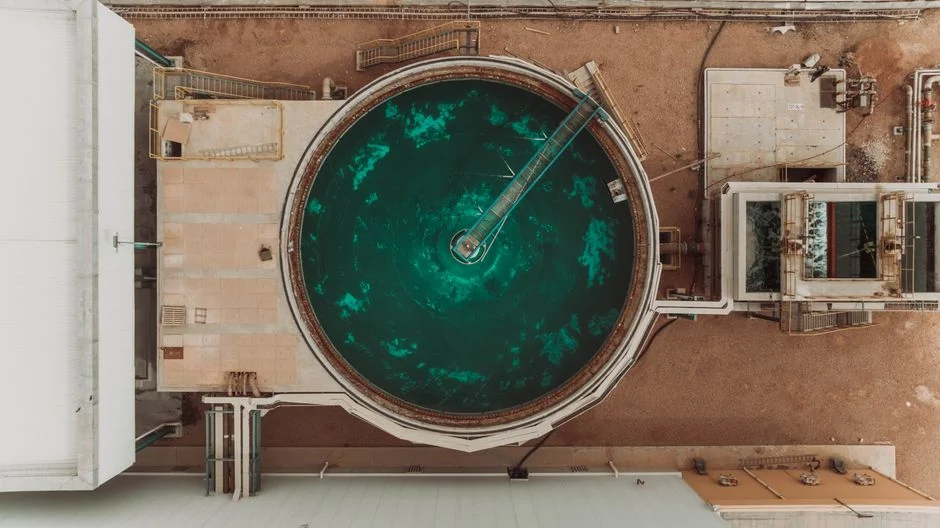
Five failure modes show up repeatedly on distillery SBR commissioning reports.
- Skipping the anaerobic stage. Feeding raw 30,000+ mg/L spent wash to the SBR causes biomass washout and foaming within hours; the oxygen demand is unmeetable and melanoidin precipitates foul the decanter.
- Under-sized equalization. A 3–5× peak diurnal COD swing hitting the SBR fill phase knocks MLSS into shock and ruins settle clarity, especially on cane molasses batch plants.
- Ignoring temperature. Nitrification efficiency drops sharply below 15 °C, so cold-climate plants need a heat exchanger on the SBR feed or a covered reactor to hold biology in the 25–35 °C window.
- Missing nutrient dosing after the anaerobic stage. Anaerobic digestion strips N and P along with the carbon, and an SBR running on a nitrogen-starved feed loses nitrification within two weeks. The BOD:N:P = 100:5:1 ratio must be maintained through an automatic chemical dosing system upstream of the SBR.
- Decant depth set too high on a foaming feed. Floating sludge carries over and downstream TSS fails; restrict decant to 20–30% of tank depth and add a defoaming dose if the feed carries residual surfactant or FOG.
Most bulking on distillery SBRs traces to one of these five causes, and a plate and frame filter press downstream cannot fix a settle problem upstream. A 22–28% DS cake from the press is achievable only when the SBR is wasting sludge at the right SRT.
SBR for Distillery Wastewater: 2026 Procurement Checklist
Use this decision framework when specifying or buying an SBR for distillery duty in 2026.
- Choose SBR over MBBR when batch production, flows under 500 m³/d, and a clarifier-free layout dominate; choose MBBR when footprint and shock tolerance dominate.
- Always place the SBR downstream of a UASB or anaerobic digester for cane molasses distilleries; grain ethanol plants can run SBR directly after EQ and nutrient dosing.
- Size equalization to 12–24 hours of peak flow, correct pH to 6.5–7.5, and maintain BOD:N:P = 100:5:1 through chemical dosing. A rotary mechanical bar screen upstream protects the reactor from solids carryover, and a high-efficiency sedimentation tank handles grit that the screen misses.
- Order-of-magnitude capex for a 100 m³/d SBR reactor — tank, blowers, diffusers, decanter, control panel — runs roughly USD 60,000–120,000 equipment-only in 2026, excluding civils.
- Aeration is 60–70% of opex; specify VFD blowers and DO control to keep energy in check, and target 0.8–1.2 kg O₂/kg BOD applied.
- Plan the polish step. A dissolved air flotation (DAF) system for FOG and color bodies, or an MBR membrane bioreactor system when discharge COD ≤100 mg/L is required, is the standard 2026 finish for an SBR-led train.
For distilleries that want a pre-engineered package, the SBR + MBR or SBR + DAF combination matches the MBBR + MBR benchmark in compliance outcome while keeping the layout simple. See the MBR installation and commissioning guide and the DAF vs clarifier for food and beverage wastewater guide for finish-stage specification details.
Frequently Asked Questions
Can an SBR treat raw distillery spent wash without anaerobic pretreatment?
No. Raw spent wash at 30,000–80,000 mg/L COD will wash out the SBR biomass within hours; the SBR sits downstream of a UASB on cane molasses duty and runs as the main aerobic stage only on grain ethanol effluent in the 5,000–15,000 mg/L COD range (per the MBBR for distillery wastewater engineering guide).
What cycle time should I design for a post-anaerobic SBR on distillery effluent?
Plan for 8–24 hours total, with 6–10 hours of aeration, 1–2 hours of anoxic fill, and 60–90 minutes of settle (per the SBR reference, S5).
Is an SBR or an MBBR better for distillery wastewater?
MBBR has a 30–50% smaller footprint and better shock tolerance; SBR delivers lower effluent TSS without a clarifier (per the MBBR for distillery wastewater engineering guide).
What MLSS and F:M should a distillery SBR target?
MLSS 3,000–5,000 mg/L, MLVSS/MLSS 0.7–0.8, F:M 0.05–0.15 kg BOD/kg MLVSS·d post-anaerobic, and DO 2.0–3.0 mg/L during aeration (per S5 and the MBBR engineering guide).
Can an SBR hit ≤100 mg/L COD discharge on distillery effluent?
Yes, with a downstream DAF, activated carbon, or MBR polish per the 2026 hybrid train (per the MBBR engineering guide).