

Why Tannery Wastewater Is a Hard Problem for Biological Treatment
Raw composite tannery effluent typically lands in the ranges of COD 3,000–8,000 mg/L, BOD 1,500–4,000 mg/L, total suspended solids 1,500–4,000 mg/L, total chromium 50–500 mg/L, sulfide 50–200 mg/L, salinity/TDS 5,000–20,000 mg/L, and pH 8–11 (Goswami & Mazumdar 2016, as reviewed in Applied Water Science 2022). Those numbers already disqualify a default municipal activated-sludge design. Conventional ASP underperforms on this stream for three reasons: (1) shock loads from beamhouse and wet-finishing batches strip floc and wash biomass out of the clarifier; (2) free sulfide above ~20 mg/L and total chromium above ~5 mg/L inhibit nitrifiers and most heterotrophs in suspended growth; and (3) the long hydraulic residence time required (24–48 h) inflates basin volume and aeration tank footprint, which is a real problem on space-constrained tannery sites in Kanpur, Hazaribagh, or Addis Ababa.
The fix is to decouple biomass retention from hydraulic retention. A moving bed biofilm reactor keeps biomass attached to free-floating plastic carriers held in suspension by coarse-bubble aeration, so the reactor holds 3–4 kg SS/m³ of suspended biomass plus 10,000–12,000 mg/L of fixed biofilm on the carrier surface (Applied Water Science 2022, review of MBBR literature). That fixed-growth inventory is what survives a sulfide or salt spike that would normally knock out an ASP basin.
MBBR Performance Benchmarks for Tannery Effluent
The headline benchmark for this application is 90% COD removal reported by Goswami & Mazumdar (2016) for a moving bed biofilm reactor treating composite chrome tannery wastewater, against an activated-sludge baseline on the same feed (Applied Water Science 2022, citing Goswami & Mazumdar 2016). Translate that to a defensible design band and you get COD 85–95%, BOD 80–92%, and ammonia 70–90% under nitrification for a properly sized MBBR on tannery influent that has already passed sulfide oxidation and chromium precipitation. Chromium itself is not a job for the biology — it must be lifted to <2 mg/L upstream by hydroxide precipitation at pH 8–9, after which the MBBR is dealing with organics and ammonia, not heavy metals.
For carrier reference, a Kaldnes K1 study at 20% fill on laundry wastewater (a different matrix, but useful for media benchmarking) reported COD 93.81%, BOD 91%, and phosphate 86.10% after 10 days (Kusuma et al. 2019, Jurnal Teknik Lingkungan). Use that as a transferable carrier benchmark, not a tannery prediction. The realistic operating envelope for a tannery MBBR basin is HRT 6–24 h, temperature 20–35 °C, dissolved oxygen 2–4 mg/L, and basin pH corrected to 6.5–7.5 before the reactor.
| Parameter | Raw tannery influent (typical) | MBBR effluent target | Removal % |
|---|---|---|---|
| COD (mg/L) | 3,000–8,000 | 150–1,200 | 85–95 |
| BOD (mg/L) | 1,500–4,000 | 120–800 | 80–92 |
| TSS (mg/L) | 1,500–4,000 | <150 (post-clarifier) | >90 |
| Total chromium (mg/L) | 50–500 | <2 (post-precipitation) | >99 |
| Sulfide (mg/L) | 50–200 | <20 (pre-MBBR) | 85–95 |
| NH₃-N (mg/L) | 200–600 | 20–180 | 70–90 |
| TDS (mg/L) | 5,000–20,000 | similar (no rejection) | — |
| pH | 8–11 | 6.5–7.5 | — |
MBBR vs Activated Sludge vs SBR for Tanneries
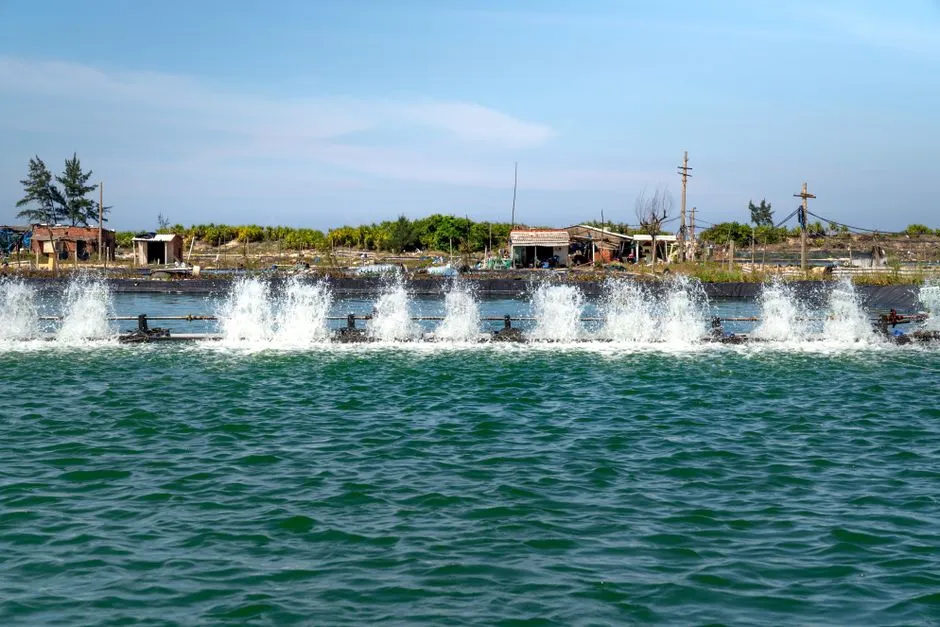
When an EPC asks "why not SBR?" or "why not conventional ASP?" the answer is a trade-off matrix, not a slogan. MBBR's advantage is fixed biomass: 10,000–12,000 mg/L on the carrier, independent of the suspended-sludge washout risk that plagues a tannery ASP basin on a Monday morning after a weekend soak. SBR is competitive below 50 m³/d because the batch flexibility lets a small plant recycle chrome liquor back to the beamhouse without building a separate equalization cell. ASP is the cheapest per m³ if you have land and a tame feed, which tannery effluent is not.
On capex per m³/day installed in 2026, expect ASP at the low end, SBR in the middle (because of the decanter and controls), and MBBR with carriers and sieves at the upper end — but the MBBR basin is 25–35% smaller than the equivalent ASP aeration tank, which often flips the answer on land cost.
| Criterion | MBBR | Conventional ASP | SBR |
|---|---|---|---|
| COD removal (tannery) | 85–95% | 75–85% | 80–88% |
| Footprint (50–500 m³/d) | Smallest (high attached biomass) | Largest (long HRT) | Medium (single basin, tall) |
| Shock-load tolerance | High (fixed biofilm) | Low (floc washout) | Medium (batch buffer) |
| Sludge yield | Low (lower F/M) | High | High |
| Operator skill required | Moderate (sieve cleaning) | High (MLSS, F/M, SVI) | High (cycle tuning) |
| Capex per m³/day (2026) | USD 280–520 | USD 220–420 | USD 260–480 |
| Best fit | 50–500 m³/d, variable load, saline | Large municipal-like flows, tame feed | <50 m³/d, chrome recycle loops |
Selecting the Right Kaldnes Media and Fill Ratio
Media selection is the single biggest design decision after tank volume. AnoxKaldnes grades differ in protected surface area, and the right grade depends on whether you are chasing BOD removal, combined BOD plus nitrification, or compact high-strength loading. The S2 review reports specific surface areas of K1 ~500 m²/m³, K3 500 m²/m³, K5 800 m²/m³, and M media 1200 m²/m³ (Applied Water Science 2022, summarizing Erkan et al. 2019 and related work).
For a composite chrome tannery at 50–500 m³/d, the practical recommendation is K3 for BOD-only duty, K5 if you also want nitrification in the same basin, and M media if the site is severely space-constrained or the influent is at the high end of the 8,000 mg/L COD range. Fill ratio is the second lever: the same review notes that organics removal is more effective at 50–60% fill, while nutrient (ammonia, nitrate) removal works better at 30–40% fill (Applied Water Science 2022, citing Odegaard 1999 and follow-on studies). A 40% fill on K5 is a balanced starting point for a tannery plant that needs both organics and ammonia knocked down in one stage. The literature floor is 200–250 m²/m³ of specific surface area at 30–70% fill — go below that and the design will not hold a viable biofilm under tannery loading.
| AnoxKaldnes grade | Specific surface area (m²/m³) | Recommended fill % | Best fit in tannery train |
|---|---|---|---|
| K1 | ~500 | 40–60 | BOD removal only, large basins |
| K3 | 500 | 40–60 | BOD removal, robust to FOG spikes |
| K5 | 800 | 30–50 | Combined BOD + nitrification, balanced default |
| M | 1,200 | 20–35 | High-strength or space-constrained plants |
Full Process Train: From Raw Hide to Compliant Discharge
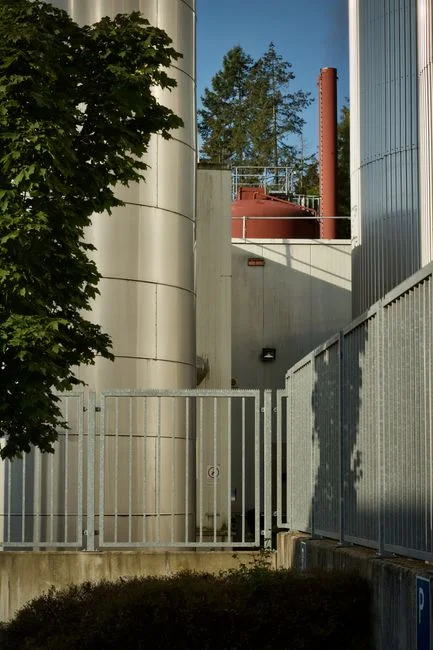
An MBBR alone will not get tannery effluent to a discharge or reuse limit. The biology is the workhorse, but only after the upstream toxics are removed. The 2026 working train for a 50–500 m³/d plant looks like this:
- Bar screening with a rotary mechanical bar screen to remove fleshings, hair, and large solids before the equalization cell.
- Flow and load equalization in a holding basin sized for 12–24 h retention to smooth beamhouse versus finishing peaks.
- Sulfide oxidation using air/FeCl₃ or catalytic MnO₂ to drop sulfide below 20 mg/L before the biology; sulfide is acutely toxic to nitrifiers even at low concentration.
- Chromium precipitation at pH 8–9 with NaOH dosing, followed by lamella or DAF clarification to lift the chrome sludge out as a separately handled stream for chrome recovery or secure disposal.
- pH correction to 6.5–7.5 using an automated NaOH and FeCl3 dosing skid sized to the peak equalized flow.
- MBBR basin(s) with K5 carriers at 40% fill, DO 2–4 mg/L, HRT 6–24 h, and a coarse-bubble diffuser grid sized for 0.8–1.2 Nm³ air per m³ basin volume per hour.
- Post-clarification using a high-efficiency sedimentation tank for routine sludge blanket removal, a DAF unit for tannery pre-treatment if FOG and floatable solids are still elevated, or an MBR if reuse-grade effluent is required downstream.
- Sand filtration for TSS polish to below 30 mg/L before disinfection or reuse.
- Disinfection with a ClO2 polishing generator for reuse water, chosen over chlorine because ClO₂ is far less reactive with the residual amines and ammonia that survive MBBR effluent.
Wasted biological sludge from the clarifier underflow and the DAF float is thickened and dewatered on a filter press for waste-activated sludge before off-site disposal or co-incineration. The upstream bar screen is your first line of defense against ragging the MBBR sieve, so do not undersize it; a rotary mechanical bar screen with 6–10 mm aperture is a sensible default for tannery flows.
Each upstream step is justified by a specific toxicity or loading argument: sulfide must drop below 20 mg/L before the reactor to protect nitrifiers, chromium must be precipitated before the basin to keep biofilm activity intact, and flow equalization prevents the post-MBBR clarifier from being hit with a 10× BOD slug. The MBBR is the middle of a chain, not the chain itself.
2026 Capex, Opex, and ROI for an MBBR Tannery Plant
Translate the engineering into numbers procurement will sign. In 2026, a 50–500 m³/d MBBR-based tannery train installs in the band of USD 280–520 per m³/day of design capacity, with the spread driven by stainless-steel selection (SS304 vs SS316 for the chrome-handling sections), the MBBR media quantity, and whether sand filtration plus ClO₂ polishing is included for reuse. A bare-bones ASP would undercut that, but the MBBR basin volume is 25–35% smaller and the unit produces 15–20% less waste-activated sludge, which moves the comparison back toward MBBR once land and sludge hauling are priced in.
Operating cost lands in the band of USD 0.18–0.35 per m³ treated, dominated by aeration energy at 60–70% of opex and sludge hauling at 10–15% (HydropureWater field data, 2026, for Indian and Bangladeshi tannery installations). Aeration energy runs 10–15% lower per kg BOD removed than an equivalent ASP because the MBBR holds a higher active biomass per unit volume and does not need to recycle as much mixed liquor. Payback against either municipal sewer surcharges (where the tannery is inside a CETP service area) or against avoided fresh-water purchase for in-plant reuse (washing, soak, chrome liquor make-up) typically falls in the 2.5–4.5 year range for a 2026 build.
Frequently Asked Questions
What COD removal can an MBBR realistically achieve on composite chrome tannery wastewater?
An MBBR sized with 30–60% AnoxKaldnes media fill, 6–24 h HRT, and 3–4 kg SS/m³ biomass typically delivers 85–95% COD removal on composite chrome tannery effluent, with the 90% headline figure reported by Goswami & Mazumdar (2016) being the design benchmark most engineers cite.
Why must sulfide and chromium be removed before the MBBR?
Sulfide above ~20 mg/L is acutely toxic to nitrifying biofilm, and total chromium above ~5 mg/L inhibits heterotrophic activity. Both must be cut upstream — sulfide by oxidation, chromium by precipitation at pH 8–9 with NaOH — so the MBBR is dealing with organics and ammonia rather than dying from toxics.
Which Kaldnes media and fill ratio is the right default for tannery duty?
K5 at 40% fill is the balanced default for a composite tannery that needs both BOD and ammonia in one stage, with K3 reserved for BOD-only basins and M media reserved for space-constrained or high-strength sites above 6,000 mg/L COD.
How does MBBR compare with SBR for small tannery flows below 50 m³/day?
SBR remains competitive below 50 m³/d because batch flexibility supports chrome liquor recycle without a separate equalization cell, but MBBR scales better, tolerates the 5,000–20,000 mg/L TDS band more reliably, and produces 15–20% less waste-activated sludge for the same removal duty.