Why a Frankfort Discharge Faces Three or Four Federal Hooks at Once
40 CFR Part 403 is the federal umbrella that lets a publicly owned treatment works (POTW) reject industrial waste streams strong enough to damage the plant, the receiving stream, the workforce, or the biosolids market. Per the Oregon Association of Clean Water Agencies (ACWA) fact sheet (2026-08), the program has four statutory objectives: protect the POTW from interference, protect the nation's waters from pass-through pollutants, protect collection-system and POTW workers from hazardous exposure, and protect the beneficial reuse of biosolids as soil conditioners and fertilizer. Any one of those four can drive a categorical limit, which is why a single number on a discharge report can be backed by three or four independent regulatory hooks. A zinc exceedance at a Frankfort-discharging EV plant can simultaneously trip the categorical daily maximum under 40 CFR Part 433, the local cap from the Frankfort Sewer Department, pass-through liability under the Clean Water Act, and biosolids contamination exposure — and any of the four is enough to put the plant in its quarter's compliance report.
The receiving utility is the Frankfort Sewer Department, which operates the E.C. McManis Wastewater Treatment Plant (WWTP) at 9.9 MGD after a 2001 expansion from 6.6 MGD (per the City of Frankfort, 2026). The plant has run ozone disinfection since 1980 — the first installation in Kentucky — and serves 15,000 customers across Frankfort, Franklin County, and Woodford County. The collection system is a combined sewer, and the FSD runs both a Long-Term Control Plan for Combined Sewer Overflows (CSOs) and a Sanitary Sewer Overflow Plan (SSOP). That biosolids-reuse obligation is the operating reason the local metals cap sits at 1–3 mg/L: every pound of zinc that passes through the headworks and into the digester eventually has to be accounted for in the cake going to land application, and the E.C. McManis WWTP cannot afford a contaminated biosolids stream without losing its land-application permit. A Part 433 zinc or nickel violation at a discharging plant routinely reaches six figures per quarter before corrective action is complete, once Notice of Violation costs, third-party sampling, and engineering rework are added in.
The Categorical Standards That Apply to a 2026 Gigafactory Floor
40 CFR Part 433 (Metal Finishing) governs body-in-white phosphating, zinc-nickel plating, and any line that rinses or drags out heavy metals — the workhorse rule for the conventional auto assembly plant. It is subcategorized into four operating regimes: three-stage phosphate, zinc phosphate, zinc-nickel, and electroless nickel. Each subcategory has its own daily maximum and monthly average for zinc, nickel, chromium (total and hexavalent), lead, copper, and cyanide, because the drag-out chemistry is genuinely different. A line that switches from a three-stage phosphate to a zinc-nickel sealer mid-shift must report against the active subcategory on the day of the sample, and the operating record has to show which one was running.
40 CFR Part 467 (Battery Manufacturing) governs the EV side of the floor: cell coating, electrode rinse, and electrolyte washwater that carry cobalt, nickel, and lithium residues. Because the gigafactory floor often sits next to the body shop, most EV plants in 2026 are subject to both Part 433 and Part 467 simultaneously and must design for the stricter of the two on each parameter. The ACWA fact sheet (2026-08) makes the enforcement point explicit: local limits are "technically-based, legally defensible, and enforceable just like national categorical pretreatment standards." In practice, the receiving utility's local limit for total metals often lands at 1–3 mg/L because the receiving utility is protecting biosolids reuse — the fourth statutory objective — and that local cap beats the categorical daily maximum on a routine basis. The design implication is straightforward: spec the chemistry step to drop dissolved metals to under 1 mg/L on each individual metal, not to the categorical number.
| Subcategory | Governing Rule | Daily Max (mg/L, illustrative) | Monthly Avg (mg/L, illustrative) | Local Cap (Frankfort-area POTW) |
|---|---|---|---|---|
| Three-stage phosphate | 40 CFR Part 433 | Zn 1.48; Ni 1.10; Cr 1.71; Pb 0.43 | Zn 0.74; Ni 0.74; Cr 0.71; Pb 0.24 | Total metals 1–3 mg/L (site-specific) |
| Zinc phosphate | 40 CFR Part 433 | Zn 1.48; Ni 1.10; Cr 1.71; Pb 0.43 | Zn 0.74; Ni 0.74; Cr 0.71; Pb 0.24 | Total metals 1–3 mg/L (site-specific) |
| Zinc-nickel plating | 40 CFR Part 433 | Zn 1.48; Ni 1.10; Cr 1.71; Pb 0.43 | Zn 0.74; Ni 0.74; Cr 0.71; Pb 0.24 | Total metals 1–3 mg/L (site-specific) |
| Electroless nickel | 40 CFR Part 433 | Ni 1.10; Pb 0.43 (no Zn, no Cr) | Ni 0.74; Pb 0.24 | Total metals 1–3 mg/L (site-specific) |
| Battery cell coating / electrode rinse | 40 CFR Part 467 | Co, Ni, Li per subpart | Co, Ni, Li per subpart | Total metals 1–3 mg/L (site-specific) |
Daily-max and monthly-average values are drawn from the categorical tables; local cap is the biosolids-reuse-driven metals ceiling typically enforced by the Frankfort Sewer Department and analogous Kentucky POTWs. Confirm the active subcategory and the local cap against the current discharge permit before specifying chemistry dose.
Mapping Each Process Stream to Its Pollutant Load
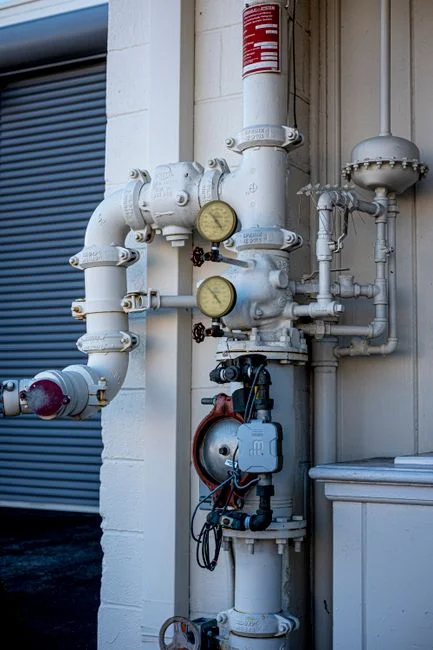
Body-in-white and stamping: lubricating oils, drawing compounds, tramp grease, and iron fines from blanking. The stream is high in FOG and TSS but low in dissolved metals, so it routes first through a rotary mechanical bar screen for headworks protection and then to oil/water separation. Discharge from this line rarely drives a categorical limit on its own, but slug flows from stamping will overwhelm downstream equalization if the screen and OWS are undersized — the failure shows up as a TSS excursion on the next daily report.
Phosphate and nickel pretreatment (immersion and spray): the stream that drives 40 CFR Part 433 limits. Immersion zinc-phosphate, spray zinc-phosphate, and electroless nickel baths drag out zinc, nickel, phosphate, and TSS at concentrations the daily-maximum tables in Part 433 are written to address. Because the same line may switch between subcategories depending on model mix, the categorical subcategory — and the limit — can change shift-to-shift, and the operating record has to reflect the active one on the day of the sample.
E-coat and paint shop: the electrodeposition coating tank generates an ultrafiltrate that is recirculated, plus rinse water that carries paint solids, solvents, and dissolved organics. Flow is intermittent — tied to rack entry and exit — and pH swings from 9 to 12 inside a single batch, which is why this line always feeds the equalization basin first. Solvent-bearing washwater from spray guns and booth purge is segregated and treated as a hazardous waste stream unless the POTW has a specific solvent-bearing waste acceptance program; the E.C. McManis WWTP does not advertise one, so segregate at the source.
Machining and battery cell assembly: machining cells generate water-based coolant emulsions with tramp oils and fine metal swarf. EV cell and pack lines add electrode coating solvent rinses and electrolyte washwater that pick up cobalt, nickel, and lithium residues — the pollutant set that 40 CFR Part 467 was written to address. These two streams are often blended at the plant boundary for treatment, but they have very different metals profiles, so they should be metered separately and dosed independently in the chemistry step. The Frankfort-area permitting path runs through the Kentucky Division of Water (KDOW) KPDES pretreatment program administered by the Frankfort Sewer Department, which sits on top of the federal framework and adopts any stricter local cap that biosolids reuse requires.
Designing the Treatment Train in Hydraulic Order
The unit operations below are listed in hydraulic order — the way water actually flows through the plant. Equipment selection and sizing will vary with flow, but the sequence does not, because each step depends on the prior step's effluent quality. Skipping the equalization step or putting the DAF ahead of the OWS is a common spec error that drives most of the audit findings discussed in the next section.
- Headworks and equalization. A rotary bar screen removes rags, weld wire, and large solids that would otherwise blind the OWS or DAF. The screened stream drops into an equalization basin sized for at least one full shift's slug — typically 4–8 hours of design flow — to absorb the e-coat rack cycle and the alkaline/acid rinse swings before precipitation chemistry sees the water.
- Oil/water separation and DAF. A corrugated-plate OWS pulls free oil, then a dissolved air flotation system for emulsified oil and TSS removal floats the emulsified fraction. DAF works on the micro-bubble principle: dissolved air is released into the waste stream at atmospheric pressure, attaching to oil droplets and colloidal solids and lifting them to the surface as a float that is mechanically skimmed. For a Frankfort-area line discharging to a 9.9 MGD plant, the DAF should be sized to drive FOG below 25 mg/L and TSS below 60 mg/L so the downstream clarifier is not blinded.
- Chemical precipitation. pH is driven up with caustic (or down with acid for chromium reduction) ahead of a PLC-controlled coagulant and pH dosing skid tied to a flow signal. Dosing is automatic for a reason: operators over-dose by hand on the day shift, under-dose on the night shift, and the metals profile on the discharge report moves with the clock. A sulfide or hydroxide dose followed by a flocculant polymer drops dissolved metals below the local limit before the clarifier.
- Polishing. A high-efficiency lamella clarifier for metals precipitation takes the floc blanket off in a small footprint, and a multi-media filter for residual TSS handles any solids that escape the clarifier. If the local POTW requires disinfection — common for plants discharging upstream of a reuse reach — an on-site chlorine dioxide generator provides residual control without the THM formation risk of straight chlorination.
- Sludge handling. The float from the DAF and the underflow from the clarifier report to a sludge holding tank and then a plate-and-frame filter press for sludge dewatering that produces a 30–40% dry-solids cake for off-site disposal. Dewatering on-site is the single largest controllable operating cost on the wastewater side of the plant, and a well-sized press typically pays back inside three years on hauling alone (HydropureWater field data, 2026).
| Step | Unit Operation | Design Function | Typical Effluent Target |
|---|---|---|---|
| 1 | Rotary bar screen + EQ basin | Protects downstream units; absorbs slug | Settled solids removed; pH variation damped to ±1.5 |
| 2 | Corrugated-plate OWS + DAF | Free and emulsified oil + TSS removal | FOG < 25 mg/L; TSS < 60 mg/L |
| 3 | Caustic/acid dosing + flocculant | Precipitates dissolved metals (Zn, Ni, Cr, Pb, Co) | Each metal < 1 mg/L before clarifier |
| 4 | Lamella clarifier + multi-media filter | Polishing of TSS and residual floc | TSS < 30 mg/L; turbidity < 5 NTU |
| 5 | Plate-and-frame filter press | Sludge dewatering for off-site haul | Cake at 30–40% DS; filtrate returned to head of plant |
Where 2026 Audit Reports Keep Citing Violations
Categorical violations in this sector are not random; they cluster around four failure modes that show up in nearly every audit report a compliance manager will see in 2026.
Slug discharge from the e-coat line bypassing equalization. When a maintenance crew ties a new e-coat rinse line into the discharge header without a tie-in to the EQ basin, the next pH excursion shows up at the sampling point. This is the single most common Part 433 violation cited at body shops and is almost always traced to a piping change that was not reviewed by the environmental team. Forcing every new rinse tie-in through an EQ tie-in review closes the gap.
pH excursions in the common header. The alkaline cleaning rinse (pH 11–13) and the acid pickle rinse (pH 1–3) feed the same sewer in many plants. If equalization is undersized or the mixers are out of service, the pH swings through the chemistry step's effective range, metals stay in solution, and the next day's report shows a zinc or nickel exceedance. The fix is a pH probe in the common header wired to a divert valve that routes out-of-band flow back to EQ.
Metals creep on the back end. Clarifier sludge that is not bled off at the right rate releases dissolved metals back into the overflow during high-flow events. The 24-hour composite sample averages the spike out, but the daily grab on the day of the event trips the local limit and the categorical monthly average simultaneously. Tie the sludge bleed to the clarifier's underflow density, not to a calendar.
Manual chemical dosing. When operators hand-dose caustic and polymer against a sight glass, the dose tracks the operator, not the flow. An online analyzer paired with a PLC-controlled dosing skid closes the loop and removes the shift-to-shift variability that drives the monthly average up. For a deeper treatment-train comparison, see the DAF vs clarifier buyer's guide for EV/auto wastewater, and for the FOG ceiling that drives the DAF sizing, the oil and grease discharge limit guide.
Frankfort Sewer Department Permitting, Monitoring, and Penalty Exposure
Categorical standards under 40 CFR Part 433 require sampling at least once per month for total metals, TSS, O&G, and pH, with the frequency rising if the plant approaches its monthly average. Most POTW pretreatment permits — including the Frankfort Sewer Department's local program layered on top of the federal framework — add daily or continuous monitoring for pH and flow, and quarterly monitoring for parameters not on the categorical list. Continuous online monitoring is increasingly required for Significant Industrial Users (SIUs) as POTW pretreatment programs tighten through 2026. For nickel-specific recovery and reuse questions on the EV side, the RO nickel removal engineering guide walks through the concentrate-handling trade-offs.
On enforcement: the POTW can revoke the SIU discharge authorization, issue a Notice of Violation, and pursue civil penalties under the Clean Water Act. The plant also loses the protection of its NPDES-permitted discharge envelope and becomes directly liable for pass-through and biosolids contamination — the third and fourth statutory objectives under 40 CFR Part 403. For a 40 CFR Part 433 violation of zinc or nickel, penalties routinely reach six figures per quarter before corrective action is complete (per EPA enforcement summaries, 2025). Budget the on-site treatment train to keep the operating record inside both the categorical daily maximum and the local 1–3 mg/L total-metals cap that the E.C. McManis WWTP's biosolids-reuse obligation forces on every discharger in its service area.
Frequently Asked Questions
What federal categorical standard applies to phosphate and nickel rinse water at a Frankfort-area auto plant?
40 CFR Part 433 (Metal Finishing) governs body-in-white, phosphate, and nickel pretreatment lines. The applicable daily maximums and monthly averages depend on the subcategory — three-stage phosphate, zinc phosphate, zinc-nickel, and electroless nickel each report different numbers. Plants running multiple subcategories on the same line must keep an operating record that reflects the active subcategory on the day of each sample (per 40 CFR Part 433).
Why does the Frankfort Sewer Department cap total metals at 1–3 mg/L when the federal categorical number is higher?
The E.C. McManis WWTP runs a 9.9 MGD plant (post-2001 expansion) with a biosolids-reuse program, and the receiving utility's local limit protects that land-application outlet under the fourth statutory objective of 40 CFR Part 403. Because every pound of zinc in the digester feed has to be accounted for in the cake, the local cap is set to keep biosolids reuseable and is often stricter than the Part 433 daily maximum.
What is the minimum on-site treatment train to stay in compliance with Part 433 and the Frankfort local cap?
Equalization, oil/water separation, a dissolved air flotation system, chemical precipitation for dissolved metals with automatic pH and coagulant dosing, and a high-efficiency lamella clarifier for polishing. A multi-media filter and an on-site chlorine dioxide generator are added when local POTW limits require them, and a plate-and-frame filter press for sludge dewatering is the standard way to keep waste-hauling cost on the operating budget.
What monitoring frequency does a Frankfort SIU face, and what is the penalty exposure for a single quarter's violation?
Categorical standards under 40 CFR Part 433 require monthly sampling for total metals, TSS, O&G, and pH, with most POTW pretreatment permits adding daily or continuous pH and flow monitoring and quarterly monitoring for non-categorical parameters. For a Part 433 zinc or nickel violation, penalties routinely reach six figures per quarter before corrective action is complete, and the POTW can revoke SIU discharge authorization alongside issuing a Notice of Violation.