Why Crossville Mining and Metals Plants Are Rethinking Clarification in 2026
For mining and metals wastewater in Crossville, choose a DAF system when influent TSS is high (1,000–5,000+ mg/L) or contains floatable fines, oils, or low-specific-gravity metal hydroxides — DAF delivers 92–97% TSS removal in a small footprint. Choose a conventional clarifier (or lamella) when solids are dense, settleable, and flow rates are very high with low surface loading needs. Many 2026 plants run DAF as primary with a lamella polish.
Cumberland County operations face a tighter discharge envelope in 2026 than they did three years ago. The Tennessee Department of Environment and Conservation (TDEC) administers NPDES permits for direct surface-water discharges and industrial pretreatment programs for facilities sending waste to the Crossville POTW; both paths now enforce metals limits (lead, arsenic, zinc, copper, chromium, cadmium) on top of TSS, oil & grease, and pH. A typical Crossville-area stream blends limestone quarry washdown, aggregate fines from wet screening, lime-stabilized metals finishing rinses, and trace heavy metals from cutting fluids — a matrix that punishes equipment relying on gravity alone.
Three 2026 drivers are forcing spec changes. First, hauling costs for filter-cake disposal have climbed with fuel and Tennessee landfill tipping fees, so plants want sludge at 18–25% dry solids before it leaves site, not 8–12%. Second, water-reuse targets on quarry and aggregate sites push plants toward closed-loop recycle, which demands consistent sub-50 mg/L TSS effluent. Third, TDEC renewals are scrutinizing metals mass-balance more aggressively, so the clarifier must capture metal-hydroxide flocs rather than letting them bleed over the weir. Anyone working through a similar pretreatment problem will recognize the same pattern documented in the mining and metals pretreatment compliance guide for the East Finley, PA region.
How a DAF System Actually Treats Mining Wastewater
Dissolved air flotation separates particles by attaching 30–50 micron micro-bubbles to flocculated solids and floating them to the surface, where a skimmer sweeps them off. The mechanism is buoyancy-driven, so it preferentially captures low-specific-gravity material — exactly the fines, oil-coated particles, and metal-hydroxide flocs that escape a gravity clarifier (per Clearwater Industries, 2026; Sigmadaf, 2026).
The process runs in five stages. Coagulation-flocculation conditions the stream with pH adjustment, coagulant, and polymer to build a strong floc. Pressurization sends a side stream of clarified water to a recirculation pump at roughly 6 bar. Saturation dissolves compressed air into that recycle stream. Depressurization releases the saturated water through needle valves or proprietary nozzles back into the main tank, nucleating the 30–50 micron bubble cloud that attaches to flocs. Skimming then sweeps the float layer into a hopper; settled heavy particles drop to a bottom cone and are purged separately (per Sigmadaf technical documentation, 2026).
Performance on mining duty is documented at 92–97% TSS removal for high-rate DAF (FC Maximizer geometry) and 85–90% for rectangular configurations (RC UniMax) per DAF Corp manufacturer data. COD reduction of 60–80% is achievable when the DAF is dosed correctly. Sludge exits as a 2–4% dry-solids float, which still requires a downstream dewatering step but produces a denser, more uniform cake than clarifier underflow. For most Crossville flows in the 10–80 m³/h range, a skid-mounted HydropureWater DAF system handles the hydraulic envelope without oversizing.
How a Conventional Clarifier Treats the Same Stream
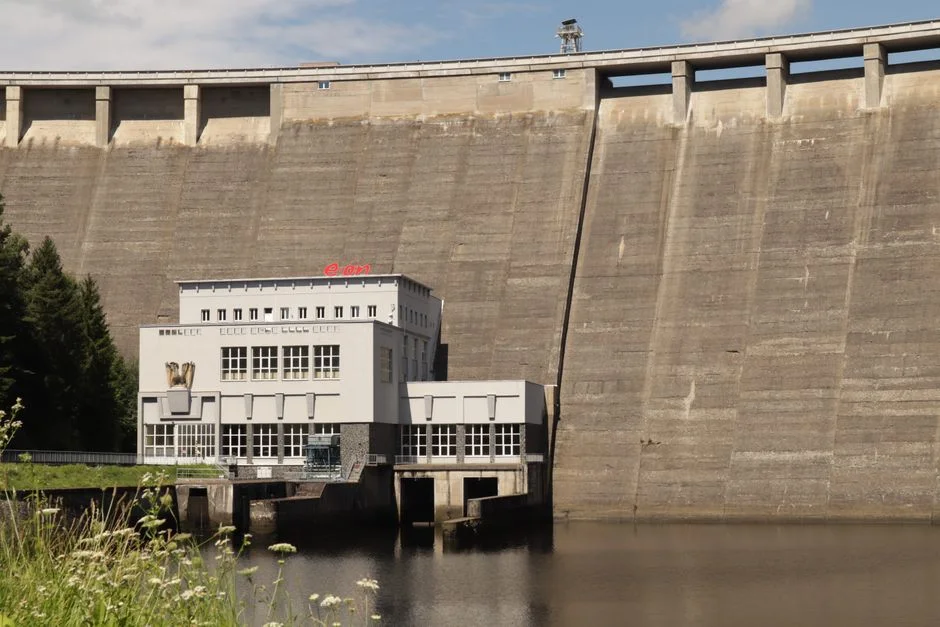
A conventional or lamella clarifier relies on gravity settling. Flocculated water enters a basin, quiescent conditions let dense particles drop to a sludge hopper on the bottom, and clarified supernatant discharges over a weir. Inclined-plate (lamella) designs pack 40–60 plates at 55–60° inside the tank to multiply the effective settling area; this pushes hydraulic surface loading rates to 20–40 m/h, several times what a traditional basin can absorb, and trims coagulant demand by up to 30% by improving floc-to-plate contact (per HydropureWater product spec for the high-efficiency sedimentation tank).
Gravity works well when particles are dense, mineral, and already prone to settling. Quarry fines above ~50 microns, silica washdown, and tailings thickener overflow all fall into that category, and a HydropureWater lamella clarifier handles them with low energy and simple controls. Where the clarifier loses is on the particles a DAF would catch: light metal-hydroxide flocs, oil-coated fines, emulsified cutting fluids, and sub-20-micron colloidal solids. Those escape over the weir and end up either in the recycle loop or in the discharge — which is precisely where TDEC will find them during a compliance sampling event.
DAF vs Clarifier: A 2026 Side-by-Side for Mining Duty
Head-to-head, the equipment choices diverge on mechanism, footprint, and the character of the sludge they produce. The matrix below maps the decision parameters a Crossville engineer needs to defend the choice in front of a plant owner or TDEC reviewer.
| Parameter | Dissolved Air Flotation (DAF) | Lamella / Conventional Clarifier |
|---|---|---|
| TSS removal efficiency | 92–97% (high-rate circular, e.g. FC Maximizer geometry); 85–90% (rectangular, e.g. RC UniMax) | 50–80% depending on particle density and floc strength |
| Influent TSS range | 500–5,000+ mg/L | 100–2,000 mg/L (higher load needs much larger footprint) |
| Footprint for 50 m³/h | ~10–12 m² tank area with recycle skid | ~30–50 m² for lamella, more for conventional basin |
| Oil / FOG / floatable fines | Excellent — bubble attaches and lifts | Poor — floatables escape over the weir |
| Metal-hydroxide floc capture | Strong when dosed at pH 8.5–9.5 | Mixed; light flocs often carry over |
| Sludge dryness from unit | 2–4% DS float, distinct from settled | 1–3% DS underflow, larger volume |
| Energy signature | Recycle pump at ~6 bar plus air compressor; 5–8 kWh/m³ treated | Low-head sludge pumps only; ~0.5–1.5 kWh/m³ |
| Capex intensity (relative) | Higher per m², but small footprint reduces civil costs | Lower per unit, but larger basin + civil work offsets savings |
| Best-fit stream | High TSS, oils, fines, metals, water-reuse duty | Dense settleable solids, very high flow, simple chemistry |
The trade-off is energy versus footprint. A DAF consumes more kilowatt-hours per cubic meter because of the pressurized recycle and compressed-air system, but it does the work in a fraction of the basin area — a decisive factor on tight Crossville plant layouts where civil work is the expensive line item. A lamella clarifier uses a tenth of the energy, but at 50 m³/h it needs a tank 3–4× the plan area of the equivalent DAF, plus larger slab and structural steel. For operations also weighing alternatives like DAF-versus-clarifier trains in other industries, the DAF vs clarifier for EV and auto parts wastewater breakdown shows the same footprint-versus-energy tension in a different regulatory frame.
Choosing by Influent Characteristics: A 2026 Decision Tree
The matrix above is the data; this section turns it into a rule an engineer can apply during a 30-minute scoping call with a plant manager. Four rules cover most Crossville mining and metals scenarios in 2026.
| Rule | Trigger Condition | Equipment Choice |
|---|---|---|
| 1. High TSS or floatables | Influent TSS >1,000 mg/L, OR visible oil/FOG, OR floatable fines from aggregate washing | DAF primary, sized at 25–35 m/h hydraulic surface loading rate |
| 2. Dense mineral stream | Low oil/FOG, large flow rate (>80 m³/h), footprint available, settleable mineral solids dominate | Lamella clarifier or thickener, sized at 20–40 m/h HSR |
| 3. Tight discharge limit + high TSS | Discharge TSS limit <30 mg/L and influent >1,500 mg/L | DAF primary + lamella polish — the dominant 2026 mining train |
| 4. Trace heavy metals | Lead, zinc, copper, arsenic, or chromium detected; metal precipitation via pH adjustment to 8.5–9.5 | DAF after precipitation (captures light metal-hydroxide flocs), then clarifier for sludge thickening |
Rule 3 is the most common 2026 configuration we see on Crossville scoping studies. The DAF pulls TSS from 2,000–3,000 mg/L down to 50–150 mg/L with the bulk of the metal-hydroxide mass attached; the lamella polish then drives the final effluent under 30 mg/L to clear the TDEC limit. The DAF float still needs dewatering — typically a plate-and-frame press — but the sludge is uniform and handles well. Plants running lighter polymer programs and lower metals loads sometimes succeed with a single-stage DAF; plants with legacy iron-laden rinses and high fines need both stages. The same logic appears in adjacent verticals, including the DAF vs clarifier for plastics and rubber wastewater decision tree, where floatables drive the choice.
Sizing, Integration, and 2026 Compliance Considerations for Crossville
Sizing a DAF on flow alone is the most common 2026 mistake. Manufacturer capacity tables (DAF-003 at 3 m³/h up to DAF-120 at 120 m³/h per S2) bracket the envelope, but model selection is driven by the hydraulic surface loading rate (HSR) — the ratio of flow to effective flotation area. For a mining DAF with chemical conditioning, HSR should sit at 25–35 m/h; pushing past 40 m/h starves the bubble-to-floc contact time and drops removal efficiency. A Crossville plant at 50 m³/h therefore needs roughly 1.5–2.0 m² of effective flotation area per m³/h, which falls cleanly in the mid-range DAF models.
Downstream of the DAF, the 2–4% DS float still needs a plate-and-frame filter press to reach 18–25% DS for haul-off, and the HydropureWater plate and frame filter press paired with an automatic chemical dosing skid for polymer make-up is the standard finishing train. Without this, the lifecycle cost story falls apart — the DAF may have lower civil cost, but un-dewatered float is a-hauling liability.
For TDEC compliance, any system discharging to the Crossville POTW or under a direct NPDES permit must demonstrate TSS, metals, and pH compliance on a routine basis. DAF effluent typically clears TSS limits more easily than clarifier effluent on mining streams with floatable fines, but metals compliance depends on the upstream precipitation step — pH must be controlled inside the narrow band where the target metals form low-solubility hydroxides. Before final selection, run a jar test to lock coagulant and polymer dose, then commission an on-site pilot (consistent with DAF Corp methodology) at representative flow for 4–6 weeks to verify metals and TSS removal under real influent variability.
Frequently Asked Questions
When is a DAF the right primary clarifier for a Crossville mining plant?
Specify a DAF when influent TSS exceeds 1,000 mg/L, when the stream carries oil, FOG, or floatable fines, or when discharge limits are tighter than 30 mg/L TSS. DAF achieves 92–97% TSS removal on mining duty (per high-rate DAF manufacturer data) and captures metal-hydroxide flocs that a gravity clarifier typically loses over the weir.
Can a lamella clarifier handle a quarry washdown stream on its own?
Yes, if the solids are dense and settleable, oil/FOG is negligible, and the plant has footprint for the larger basin. Lamella clarifiers run at 20–40 m/h surface loading and cut coagulant use by up to 30% relative to conventional basins. For high-TSS or floatable-fines streams, plan a DAF upstream instead.
What does a 2026 DAF cost-of-ownership picture look like for a Crossville operation?
Capex per m³/h is higher than a lamella clarifier, but the smaller footprint reduces civil and structural costs. Opex is dominated by polymer dose, recycle-pump energy at 5–8 kWh/m³, and downstream dewatering. Skid-mounted DAF units from 3–120 m³/h cover the typical Crossville flow range, paired with a plate-and-frame press for the 2–4% DS float to reach 18–25% DS haul-off cake.
How does TDEC regulate discharges from mining and metals pretreatment in Cumberland County?
TDEC administers NPDES permits for direct surface-water discharges and the industrial pretreatment program for plants sending waste to the Crossville POTW. Permit limits typically cover TSS, oil & grease, pH, and individual metals (lead, zinc, copper, arsenic, chromium, cadmium). DAF effluent more reliably clears TSS limits on floatables-bearing mining streams, but metals compliance still hinges on correct pH-controlled precipitation upstream of the clarifier.