Why 40 CFR Part 403 Sets the Rules for Fernley Chemical Plants
Federal pretreatment authority governs every chemical plant in Lyon County that discharges process wastewater to a sanitary sewer, regardless of size or ownership. EPA defines "pretreatment standards" at 40 CFR 403.3(j) as pollutant discharge limits that apply to industrial users (IUs) of a publicly owned treatment works (POTW), and it defines a "pass-through" at 40 CFR 403.3(p) as a discharge that exits the POTW in quantities or concentrations that, alone or in conjunction with other sources, cause a violation of the POTW's NPDES permit. "Interference" at 40 CFR 403.3(k) is the corresponding definition for discharges that disrupt the POTW, its treatment processes, or its sludge handling. The City of Fernley Water Treatment Facility, which was completed in October 2009 to bring the municipal system into compliance with the federal Clean Water Act (per AGRU America project records, 2009), demonstrates that the receiving POTW already operates under an active CWA compliance program — meaning the local limits your plant must meet are not optional. Under 40 CFR 403.5(c), most general prohibited discharge standards are narrative rather than numeric, so each POTW is required to derive site-specific local limits, and EPA can enforce those local limits as pretreatment standards once approved. Annual review and periodic re-evaluation of local limits is mandatory, and enforcement rides on the same pass-through and interference definitions cited above.
Are You a Significant Industrial User? The SIU Determination Step
Three regulatory triggers determine whether a Fernley-area chemical plant is a Significant Industrial User (SIU) under 40 CFR Part 403: (1) the facility falls under a categorical pretreatment standard in 40 CFR Parts 405–471, which cover chemical manufacturing subcategories; (2) the plant discharges more than 25,000 gpd of process wastewater; or (3) the discharge has the potential to cause pass-through or interference as defined at 40 CFR 403.3(p) and (k). Hitting any one trigger pulls the facility into the SIU permitting and self-monitoring regime. New SIUs must submit a baseline monitoring report under 40 CFR 403.12(b) within 180 days of the categorical standard's effective date, and any new source or new discharger must submit its report at least 90 days before commencing discharge. A real-world parallel is the Clean Water Services pretreatment program in Washington County, Oregon, which requires a completed nondomestic waste discharge application at least 90 days before wastewater is discharged (per Clean Water Services, 2026 program page). The table below maps the three SIU triggers to the action each one forces on the plant.
| SIU Trigger | Regulatory Citation | Action Required |
|---|---|---|
| Categorical industrial user (chemical mfg. subcategory) | 40 CFR Parts 405–471 | Baseline Monitoring Report (BMR) per 40 CFR 403.12(b); categorical limits apply at end-of-pipe |
| Process flow > 25,000 gpd | 40 CFR 403.3(v) | SIU classification; submit BMR; permit application required |
| Pass-through / interference potential | 40 CFR 403.3(p), (k) | Headworks loading analysis; permit with narrative and numeric limits |
For a deeper walkthrough of the SIU determination logic applied to a similar chemical corridor, the Hopewell chemical plant pretreatment guide provides a comparable side-by-side.
What Fernley-Area POTWs Typically Enforce as Local Limits
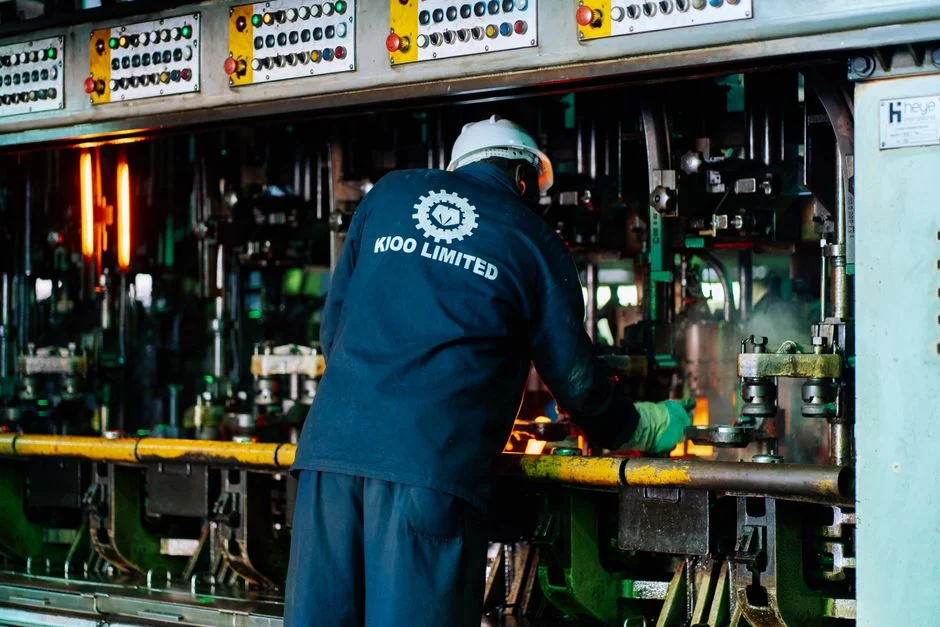
Local limits in the Fernley / Lyon County / Tahoe Reno Industrial Center corridor are numeric end-of-pipe discharge limits applied at the point of connection to the sanitary sewer, derived under EPA's Local Limits Development Guidance and codified at 40 CFR 403.5(c). The receiving POTW calculates maximum allowable headworks loading, NPDES pass-through criteria, and sludge quality criteria (typically using the local limits workbook that EPA published in 1987 and re-evaluates periodically) to set the IU-specific cap. The numeric envelope below is typical for small Nevada POTWs serving chemical and light-industrial users; an actual plant must obtain the local limits worksheet from its POTW before any design is locked in. POTWs must conduct annual reviews and periodic re-evaluations of these limits per 40 CFR 403.5(c) — values do not stay static as the receiving stream's assimilative capacity and biosolids disposal options change. The City of Fernley Water Treatment Facility — coagulation, flocculation, sedimentation, microfiltration, completed 2009, designed to bring the municipality into compliance with the federal Clean Water Act (per AGRU America, 2009) — is the local proof point that this POTW is running an active CWA program with the institutional capacity to enforce local limits. The table summarizes representative numeric bands an engineer should expect on a Fernley-area discharge permit.
| Parameter | Typical Local Limit (Daily Max) | Derivation Basis |
|---|---|---|
| pH | 5.0 – 10.0 SU | 40 CFR 403.5(b) prohibited discharge range |
| Total Suspended Solids (TSS) | 250 – 500 mg/L | Max allowable headworks loading + sludge criteria |
| COD / BOD (high-strength surcharge trigger) | 300 – 600 mg/L BOD; surcharge above ~250 mg/L | NPDES pass-through + biosolids criteria |
| Oil & Grease (O&G) | 100 mg/L | 40 CFR 403.5(b)(7) |
| Total Metals (Cd, Cr, Cu, Ni, Pb, Zn, Hg) | Per 40 CFR Part 403, Appendix A categorical tables | Sludge quality + NPDES pass-through |
| Arsenic, Selenium | Site-specific, often <0.5 mg/L | Local geology (Fernley basin naturally high arsenic) |
For a comparable end-of-pipe parameter reference, the Summer Shade chemical pretreatment reference lists similar numeric bands applied to a different small-POTW corridor.
Designing the Pretreatment Process Train: Unit Operations and Parameters
A packaged pretreatment train sized for a 50–200 m³/day chemical plant discharge to a Lyon County POTW typically runs through the following unit operations. Each stage is justified by a numeric parameter the engineer can put on a P&ID.
- Equalization basin — 8–24 h hydraulic residence, mechanical top-entering mixer, level and pH instrumentation, sized to dampen batch discharges from reactors and CIP cycles. The same basin feeds the PLC-controlled automatic chemical dosing skids that trim pH and add coagulant.
- pH adjustment — two-stage with caustic followed by acid trim, mixing residence >5 min per stage, target band 6.5–9.0 SU before the biological stage. Probe redundancy is mandatory; the dosing skid takes feedback from a 4–20 mA pH loop.
- Dissolved air flotation (DAF) — 10–30 m²/h hydraulic loading, 4–6 bar saturator pressure, micro-bubble 10–100 μm. A dissolved air flotation system removes free oil, emulsified FOG, and colloidal TSS before the biological stage, which protects downstream biomass.
- Biological treatment — activated sludge or MBR; MLSS 3,000–5,000 mg/L, F/M 0.1–0.3 kg BOD/kg MLSS·d, HRT 6–12 h. For footprint-constrained sites, a flat-sheet MBR delivers <10 NTU effluent and eliminates a downstream clarifier. A compact MBR wastewater treatment system packages aeration, membrane, and backwash on a single skid; the MBR module reference for the flat-sheet cassette is the MBR flat-sheet option.
- Clarification (post-DAF or post-CAS) — lamella surface loading 20–40 m³/m²·h, typically a high-efficiency lamella clarifier used to polish biological effluent or as a primary stage ahead of the DAF.
- Disinfection — chlorine dioxide at 0.5–2.0 mg/L residual or UV at ≥40 mJ/cm², sized to deliver a downstream fecal coliform or E. coli limit consistent with the local limits worksheet. An on-site chlorine dioxide generator eliminates the bulk chemical storage and ton-container handling on site.
- Sludge handling — waste-activated sludge and DAF float routed to a plate and frame filter press for dewatering to 30–40% DS prior to off-site disposal; filtrate returns to the equalization basin.
| Unit Operation | Key Parameter | Typical Range |
|---|---|---|
| Equalization | HRT | 8 – 24 h |
| pH adjustment | Outlet band | 6.5 – 9.0 SU; residence >5 min/stage |
| DAF | Hydraulic loading / saturator pressure | 10 – 30 m³/m²·h; 4 – 6 bar |
| Biological (MBR) | MLSS / F/M / HRT | 3,000 – 5,000 mg/L; 0.1 – 0.3; 6 – 12 h |
| Lamella clarifier | Surface loading | 20 – 40 m³/m²·h |
| Disinfection (ClO₂) | Dose / residual | 0.5 – 2.0 mg/L; CT per local limit |
| Plate & frame press | Cake dryness | 30 – 40% DS |
Nevada-Specific Permitting: NDEP, Lyon County, and the POTW Path
The Nevada Division of Environmental Protection (NDEP) Bureau of Water Pollution Control delegates pretreatment oversight to POTWs that have an approved pretreatment program under 40 CFR 403.10. For a chemical plant discharging to a Fernley-area sanitary sewer, the practical actor is the receiving POTW, and NDEP remains the state backstop. The application sequence runs: (1) nondomestic waste survey → (2) discharge permit application with process flow diagram and wastewater characterization → (3) POTW technical review and headworks loading analysis → (4) categorical standard check against 40 CFR Parts 405–471 → (5) permit issuance with self-monitoring requirements. The plant must install a 24-hour composite sampler at the discharge point, conduct baseline monitoring per 40 CFR 403.12(b), and submit SIU annual reports thereafter. Enforcement escalates from warning letter to administrative penalty to an order to stop discharging, mirroring the Clean Water Services Enforcement Response Plan structure that covers SIU noncompliance in Washington County, Oregon (per Clean Water Services, 2026 program page).
Equipment Mapping and Cost Bands for a 50–200 m³/day Chemical Plant
The packaged train described above maps to the equipment list below, with indicative capex bands drawn from typical small-to-mid chemical plant installations (HydropureWater field data, 2026). Bundling headworks screening — a rotary mechanical bar screen — with chemical dosing on a single skid cuts field install time and is standard scope on a Fernley-area site.
| Unit Operation | Equipment / SKU | Capacity Range (50–200 m³/day) |
|---|---|---|
| Headworks screening | Rotary mechanical bar screen | 0.5 – 5 mm aperture |
| Equalization / pH trim | FRP or coated-carbon basin + automatic dosing skid | 20 – 100 m³ live volume |
| Coagulation / flotation | Dissolved air flotation system | 5 – 25 m³/h |
| Biological | Compact MBR wastewater treatment system (flat-sheet) | 2 – 10 m³/h |
| Clarification / polishing | High-efficiency lamella clarifier | 20 – 40 m³/m²·h loading |
| Disinfection | On-site chlorine dioxide generator | 50 – 500 g/h ClO₂ |
| Sludge dewatering | Plate and frame filter press | 2 – 10 m³/h filtrate |
Indicative capex for a packaged 50–200 m³/day train runs USD 200,000 – 1,500,000 installed, dominated by equalization volume, DAF sizing, the choice between MBR and conventional activated sludge, the disinfection technology, and whether sludge dewatering is in scope (HydropureWater field data, 2026). Concrete basins vs. FRP, building enclosure vs. open-frame skid, and instrumentation scope (analog vs. full PLC with SCADA) drive most of the variance within that band.
Frequently Asked Questions
How does a chemical plant near Fernley determine if it is a Significant Industrial User?
Run the three-trigger test: a categorical industrial user status under 40 CFR Parts 405–471, process flow over 25,000 gpd, or pass-through/interference potential under 40 CFR 403.3(p) and (k). Any single hit triggers SIU status and the corresponding baseline monitoring and 90-day pre-discharge reporting requirements, as defined under 40 CFR 403.3(j).
What local limits should a Lyon County chemical plant expect on its discharge permit?
Expect pH 5.0–10.0 SU, TSS 250–500 mg/L daily max, BOD/COD caps with a high-strength surcharge trigger (typically above ~250 mg/L BOD), oil and grease 100 mg/L, and metals per the categorical tables at 40 CFR Part 403 Appendix A — all derived under EPA's Local Limits Development Guidance at 40 CFR 403.5(c).
What is the typical hydraulic residence time for an equalization basin in this kind of train?
Equalization is sized for 8–24 hours of residence to dampen batch and CIP flows, with mechanical mixing and a PLC-controlled pH/ORP probe feeding the PLC-controlled automatic chemical dosing skids on the discharge of the basin.
What capex should a 100 m³/day chemical plant pretreatment train expect?
Budget USD 200,000–1,500,000 installed for a packaged 50–200 m³/day train, with equalization volume, DAF sizing, MBR vs. CAS selection, and the inclusion of a plate and frame filter press as the primary cost drivers (HydropureWater field data, 2026).