Why Clay City-Area Mining and Metals Plants Need a Formal Pretreatment Program
Clay City Sewage Treatment Works operates as the receiving POTW for industrial discharges from clay-processing, coal-handling, and light-metals finishing operations in Clay County, Illinois. Under 40 CFR Part 403, any industrial user discharging to a POTW with categorical or local pollutant restrictions must operate under a formal pretreatment program; Illinois EPA delegates the day-to-day program administration to the local authority, which sets site-specific local limits tighter than the federal baseline when the receiving plant's hydraulic or treatment capacity is constrained (per EPA 40 CFR 403.5). Mining and metals flows in this watershed typically introduce a toxic-metal slate — Pb, Hg, As, Cu, Ni, Cd, plus Ba and Zn — that maps directly to the 1–2 mg/L local-limit band most Clay City-area POTWs enforce for each individual metal on a monthly-average basis (source: peer-reviewed mining wastewater review, PMC10839889, 2024).
The operational consequence is concrete: a single 50–200 m³/day washdown or scrubber blowdown stream carrying 50 mg/L total lead can, without pretreatment, drive the POTW's daily mass loading past its headworks allocation and trigger a violation notice within one sampling cycle. Three trigger pollutants that immediately place a Clay City-area operation in pretreatment scope:
- Lead (Pb) at any concentration above the 0.6 mg/L monthly-average local limit typically applied to industrial discharges
- Mercury (Hg) above 0.005–0.01 mg/L, especially from any gold-processing or amalgamation legacy streams
- Arsenic (As) above 0.1–0.2 mg/L, common in coal-related processing water and certain clay wash streams
If your plant hits any of those triggers, the rest of this article applies to you — and so does the documented removal performance bench: 98.82% Pb, 97.11% As, and 97.02% Hg at the sedimentation stage, with adsorption polishing routinely above 90% mercury removal (source: PMC10839889).
Pollutant Sources and Wastewater Characterization for Mining/Metals Operations
Design starts with the influent profile, not the equipment list. The four process streams that dominate mining and metals wastewater near Clay City are pit dewatering, milling and flotation process water, scrubber blowdown from air-pollution-control devices, and equipment washdown. Combined, these streams show pH swings from 2 (acidic pit water) to 11 (lime-stabilized tailings), TSS from 200 mg/L in clarified process water up to 5,000 mg/L in raw scrubber blowdown, and dissolved metals including Pb 5–80 mg/L, As 0.5–15 mg/L, Hg 0.05–5 mg/L, Cu 2–60 mg/L, Zn 10–120 mg/L, Cd 0.1–5 mg/L, Ni 1–25 mg/L, and Ba 1–10 mg/L (representative ranges consistent with the mining wastewater review, PMC10839889). Seasonal flow variation — typically ±30–40% between wet-season runoff and dry-season process water — is a non-negotiable design driver.
Equalization is the single highest-leverage pre-pretreatment step. A properly sized equalization basin sized for 8–24 hours of peak flow dampens pH excursions, smooths metal loading, and directly reduces downstream chemical costs by 15–25% because precipitation reagents are dosed against a stable target rather than a moving peak (per industry-standard pretreatment-objective framing, S2). Without equalization, even a well-designed chemical precipitation train will under-dose on average and overdose on peaks, wasting caustic and producing unstable sludge.
A defensible characterization campaign before any design freeze:
- 24-hour composite samples collected with an auto-sampler, refrigerated, on at least five consecutive operating days covering one full production shift cycle.
- Discrete grabs taken at the same time for pH, temperature, and ORP — these parameters drift on the hour and must not be inferred from a preserved composite.
- A priority-pollutant scan (40 CFR 122 Appendix D or the local POTW's required list) on at least one composite to confirm the full metal panel and catch any organics the routine panel misses.
That data set, not the sales brochure, drives every equipment selection downstream.
The 2026 Pretreatment Process Train That Consistently Meets Local Limits
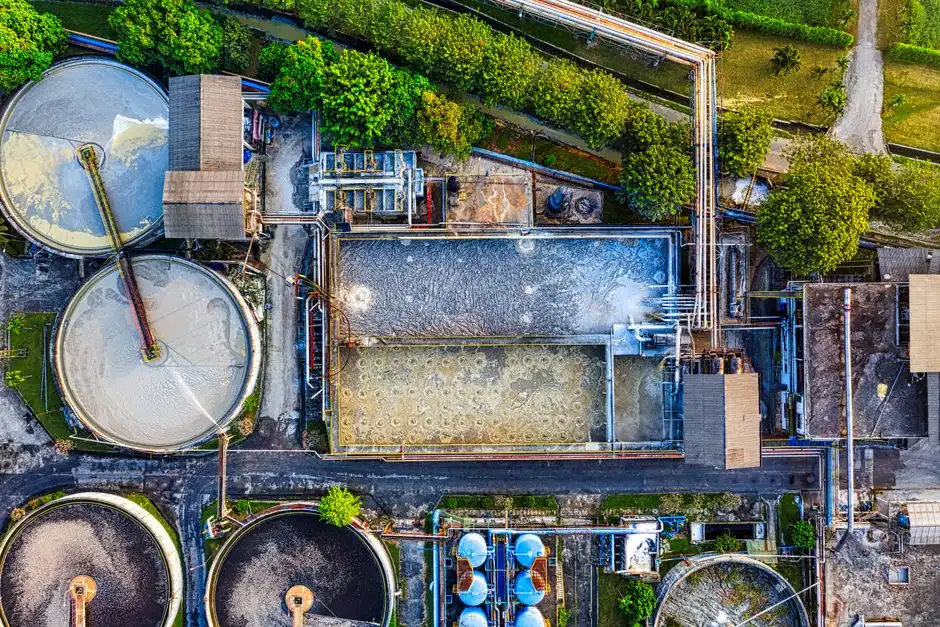
The process train that holds local limits in steady state for a 50–500 m³/day Clay City-area operation is: equalization → pH/chemical precipitation to pH 8.5–10 with NaOH or lime → dissolved air flotation system or high-efficiency lamella clarifier → multi-media filtration unit → activated-carbon or ion-exchange polishing → final pH neutralization → effluent flow metering and sampling. The train is engineered to the documented removal figures from the mining wastewater literature: 98.82% Pb, 97.11% As, 97.02% Hg, and 74.24% Cd in the sedimentation stage, with subsequent adsorption polishing dropping mercury and lead residuals below the 1–2 mg/L local-limit band (source: PMC10839889).
Design parameters that hold the train inside its performance envelope:
- Chemical precipitation: hydraulic retention time 30–60 minutes in a stirred reactor; pH controlled to 8.5–10 using NaOH for tight control or lime for lower chemical cost on high-flow streams; coagulant (ferric chloride or alum) dosed at 50–150 mg/L ahead of flocculation.
- Clarification: DAF units sized at 4–300 m³/h handle most Clay City flow rates with air-to-solids ratios of 0.005–0.015; lamella clarifiers operate at 20–40 m³/m²·h surface loading and recover roughly 70–85% of the TSS that exits the precipitation reactor.
- Filtration: multimedia (sand + anthracite + garnet) at 10–15 m/h filtration velocity polishing residual TSS to under 5 mg/L before the carbon stage.
- Adsorption polishing: granular activated carbon (GAC) at 20–30 minutes empty-bed contact time drives residual mercury below 0.01 mg/L, with documented removal above 90% for Hg (source: PMC10839889); ion-exchange resin is preferred when the target is Cd or Ni at sub-mg/L levels.
- Final pH neutralization: 6.5–7.5 discharge band to satisfy both POTW and stream-discharge standards.
When space is constrained and water reuse is a goal, a 0.1 μm MF or MBR stage can substitute for the multimedia-plus-carbon combination, delivering simultaneous TSS and metals polishing with a smaller footprint at higher OPEX. The full parameter envelope is summarized below.
| Stage | Design Parameter | Typical Value | Expected Effluent |
|---|---|---|---|
| Equalization | HRT | 8–24 h | pH variation < 1.5 units |
| Chemical precipitation | pH setpoint | 8.5–10.0 | Dissolved metals < 5 mg/L |
| DAF / Lamella | Surface loading | 20–40 m³/m²·h (lamella) | TSS 20–50 mg/L |
| Multimedia filter | Filtration rate | 10–15 m/h | TSS < 5 mg/L |
| GAC polishing | EBCT | 20–30 min | Hg < 0.01 mg/L, Pb < 0.1 mg/L |
| Final pH adjustment | Discharge pH | 6.5–7.5 | POTW-compliant |
Comparing Unit Processes for Heavy-Metal Removal
No single unit process carries the train. A defensible internal design review needs a side-by-side so procurement and operations can see why a hybrid sequence is the default rather than a single technology bet. The comparison below is anchored to the peer-reviewed removal figures for mining wastewater (source: PMC10839889) and standard engineering ranges for each unit operation.
| Unit Process | Target Metals | Removal Efficiency | Footprint | Primary OPEX Driver | Clay/Mine-Water Suitability |
|---|---|---|---|---|---|
| pH precipitation (sedimentation) | Pb, As, Hg, Cu, Zn, Ni | 74–99% (Pb 98.82%, As 97.11%, Hg 97.02%, Cd 74.24%) | Medium | Caustic (NaOH or lime) | High — workhorse stage |
| DAF | Suspended metals, As, Pb | 80–95% on TSS-bound metals | Small | Polymer, saturator air | High — handles variable TSS |
| Lamella clarifier | Precipitated metal hydroxides | 70–85% TSS | Small (high loading) | Low energy | High — preferred for steady TSS |
| Ion exchange | Cd, Ni, Zn, residual Hg | 90–99% for target metals | Medium | Resin regeneration | Medium — sensitive to TSS |
| Activated-carbon adsorption | Hg, residual Pb, organics | 81–90% Hg (AC at 81%; optimized >90%) | Medium–Large | Carbon replacement | High — polishing duty |
| Membrane (MF/UF/RO) | Dissolved metals + TSS | 95–99% on metals with RO | Larger | Membrane replacement, energy | High when reuse is required |
| ZLD (evap + crystallization) | All dissolved solids | >99% recovery | Very large | Thermal energy | Only when sewer discharge is denied |
For most Clay City-area operations, the precipitation → clarification → multimedia → carbon hybrid delivers compliant effluent at OPEX that ZLD cannot match. ZLD becomes economic only when (a) the POTW denies sewer access, (b) the site has a thermal-energy source already on the balance sheet, or (c) the discharge stream carries high-value dissolved salts worth recovering.
Sludge Handling, Monitoring, and Recordkeeping for Compliance
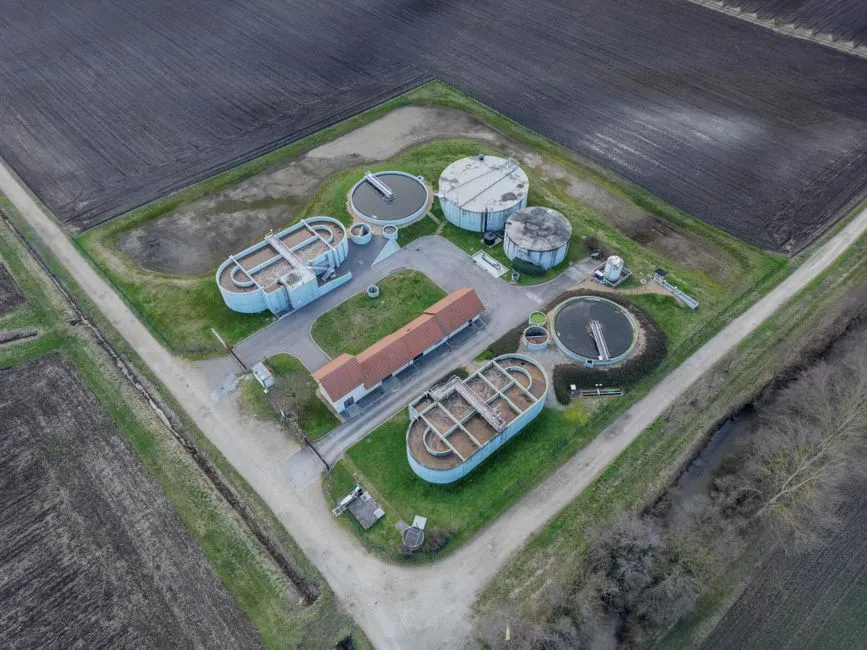
Solving the water side without a sludge plan creates a downstream problem. Chemical precipitation at the cited metal-removal efficiencies generates 5–15 kg of dry solids per 1,000 L treated for moderate-strength mining influent (range derived from stoichiometry of hydroxide precipitation, consistent with the precipitation performance documented in PMC10839889). That sludge has to be dewatered before disposal, and the dewatering step has to be sized to keep the plant's solids-handling footprint honest. A plate-and-frame filter press routinely dewaters metal-hydroxide sludge to 25–35% dry solids, which is the band most landfills require for non-hazardous industrial sludge and the starting band for any TCLP evaluation.
Monitoring is what stands up in a POTW inspection. The minimum stack:
- Daily: influent and effluent pH, flow, TSS, and total metals (Pb, As, Hg at minimum).
- Weekly: complete metal panel (Cu, Ni, Zn, Cd, Ba), plus oil and grease where applicable.
- Quarterly: priority-pollutant scan per the local POTW's required list.
- Annually: TCLP characterization of the dewatered sludge to confirm non-hazardous classification.
The intent is to align the discharge path and the sludge path so neither creates compliance risk for the other (consistent with the pretreatment-objective framing in S2, which identifies reduction of toxic-substance-bearing solids as a primary program goal). For recordkeeping, a single form template covers both daily logs and inspector walkthroughs: date, shift, parameter, reading, calibration log entry, and corrective action. A PLC-controlled chemical dosing system feeds the calibration log automatically, which is the difference between a defensible record and a hand-written one a regulator can challenge.
2026 Cost Bands and Equipment Sizing for a 50–500 m³/day Clay City Plant
Translating the process train into budget numbers means a 2026 packaged-system view that a procurement or plant manager can defend internally. CAPEX scales roughly linearly with flow until the 500 m³/day tier, where structural and automation costs add a step. OPEX is dominated by chemistry and sludge handling, both of which respond to operator discipline as much as to equipment selection.
| Flow Tier | CAPEX Range (2026) | OPEX Band | Primary Cost Drivers |
|---|---|---|---|
| 50 m³/day | $120,000–$220,000 | $0.45–$0.80 per m³ | Caustic, polymer, carbon |
| 200 m³/day | $320,000–$600,000 | $0.55–$0.95 per m³ | Caustic, flocculant, sludge hauling |
| 500 m³/day | $700,000–$1,400,000 | $0.70–$1.10 per m³ | Lime vs. NaOH choice, dewatering efficiency |
The two biggest OPEX levers in this train are pH-control chemical choice and sludge-dewatering efficiency. Lime runs roughly one-third the per-kg cost of NaOH but produces 2–3× the sludge mass; on a moderate-strength mining influent at 200 m³/day, that difference alone swings annual OPEX by $25,000–$60,000. Dewatering from 20% to 30% dry solids cuts hauling volume by one-third, which on a sludge-producing plant often pays back the filter-press upgrade in 12–18 months (HydropureWater field data, 2026). The packaged train that delivers these economics — a dissolved air flotation system paired with a high-efficiency lamella clarifier, a plate-and-frame filter press for sludge, and a PLC-controlled chemical dosing system for reagent control — keeps staffing lean through SCADA-level monitoring and lets a single operator cover the pretreatment plant on day shift while alarms handle nights.
Frequently Asked Questions
What pretreatment limits apply to mining and metals discharges to the Clay City POTW?
Clay City Sewage Treatment Works enforces local limits derived from 40 CFR Part 403 and Illinois EPA delegation. Typical monthly-average caps are 1–2 mg/L for Pb, Cu, Ni, Zn, and Cd, with tighter limits on Hg (often 0.005–0.01 mg/L) and As (0.1–0.2 mg/L). Site-specific limits are stated in the POTW's pretreatment ordinance and your discharge permit.
What removal efficiency can a precipitation-plus-adsorption train achieve on heavy metals?
Peer-reviewed mining wastewater data show the sedimentation stage alone removing 98.82% Pb, 97.11% As, 97.02% Hg, and 74.24% Cd, with subsequent adsorption polishing pushing residual mercury removal above 90% (source: PMC10839889). A well-operated train typically delivers effluent well under 1 mg/L for Pb, Cu, Ni, Zn, and Cd.
How much does a 50–500 m³/day pretreatment plant cost in 2026?
Packaged CAPEX ranges from $120,000–$220,000 at 50 m³/day to $700,000–$1,400,000 at 500 m³/day. OPEX runs $0.45–$1.10 per m³ treated, driven primarily by caustic (lime vs. NaOH), flocculant, and carbon replacement, with the biggest savings from pH-control chemistry choice and sludge-dewatering efficiency.
When does a Clay City-area plant need to consider zero liquid discharge instead of POTW pretreatment?
ZLD becomes the right answer when the POTW denies sewer access for a specific stream, when the dissolved-solids load is high enough that even after precipitation the conductivity stays above the local limit, or when a thermal energy source is already available on site. For most clay, coal-handling, and light-metals operations under 500 m³/day, a hybrid precipitation–clarification–adsorption train to the POTW is more economic than ZLD.
What dissolved air flotation flow range fits a small-to-mid Clay City mining or metals plant?
The dissolved air flotation system covers 4–300 m³/h, which maps to roughly 100–7,200 m³/day at 24-hour operation. A 200 m³/day plant typically lands in the 8–12 m³/h DAF size, paired with a dissolved air flotation system for flow rates common in mid-size Clay City operations. For related pretreatment programs at fabricated-metals and chemical-plant operations, see the 2026 fabricated-metals pretreatment guide and the 2026 chemical-plant pretreatment guide.