Why the North Slope Pretreatment Problem Is Different
Mining and metals plants on Alaska's North Slope meet sewer pretreatment limits by combining EPA categorical standards (40 CFR 436 for ore mining; 40 CFR 433 for metal finishing) with Alaska DEC's 18 AAC 72 receiving-water rules, then designing a four-stage train — screening, DAF oil/solids removal, lamella clarification, and either MBR biological polishing or RO for metals recovery — to hit TSS, total metals, and oil and grease limits before any discharge or land application.
The compliance problem is not generic. A concentrate facility at Red Dog, a zinc/silver project near the Brooks Range, or a critical-minerals pilot on the coastal plain is dealing with two regulatory layers at once: federal EPA categorical pretreatment under 40 CFR Part 403, 40 CFR Part 436 (Ore Mining and Dressing), and 40 CFR Part 433 (Metal Finishing), plus Alaska state rules under 18 AAC 72 (Wastewater Disposal) and 18 AAC 83 (Domestic Wastewater), administered by the Alaska Department of Environmental Conservation. The categorical standards set the floor; the state rules and the site's NPDES permit almost always set the ceiling that actually controls design.
The arctic overlay then forces a different equipment list than anything in the lower 48. Permafrost sets a hard limit on burial depth — only the top ~0.5–1.0 m of the active layer thaws each summer, and any buried tank, pipe, or basin sitting in thawed soil will frost-heave. Sub-zero air temperatures force enclosed, heated, or buried process units. Freeze-thaw cycling destroys uncovered concrete basins within a few seasons. And seasonal logistics — barge during the open-water window (roughly July–October) and ice road from January–April — constrain chemical resupply and sludge haul-out to a few months per year. The equipment list is therefore driven as much by logistics and thermal management as by chemistry. USGS baseline hydrology bulletins, such as the historic North Slope streamflow records, give background on receiving-water flows but are not the operative compliance basis; NPDES permits and Alaska DEC mixing-zone rules are.
The Regulatory Stack Mining and Metals Plants Must Clear
40 CFR Part 436 (Ore Mining and Dressing) sets categorical pretreatment limits for mine dewatering, mill wash, and ore-handling streams. The regulated parameters are TSS, total recoverable metals, and pH, expressed as both a daily maximum and a monthly average. North Slope operations rarely have a direct POTW connection, so the categorical limit effectively becomes a state-enforced limit enforced through the Alaska DEC permit — land application, ZLD, or zero-surface-discharge are the typical compliance paths.
40 CFR Part 433 (Metal Finishing) is the rule most engineers miss. Mining operations that maintain even a small maintenance shop, an electroplating line for wear parts, or a battery/connector assembly area trigger Part 433. The standard is organized into three subcategories (copper, zinc, and nickel) and sets daily-maximum and monthly-average total-metal limits that are tighter than most mining operations assume — for example, the copper subcategory caps total copper at 3.38 mg/L daily max / 2.07 mg/L monthly avg, and total zinc at 2.61 mg/L daily max / 1.48 mg/L monthly avg, per the federal categorical table. The full 2026 cross-jurisdictional limits are mapped in this 2026 copper discharge standard guide.
Alaska 18 AAC 72.020 and 18 AAC 72.040 set the receiving-water and mixing-zone criteria that Alaska DEC uses to override the federal categorical minimums. For tundra streams, salmon-bearing waters, or lakes used as drinking-water sources, DEC routinely writes site-specific effluent limits tighter than 40 CFR 436 or 433 — typical site-specific caps include TSS ≤30 mg/L monthly average, oil and grease ≤10–15 mg/L, and metals at the 1-hour WQBEL derived from Alaska water-quality criteria.
Under 40 CFR 403.3, a "Significant Industrial User" (SIU) is any industrial user that discharges more than 25,000 gpd of process wastewater, contributes 5% or more of the POTW's organic or hydraulic load, or is designated by the control authority for compliance. For most North Slope mines, no off-site POTW exists at all, so the SIU definition is moot — the operator deals directly with Alaska DEC under a state disposal permit rather than a federal SIU agreement.
| Rule | Citation | Parameters | North Slope interpretation |
|---|---|---|---|
| General Pretreatment | 40 CFR Part 403 | SIU definition, prohibited discharges, BMPs | Applies only if a camp or municipal POTW is used |
| Ore Mining & Dressing | 40 CFR Part 436 | TSS, total metals, pH (daily max / monthly avg) | Floor limits; usually overridden by state WQBELs |
| Metal Finishing | 40 CFR Part 433 | Cu / Zn / Ni subcategories, daily max / monthly avg | Triggered by any on-site plating or finishing shop |
| Alaska Wastewater Disposal | 18 AAC 72.020 / 72.040 | Receiving-water criteria, mixing-zone rules | Sets site-specific limits stricter than federal categorical |
The Four-Stage Pretreatment Train That Works in the Arctic
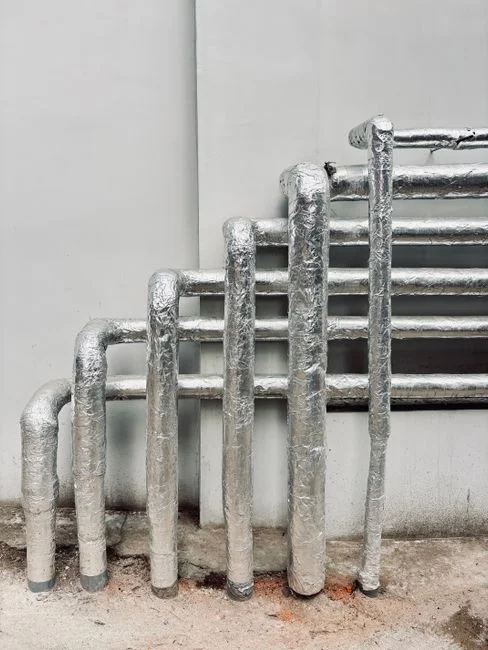
The pretreatment train that performs on the North Slope is a four-stage sequence — screening, equalization, DAF, and lamella — with an optional fifth stage (MBR or RO) depending on the discharge path. Each stage has a specific chemistry or hydraulic job, and each one has an arctic-specific caveat that decides the equipment spec.
Stage 1 — Coarse screening. A rotary mechanical bar screen with stainless rake teeth, continuous-duty drive, and heated enclosure removes rags, ice chunks, gravel, and mill debris that would otherwise damage downstream pumps, plug DAF nozzles, and wreck lamella plates. Specify 6 mm bar spacing for the front-end and a 2–3 mm fine screen ahead of the DAF on high-solids streams.
Stage 2 — Flow and load equalization. A covered or buried equalization tank with mechanical mixers, sized for 8–24 hours of retention, dampens slug loads from mine dewatering, mill cleaning cycles, and vehicle/rig wash. In sub-zero climates, the EQ tank must be heated, insulated, or buried below the permafrost active layer; an uncovered steel tank in January will freeze solid within 72 hours of downtime.
Stage 3 — DAF for oils, greases, and suspended solids. A dissolved air flotation system operating in the 4–300 m³/h range uses 30–80 µm micro-bubbles to lift free oil, emulsified FOG, and colloids that gravity settling cannot remove in cold, high-viscosity arctic wastewater. DAF outperforms a primary clarifier on the North Slope because hydraulic residence time is 15–30 minutes versus 2–4 hours for settling, and microbubble flotation is far less sensitive to viscosity at 1–5 °C. Detailed sizing for a copper/zinc concentrator feed stream is covered in the DF sizing for copper concentrator water guide.
Stage 4 — Lamella clarification for fine solids and metal hydroxides. A lamella clarifier using 60° inclined plates at 20–40 m/h surface loading rate polishes the DAF effluent and drops precipitated metal hydroxides (Fe, Al, Cu, Zn) to the bottom sludge hopper. Lamella designs cut coagulant consumption by ~30% relative to conventional clarifiers because the inclined plates shorten the settling path and improve floc capture.
Stage 5 (optional) — MBR or RO polishing. For surface or land-application discharge, an MBR membrane bioreactor with sub-1 µm filtration delivers effluent TSS below 5 mg/L in roughly 60% of the footprint of a conventional activated-sludge + clarifier train. For water reuse or ZLD prep, RO at 75–95% recovery removes the dissolved metals (Cu, Zn, Ni, sulfate) that lamella cannot touch. The RO sizing for copper concentrator water guide gives the 2026 design math.
| Stage | Unit operation | Design parameter | Arctic caveat |
|---|---|---|---|
| 1 | Coarse screening | 6 mm bar spacing; 2–3 mm fine ahead of DAF | Heated enclosure; stainless rake teeth |
| 2 | Equalization | 8–24 h HRT, mechanical mixing | Buried below active layer or insulated/heat-traced |
| 3 | DAF | 15–30 min HRT; 4–300 m³/h range | Enclosed skid; glycol heat trace on saturator |
| 4 | Lamella clarifier | 20–40 m/h SLR; 60° plates | Covered tank; sludge line heat-traced |
| 5 (opt.) | MBR or RO | MBR <1 µm; RO 75–95% recovery | Insulated membrane housing; cold-rated pumps |
Process-Flow Diagram and Parameter Targets for 2026
A working influent/effluent table is the first thing most engineers ask for. The numbers below are typical 2026 design targets for a North Slope zinc/lead/silver concentrator with vehicle wash and ancillary metal-finishing flows, drawn from site characterization work in sub-Arctic operations (HydropureWater field data, 2026).
| Parameter | Influent (mine dewatering) | Influent (rig/vehicle wash) | Target effluent (Alaska DEC site-specific) |
|---|---|---|---|
| TSS | 200–1,500 mg/L | 500–5,000 mg/L | ≤30 mg/L monthly avg |
| Total recoverable metals | 50–500 mg/L | 10–50 mg/L | Per 40 CFR 433 daily max; state WQBEL may be tighter |
| Oil & grease | 50–200 mg/L | 200–2,000 mg/L | ≤10–15 mg/L (typical DEC site cap) |
| pH | 4–9 | 6–9 | 6.0–9.0 |
| Sulfate | 500–3,000 mg/L | <100 mg/L | Site-specific; drives RO/ZLD decision |
Chemical dosing is PLC-controlled on a skid: coagulant (ferric chloride at 30–80 mg/L or alum at 50–150 mg/L) is injected ahead of the DAF for FOG and colloid destabilization, and anionic polyacrylamide (PAM, 1–5 mg/L) is injected as flocculation aid ahead of the lamella. An automated chemical dosing system delivered factory-tested and pre-wired is preferred for arctic sites because it minimizes field-commissioning time during the short construction season.
Sludge from the DAF float and the lamella underflow is thickened and dewatered with a plate and frame filter press (1–500 m² filtration area) to a 35–45% dry-solids cake. Cake volume drives the haul cost, and on the North Slope that cost is dominated by the barge-tug or ice-road cycle — a 50% reduction in cake mass pays for the press inside the first year of operation.
Arctic Engineering Constraints and How Designs Adapt
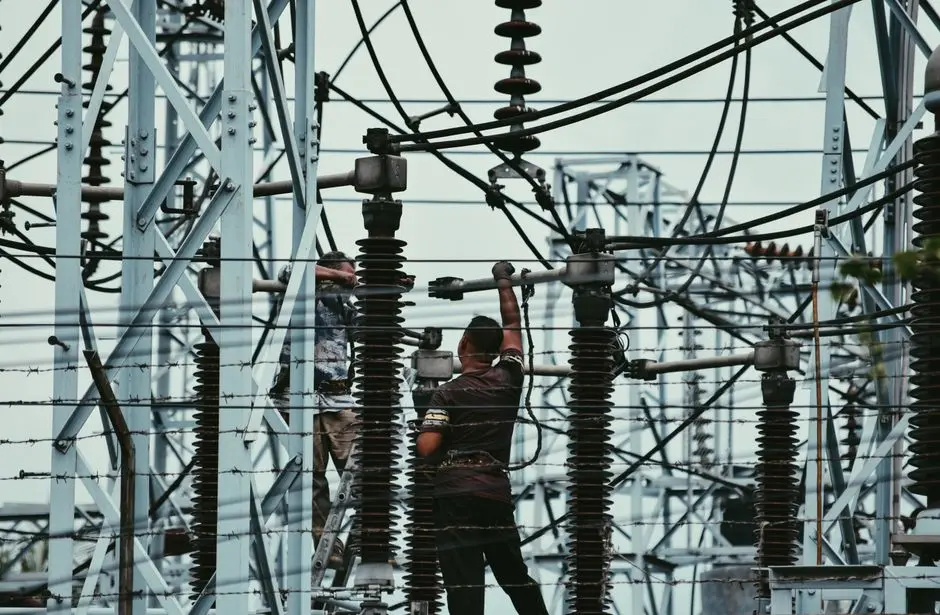
Equipment that works in Texas or Nevada will not survive a North Slope winter without redesign. Four constraints drive the equipment list.
Permafrost. Any buried equipment must be designed for frost heave. The active layer on the coastal plain is roughly 0.5–1.0 m deep; thaw-sensitive soils can heave 10–30 cm seasonally. Vacuum-sanitized, heated DAF enclosures and skid-mounted above-grade packages are standard — an above-grade integrated sewage treatment skid is the typical reference design for camp and small-mine installations.
Freeze protection. All piping, valves, and chemical tanks need heat tracing, insulation, or burial below the frost line. Instruments should be rated to −40 °C, or to whatever the local design ambient is, when mounted inside heated enclosures. DAF saturators, polymer feed lines, and chemical day tanks are the most common freeze points.
Power and staff. Fully automated PLC controls with remote telemetry (cellular or satellite) are standard because skilled operators are scarce on the Slope. Specify equipment that can run with no on-site operator or with a single operator covering 8–12 hours of the day; alarms route to a remote on-call engineer.
Logistics. Containerized or skid-mounted systems that arrive by barge during the open-water window or by ice road in winter are strongly preferred over field-erected concrete basins. Concrete requires heated forming, curing blankets, and quality control that are impractical during the dark cold months.
Decision Framework: When to Pretreat, When to ZLD
The pretreatment-to-sewer path makes sense when three conditions are all true: (1) a municipal or camp POTW exists within a reasonable haul distance for the sludge cake, (2) Alaska DEC site-specific effluent limits can be met with biological/MBR polishing downstream of the four-stage train, and (3) the receiving POTW is willing to accept the SIU load. The total flow and load to the POTW stays under the 25,000 gpd SIU threshold, and 40 CFR 436/433 daily-maximum values are the binding limits.
ZLD makes sense when no POTW is accessible, when the concentrate stream carries high dissolved salts (sulfate >2,000 mg/L or TDS >5,000 mg/L) that block land application, or when the mine is so remote that sludge haul costs exceed the OPEX of an evaporator. 2026 designs use RO at 75–95% recovery feeding a mechanical-vapor-recompression (MVR) evaporator and crystallizer; the ZLD sizing for copper concentrator water guide gives the 2026 design math.
2026 cost band. A 50 m³/h DAF + lamella + MBR pretreatment package typically falls in the $400K–$1.2M CAPEX range, with OPEX driven by chemical cost and sludge-haul distance. ZLD adds 2–4× that figure depending on evaporator selection (MVR versus thermal) and the concentrate destination. For a 200 m³/h concentrator water stream, 2026 CAPEX for a full DAF + RO + evaporator/crystallizer ZLD system typically lands in the $6M–$15M range, with the OPEX dominated by evaporator energy at 25–40 kWh/m³ of distillate.
Frequently Asked Questions
What federal and Alaska rules apply to a North Slope mining wastewater discharge?
Federal: 40 CFR Part 403 (general pretreatment), 40 CFR Part 436 (Ore Mining and Dressing), and 40 CFR Part 433 (Metal Finishing). Alaska: 18 AAC 72 (Wastewater Disposal) and 18 AAC 83 (Domestic Wastewater), administered by Alaska DEC. Because most North Slope mines have no off-site POTW, the federal categorical limits are enforced through a state disposal permit rather than a POTW SIU agreement.
What is the standard four-stage pretreatment train for arctic mining wastewater?
Screening (rotary mechanical bar screen), equalization (covered/buried tank, 8–24 h HRT), DAF for FOG and suspended solids, and lamella clarification for fine metals and TSS. An MBR or RO polishing stage is added depending on whether the discharge path is land application, surface discharge, or ZLD.
How is a DAF sized for cold, high-viscosity arctic wastewater?
DAF is selected over gravity settling because hydraulic residence time is 15–30 minutes versus 2–4 hours for clarifiers, and microbubble flotation is far less viscosity-sensitive at 1–5 °C. Typical sizing is 4–300 m³/h per unit; refer to the dissolved air flotation system product spec and the DAF sizing for copper concentrator water guide for the 2026 design math.
What are the 40 CFR Part 433 daily-maximum and monthly-average metal limits?
For the copper subcategory, total copper is capped at 3.38 mg/L daily max and 2.07 mg/L monthly avg; for the zinc subcategory, total zinc is capped at 2.61 mg/L daily max and 1.48 mg/L monthly avg. Nickel subcategory limits follow the same daily-max / monthly-avg structure. Alaska DEC site-specific WQBELs are often stricter.
What is the 2026 cost band for a North Slope ZLD system?
A 50 m³/h DAF + lamella + MBR pretreatment package typically falls in the $400K–$1.2M CAPEX range. A full ZLD system (DAF + RO at 75–95% recovery + MVR evaporator/crystallizer) at 200 m³/h typically lands in the $6M–$15M CAPEX range, with OPEX dominated by evaporator energy at 25–40 kWh/m³. Sludge and concentrate disposal OPEX scales with the haul distance to the barge or ice-road point.
Related Equipment
- MBR membrane bioreactor — specifications, capacity range, and technical data