Why Paint Booth Curtain Water Breaks Conventional Biotreatment
Paint booth curtain water is a hostile feed for any biological system: 70–90% water by volume, with intermittent spikes of overspray solids at 50–500 mg/L TSS, free isocyanates (HDI, MDI), styrene, glycol ethers, and pigmented resins that arrive in slugs tied to booth cycle times. A conventional activated-sludge (AS) clarifier cannot hold this feed because the solvent spikes disperse the floc, the pigments pass through the clarifier as pin floc, and the slow-growing organisms that would metabolize aromatic solvents wash out at typical SRTs of 5–15 days. The result is inconsistent effluent, NPDES excursions, and a clarifier that foams over within hours of a color change.
A membrane bioreactor (MBR) integrates activated sludge with membrane filtration, removing the need for a separate clarifier and retaining all biomass inside the aeration tank. Per Oklahoma DEQ Guidance WQD-002 (2017), MBR effluent quality equals the combination of conventional activated sludge, secondary clarification, and microfiltration — that is the regulatory basis for either direct surface discharge or non-potable reuse. The ScienceDirect 2021 review on MBRs (Krzeminski et al., Case Studies in Chemical and Environmental Engineering) frames the same point operationally: the membrane's role is to decouple solids retention from hydraulic retention, which is exactly what a solvent-shocked clarifier cannot do.
This is the article's working thesis: for paint booth curtain water in 2026, the MBR configuration is not a vendor preference — it is the minimum technology that can absorb the feed. The configuration choice (flat-sheet vs hollow-fiber vs external) is downstream of a non-negotiable upstream train that strips oil, pigment, and overspray solids before the membrane tank. A full walkthrough of that pretreatment is in the paint booth curtain water pretreatment before MBR process guide.
Three MBR Configuration Options for Paint-Line Feed
Three MBR configurations are commercially available for paint-line feeds, and they map directly to footprint, retrofit constraints, and fouling tolerance.
Submerged flat-sheet PVDF (DF series, 0.1 μm pore) is the dominant 2026 choice for paint booth water. The rigid PVDF panels mount in cassettes inside the aeration tank, and an integrated coarse-bubble aeration box beneath each module scours the membrane face continuously, suppressing cake formation. Each panel is individually replaceable, which matters when pigment or overspray carryover eventually blinds one module. Flat-sheet geometry tolerates the high MLSS (8,000–12,000 mg/L) needed to keep solvent-degrading biomass in the system, and the open channel between panels does not trap hair or lint the way hollow-fiber bundles do. The pore size sits at the upper end of the microfiltration band defined in Oklahoma DEQ WQD-002 (2017) as 0.1–0.4 μm nominal, which is sufficient to retain all biomass and most pigment aggregates. DF series PVDF flat-sheet MBR modules are typically specified at 32–135 m³/day per module depending on panel count and feed strength.
Submerged hollow-fiber (PVDF, 0.03–0.4 μm) offers higher packing density — more membrane area per cubic meter of tank — but the bundled fiber geometry is prone to sludging when feed TSS is high. Paint overspray carryover is exactly the kind of feed that packs between fibers and causes irreversible fouling within weeks. Hollow-fiber is a reasonable choice for lightly loaded rinsing water, not for raw curtain water with 50–500 mg/L TSS spikes.
External (sidestream) cross-flow MBR uses tubular or multitube membranes in a separate recirculation loop, with high crossflow velocity to keep the membrane surface scoured. Energy demand is 5–10× a submerged system (typically 3–8 kWh/m³ for the membrane loop alone), which makes it uneconomical for paint lines unless the waste is unusually abrasive — for example, a shot-blast pre-coat line. For paint booth curtain water, external MBR is legacy equipment.
For retrofit paint shops with an existing aeration tank, both submerged flat-sheet and submerged hollow-fiber can be dropped into the existing volume; external systems require a separate skid and recirculation pumps, which is a meaningful footprint penalty. A packaged integrated MBR wastewater treatment system with flat-sheet modules is the lowest-risk path for a 2026 retrofit.
| Configuration | Pore size (μm) | Typical MLSS tolerance (mg/L) | Net flux on paint feed (LMH) | Specific energy (kWh/m³) | Best fit for paint booth curtain water |
|---|---|---|---|---|---|
| Submerged flat-sheet PVDF (DF series) | 0.1 | 8,000–12,000 | 12–20 | ~0.5 | Primary recommendation |
| Submerged hollow-fiber PVDF | 0.03–0.4 | 6,000–10,000 | 10–18 | ~0.6 | Lightly loaded rinsing water only |
| External cross-flow tubular | 0.1–0.4 | 8,000–15,000 | 20–40 | 3–8 | Abrasive feeds, not standard paint |
Operating Envelope: MLSS, SRT, Flux, and TMP for Paint Feed
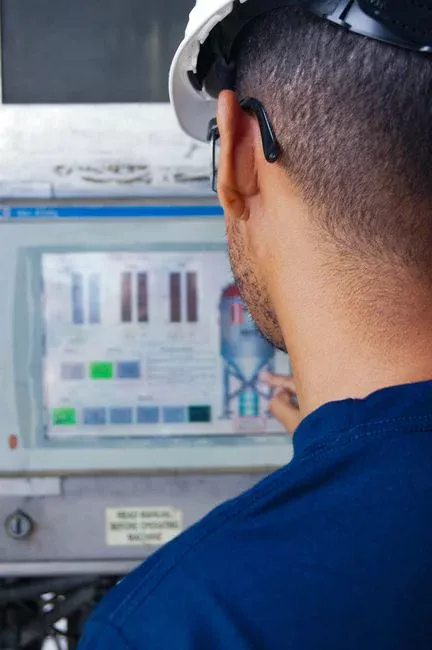
The numbers below are the 2026 working envelope for a submerged flat-sheet MBR on automotive paint booth curtain water. They are tighter than municipal MBR envelopes because the feed is more concentrated and more variable.
MLSS 8,000–12,000 mg/L — versus 2,000–4,000 mg/L in conventional AS. High MLSS is what allows the biomass to absorb a solvent slug without washout: there is enough active organism mass that a spike of 2,000 mg/L COD does not collapse the food-to-microbe ratio. Above ~12,000 mg/L, oxygen transfer efficiency drops and viscosity-related fouling accelerates.
SRT 30–60 days — long enough to retain the slow-growing bacteria (typical μmax 0.2–0.4 d⁻¹) that metabolize isocyanates, styrene, and aromatic solvents. Conventional AS at SRT 5–15 days washes these organisms out and loses the biodegradation pathway entirely.
F/M ratio 0.05–0.15 kg COD/kg MLSS·d — held at the low end because influent COD swings 500–5,000 mg/L through a shift. Equalization upstream is what makes this ratio achievable; without it, the F/M excursions kill biomass activity.
Permeate flux 12–25 LMH for submerged flat-sheet on paint feed, lower than the 15–30 LMH achievable on settled municipal feed. Flux derates as transmembrane pressure (TMP) builds through a run, so the operating setpoint is normally 12–20 LMH with peak transients up to 25 LMH during the first hours after a CIP. TMP typically ramps from 0.05–0.15 bar (clean) to 0.3–0.5 bar (CIP trigger) over a 30–60 day cycle on paint feed.
Aeration demand: per MDPI 2025 (Membranes 16(5):181), total MBR energy is 0.4–1.5 kWh/m³, with submerged flat-sheet at the low end (~0.5 kWh/m³) because the integrated coarse-bubble scouring doubles as process aeration. External cross-flow sits at the high end of that range because of the recirculation pumps.
Relaxation and CIP: a typical cycle is 8–12 minutes permeate followed by 7–14 minutes relaxation (no suction, continued scour air). CIP is triggered by either a TMP ceiling (0.4–0.5 bar) or a permeability decline of 30% from clean baseline, whichever comes first — usually every 30–90 days on paint feed, depending on upstream TSS performance.
| Parameter | Flat-sheet MBR on paint feed (2026 envelope) | Notes |
|---|---|---|
| MLSS | 8,000–12,000 mg/L | Higher than CAS; limited by O₂ transfer |
| SRT | 30–60 days | Retains slow-growing solvent degraders |
| F/M ratio | 0.05–0.15 kg COD/kg MLSS·d | Driven by upstream EQ |
| HRT | 18–36 h | Includes anoxic + aerobic zones |
| DO (aerobic zone) | 1.5–2.5 mg/L | Lower bound limits filament growth |
| Net permeate flux | 12–25 LMH (setpoint 12–20) | Derates with TMP ramp |
| TMP (clean → CIP) | 0.05–0.15 → 0.3–0.5 bar | 0.4 bar is typical CIP trigger |
| Relaxation cycle | 7–14 min off / 8–12 min on | Coarse-bubble air continuous |
| CIP interval | 30–90 days | Feed-TSS dependent |
| Specific energy | 0.4–1.5 kWh/m³ (flat-sheet ~0.5) | Per MDPI 2025 |
Upstream Train: What MBR Cannot Survive Without
The most common MBR specification mistake on paint lines is treating the membrane tank as the treatment, when in practice the upstream train determines whether the membranes survive a 30-day CIP cycle or foul in three. The minimum train, in order, is:
Bar screen (1–3 mm opening) at headworks to strip masking tape, rags, and overspray lint that would otherwise blind the membrane cassettes. A GX series rotary mechanical bar screen at 1–2 mm aperture is the standard for automotive paint lines.
Coalescer (corrugated plate or fiber-bed) to drop free oil and unpigmented overspray to <10 mg/L. Raw paint booth water can carry 200–1,000 mg/L of free oil and solvent depending on booth design (wet vs dry, water curtain vs downdraft), and this load must be removed before any biological stage.
DAF with coagulant and polymer dosing to remove emulsified paint solids, pigments, and the remaining oil to <50 mg/L TSS. A dissolved air flotation system with 5–10 g/m³ cationic polymer and 50–150 g/m³ coagulant (typically PAC or ferric chloride) typically achieves 80–95% TSS removal on paint overspray water. Design and polymer selection logic for fibrous industrial feeds is covered in the DAF design and polymer selection for fibrous industrial feed reference, and metalworking-feed design parallels are in the die-cast aluminum wash water pretreatment before DAF guide.
Equalization tank, 12–24 h retention, with mixing and aeration to dampen COD swings. Without EQ, a color-change slug of 5,000 mg/L COD hits the membrane tank and collapses the F/M ratio in a single shift.
Chemical dosing: pH adjustment to 6.5–8.0 before the bioreactor, antifoam if styrene or acrylate feed is high (these feeds strip across the aeration basin and carry over into the membrane tank), and nitrogen/phosphorus supplementation to keep C:N:P near 100:5:1 for the biological stage. A PLC-controlled chemical dosing system for coagulant and pH adjustment is the standard 2026 hardware, with flow-paced setpoints tied to the EQ tank level.
Reuse vs Discharge: Permeate Quality Targets
For curtain make-up or rinsing reuse, the MBR permeate target is COD <50 mg/L, TSS <1 mg/L (effectively zero given <1 μm filtration), turbidity <1 NTU, and free oil <0.5 mg/L. If the water is destined for boiler feed or a closer-loop rinse, an RO polish is normally added — see the reverse osmosis polishing stage for typical rejection rates. RO feedwater should meet SDI <3, which flat-sheet MBR permeate achieves consistently.
For compliant discharge, paint-line MBR permeate typically meets indirect discharge limits to a municipal sewer (COD <300–500 mg/L, TSS <30–50 mg/L) without further treatment. Direct surface discharge may require additional polishing for trace solvents, depending on the permit. Per MDPI 2025 (Membranes 16(5):181), MBR permeate meets standards for direct non-potable reuse and surface discharge in most jurisdictions.
Energy cost is dominated by aeration. At $0.08–0.12/kWh industrial tariff, the membrane + aeration energy alone is $0.03–0.18/m³, and pretreatment plus sludge handling roughly doubles that. Waste activated sludge from a paint-feed MBR runs 0.3–0.5 kg DS per m³ treated and dewaters well on a plate-and-frame filter press at 20–30% DS cake without the high polymer demand of a belt press.
Frequently Asked Questions
What MBR configuration treats paint booth curtain water for reuse or discharge in 2026?
A submerged PVDF flat-sheet MBR with 0.1 μm pore membranes, operated at MLSS 8,000–12,000 mg/L, SRT 30–60 days, and net flux 12–20 LMH, paired with a coalescer + DAF + equalization upstream train. Per Oklahoma DEQ WQD-002 (2017), this configuration produces effluent equal to activated sludge plus secondary clarification plus microfiltration.
Why can't conventional activated sludge treat paint booth curtain water?
Solvent spikes disperse the floc, pigments pass through the clarifier as pin floc, and the SRT of 5–15 days is too short to retain the slow-growing bacteria that biodegrade isocyanates and aromatic solvents. MBR decouples solids retention from hydraulic retention, which is the missing piece.
What is the typical flux and TMP for a flat-sheet MBR on paint feed?
Net permeate flux 12–20 LMH at the operating setpoint, with peaks of 25 LMH immediately after CIP. TMP ramps from 0.05–0.15 bar (clean) to 0.3–0.5 bar (CIP trigger) over 30–60 days. This is lower than the 15–30 LMH typical of municipal MBR feed because the paint feed carries more colloidal and emulsified load.
What upstream pretreatment is mandatory before the MBR on a paint line?
Bar screen (1–3 mm), oil coalescer to <10 mg/L, DAF with coagulant/polymer to <50 mg/L TSS, equalization (12–24 h), and pH/Nutrient dosing. Skipping any of these stages typically results in membrane fouling within 7–14 days. Full process flow is in the paint booth curtain water pretreatment before MBR process guide.
How much energy does a paint-line MBR use?
Per MDPI 2025 (Membranes 16(5):181), total MBR energy is 0.4–1.5 kWh/m³. A submerged flat-sheet MBR sits near 0.5 kWh/m³ because the coarse-bubble scour air doubles as process aeration; an external cross-flow system is at the high end of the range.
How often does the MBR need CIP on paint feed?
Typically every 30–90 days, triggered by a TMP ceiling of 0.4–0.5 bar or a 30% decline in permeability from the clean baseline. The CIP interval is the single best indicator that the upstream train is correctly sized — for a step-by-step protocol, see the MBR maintenance guide for industrial systems.
Related Equipment
- integrated MBR wastewater treatment system — specifications, capacity range, and technical data