Why Paint Booth Curtain Water Is One of the Hardest Feeds for an MBR
Paint booth curtain water is the recirculating scrub water in dry-filter, water-wash, and downdraft booths that captures overspray, volatile solvents, and air contaminants before they reach the plant stack. When that stream is sent untreated to a membrane bioreactor, the MBR membranes blind in weeks — a paint-shop manager I worked with watched his 0.1 μm PVDF modules lose flux after just 6 weeks because the spec omitted upstream guards. The curtain water hit the membranes directly, and replacement membranes cost more than the pretreatment train would have.
Three threats make this feed uniquely destructive. First, sticky, non-biodegradable paint resin and pigment physically coat PVDF membrane surfaces with a film that chemical cleaning only partially removes — every recovery cycle costs irreversible flux. Second, organic solvents common in coating lines (IPA, butyl cellosolve, xylene in solventborne booths) disrupt biomass and swell some membrane polymers, so even low background solvent load degrades biology and membrane integrity simultaneously. Third, sharp pigment particles and metal pretreatment grit carried in with the work pieces scratch the membrane surface, creating permanent defects rather than reversible fouling.
The 2026 Nature study on curtain-type dynamic membrane upcycling of end-of-life MBR modules notes that over 90% of commercial MBR modules are hollow-fiber, and the porous support behind the skin layer has a pore size of roughly 20 μm — anything that bypasses pretreatment and reaches the module lodges in that support structure, not just on the surface (Nature, 2026-01). The 2026 MDPI review of MBR plants worldwide puts deployment above 5,000 plants, and identifies aeration for biological oxygen transfer and membrane scouring as the dominant lifecycle cost driver (MDPI Membranes, 2026-05). Pretreatment is what keeps that aeration cost from blowing up; skipping it does not save money, it just shifts spend from civil works to membrane replacement and energy.
Typical Paint Booth Curtain Water Characteristics You Must Design For
Curtain water is not a single wastewater — it is a moving target. The table below captures the range you must design for across a typical automotive or appliance paint shop. Waterborne lines run cooler and cleaner; solventborne lines spike COD, oil and grease, and solvent load by a factor of three or more.
| Parameter | Waterborne paint | Solventborne paint | Design note |
|---|---|---|---|
| COD | 1,000–5,000 mg/L | 3,000–15,000 mg/L | MBR feed target ≤ 1,000 mg/L after equalization |
| BOD₅ | 200–1,000 mg/L | 200–2,000 mg/L | BOD₅/COD often < 0.2 waterborne, < 0.1 solventborne |
| TSS | 200–2,000 mg/L | 500–2,000 mg/L | Concentrate bleed can spike TSS > 5,000 mg/L |
| Oil & grease | 50–300 mg/L | 100–500 mg/L | MBR feed target ≤ 50 mg/L |
| pH | 6.5–9.0 | 6.5–9.5 | Adjust to 6.5–8.5 before MBR |
| Temperature | 25–40 °C | 25–45 °C | PVDF membranes rated to 40–45 °C sustained |
| TDS | 500–2,000 mg/L | 500–3,000 mg/L | Driven by detackifier and rinse-water bleed-in |
| Color | Opaque, white–grey | Opaque, tinted | Indicator of pigment loading |
| Heavy metals | Trace (Zn, Pb from pretreatment) | Trace | Keep cyanide, Cr(VI), Zn rinses on a separate ETP line |
The key ratio the MBR cannot fix is BOD₅/COD. At 0.2 or below, the biology is doing almost nothing — the MBR is essentially a membrane filter with aeration for scouring, not a true biotreatment stage. Pretreatment must do the removal work upstream, or you pay for it in membrane area and CIP chemical.
A single grab sample will mislead you. Curtain water is slug-loaded as booths start and stop, and concentrate bleed from the booth recirculation loop can spike TSS above 5,000 mg/L for 15–30 minutes at a time. Paint shops must also keep cyanide, hexavalent chromium, and zinc-bearing pretreatment rinses on a separate ETP line — those are not MBR feed under any reasonable design.
The Four-Guard Pretreatment Train Before the MBR
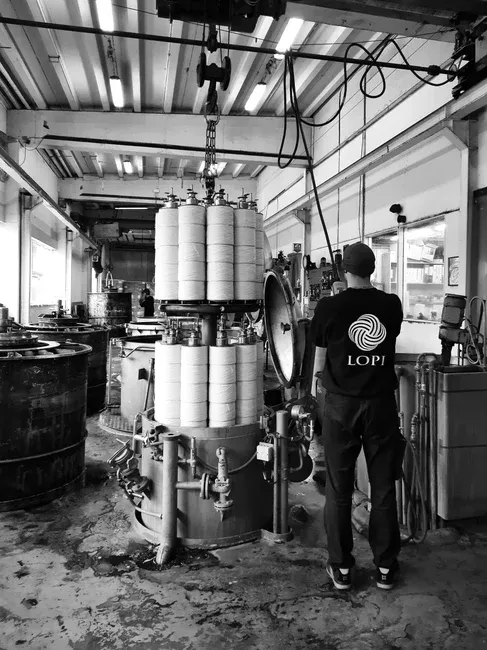
The four guards must run in order, and each one has a target the next guard relies on. Skipping any of them shifts the fouling load downstream onto the most expensive equipment in the train.
| Guard | Unit operation | Key equipment | Target leaving this guard |
|---|---|---|---|
| 1 — Coarse screening | Rotary bar screen or perforated drum, 1–3 mm opening | Rotary bar screen for paint booth headworks | Remove overspray rag, masking paper, lint; protect downstream pumps and nozzles |
| 2 — Oil and floatable paint-solids removal | Dissolved air flotation with coagulant (PAC or polyaluminum chloride) dosed at 50–200 mg/L | HydropureWater DAF system for paint booth curtain water | Remove 80–95% of free oil and 60–90% of TSS; oil & grease ≤ 100 mg/L |
| 3 — Coagulation, flocculation, and break-up tank | Stirred reactor with pH adjust to 7.0–8.5, cationic polyacrylamide 1–5 mg/L, 20–40 min residence | Automatic coagulant and polymer dosing skid | Destabilize emulsified resin and capture fine pigment; second DAF pass if needed |
| 4 — Flow and load equalization | 12–24 h equalization basin with mixing and aeration; cooling if temperature > 38 °C | EQ tank, aerators, plate heat exchanger | COD ≤ 1,000 mg/L, oil & grease ≤ 50 mg/L, SS ≤ 100 mg/L, pH 6.5–8.5, T ≤ 38 °C |
Guard 1 protects the rest of the train. Overspray rag, masking paper, and lint will clog DAF nozzles and pump impellers within days if a 1–3 mm screen is not in front. Guard 2 is the workhorse — DAF at 4–25 m³/h per m² hydraulic loading with coagulant ahead of the cell handles 80–95% of free oil and 60–90% of TSS, which is the bulk of the load. Guard 3 is where most paint-shop pretreatment trains fail. Without a stirred break-up tank at pH 7.0–8.5 with cationic polyacrylamide dosed at 1–5 mg/L and a 20–40 minute residence, emulsified resin passes straight through the DAF and gels on the membrane in the first week of operation. Guard 4 smooths the slug loads — the 12–24 hour equalization basin is what lets you guarantee the MBR feed spec of COD ≤ 1,000 mg/L and oil & grease ≤ 50 mg/L even when a booth starts up after a weekend shutdown. Cooling may be required; a similar sequence applied to slaughterhouse streams is documented in this slaughterhouse DAF pretreatment guide.
How to Match the Pretreatment Train to Your Paint Chemistry
Not all paint lines need the same train. Waterborne single-stage is the easiest feed; solventborne and 2K systems need additional steps. The table below maps paint chemistry to the specific sub-sequence to specify.
| Paint chemistry | Guard 1 screening | Guard 2 DAF | Guard 3 coag-floc-break | Additional step | Guard 4 equalization |
|---|---|---|---|---|---|
| Waterborne single-stage | 1–3 mm rotary screen | Standard DAF, PAC 50–150 mg/L | pH 7.0–8.5, CPAM 1–3 mg/L, 20–30 min | — | 12–18 h EQ + cooling if needed |
| Waterborne 2K (amine hardener) | 1–3 mm rotary screen | Standard DAF, PAC 50–150 mg/L | Add amine break: raise pH > 10, hold 30 min, then neutralize | Amine break reactor | 18–24 h EQ + cooling |
| Solventborne (xylene, butyl cellosolve) | 1–3 mm rotary screen | DAF with PAC 100–200 mg/L | pH 7.0–8.5, CPAM 2–5 mg/L, 30–40 min | Activated carbon or air stripping if solvent load > 200 mg/L | 18–24 h EQ with aeration, cooling mandatory |
| Powder-coat overspray | 0.5–1 mm fine screen | First DAF pass | Coag-floc with extended break | Second DAF pass for metallic fines | 12–18 h EQ, lower organic load but high TSS |
For solventborne lines, the aqueous-phase solvent load must stay below roughly 200 mg/L going into biological treatment, or biomass performance collapses. Activated carbon polishers or air strippers handle this; the DAF and equalization alone will not. For 2K waterborne systems, the amine hardener forms a stable emulsion that requires an intentional high-pH break — raise pH above 10, hold for 30 minutes, then neutralize before the DAF. Skipping the amine break is the second most common cause of chronic MBR fouling after omitting the break-up tank entirely.
High-temperature curtain water from paint curing ovens exhausting into the booth water can exceed 45 °C in summer. Most PVDF membranes are rated to 40–45 °C sustained, and sustained operation at the upper limit accelerates aging. A plate heat exchanger on the EQ basin outlet is cheaper than a membrane replacement. The Oklahoma DEQ MBR Guidance puts typical MLSS at 8,000–12,000 mg/L with SRT of 20–40 days (Oklahoma DEQ, 2017) — a slug of paint resin can drop viable biomass faster than the recovery time the SRT allows, which is why load smoothing in Guard 4 is non-negotiable. The DAF mechanism in fiber recovery, covered in this DAF mechanism in fiber recovery guide, applies the same air-to-solid attachment principle to paint floc.
Operating the MBR After Pretreatment: What Changes and What to Watch
With the four-guard train in place, the MBR behaves like a stable polishing step rather than a fouling battleground. MLSS settles into the 8,000–12,000 mg/L range per the Oklahoma DEQ MBR Guidance, and SRT holds at 20–40 days without operator intervention (Oklahoma DEQ, 2017). The 2026 MDPI review confirms that aeration for scouring is the dominant lifecycle cost — pretreatment lets you run that aeration at design rates rather than compensating for fouling with over-sized blowers (MDPI Membranes, 2026-05). Specification of the upstream HydropureWater MBR system with PVDF flat-sheet membranes should follow the MBR manufacturer selection guide once the feed is proven.
Transmembrane pressure (TMP) is the early-warning instrument. On a constant-flux MBR, a TMP rise greater than 0.05 bar per week signals incomplete pretreatment — not membrane aging. Recovery cleaning frequency should drop from weekly on an unprotected MBR to quarterly or less once the four guards hit their targets. Anything worse than that means one of the guards is undersized or a chemistry change has shifted the influent character.
Frequently Asked Questions
What screening size is required before a paint-shop MBR?
A 1–3 mm rotary bar screen or perforated drum is the minimum; powder-coat lines with metallic fines need 0.5–1 mm to protect DAF nozzles and pump seals.
Is DAF or an API oil-water separator better for paint curtain water?
DAF, with hydraulic loading of 4–25 m³/h per m² and coagulant dosed at 50–200 mg/L, removes 80–95% of free oil and 60–90% of TSS. An API separator will not remove emulsified paint solids or fine pigment — it only handles free oil that rises by gravity.
Can an MBR run on paint curtain water without equalization?
No. Without a 12–24 hour equalization basin, slug loads spike TSS above 5,000 mg/L during booth startups and concentrate bleed events, and the resulting flux shock on the membrane is not recoverable in the field.
What solvent load kills MBR biomass?
Aqueous-phase solvent load above roughly 200 mg/L going into biological treatment disrupts biomass and causes the MLSS to lose viability faster than the 20–40 day SRT can recover. Solventborne lines need activated carbon or air stripping ahead of the MBR.