Why Paper Mill White Water Is Both a Loss and a Liability
White water is the dilute fiber-and-fines suspension, typically 0.05–1.0% consistency, that drains through the paper machine wire and is recirculated in a closed loop back to the headbox, the stock prep chest, and the machine showers. A modern 1,000 tonne/day mill circulates 20,000–60,000 m³/day of this stream, so any solids lost to the sewer represent a real raw-material write-off, and any fresh water added to compensate for lost recirculation represents an effluent-treatment cost on the back end. The mill is effectively paying for the same fiber and the same water twice — once at purchase and once at discharge.
White water is not clean water. It carries colloidal and dissolved solids — filler (GCC, kaolin), sizing residuals, broke fragments, starch, and dissolved organics from pulping and broke storage. A 2025-vintage process audit at a North American linerboard mill found total suspended solids in the white-water tray of 800–2,400 mg/L, with 30–50% of that mass below 100 µm in size (HydropureWater field data, 2025-11). That fines fraction is the part gravity settling cannot capture economically, and it is the part that drives the choice of flotation over sedimentation. The academic anchor for the whole recovery case is straightforward: Dissolved-air flotation has been applied as a separation technique to recover suspended solids from the paper mill white water system (JAPAN TAPPI Journal, doi:10.2524/jtappij.27.8_384), and the engineering case is that any mill still sending white-water tray overflow to the sewer is paying twice for the same kilogram of furnish. For a deeper look at how DAF slots into a hybrid pretreatment train with RO and MBR downstream, see this hybrid DAF/RO/MBR system engineering and capex breakdown.
What DAF Actually Does Inside the Flotation Tank
DAF separates suspended solids from water by attaching micro-bubbles to particle surfaces so the combined bubble-particle aggregate becomes buoyant. The process flow is the same on every paper-mill DAF, regardless of manufacturer: a recycle sidestream — typically 10–30% of the flotation cell throughput — is taken from the clarified effluent, pressurized to 4–6 bar in a saturator vessel with compressed air, held long enough for the water to approach air-saturation (Henry's-law equilibrium, roughly 60–80% of theoretical saturation in a well-designed unit), and then released back into the flotation cell through needle valves or nozzle orifices. The pressure drop nucleates the dissolved air as a cloud of 10–100 µm micro-bubbles that rise through the cell.
Those micro-bubbles attach preferentially to floc surfaces and to gas nuclei already trapped inside floc pores. The resulting bubble-floc aggregate has an effective density below 1.0 g/cm³, so it rises at roughly 0.5–3 m/min through the cell and forms a floated sludge layer at the surface, which a chain-and-flight skimmer or a beach-type scraper removes. Clarified water exits from the bottom of the cell and returns to the process.
DAF differs from induced-air flotation (IAF) in bubble size and energy profile. IAF generates 0.5–2 mm bubbles by mechanical induction, which is fine for coarse oily emulsions but captures fines poorly; DAF's 10–100 µm micro-bubbles provide orders-of-magnitude more surface area per unit of air volume, and that is why DAF is the standard for white-water clarification with its sub-100 µm fines fraction. The cost of that advantage is the saturator pump and compressor energy, but on paper-mill service the recovered fiber pays for it within months. Sedimentation is the other common baseline — gravity clarifiers work for high-consistency stock above roughly 0.5%, but for the dilute, low-density fines that dominate white water, settling velocities of 0.1–1 m/h make the clarifier surface area uneconomical, which is why DAF has displaced gravity savealls in most modern mills. The core claim the rest of the article builds on is the JAPAN TAPPI finding that DAF is a proven separation technique for white-water suspended-solids recovery.
Chemistry That Makes the Bubbles Stick: Polyelectrolytes and Floc Build
Micro-bubbles do not attach reliably to raw, sub-100 µm paper fines — the surface is too hydrophilic and the particles are too small for bubble contact angle to drive attachment. That is why every paper-mill DAF on production service runs with chemical conditioning ahead of the cell, almost always a cationic polyelectrolyte. The mechanism is charge neutralization and bridging: cationic polyacrylamide (CPAM), cationic starch, or polyaluminum chloride (PAC) neutralize the anionic surface charge on fines and filler, then bridge multiple particles into flocs of 100–500 µm. Those flocs trap residual gas nuclei in their pore structure, and the rising micro-bubbles from the saturator attach at those nuclei sites. Without floc build, fines bypass the float zone and the effluent TSS climbs.
The JAPAN TAPPI article cited above — On the Application of Polyelectrolytes to White Water Treating by Dissolved-air Flotation — is the authoritative reference for flocculant selection on this duty, and mill operators should treat it as the starting point for any vendor bench trial. Operating pH on white-water DAF typically runs neutral to mildly alkaline (pH 6.5–8) because acidic conditions protonate fines and reduce cationic demand, while strongly alkaline conditions raise dissolved-COD load. Hardness and conductivity matter: high calcium (>200 mg/L as CaCO₃) can compress the electrical double layer and produce small, dense flocs with poor bubble attachment, which is why some mills add dispersant or use low-charge, high-molecular-weight CPAM to compensate. Over-dosing reverses the gain — the dose-response curve has a clear maximum, and re-stabilization of the colloid past that point drops recovery sharply. Bench jar tests with the actual white water are the only reliable way to find the operating dose; an automated automatic chemical dosing system then holds that setpoint in the face of consistency swings from broke dumps.
DAF Design Parameters and Operating Window for White-Water Service
The parameter ranges below are the typical industrial envelope vendors quote for paper-mill white-water DAF. They are framed as ranges, not single-point guarantees, because hydraulic and bubble-flux limits depend on the specific furnish, fines fraction, and the chemistry the mill is willing to run. The table consolidates the operating window a process engineer should expect to see in a vendor proposal.
| Parameter | Typical industrial range for white-water DAF | Engineering note |
|---|---|---|
| Hydraulic loading (cell surface basis) | 5–20 m/h | Higher end requires proven bubble flux; lower end is conservative for high-fines furnish. |
| Recycle ratio (saturator sidestream) | 10–30% of cell throughput | Raising recycle improves bubble coverage but increases pump and compressor energy. |
| Saturator pressure | 4–6 bar(g) | Drives dissolved-air concentration via Henry's law; 4 bar is a common economic minimum. |
| Air-to-solids ratio (A/S) | 0.02–0.10 (mass air / mass influent TSS) for white-water duty | Higher than wastewater DAF because fiber loading is high; under-sized A/S leaves float in the cell. |
| Skimmed float consistency | 3–6% dry solids | Thickened enough to feed stock prep or a dewatering device without dilution. |
| Effluent TSS reduction | Typically >90% on white water; 50–200 mg/L in clarified overflow vs. 800–2,400 mg/L feed (per 2025 mill audit) | Determined by influent consistency and flocculant performance. |
| Micro-bubble size | 10–100 µm | Set by saturator pressure and nozzle/needle-valve geometry; finer bubbles capture fines better. |
Two of those parameters deserve more attention. The recycle ratio is the single biggest operating-cost lever: pushing from 15% to 30% roughly doubles the saturator pump's energy draw but can lift effluent quality by 20–30% on a fines-heavy furnish, so it is the dial an operator turns when chase-water quality is degrading. The air-to-solids ratio (A/S) is the design parameter most often undersized — wastewater DAF datasheets quote 0.005–0.03, but white-water DAF with 1,000–2,500 mg/L TSS needs a much higher A/S to lift the float without burying the cell. A dissolved air flotation system sized for 5–20 m/h hydraulic loading with a 20% recycle is a reasonable starting point for a mill evaluating a replacement saveall.
What Happens to the Float: Fiber Recovery vs. Rejects Loss
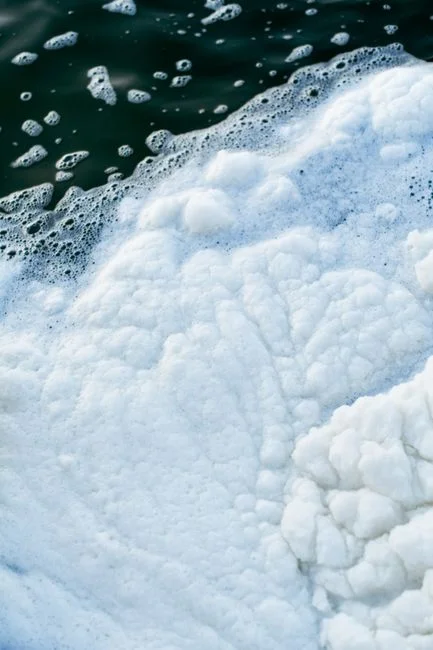
The skimmed float leaves the DAF cell at 3–6% consistency and is a fiber-rich slurry, but it is not the same stream as the clean, long-fiber furnish from the machine chest. It is a mixture of fines, filler, sizing residual, broke fragments, and any ash or coating that broke the paper-machine white-water loop. The first design decision is whether to return that float directly to stock prep or to screen and wash it first. Most mills send the bulk of the float back to the machine chest or to a blend chest, but a side stream is typically pulled as a "rejects" fraction and sent to sludge handling or to a fiber-recovery step.
That rejects stream is where the counter-intuitive academic finding lives. Per the BioResources study from NCSU (doi link), between 10% and 20% of the fibers in the dissolved air flotation rejects are also lost during subsequent handling. The lab protocol the paper documents is informative: 150 g of wet DAF rejects were diluted in 10 L of distilled water and screened through a 100-mesh sieve to recover the long-fiber fraction. That fraction was then oxidized in a TEMPO system and re-introduced to recycled handsheets. The recovered long fibers improved paper tensile and burst strength up to about 3% on a dry basis; above that, the rising negative charge on the oxidized fiber surface drove fiber-fiber repulsion and paper properties degraded.
For the mill engineer, the take-aways are specific. First, expect 10–20% of the mass in the DAF rejects to be lost to sewer or sludge even with a 100-mesh recovery step — that number is a published, repeatable figure, not a vendor claim. Second, the dose optimum for re-introduced recovered fiber is narrow; above ~3% dry basis, oxidized recovered fiber actually worsens paper properties. Third, the economic value of the recovery is still positive — every percentage point of fiber pulled back from rejects is furnish the mill does not have to purchase as virgin pulp, and at integrated mill pulp prices of $700–1,100/tonne the payback on a 100-mesh recovery screen is short. The same resource-recovery logic drives broader wastewater resource recovery market trends through 2030, of which paper-mill DAF is one of the oldest and most established segments.
Integrating DAF into a Modern Mill Water-Loop Closure Strategy
DAF does not stand alone on a paper mill — it is one unit in a water-loop closure train, and where it sits determines both capital and operating economics. The standard placement is upstream of the paper machine saveall: white-water tray overflow and the silo filtrate are combined in a balance tank, conditioned with polyelectrolyte, and fed to the DAF cell. Clarified DAF effluent — typically >90% TSS reduction — returns to the paper machine as dilution water at the fan pump or as shower water on the wire and felt. The float goes either back to the stock prep chest for fiber recovery or to a sludge dewatering device.
Compared with competing clarification technologies, DAF is the only option that captures both long fibers and fines plus filler in a single step. Drum filters recover long fibers efficiently but miss the sub-100 µm fraction that drives loop closure, and they consume a lot of fresh shower water that then has to be treated. SSD (screw-press saveall drum) and gravity clarifiers are cheaper to install but cannot meet the effluent quality a closed loop demands at the hydraulic rates a modern machine runs. The IWA Publishing study of a plywood mill water system (doi:10.2166/wst.1999.0692) is a useful parallel: dissolved air flotation with chemical precipitation was found to be a suitable treatment method for the soaking basin overflow of a plywood mill… two-thirds of the flotation treated water is led to flue gas scrubbers. The same closure logic — take a contaminated process water stream, polish it with DAF, and route the majority back into a downstream mill use — applies directly to a paper mill's white-water loop. The trend through 2026 is toward higher recycle ratios and lower fresh-water consumption, which is exactly the operating envelope that pushes older sedimentation savealls toward a DAF upgrade. For a head-to-head review of where DAF beats IAF and where it does not, the DAF vs IAF flotation comparison is a useful side read.
Frequently Asked Questions
How does DAF recover paper fibers from paper mill white water?
DAF saturates a pressurized recycle sidestream with air at 4–6 bar, then releases that pressure inside the flotation cell where 10–100 µm micro-bubbles nucleate, attach to flocculated fiber particles, and lift them to the surface as a float that is skimmed off. Clarified water is returned to the paper machine. The mechanism is documented in the JAPAN TAPPI literature as a proven separation technique for white-water suspended solids.
Why do paper-mill DAF units need polyelectrolyte dosing?
Raw sub-100 µm paper fines are too hydrophilic and too small for reliable micro-bubble attachment. Cationic polyelectrolytes such as CPAM, cationic starch, or polyaluminum chloride neutralize surface charge and bridge fines into flocs that trap gas nuclei, giving the micro-bubbles a surface to attach to. The JAPAN TAPPI article on polyelectrolyte application to white-water DAF is the authoritative reference for flocculant selection on this duty.
How much fiber is lost in DAF rejects handling?
Between 10% and 20% of the fibers in DAF rejects are also lost during subsequent handling, per the BioResources study from NCSU. The paper's lab protocol screens rejects through a 100-mesh sieve to recover the long-fiber fraction for re-introduction into recycled furnish.
Can DAF effluent be reused directly in the paper mill?
Yes. DAF typically achieves >90% TSS reduction on white water, and clarified effluent is commonly returned as dilution water at the fan pump or as shower water on the paper machine. The IWA Publishing plywood-mill case study documents two-thirds of DAF-treated water being reused in flue-gas scrubbers — the same closure logic applies to a paper mill's white-water loop.
What is the typical hydraulic loading rate for a white-water DAF?
Industrial DAF cells on white-water service are typically sized in the 5–20 m/h range on the flotation cell surface, with a 10–30% recycle ratio. The exact value depends on the fines fraction, the air-to-solids ratio, and the chemistry the mill is willing to run; vendor bench trials on the actual white water are the reliable way to pin a design number.