
Why Austin Hotels Need a Packaged MBR, Not a Conventional STP
A packaged MBR (membrane bioreactor) integrates coarse screening, equalization, anoxic and aerobic zones, and a submerged PVDF membrane cassette inside a single factory-built skid or shipping container, and that integration is exactly what an Austin hotel site demands. Travis County's water table sits within 1.5–4 m of grade in most redevelopment zones, which caps burial depth for conventional cast-in-place concrete basins and effectively rules out new drain-field construction across the Edwards Aquifer Recharge Zone (EARZ). Tight urban footprints, setback requirements, and reuse-driven effluent targets (BOD ≤20 mg/L, TSS ≤20 mg/L, turbidity often <1 NTU) leave conventional activated sludge with too little margin. MBR's <1 μm physical filtration barrier delivers that margin as standard, not as an upgrade.
Hotel wastewater is a distinct stream: BOD 250–400 mg/L, TSS 200–300 mg/L, FOG 50–100 mg/L, with surfactant pulses from laundry and chlorine/salt surges from pool backwash. Two form factors dominate hospitality flows: the WSZ underground packaged STP for sites with usable subsurface volume and lower visible profile, and skid- or containerized units built around a DF series flat-sheet MBR module for above-grade or trailer-mounted installations. A complete packaged MBR wastewater treatment system in either configuration arrives with blowers, permeate pumps, and PLC controls pre-commissioned, cutting on-site integration time from months to weeks.
Sizing the MBR for an Austin Hotel: Flow, Load, and Peaking
Reproducible sizing is what separates a defensible vendor shortlist from a guess. The workflow below lets a project manager validate any proposal against room count and occupancy data before issuing an RFP.
- Step 1 — Average daily flow. Multiply rooms × occupancy rate × 150–250 L per guest-night. Use 180 L for mid-scale Austin properties (limited-service, 80–60% occupancy) and 220 L for resort/lakefront sites with higher amenity water use.
- Step 2 — Peaking factor. Apply 2.0–2.5 to capture the morning peak from breakfast service plus guest showers. For properties over 150 rooms, run a 24-hour hydrograph and size equalization for the 2-hour peak rather than the daily average.
- Step 3 — Design flow selection. Convert average flow to design flow and select an MBR unit from the 10–2,000 m³/day catalog range. A 120-room Austin hotel typically lands at 35–60 m³/day average and 80–130 m³/day peak.
- Step 4 — Membrane area. Size using a flux of 15–25 L/m²·h for 0.1 μm PVDF flat sheet, which puts a 100 m³/day peak on roughly 200 m² of module area (one or two DF-225 cassettes).
Target an aerobic hydraulic retention time (HRT) of 6–8 hours and a solids retention time (SRT) of 20–40 days; both are standard MBR operating windows that keep mixed liquor suspended solids (MLSS) in the 8,000–12,000 mg/L range for stable nitrification. For below-grade sites, the WSZ underground packaged STP ships as a single FRP-coated steel tank with internal baffles and can be set on a gravel bed in a single excavation.
| Parameter | Value / Range | Notes |
|---|---|---|
| Design flow per guest-night | 150–250 L | 180 L mid-scale, 220 L resort |
| Peaking factor | 2.0–2.5× | Use 2.5 for >150 rooms |
| Equalization volume | 25–40% of ADF | Absorbs diurnal + pool backwash surges |
| Membrane flux (flat sheet PVDF) | 15–25 L/m²·h | 0.1 μm nominal pore |
| Aerobic HRT | 6–8 h | Standard MBR window |
| SRT | 20–40 d | Holds MLSS at 8,000–12,000 mg/L |
Austin's Regulatory Framework: TCEQ, Austin Water, and Reuse Rules
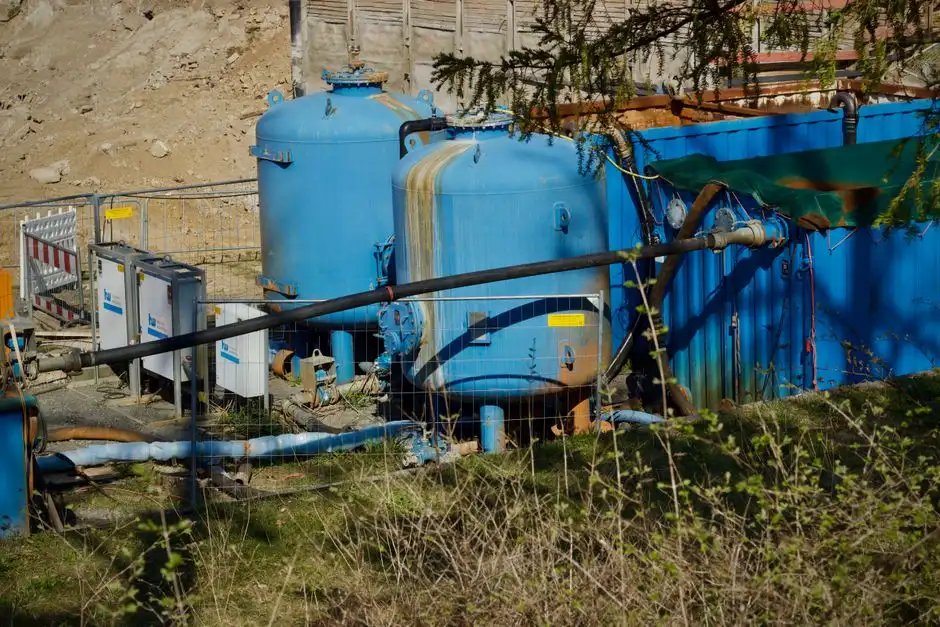
Texas compliance is the first filter on any vendor shortlist. TCEQ 30 TAC Chapter 217.171 sets secondary effluent limits of BOD ≤20 mg/L, TSS ≤20 mg/L, and E. coli ≤126 CFU/100 mL for surface discharge — a bar MBR clears comfortably. Austin Water's reclaimed water program tightens that further: Type I reuse (irrigation, toilet flush, cooling-tower makeup) demands turbidity ≤2 NTU, and MBR permeate routinely runs <1 NTU without tertiary filtration. The Edwards Aquifer Recharge Zone rules under TCEQ 30 TAC §213 prohibit surface discharge in most contributing zones and require impermeable basins plus either reuse or haul-off for any treated flow.
For flows under 500 gpd, TCEQ's general permit TXG110000 covers packaged domestic systems with a streamlined authorization. Above that threshold — and every hotel project will exceed it — an individual TPDES permit is required and the design must be sealed by a Texas-licensed Professional Engineer. 30 TAC §285 governs on-site reuse, including golf-course irrigation at resort properties where nitrogen limits (≤10 mg/L NO₃-N for unrestricted irrigation) often drive MBR operation toward the lower end of the SRT range. For a deeper dive on FOG-specific limits that apply to kitchen pretreatment, see the FOG discharge limit compliance guide.
Pretreatment and Flow Conditioning for Hotel Waste Streams
MBR performance collapses if upstream screening and grease removal are undersized. A rotary mechanical bar screen with 3–6 mm openings should sit ahead of the equalization basin to capture rags, hair, and pool debris that would otherwise blind the membranes. A DAF system for FOG removal is the next stage; without it, hotel kitchen flows can spike above 200 mg/L FOG during banquet events and push biomass into foaming and fouling. Target FOG <30 mg/L entering the bioreactor.
Size the equalization basin to 25–40% of average daily flow so it can absorb both the diurnal guest cycle and pool backwash surges, which arrive as short-duration high-volume events. On-site laundry generates alkaline wash water that drifts pH above 8.5; an automatic chemical dosing skid rated at 2–5 L/h should trim pH back into the 6.5–7.5 window before the anoxic zone. For Texas-specific flows and the parallel Dallas market, the hotel wastewater treatment in Texas reference provides a useful side-by-side.
2026 Cost Benchmarks: CAPEX, OPEX, and Reuse Payback
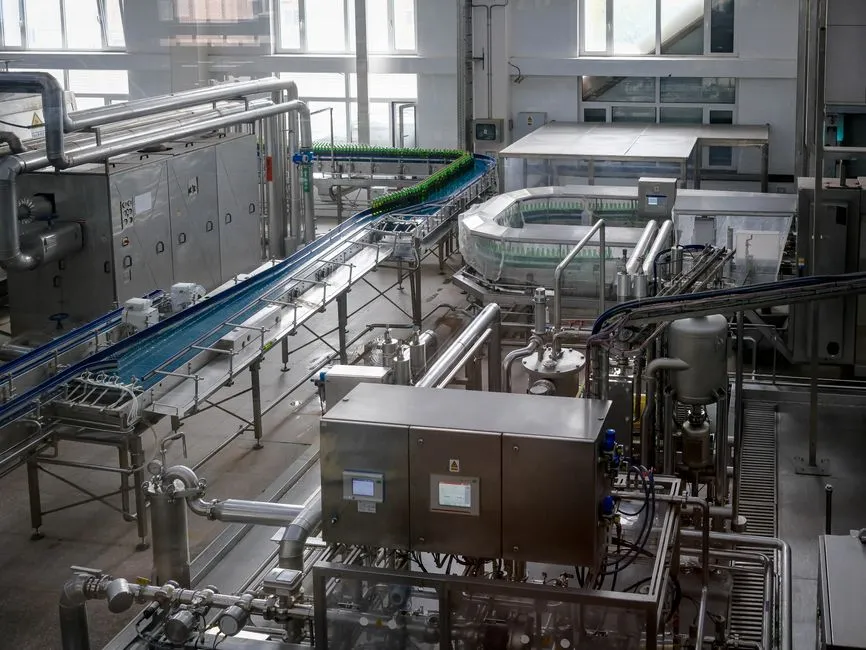
Packaged MBR CAPEX in 2026 USD runs $25,000–$60,000 per m³/day for skid- or containerized systems, fully equipped with membranes, blowers, controls, and installation (HydropureWater field data, 2026). A 50 m³/day Austin hotel MBR typically lands at $1.3M–$2.0M turnkey; prefabricated containerized units undercut equivalent buried concrete builds by $200K–$400K because site work is limited to a slab, a drain, and a power tie-in. Buried WSZ underground packaged STP units have lower visible footprint but 15–25% higher site-work cost due to excavation in Austin's expansive clay soils.
OPEX is dominated by aeration. Membrane scour at 0.4–0.8 kWh/m³ is the largest line item, followed by sludge hauling at $80–$150 per wet ton, chemical dosing at $0.01–$0.03 per m³, and membrane replacement every 7–10 years at $80–$120 per m² of module area. Total OPEX for a 50 m³/day system runs $0.18–$0.32 per m³ treated, or roughly $3,300–$5,800 per month (HydropureWater field data, 2026). For full budget context, the 2026 effluent treatment plant cost benchmarks breakdown covers larger scales. Reuse changes the math: Austin Water reclaimed water rates run $1.50–$3.50 per m³, and a 50 m³/day hotel offsetting 60–80% of irrigation and cooling-tower makeup demand typically sees a 4–7 year payback on the reuse premium alone.
| Cost Driver | 2026 USD Range | Basis |
|---|---|---|
| CAPEX, skid/containerized | $25,000–$60,000 per m³/day | Full train, installed |
| 50 m³/day turnkey | $1.3M–$2.0M | Austin hotel scope |
| Aeration energy | 0.4–0.8 kWh/m³ | Membrane scour, largest OPEX line |
| Sludge hauling | $80–$150 per wet ton | 20–25% solids dewatered cake |
| Membrane replacement | $80–$120 per m² | 7–10 year interval |
| Total OPEX | $0.18–$0.32 per m³ | 50 m³/day operating point |
| Reuse payback | 4–7 years | vs. Austin Water $1.50–$3.50/m³ |
Vendor Selection Checklist: 10 Questions to Ask Before You Sign
- Can you provide NSF/ANSI 245 or 350 validation if on-site reuse is in scope, and TCEQ 30 TAC §285 acceptance for irrigation?
- Will you share a factory acceptance test (FAT) report with effluent TSS, turbidity, and E. coli over a 30-day continuous run at design flow?
- Confirm membrane material is PVDF (not PES or PAN) for chlorine tolerance and a 7–10 year service life.
- Does the controls platform support Modbus TCP or BACnet for integration with the hotel's BAS?
- What warranty terms apply — specifically a 24-month membrane performance warranty and on-site commissioning within 30 days of delivery?
- Is a remote monitoring option available for unmanned hotel operation? Minimum tags should be flow, TMP, DO, and turbidity.
- Can you supply a reference list of at least three operating hotel or hospitality MBR installations in Texas or comparable climates?
- What is the guaranteed membrane flux at design flow, and what is the clean-in-place (CIP) chemical consumption per cycle?
- What is the maximum sound level at the property line, given Austin's noise ordinance (65 dBA daytime, 55 dBA nighttime at residential receivers)?
- What is the spare-parts lead time for blowers, permeate pumps, and membrane cassettes?
For unmanned sites, the remote monitoring for sewage treatment guide covers the minimum sensor set and alarm architecture that should be specified.
Frequently Asked Questions
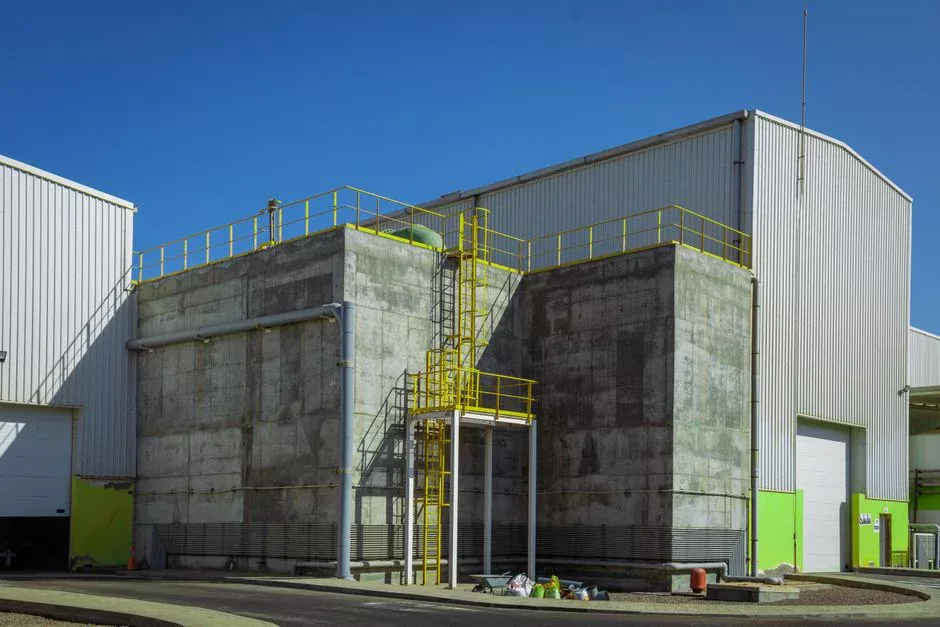
What size MBR do I need for a 120-room Austin hotel? At 180 L per guest-night and 70% occupancy, average flow is about 45 m³/day; with a 2.5× peaking factor, design flow lands at 110–115 m³/day, which maps to a single skid in the 100–150 m³/day catalog band with 200–250 m² of flat-sheet membrane area.
How much does a packaged MBR cost for a hotel in 2026? Turnkey CAPEX for a 50 m³/day system runs $1.3M–$2.0M, equivalent to $25,000–$60,000 per m³/day installed. OPEX adds $0.18–$0.32 per m³ treated at current Austin energy and hauling rates (HydropureWater field data, 2026).
Can MBR effluent be reused for irrigation or cooling towers in Austin? Yes. MBR permeate typically runs <1 NTU turbidity, meeting Austin Water's Type I reclaimed water standard, and 30 TAC §285 allows on-site irrigation of landscapes and golf courses when nitrogen is held ≤10 mg/L NO₃-N.
What permits are required for a packaged MBR in Austin? Flows under 500 gpd qualify for TCEQ general permit TXG110000; above that, an individual TPDES permit is required and the design must be sealed by a Texas P.E. EARZ sites also trigger TCEQ 30 TAC §213 review for impermeable basins and reuse-or-haul-off plans.
How long do MBR membranes last in hotel service? PVDF flat-sheet modules in hospitality service typically run 7–10 years before replacement, with recovery cleaning every 3–6 months and CIP events once or twice per year, depending on FOG control upstream.