Why Dallas Hotel Wastewater Is a Different Engineering Problem
A 150-room hotel on LBJ Freeway and a 250-room resort in Frisco do not generate "sewage" in the residential sense — they generate three overlapping waste streams that all converge on one treatment plant. Blackwater from guest rooms runs 50–75 gal/person/day at BOD 250–400 mg/L and TSS 200–350 mg/L, with a 3–5× peak-to-average ratio between Tuesday morning and Saturday check-in. Kitchen greywater adds 200–1,000 mg/L of FOG in pre-rinse and dishwasher discharge, plus emulsified oils that defeat passive grease traps. Pool and spa backwash contributes a third sidestream with TSS 50–150 mg/L and 1–3 mg/L free chlorine — the last number matters because free chlorine at that concentration will wipe out nitrifying bacteria in a biological plant within hours of contact.
The regulatory backdrop is tightening, not loosening. UN-Water data cited in the 2024–2025 ABB and Yokogawa industry briefs shows that 42% of household wastewater globally is not treated safely and only 11% receives advanced treatment — a number US regulators reference when they justify tighter commercial discharge rules. In Dallas, that pressure shows up as a layered compliance stack: EPA 40 CFR Part 133 secondary standards on the federal side, TCEQ Chapter 305 and 307 TPDES permits on the state side, and City of Dallas Ordinance 30418 (industrial waste) on the local side, with 30 TAC §285 triggered if the property sits outside the Dallas Water Utilities service area. Generic "wastewater treatment" pages — including the Yokogawa definition page that currently ranks for this query — do not address any of these loadings or rules, which is why hotel developers keep getting surprised during pre-application meetings.
Dallas 2026 Compliance Map: TCEQ, EPA, and City of Dallas Requirements
Four regulatory layers govern a Dallas hotel plant, and missing one of them delays the opening by 3–6 months. The federal floor is EPA 40 CFR Part 133, which sets secondary treatment minimums at BOD₅ 30 mg/L (avg) / 45 mg/L (max), TSS 30 mg/L / 45 mg/L, pH 6.0–9.0, and fecal coliform 200 CFU/100 mL — these are the numbers Dallas Water Utilities checks first when an industrial user hooks up. The state layer is TCEQ Chapter 305 (TPDES permit) for any surface-water discharge, or an industrial user permit through Dallas Water Utilities under 40 CFR 403.6 for the more common path of discharging to the city's POTW. If the resort is outside sewer service area, 30 TAC §285 on-site sewage facility rules apply, with setbacks of 50–150 ft from wells, 100 ft from water lines, and TCEQ review of soil-percolation data before a permit is even drafted.
Local limits are often tighter than EPA. City of Dallas Ordinance 30418 enforces industrial waste limits that include oil & grease at 100 mg/L, total phosphorus as low as 1 mg/L at large sites (driven by the city's watershed-protection program for the Trinity River), and surcharges on BOD and TSS above 250 mg/L. Properties pursuing irrigation or cooling-tower reuse must also satisfy 30 TAC Chapter 210 Type I (unrestricted) or Type II (restricted) reuse standards, with turbidity ≤3 NTU for Type I and E. coli ≤1 CFU/100 mL — numbers that push most developers toward an MBR rather than a conventional activated-sludge plant.
| Authority | Rule / Standard | Key Parameter | 2026 Limit |
|---|---|---|---|
| EPA | 40 CFR Part 133 | BOD₅ (30-day avg / max) | 30 / 45 mg/L |
| EPA | 40 CFR Part 133 | TSS (avg / max) | 30 / 45 mg/L |
| EPA | 40 CFR Part 133 | pH | 6.0–9.0 |
| EPA | 40 CFR Part 133 | Fecal coliform | 200 CFU/100 mL |
| TCEQ | 30 TAC Chapter 305 | TPDES permit | Required for surface discharge |
| TCEQ | 30 TAC §285 | OSSF setbacks | 50–150 ft (site-dependent) |
| TCEQ | 30 TAC Chapter 210 | Reuse Type I turbidity | ≤3 NTU |
| City of Dallas | Ordinance 30418 | Oil & grease | 100 mg/L |
| City of Dallas | Ordinance 30418 | Total P (large sites) | 1 mg/L |
Three Systems Dallas Hotels Actually Buy: MBR, SBR, and Buried Package A/O
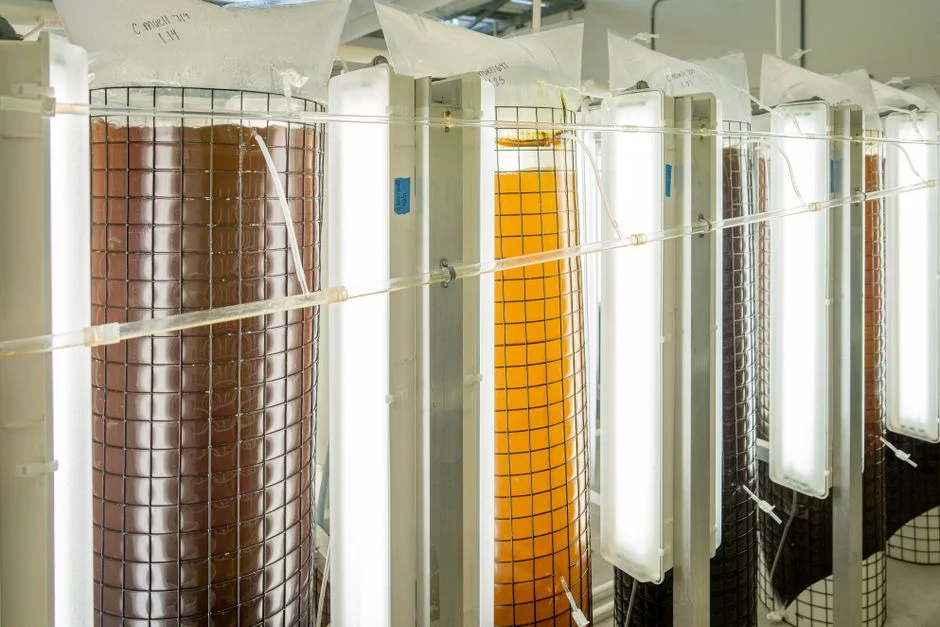
Three packaged configurations dominate 2026 hotel bids in the DFW market, and each maps cleanly to a different site constraint. The MBR (membrane bioreactor) pairs an activated-sludge bioreactor with submerged PVDF flat-sheet or hollow-fiber membranes at 0.1–0.4 μm pore size; it delivers effluent COD <50 mg/L, TSS <5 mg/L, and turbidity <1 NTU in roughly 60% of the footprint of a conventional activated-sludge plant — and the effluent clears 30 TAC Chapter 210 Type I reuse with ClO₂ disinfection. Energy demand runs 0.3–0.6 kWh/m³ treated, which is the line item lenders scrutinize hardest. The SBR (sequencing batch reactor) runs fill/aerate/settle/decant cycles in a single tank with a timer or PLC, tolerates weekend occupancy surges of 3–5×, and produces BOD/TSS around 20/20 — enough to meet EPA secondary but not reuse-grade. Operator skill is moderate: the cycle clock and decant weir must be tuned for the actual diurnal curve.
The third option — the buried package A/O plant (anoxic/oxic contact oxidation, WSZ-type series) — combines biological treatment, sedimentation, and chlorination in a single buried skid, fully automatic, 1–80 m³/h. It produces BOD 20 mg/L, TSS 20 mg/L, NH₃-N 5–8 mg/L, and it sits below grade with no visible equipment on the hotel landscape. For a 50–150 room urban infill property with zero above-grade space, this is the default specification. For a 150–400 room resort pursuing LEED and on-site irrigation reuse, the MBR is the default. For a remote ranch or event venue outside the Dallas sewer service area, an SBR with UV disinfection paired with subsurface drip dispersal per 30 TAC §285 is the most defensible path.
| Parameter | MBR | SBR | Buried Package A/O (WSZ) |
|---|---|---|---|
| Effluent BOD (mg/L) | <5 | 20 | 20 |
| Effluent TSS (mg/L) | <5 | 20 | 20 |
| Effluent NH₃-N (mg/L) | <1 | 5–10 | 5–8 |
| Footprint (vs. CAS) | ~40% | ~80% | ~50% (buried) |
| Energy (kWh/m³) | 0.3–0.6 | 0.25–0.4 | 0.2–0.35 |
| Operator skill | High (membrane care) | Moderate (PLC tuning) | Low (automatic) |
| 30 TAC Ch. 210 reuse | Type I capable | Type II only | Type II with UV add-on |
| CAPEX band (2026, $/m³/day) | $1,800–$3,200 | $900–$1,600 | $1,100–$1,900 |
| OPEX band (2026, $/m³) | $0.45–$0.75 | $0.25–$0.45 | $0.20–$0.40 |
For most Dallas infill builds the MBR membrane bioreactor system wins on reuse and footprint; for above-grade-restricted sites the buried package A/O plant is the lowest-touch choice. The same engineering logic that drives TCEQ compliance for commercial facilities in Houston applies in Dallas — the permitting stack is nearly identical, and the failure modes are the same.
Upstream Pretreatment: Why the Kitchen Grease Trap Is the Most Important Piece of Equipment You Will Buy
A biological plant cannot rescue a property that sends emulsified FOG past the headworks. A single FOG slug from a Friday-night banquet can foul PVDF membranes in an MBR (cleaning cost $1,500–$4,000 per event, per HydropureWater field data) or wash nitrifying bacteria out of an SBR, triggering a TCEQ ammonia exceedance that costs the property $5,000–$25,000 per notice. The required train for a 200-room hotel kitchen is a rotary bar screen at 3–5 mm opening to catch rags and food solids, a grease interceptor sized to ASME A112.14.3 with 20–30 min HRT at peak flow, a DAF unit to knock emulsified FOG below 50 mg/L oil & grease, and an equalization basin at 8–24 h HRT to dampen the Friday-night peak.
Pool and spa backwash must be dechlorinated through an automatic chemical dosing skid (sodium bisulfite at roughly 1.0–1.2 mg/L per mg/L of free chlorine) before it joins the main stream. The same logic that drives global oil and grease discharge limits for industry is what forces Dallas hotels to treat FOG as the leading indicator of biological-stage health, not a downstream polishing problem.
2026 Cost Reality: What a Dallas Hotel Plant Actually Costs to Build and Run
For a 150-room hotel generating 20,000–30,000 gal/day (75–115 m³/day), a turnkey packaged plant in 2026 dollars lands in the following bands: CAPEX $900–$3,200 per m³/day of design capacity depending on technology (SBR low, MBR high, buried A/O in between), which translates to $70,000–$370,000 for the biological plant alone before site work, permits, and pretreatment. Add 25–40% for site civil, electrical, and pretreatment screens, and the realistic all-in CAPEX for a 150-room property is $250,000–$600,000 in 2026 dollars, with MBR projects clustering at the upper end and SBR projects at the lower end. OPEX runs $0.20–$0.75 per m³ treated for energy, chemicals, and membrane replacement reserves; membrane modules for an MBR should be amortized over 7–10 years at $30–$60 per m² of membrane area, with annual replacement reserves of 8–12% of membrane CAPEX (HydropureWater field data, 2026).
Sludge hauling is the line item most developers underestimate. A 150-room hotel produces 8–14 m³/day of waste-activated sludge at 1–2% solids, which dewatered to 18–22% cakes costs $80–$140 per wet ton for hauling in the DFW market. Anaerobic or aerobic digestion ahead of the dewatering step cuts hauling volume by 40–60% and typically pays back in 3–5 years for any property above 120 rooms (HydropureWater field data, 2026). For owners evaluating how prefabricated wastewater plants work in real operating conditions, the OPEX breakdown is the section of the proposal to read line-by-line — not the headline CAPEX number, which the lowest bidder will always cut first.
Selection Framework: Matching System to Property Type and Site Constraints
For a 50–150 room urban infill hotel on the Dallas sewer system with no above-grade space, specify a buried package A/O unit (WSZ-type) with integral chlorination, fully automatic, sized for peak flow at 1.5× average day. For a 150–400 room resort or conference property pursuing LEED certification and on-site irrigation reuse, specify an MBR paired with ClO₂ disinfection to clear 30 TAC Chapter 210 Type I reuse; budget $25,000–$40,000 per year for membrane replacement reserve after year 7. For a remote ranch, vineyard, or event venue outside the Dallas Water Utilities service area, specify an SBR with UV disinfection and a subsurface drip dispersal field, with TCEQ soil and setback review per 30 TAC §285 prior to purchase. The decision rule of thumb that owners actually use: if they ask "how little can I touch it," specify package A/O; if they ask "how clean can the water be," specify MBR; if flow is intermittent or future expansion is uncertain, SBR is the most flexible. Remote monitoring for sewage treatment should be specified on every option above 100 rooms — it is the single most effective way to keep TCEQ reporting clean and avoid the surcharges in City of Dallas Ordinance 30418.
Frequently Asked Questions
What wastewater treatment system does a 150-room Dallas hotel need in 2026?
A 150-room Dallas hotel needs a packaged MBR or buried A/O plant rated 20–40 m³/day designed for 50–75 gal/person/day at BOD 250–400 mg/L, with FOG removal upstream and chlorination/dechlorination to meet TCEQ Chapter 305 and EPA 40 CFR Part 133 secondary standards before discharge to a City of Dallas POTW (per TCEQ 2026 guidance).
What permits does a Dallas hotel need for an on-site wastewater plant in 2026?
A Dallas hotel discharging to the city sewer needs an industrial user permit through Dallas Water Utilities under 40 CFR 403.6 plus compliance with City of Dallas Ordinance 30418. A property outside the sewer service area needs a 30 TAC §285 OSSF permit from TCEQ, with setbacks of 50–150 ft and soil-percolation review (per 30 TAC §285, 2026).
How much does a hotel wastewater treatment plant cost in Dallas in 2026?
Turnkey CAPEX for a 150-room hotel runs $250,000–$600,000 in 2026 dollars including civil and pretreatment, with OPEX of $0.20–$0.75 per m³ treated; MBR projects cluster at the upper end and SBR at the lower end of these ranges (HydropureWater field data, 2026).
What are the TCEQ effluent limits for hotel wastewater in Dallas?
TCEQ requires hotel plants to meet EPA 40 CFR Part 133 secondary minimums (BOD 30 mg/L avg, TSS 30 mg/L avg, pH 6.0–9.0, fecal coliform 200 CFU/100 mL) plus City of Dallas Ordinance 30418 local limits including oil & grease at 100 mg/L and total phosphorus as low as 1 mg/L at large properties (per 2026 Dallas Water Utilities discharge rules).
Can a Dallas hotel reuse wastewater for irrigation in 2026?
Yes, under 30 TAC Chapter 210 Type I (unrestricted) or Type II (restricted) reuse. Type I requires turbidity ≤3 NTU and E. coli ≤1 CFU/100 mL, which typically forces the design toward an MBR with ClO₂ disinfection rather than an SBR or buried A/O plant (per 30 TAC Chapter 210, 2026).