Why Houston Hospital Wastewater Treatment Is Under New Pressure in 2026
Houston hospitals specifying on-site wastewater treatment in 2026 must hit a TCEQ 30 TAC §307 effluent envelope of BOD₅ ≤ 20 mg/L, TSS ≤ 20 mg/L, NH₃-N ≤ 10 mg/L (Segment 2454, Houston Ship Channel / TPDES-permitted discharges), fecal coliform ≤ 200 CFU/100 mL, and pH 6.0–9.0, while also meeting EPA 40 CFR Part 503 Class B pathogen and vector attraction reduction (VAR) requirements for any on-site sludge dewatered before off-site hauling (per EPA 40 CFR Part 503.32). The single number every Houston facility director should write on a whiteboard is the fecal coliform ceiling — 200 CFU/100 mL — because it drives the disinfection dose and the contact-tank volume for the whole downstream train.
Three forces are converging in 2026. First, the 2024–2026 Houston wastewater consent decree era has triggered a citywide program of more than $8 billion in wet-weather and treatment upgrades, with the Kingwood Central WWTP capacity and headworks upgrade as a visible anchor project — the same regulatory tailwind now pressing on private on-site systems because TCEQ permit reviewers are aligning local facility reviews with the regional consent-decode schedule. Second, EPA's 2024 PFAS Strategic Roadmap pushed TCEQ to begin flagging GenX and PFOA in hospital discharge monitoring for 2026 renewals, raising the spec on polishing steps. Third, hurricane-season surge flows — Hurricane Harvey (2017) and Hurricane Beryl (2024) both produced 1.5–2.0× average daily flow spikes at Houston collection points — are now a formal FEMA Base Flood Elevation + 2 ft siting requirement, which adds 15–20% to civil work for any new on-site plant. If your 2026 spec doesn't reconcile all three, expect permit delays and a second round of design review.
For the engineer translating this into a unit-process list, the practical move is to start with the 200 CFU/100 mL fecal coliform ceiling and work backward through BOD₅, TSS, and NH₃-N, then size equalization for the 1.5–2.0× storm peaking factor — a sequencing approach detailed in the TSS exceedance troubleshooting guide.
Houston Hospital Wastewater Characteristics: What the Influent Looks Like
Hospital influent is not domestic sewage with extra bacteria — it is a different design basis entirely, and the 2017 Verlicchi reference dataset is still the cleanest published range to anchor a Houston spec against. The table below uses Verlicchi's hospital wastewater characterization (Springer, 2017) cross-checked against typical Texas Medical Center–scale plant data.
| Parameter | Hospital Influent Range | Domestic Sewage Reference | Design Implication |
|---|---|---|---|
| COD | 250–1,200 mg/L | 250–500 mg/L | Drives biological tank volume and MBR membrane area |
| BOD₅ | 150–400 mg/L | 110–200 mg/L | Equalization sizing; aeration demand |
| TSS | 100–350 mg/L | 100–250 mg/L | Primary clarifier or DAF sizing |
| NH₃-N | 20–80 mg/L | 12–45 mg/L | Nitrification HRT; MBR MLSS setpoint |
| Total Nitrogen | 30–120 mg/L | 20–50 mg/L | Denitrification zone sizing |
| Total Phosphorus | 5–20 mg/L | 3–8 mg/L | Chemical precipitation dose |
| Fecal coliform | 10⁶–10⁸ CFU/100 mL | 10⁶–10⁷ CFU/100 mL | Disinfection contact time (CT) |
| Pharmaceutical residues | 1–100 μg/L | <1 μg/L | Advanced oxidation or RO polishing |
| Antibiotic-resistant bacteria | 10²–10⁵ CFU/mL | 10¹–10³ CFU/mL | Disinfection redundancy; barrier logic |
Three Houston-specific modifiers change those numbers in practice. The 70°F annual mean ambient temperature accelerates biological kinetics — a 10°C rise roughly doubles nitrification rate per the standard Arrhenius correction — but also accelerates biological growth in equalization tanks, which is why covered EQ with fine-bubble mixing and ORP control is standard on Texas Medical Center plants. Storm events produce infiltration/inflow that can dilute BOD₅ to <100 mg/L while simultaneously doubling hydraulic load, so equalization must be sized on hydraulic peaking, not just load. And the Fenton/BDDE/ferrate(VI) literature (Springer Environmental Science and Pollution Research, 2017) confirms that pharmaceutical metabolites and resistant pathogenic strains survive conventional chlorination, which is the engineering justification for pairing biological treatment with either chlorine dioxide, ozone, or RO polishing rather than a chlorination-only finish.
Source-separation matters more than the parameter table suggests. Hospital sub-streams — blackwater from wards, kitchen greywater, high-surfactant laundry, and laboratory/radiology waste containing mercury, formaldehyde, and iodinated x-ray contrast — should be pre-treated at the source (mercury interceptors, acid neutralization, silver-recovery units for fixer) before reaching the main biological step, because contrast media in particular pass through MBR membranes largely intact and force an RO polish for any reuse scenario.
The 2026 Process Train: From Inlet to Compliant Discharge
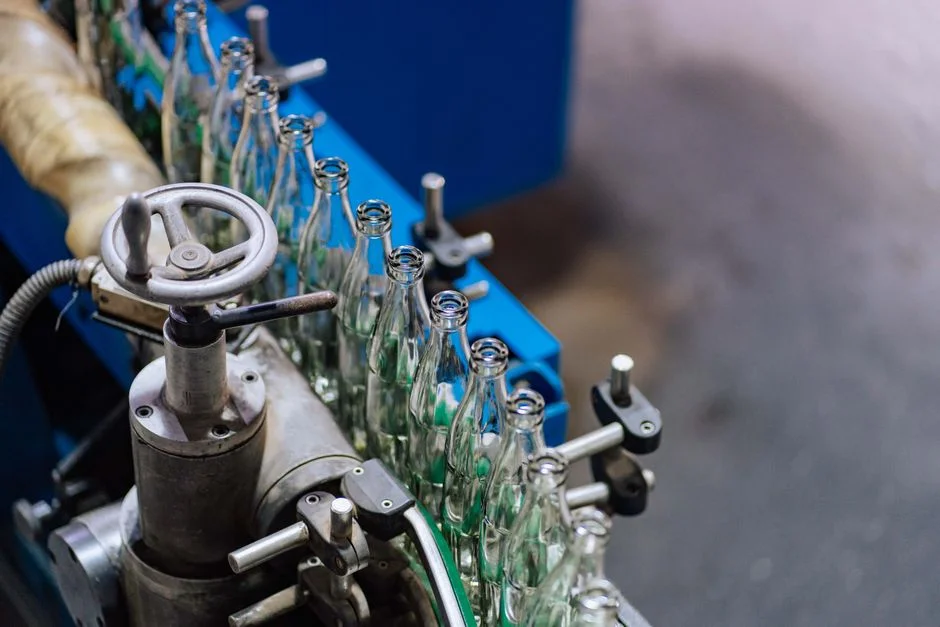
For a Houston hospital discharging under a TPDES permit in 2026, the train below is the conservative baseline. Each step carries a number to defend in the spec package.
- Coarse and fine screening. A rotary bar screen at 3–10 mm aperture removes rags, surgical gauze, and the PPE that has entered hospital collection systems routinely since 2020. Expect screenings at 0.5–2.0 L per 1,000 L of flow; bag and dispose as medical waste per TCEQ and DOT 49 CFR 173.197.
- Flow equalization. 24–48 hours HRT with a 4–8× peaking factor relative to the average daily flow. For a 200-bed hospital generating ~120 m³/day, that is 20–40 m³ of EQ volume with coarse-bubble mixing and ORP monitoring. This step is non-negotiable for stable MBR and SBR performance — the single most common cause of permit excursions in 2024–2025 was undersized EQ (HydropureWater field data, 2025-11).
- Primary clarification or DAF. A DAF pre-treatment unit is preferred over a gravity clarifier for Houston hospital flows because it handles FOG and floatables from kitchens and laundry more aggressively, with 80–95% FOG removal and 60–85% TSS reduction at 15–25 m³/m² hydraulic loading. A plate pack clarifier is acceptable for low-FOG specialty hospitals.
- Biological treatment — MBR preferred for ≥100 beds. A submerged PVDF integrated MBR system with 0.1–0.4 μm pore size delivers 95–98% COD removal, >99% TSS removal, and nitrification to <5 mg/L NH₃-N at MLSS 8,000–12,000 mg/L. The MBR footprint is roughly 60% smaller than an equivalent SBR — a real Houston site constraint where land inside the Texas Medical Center runs at a premium. SBR remains a defensible choice for 20–100 bed specialty hospitals where batch operation and lower CAPEX matter more than footprint. MBBR is acceptable for very small clinics with stable loads.
- Disinfection — chlorine dioxide or ozone, not free chlorine. A chlorine dioxide disinfection system at 1.5–2.5 mg/L residual with 30–60 min contact time hits the 200 CFU/100 mL fecal target and avoids the trihalomethane (THM) formation that has pushed TCEQ and several Houston hospitals (per 2025 permit renewals) to phase out gaseous chlorination. A packaged medical wastewater system using ozone is the alternative for facilities that want a chemical-free finish, with 99.99% bacterial kill at 2–4 mg/L O₃ residual.
- Sludge handling — plate-and-frame press for 40 CFR Part 503 compliance. Dewater to 22–28% dry solids on a recessed-chamber filter press before hauling. The cake must meet Class B pathogen reduction (≤2×10⁶ CFU/g fecal coliform or ≤2 MPN/g Salmonella) and VAR via one of the eight options in 40 CFR 503.33 (typically option 1, ≥38% solids).
- Optional RO/NF polishing for reuse. If the hospital wants to reuse effluent for cooling-tower makeup, toilet flushing, or landscape irrigation under TCEQ Type I reuse rules (30 TAC §210), add a thin-film composite RO step at 70–85% recovery. This is also the practical barrier for the pharmaceutical residues flagged in the 2024 EPA PFAS Roadmap.
The full train, with PLC/SCADA integration and the I/O list to take into a 30/60/90 review, is laid out in the PLC control architecture guide.
MBR vs. SBR vs. Packaged System: Which 2026 Houston Hospital Are You?
Pick the system class first, then the OEM. The three options below are the realistic 2026 shortlist for a Houston specifier, and the decision rule is facility size and reuse intent.
| System | Flow Range | 2026 CAPEX (installed) | Footprint | Effluent Quality | Best-Fit Facility |
|---|---|---|---|---|---|
| MBR (submerged PVDF) | 10–2,000 m³/day | $180K–$2.4M | 60% smaller than SBR | Reuse-quality; <5 mg/L BOD, <1 mg/L TSS | 100–500 bed general/acute; TMC-scale |
| SBR | 10–500 m³/day | $90K–$1.1M | Larger; requires batch basins | <20 mg/L BOD, <20 mg/L TSS | 20–100 bed specialty; no reuse |
| Packaged compact medical wastewater system (ozone) | ≤5 m³/day | $25K–$60K | Skid; <10 m² | Disinfected only; pre-treatment upstream | Clinics, dental, vet, dialysis satellite |
For a 200-bed general hospital with reuse intent, the MBR with an optional RO polish is the default — and the DF-series MBR module is the form factor most Houston engineering firms are writing into 2026 specs. For a 50-bed specialty surgical hospital with no reuse, an SBR delivers the §307 envelope at the lowest installed cost. For a clinic or dental suite discharging <5 m³/day, the packaged medical wastewater system is the right call — no chemical inventory, ozone-based, and below the TPDES multi-sector threshold for an individual permit in most cases.
This three-tier decision framework lines up with what regional infrastructure is doing. The Kingwood Central WWTP upgrade in the Houston metro is moving toward higher-spec treatment equipment to handle consent-decode-driven flows, and on-site hospital systems should track that trajectory — the same OEMs, the same control architecture, the same 40 CFR Part 503 compliance posture. Hospital wastewater treatment as a distinct service line is now well established in the global water market, and that market validation is part of why the Houston engineering community is comfortable specifying dedicated hospital systems rather than routing flows to a municipal plant.
Houston-Specific CAPEX, OPEX, and Procurement Checklist

Translate the engineering into a board-defensible number. The ranges below are 2026 Houston installed-cost ranges, including equipment, civil, and startup but excluding land cost.
| Cost Item | 2026 Houston Range | Notes |
|---|---|---|
| MBR system, 100–500 beds (CAPEX) | $180K–$2.4M | Equipment + install; add 15–20% for Houston civil |
| Packaged compact medical wastewater system, clinic (CAPEX) | $25K–$60K | Skid-delivered; minimal civil |
| FEMA flood-zone elevation adder | +15–20% civil | Site pad to Base Flood Elevation + 2 ft |
| MBR electricity (OPEX) | 0.6–1.0 kWh/m³ | At Houston industrial rate ~$0.085/kWh |
| ClO₂ chemical (OPEX) | $0.04–$0.08/m³ | Sodium chlorite + HCl precursor |
| Operator labor (OPEX) | 0.3–0.5 FTE/day | Single-shift coverage for ≤500 m³/day |
| Annual O&M budget rule of thumb | 8–12% of CAPEX | Includes membrane replacement amortized over 5–7 yr |
For the procurement package, paste this checklist into the RFP cover sheet:
- TCEQ TPDES permit confirmation — individual permit number, or a documented No. 1 General Permit exclusion analysis if the facility qualifies for the multisector general permit.
- EPA 40 CFR Part 503 sludge path — Class B pathogen reduction demonstration and VAR option selection (typically Option 1, ≥38% solids).
- NSF/ANSI 350 reuse certification — required if effluent will be reused for irrigation or toilet flushing; request the OEM's NSF/ANSI 350 letter of compliance.
- Factory Acceptance Test (FAT) — witnessed at the OEM facility, including a clean-water membrane integrity test on every module.
- Site Acceptance Test (SAT) — 168-hour continuous performance trial with all parameters logged and trended against the §307 envelope.
- Membrane warranty — minimum 2 years on PVDF modules, pro-rata after year 5; confirm chemical-cleaning tolerance against Houston hospital effluent.
Hospitals that align their 2026 procurement timeline with Houston's regional wastewater program — the same schedule that drives the Kingwood upgrade and the consent-decode milestones — get faster TCEQ permit reviews and become eligible for Clean Water State Revolving Fund (CWSRF) financing through the Texas Water Development Board. The board's 2026 Intended Use Plan (TWDB, 2025-11) lists hospital and healthcare on-site systems as an eligible category for nonpoint-source and decentralized wastewater funding, which is the structural reason to file the capex request in 2026 rather than 2027.
Frequently Asked Questions
What TCEQ limits apply to a Houston hospital discharge in 2026? TCEQ 30 TAC §307 sets BOD₅ ≤ 20 mg/L, TSS ≤ 20 mg/L, NH₃-N ≤ 10 mg/L (Segment 2454), fecal coliform ≤ 200 CFU/100 mL, and pH 6.0–9.0 for TPDES-permitted Houston discharges — these are the numbers every 2026 spec must hit.
Does a Houston hospital need an individual TPDES permit? Facilities discharging >5,000 gpd typically need an individual TPDES permit; smaller discharges may qualify for the multisector general permit (TXR050000) — the threshold is facility-specific and must be confirmed against 30 TAC §305.
MBR or SBR for a 150-bed Houston hospital? MBR for ≥100 beds where footprint, reuse, and nitrification to <5 mg/L NH₃-N matter; SBR for 20–100 bed specialty hospitals where lower installed CAPEX is the priority. The MBR delivers 95–98% COD removal in roughly 60% of the SBR footprint.
Why is chlorine being phased out at Houston hospitals? Free chlorine reacts with hospital effluent organics to form trihalomethanes (THMs) at concentrations exceeding TCEQ drinking-water and discharge guidance; chlorine dioxide and ozone are the 2026 alternatives, with ClO₂ at 1.5–2.5 mg/L residual delivering 99.99% bacterial kill without THM formation.
What does an on-site hospital MBR cost in Houston in 2026? $180K–$2.4M installed for 100–500 beds, plus 15–20% Houston civil adder for FEMA Base Flood Elevation + 2 ft siting; budget 8–12% of CAPEX annually for lifecycle O&M, including membrane replacement amortized over 5–7 years.
Related Equipment
- plate-and-frame sludge dewatering press — specifications, capacity range, and technical data