
What Is Electrode Slurry Rinse Wastewater?
Electrode slurry rinse wastewater is the combined aqueous waste generated at three points inside a lithium-ion cell plant: the coating-head catch pan under the slot-die, the calendar/compactor rinse after roll-pressing the electrode web, and the cleaning-in-place (CIP) loop that flushes the slurry batching and transfer lines between product changeovers. On a 1 GWh production line, this combined stream runs 80–150 m³/day and carries four distinct pollutant families that govern the entire treatment design. N-methyl-2-pyrrolidone (NMP) carrier solvent typically measures 1,000–10,000 mg/L and drives the chemical oxygen demand (COD) to 5,000–40,000 mg/L, making NMP the dominant load by mass. PVDF binder (or CMC/SBR on the anode side) and carbon black conductive additive arrive as fine suspended solids at 50–500 mg/L, easily fouling filters and membranes. Lithium, nickel, cobalt, and manganese leach from the active material at 1–50 mg/L per element — trace concentrations by drinking-water standards, but strictly capped in industrial discharge. This stream is difficult to treat because NMP is fully miscible and biologically refractory, PVDF/carbon black fines blind candles and RO membranes in minutes, and metals sit at concentrations where hydroxide precipitation works but sulfide polishing is needed to meet sub-1 mg/L ceilings. A defensible characterization for a permit submittal should report all four families plus total suspended solids (typically 200–2,000 mg/L), pH (6.5–8.5), and conductivity (2,000–15,000 µS/cm) from the same 24-hour composite sample.
2026 Discharge and Reuse Limits You Must Hit
Three regulatory ceilings govern 2026 gigafactory effluent design, and the binding number depends on jurisdiction. In China, GB 30485-2020 (Carbon cathode and lithium-ion battery industry pollutant discharge standard) sets COD <150 mg/L, total cobalt <1 mg/L, total nickel <1 mg/L, fluoride <10 mg/L, and suspended solids <70 mg/L for discharge to municipal sewer; the direct-discharge table tightens COD to <50 mg/L. In the EU, IED 2010/75/EU BAT-AEL ranges for new installations push TOC <20 mg/L and total Co/Ni/Li between 0.2 and 1 mg/L depending on the receiving water body. The US has no dedicated battery ELG; designers default to EPA 40 CFR Part 413 (Electroplating) metal limits and local POTW pretreatment limits, while the 2026 trend in both EU and China is tightening around PFAS-class solvents and lithium recovery mandates — China MIIT issued guidance in 2025 requiring Li recovery from battery plant effluents above defined throughput thresholds. Treat the strictest of the three as your design point.
| Parameter | China GB 30485-2020 (sewer) | EU IED BAT-AEL (2026) | US EPA 40 CFR 413 (benchmark) |
|---|---|---|---|
| COD / TOC | COD <150 mg/L | TOC <20 mg/L | COD per local POTW |
| Total Co | <1 mg/L | 0.2–1 mg/L | 1.0 mg/L (metal finishing) |
| Total Ni | <1 mg/L | 0.2–1 mg/L | 1.0 mg/L |
| Total Li | Not specified; MIIT recovery mandate | 0.2–1 mg/L (trend) | No dedicated limit |
| Fluoride | <10 mg/L | Site-dependent | Per POTW |
| Suspended solids | <70 mg/L | Site-dependent | Per POTW |
| Conductivity (reuse) | — | <50 µS/cm in closed loop | Site-specific |
The Full 2026 Treatment Train, Stage by Stage
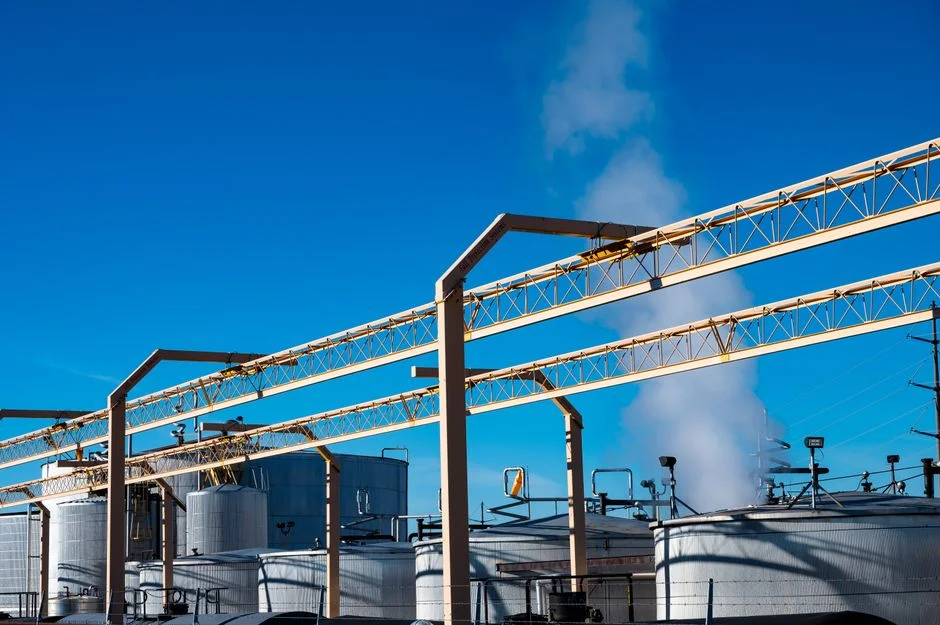
A defensible 2026 process train for electrode rinse water runs in six stages where each stage protects the next. Begin with a rotary bar screen at 3–5 mm opening to strip foil scraps and rag debris before they hit the DAF pump. Stage 2 is the workhorse for solids: a DAF flotation unit for carbon black and PVDF binder removal operating at 20–40 m³/m²·h hydraulic surface loading, dosed with polyaluminum chloride (PAC) at 50–150 mg/L and anionic polyacrylamide at 1–3 mg/L; this combination lifts >90% of carbon black and binder fines and drops the overflow to TSS <30 mg/L. Stage 3 is the Fenton block: pH is trimmed to ~3 with sulfuric acid, FeSO₄·7H₂O is dosed at 500–1,500 mg/L, hydrogen peroxide is fed at a 1.5:1 mass ratio against influent COD, and the reaction runs 2–4 hours to break NMP's pyrrolidone ring into short-chain organic acids and achieve 70–90% COD reduction. Stage 4 raises pH to 9–10 with NaOH or Ca(OH)₂ and doses Na₂S or DTCR for heavy-metal polishing, sending sludge to a lamella clarifier for post-precipitation metal sludge settling at 4–6 m³/m²·h; effluent total Li/Ni/Co/Mn should be <1 mg/L per element. Stage 5 is a multi-media filter for RO pretreatment (anthracite/sand/garnet) to drop turbidity below 3 NTU and protect the RO train from fouling. Stage 6 is an industrial RO system for reuse-grade polishing operated at 90–95% recovery, with concentrate returned to the Fenton feed tank for volume reduction. This is the train a process engineer can hand to a vendor as a single PFD.
| Stage | Equipment | Key Reagent / Parameter | Influent → Effluent | Removal |
|---|---|---|---|---|
| 1 — Screening | Rotary bar screen, 3–5 mm | — | Solids debris removal | — |
| 2 — DAF + lamella | Micro-bubble flotation | PAC 50–150 mg/L, anionic PAM 1–3 mg/L | TSS 200–2,000 → <30 mg/L | 90%+ |
| 3 — Fenton oxidation | Stirred reactor, 2–4 h | FeSO₄ 500–1,500 mg/L, H₂O₂:COD 1.5:1, pH 3 | COD 5,000–40,000 → 500–4,000 mg/L | 70–90% |
| 4 — Precipitation | Lamella clarifier | NaOH to pH 9–10, Na₂S/DTCR dose | Li/Ni/Co/Mn 1–50 → <1 mg/L each | >95% |
| 5 — Multi-media filter | Anthracite/sand/garnet | Backwash 6% of throughput | Turbidity <3 NTU | — |
| 6 — RO polishing | Brackish-water RO, 90–95% recovery | Conductivity 2,000–15,000 → <50 µS/cm | Reuse to slurry batching | >97% salts |
Optional 2026 Add-Ons: NMP Recovery, MBR, and ZLD
Three upgrades are available when the design brief specifies NMP solvent recovery, a tight footprint, or zero-liquid-discharge (ZLD). Upstream of Fenton, vacuum distillation or pervaporation can recover 85–95% of the NMP at 99.5% purity — at 2026 spot prices of $3,500–$5,000/tonne, the payback math closes for any line processing more than ~20 m³/day of NMP-bearing rinse. A MBR bioreactor for post-Fenton polishing using a submerged PVDF membrane module (0.1–0.4 µm pore size) can replace the clarifier and sand filter block where plant footprint is the binding constraint; typical MBR effluent sits at COD <100 mg/L before RO, removing another 60–70% of the residual BOD load. A full ZLD loop (brine concentrator + crystallization) is justified only on water-stressed sites or Class I watersheds — the rule of thumb is flow above 500 m³/day combined with a freshwater tariff above $3/m³. None of these upgrades eliminate the PLC-controlled chemical dosing skid or the plate and frame filter press for Fenton and DAF sludge dewatering, and the Fenton sludge plus DAF float classify as hazardous waste (HW49 in China) requiring licensed incineration. For the related metals chemistry, see this chemical precipitation for heavy metal removal guide.
Reuse Economics and Freshwater Savings in 2026
Closing the loop with an industrial RO system for reuse-grade polishing can return up to 95% of permeate to the slurry batching tank and CIP loop, cutting freshwater draw by 50–60% versus once-through discharge for a typical 1 GWh line (~120 m³/day of combined electrode rinse). NMP recovery at the front of the train is the bigger lever: at 100 m³/day of rinse carrying 5,000 mg/L NMP, ~90% recovery yields roughly $1.5M/year in solvent value at 2026 prices, exceeding the Fenton chemical OPEX. Fenton reagent OPEX itself runs $0.08–$0.18 per m³ of treated rinse (H₂O₂ and FeSO₄ combined) at typical dosing. Whole-train CAPEX for a 100 m³/day electrode rinse line sits at $1.2M–$2.4M in 2026 terms — Fenton reactor and DAF dominate the equipment cost, with the RO skid as the second-largest line item — and the payback compresses to 3–5 years when NMP recovery and freshwater avoidance are credited. Sites above 500 m³/day with modest water stress should evaluate brine concentrators and crystallizers to lock in ZLD status. This CAPEX/OPEX profile contrasts with the discharge-only design used in older gigafactories, which is no longer defensible against tightening 2026 Li-recovery mandates.
Frequently Asked Questions
Q1: What is the best primary treatment for carbon black and PVDF binder in electrode rinse water?
Dissolved air flotation (DAF) dosed with polyaluminum chloride at 50–150 mg/L and anionic polyacrylamide at 1–3 mg/L, run at 20–40 m³/m²·h hydraulic surface loading. This combination routinely drops TSS to <30 mg/L and removes >90% of carbon black and binder fines before oxidation.


