
Why a Packaged MBR Is the Default Choice for Paris Hotels
Packaged membrane bioreactor (MBR) systems now dominate the Paris hotel segment because they compress an entire activated-sludge plant, secondary clarifier, and tertiary filtration into a single factory-built skid that occupies roughly 40% of the floor area of a conventional layout (HydropureWater MBR product data, 2026). For a 60–250-room inner-Paris property — typically sited in arrondissements 1 through 8 where the only available space is a basement plantroom, a courtyard, or a recessed loading-bay enclosure — that footprint reduction is the deciding specification, not the membrane technology itself. A conventional activated-sludge train with a separate clarifier and sand filter needs 80–120 m² for a 120 m³/day duty, plus a sludge-thickening bay; an equivalent packaged MBR skid system fits in 40–50 m² and eliminates the clarifier's settled-sludge blanket, which is the largest single source of H₂S and amine odours on a hotel site.
On the regulatory side, EU UWWTD 91/271/EEC sets discharge thresholds of BOD ≤25 mg/L, COD ≤125 mg/L, and TSS ≤35 mg/L for agglomerations above 10 m³/day, while the French Arrêté du 21 juillet 2015 (modifying the 24 août 2017 thresholds) governs small treatment plants under 1,200 p.e. and adds tighter NH₃-N and nitrogen limits for sensitive receiving waters. A well-operated MBR delivers BOD 3.5–6 mg/L, COD 28–32 mg/L, TSS 1.3–5.8 mg/L, and turbidity 1.5–3.8 NTU — 3–5× inside the EU envelope and easily clear of the French arrêté ceilings. Where Parisian prefecture requirements add stricter heritage-zone or Seine-discharge clauses, that headroom is what keeps a hotel permit alive.
Paris-Specific Site Constraints You Must Check First
The PPRI (Plan de Prévention du Risque Inondation) classifies most riverside arrondissements — 1, 4, 5, 7, 8, 12, 13, 15, and 16 — in red or blue flood zones, and a packaged MBR skid located in a basement plantroom below the 100-year flood level will be flagged at the permis de construire stage. The practical fix is to elevate the skid on a 300–600 mm concrete plinth, specify IP65 electrical cabinets, and route the air blower intake above the modelled flood line. MBR cabinets rated to IP65 with sealed cable glands and flood-resistant enclosures (tested to 1 m submersion for 24 h) are now standard from the main packaged-plant vendors; do not accept anything below IP54 on a Paris site.
PLU (Plan Local d'Urbanisme) setback and acoustic rules are the second filter. The Paris PLU caps nighttime noise at 35 dB(A) at the property boundary for any new technical installation, which means the blowers and the membrane air-scour system — typically 75–78 dB(A) unsilenced — must be wrapped in an acoustic enclosure (–15 to –20 dB(A) attenuation) or mounted in a buried blower vault. Odour control is the third: carbon-filter exhaust with a 12–18 month media life, sealed access covers with EPDM gaskets, and a minimum 5 m setback from any opening window of a neighbouring residential property. Sludge management falls under the SAP (Service d'Assainissement Parisien) for sewer discharges, which sets a maximum 2-week holding time before removal; packaged MBRs produce 60–70% less waste-activated sludge than conventional AS at the same BOD load, which means a 120 m³/day hotel plant typically needs only 1–2 sludge haulings per year rather than 6–8.
Sizing the MBR Skid: Flow, Load, and Peak Factor
Sizing a packaged MBR for a hotel is a three-step calculation that the vendor should walk you through before quoting. The mistake most MEPs make is sizing on average dry-weather flow and discovering, six months after opening, that the morning peak (06:00–09:00 showers plus breakfast service) is washing the membranes with raw, untreated wastewater.
- Average dry-weather flow (ADWF). Use 0.25 m³ per guest-night for a 4–5 star Paris hotel, multiplied by room count and 75% average occupancy. Add 0.05 m³ per F&B cover (restaurant, bar, room-service, breakfast buffet) on a typical 70–80% lunch-plus-dinner turnover.
- Peak flow factor. Hotels exhibit a 2.5–4.0× peak-to-average diurnal ratio because guests shower and breakfast simultaneously; the equalisation tank upstream of the membrane tank must be sized for the peak, not the average. A 3.0× factor is a defensible mid-point; use 3.5× for properties with a conference floor or a large breakfast hall.
- Pollution load per guest. Use BOD 50–60 g/guest-day, TSS 40–50 g/guest-day, NH₃-N 6–8 g/guest-day. A packaged MBR running at MLSS 8,000–12,000 mg/L with HRT 6–8 h in the membrane chamber handles these loads with 2–3× spare capacity.
Worked example for a 150-room, 75% occupancy, 80-cover restaurant Paris hotel: ADWF = 150 × 0.75 × 0.25 + 80 × 0.05 = 28.1 + 4.0 = 32.1 m³/day. At a 3.5× peak factor, peak flow = 112 m³/day. Specifying a packaged MBR rated at 120 m³/day with an 8-hour HRT equalisation tank (40 m³) covers the design peak and leaves margin for a future 10-room extension.
| Parameter | Symbol | Value | Source |
|---|---|---|---|
| Guest-night flow | q_guest | 0.25 m³/guest-night | Industry benchmark, 4–5 star |
| F&B cover flow | q_F&B | 0.05 m³/cover | Hotel design guide |
| Average occupancy | — | 75% | Paris ADR-based |
| Peak factor | PF | 2.5–4.0× | Hotel diurnal profile |
| ADWF (150 rooms) | Q_avg | 32 m³/day | Calculated |
| Peak flow (3.5×) | Q_peak | 112 m³/day | Calculated |
| Recommended MBR rating | Q_design | 120 m³/day | With 20% margin |
| Equalisation volume | V_eq | 40 m³ (8 h HRT) | Design standard |
| MLSS target | X | 8,000–12,000 mg/L | MBR operating window |
| Membrane chamber HRT | HRT_m | 6–8 h | MBR design standard |
Matching the MBR to Hotel Wastewater Composition
Hotel sewage is a recognisable mix: high organic strength from food waste and toilet flow, plus a heavy FOG and surfactant load from kitchens and laundry. The scraped hotel MBR data set (mid-range Paris-equivalent property) puts raw influent at BOD 245–286 mg/L, COD 489–578 mg/L, TSS 140–160 mg/L, turbidity 268–350 NTU, NH₃-N 18.5–24.5 mg/L, and fecal coliform 7,500–9,800 CFU/100 mL — substantially stronger than domestic sewage (typically 150–200 mg/L BOD) and noticeably more variable across the day. The MBR must be configured to absorb these swings without losing membrane permeability.
Three pre-treatment steps are non-negotiable. First, a kitchen-side grease trap sized for 50–100 mg/L FOG in the waste stream; without it, MBR membrane fouling rate rises 2–3× because FOG coats the membrane surface and blocks air-scour bubbles. Second, a rotary fine bar screen with 1–2 mm perforations on the main sewer inlet, which removes hair, lint, and food solids that would otherwise blind the membrane. Third, a DAF pre-treatment unit when FOG or TSS is at the upper end of the range, to drop TSS to under 80 mg/L before the bioreactor and protect the membranes from surfactant-induced foaming. Treated MBR effluent from the same data set runs BOD 3.5–6 mg/L, COD 28–32 mg/L, TSS 1.3–5.8 mg/L, turbidity 1.5–3.8 NTU, NH₃-N 7–11 mg/L, and fecal coliform 49–110 CFU/100 mL — well inside the French 2023 reuse decree envelope for toilet flush and landscape irrigation once a UV or ClO₂ polishing step is added.
| Parameter | Unit | Influent (raw) | MBR effluent |
|---|---|---|---|
| BOD | mg/L | 245–286 | 3.5–6 |
| COD | mg/L | 489–578 | 28–32 |
| pH | — | 6.3–7.6 | 7.2–7.8 |
| NH₃-N | mg/L | 18.5–24.5 | 7–11 |
| TSS | mg/L | 140–160 | 1.3–5.8 |
| Turbidity | NTU | 268–350 | 1.5–3.8 |
| Fecal coliform | CFU/100 mL | 7,500–9,800 | 49–110 |
Membrane Format Comparison: Hollow Fibre, Flat Sheet, or MABR?

Three membrane formats are offered for hotel-scale packaged MBRs in 2026, and the choice is driven by influent variability and cleanability rather than by absolute flux. Hollow-fibre membranes (0.03–0.05 μm pore) deliver the highest packing density at 800–1,200 m²/m³ of module volume and run at 15–25 L/m²·h, which makes them attractive where footprint is the binding constraint — typically a new-build hotel plantroom designed around the skid from day one. The downside is sensitivity to hair and fibre fouling, which is why hollow-fibre is best specified for new-build properties with well-controlled lint and FOG.
Flat-sheet PVDF (0.1 μm pore, typically the DF-series architecture) is the workhorse for retrofits and for any hotel where the influent character is variable. Flat sheets run at a lower flux of 10–20 L/m²·h but tolerate 2–3× higher TSS excursions, can be cleaned in place with a 2–3 month CIP cycle using 0.5% citric acid followed by 0.3% NaOCl, and allow individual element replacement rather than full-rack swap-out. For the 120 m³/day Paris hotel duty, 2–3 flat-sheet cassettes of 80 m² each is the standard configuration. MABR (membrane-aerated biofilm reactor) is an emerging option with a 30–40% energy saving from passive oxygen transfer, but its track record below 200 m³/day is still thin and retrofitting MABR cassettes into a packed MBR cabinet is mechanically awkward — it remains a 2027+ option rather than a 2026 default.
| Format | Pore size | Flux (L/m²·h) | Footprint | FOG/lint tolerance | Best fit |
|---|---|---|---|---|---|
| Hollow fibre (PVDF) | 0.03–0.05 μm | 15–25 | Smallest | Low | New build, controlled influent |
| Flat sheet (PVDF, DF) | 0.1 μm | 10–20 | Medium | High | Retrofit, variable influent |
| MABR | Biofilm | n/a | Medium | Medium | Future option (<200 m³/day unproven) |
For a 120 m³/day Paris hotel, the flat-sheet PVDF membrane module is the safer specification; 2–3 cassettes of 80 m² each, CIP every 8–10 weeks, and a 3-year replacement interval for individual sheets (rather than the full cassette) keeps lifecycle cost predictable.
Compliance: French Arrêté, EU UWWTD, and Reuse Rules
The compliance layer for a Paris hotel STP is three-sided: EU UWWTD 91/271/EEC for any discharge above 10 m³/day, the French Arrêté du 21 juillet 2015 for plants under 1,200 p.e., and the local SIAAP (Syndicat Interdépartemental d'Assainissement de l'Agglomération Parisienne) convention de rejet for any connection to the Paris combined sewer. An MBR clearing the EU BOD 25 / COD 125 / TSS 35 mg/L envelope with BOD 3.5–6 / COD 28–32 / TSS 1.3–5.8 mg/L carries a 3–5× margin, which is what allows permit tolerance to absorb 20–30% influent excursion without breaching. The French arrêté additionally requires 24-hour composite sampling, which the MBR cabinet must support through built-in sampling ports and a SCADA archive of at least 12 months.
SIAAP pre-acceptance typically takes 3–6 months and requires the vendor to provide the equipment's CE marking, performance tested to NF EN 12566-3 for packaged domestic WWTPs, plus a maintenance contract compliant with the SIAAP technical guidelines. On the reuse side, the French 2023 decree on non-potable water reuse from treated greywater and blackwater sets fecal coliform at <10 CFU/100 mL for toilet flush and irrigation use; an MBR with ClO₂ polishing disinfection at 0.3–0.5 mg/L residual clears that with a 1-log margin, and the same loop can supply landscape irrigation if the hotel has a courtyard or rooftop garden.
| Standard | Scope | BOD / COD / TSS limit | MBR margin |
|---|---|---|---|
| EU UWWTD 91/271/EEC | >10 m³/day discharge | 25 / 125 / 35 mg/L | 3–5× |
| Arrêté 21 juillet 2015 | <1,200 p.e. plants | 25 / 125 / 35 mg/L + NH₃-N | 2–3× |
| SIAAP convention | Paris combined sewer | Per arrêté + local clause | By design |
| 2023 reuse decree | Toilet flush / irrigation | Fecal coliform <10 CFU/100 mL | 1 log after ClO₂ |
Retrofit vs New-Build: Containerised vs Skid vs Buried
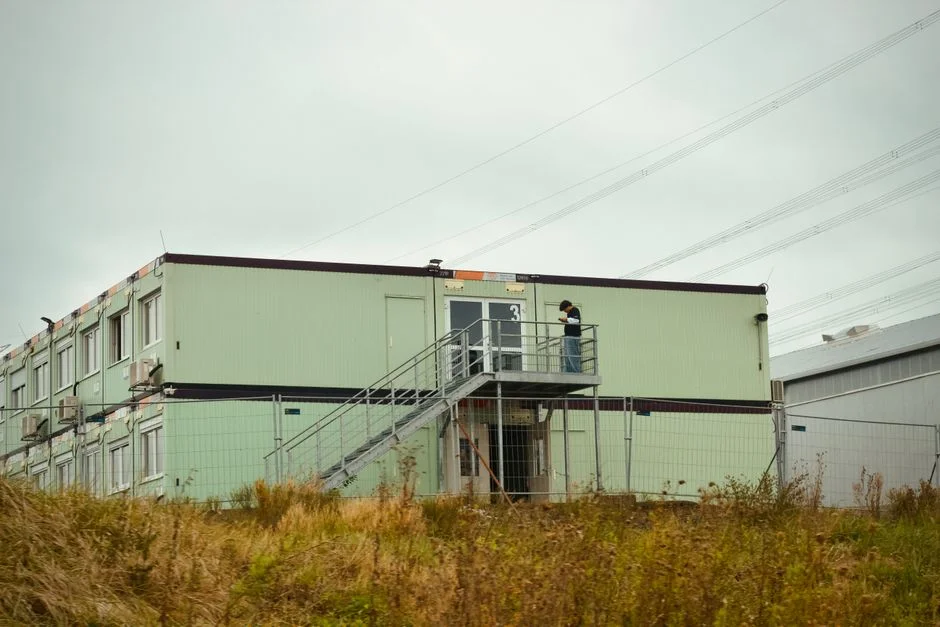
The physical form factor is decided before vendor selection, because it drives lead time, civil works, and PLU approval risk. A containerised 20 ft or 40 ft ISO MBR (the format covered in the MBR CAPEX vs OPEX breakdown) installs in 4–6 weeks on site and is the only practical answer for heritage-listed Paris façades where no permanent above-grade structure is permitted. Skid-mounted open-frame MBRs cost 15–25% less and drop into a new plantroom, which is common for 100–200 m³/day hotel duties in new-build projects. Buried packaged plants, exemplified by the WSZ underground integrated sewage treatment configuration, disappear below grade and work well in courtyards and gardens, but require French-compliant below-grade ventilation (mechanical, with H₂S monitoring) and a structural slab rated for groundwater buoyancy.
For a 120 m³/day Paris hotel, the 60% footprint reduction versus conventional AS (HydropureWater MBR product data, 2026) means a 40 m² plantroom is sufficient — typically a 10 m × 4 m room with 3.5 m clear height, a 1.5 m wide access door for cassette removal, and a floor drain sized for the equalisation tank's full volume. Remote SCADA monitoring for packaged STPs is increasingly required by the Paris prefecture for unattended sites; spec the cabinet with a 4G gateway and a Modbus TCP link to the hotel BMS.
Cost Reality for a 150-Room Paris Hotel: CAPEX, OPEX, Payback
A 120 m³/day packaged MBR STP, containerised, with DAF pre-treatment, ClO₂ polishing, and full SCADA, typically installs in Paris at €180,000–€320,000 in 2026 — the high end driven by heritage-zone logistics, night-only delivery windows, and the premium on a 30 kVA three-phase feed from the hotel's existing LV room. Civil works (plinth, equalisation tank, interconnecting pipework) adds €40,000–€70,000, and electrical / instrumentation €25,000–€45,000.
OPEX breaks down as: membrane replacement every 8–10 years (€18,000–€28,000 for 240 m² of flat-sheet modules), energy at 0.6–0.9 kWh/m³ (about €4,500–€7,000/year at French industrial tariffs), sludge hauling 1–2 times per year (€1,800–€3,000/year), and consumables (ClO₂ precursor, CIP chemicals, lab testing) around €2,500/year. Total OPEX lands at €0.55–€0.85 per m³ treated, or roughly €9,000–€13,000/year for a 32 m³/day average flow. The offset is reuse for toilet flush, which saves 30–40% of total hotel water consumption — €12,000–€25,000/year for a 150-room Paris property at 2026 commercial water rates — and the avoided risk of a SIAAP non-compliance fine (typically €5,000–€15,000 per breach). Net payback runs 6–9 years, and 4–5 years if the irrigation loop displaces potable make-up water for a courtyard or rooftop garden.
| Line item | Range (2026, Paris) | Basis |
|---|---|---|
| CAPEX — MBR skid + ancillaries | €180,000–€320,000 | 120 m³/day, containerised |
| CAPEX — civil works | €40,000–€70,000 | Plinth, EQ tank, pipework |
| CAPEX — electrical & instrumentation | €25,000–€45,000 | LV feed, SCADA, panels |
| OPEX — energy | €4,500–€7,000/yr | 0.6–0.9 kWh/m³ |
| OPEX — membrane replacement | €18,000–€28,000 every 8–10 yr | 240 m² flat-sheet |
| OPEX — sludge hauling | €1,800–€3,000/yr | 1–2×/yr |
| Reuse offset (toilet flush) | €12,000–€25,000/yr | 30–40% water saving |
| Payback | 4–9 years | Site-dependent |
Frequently Asked Questions
What is the minimum EU discharge standard a packaged MBR must meet for a Paris hotel above 10 m³/day?
EU UWWTD 91/271/EEC sets BOD ≤25 mg/L, COD ≤125 mg/L, and TSS ≤35 mg/L for any agglomeration above 10 m³/day; a packaged MBR delivering BOD 3.5–6, COD 28–32, and TSS 1.3–5.8 mg/L clears this envelope by 3–5× (per scraped hotel MBR data, 2026).
How much floor area does a 120 m³/day packaged MBR need in a Paris basement plantroom?
A 120 m³/day packaged MBR with DAF and ClO₂ polishing fits in a 40 m² plantroom (10 m × 4 m, 3.5 m clear height), which is roughly 60% smaller than an equivalent conventional activated-sludge + clarifier + sand-filter train (HydropureWater MBR product data, 2026).
Which membrane format is best for a retrofit hotel with variable FOG and lint?
Flat-sheet PVDF at 0.1 μm pore is the safer retrofit choice because it tolerates 2–3× higher TSS excursions, runs a 2–3 month CIP cycle, and allows individual element replacement; hollow-fibre is more compact but more sensitive to fouling (per hollow-fibre MBR engineering specs).
What is the SIAAP convention de rejet timeline for a Paris hotel STP?
SIAAP pre-acceptance for a packaged MBR connecting to the Paris combined sewer typically takes 3–6 months from dossier submission, and requires CE marking, NF EN 12566-3 performance testing, and a maintenance contract conforming to SIAAP technical guidelines.
Can MBR effluent be reused for toilet flushing under the French 2023 decree?
Yes — the 2023 reuse decree permits toilet flush and landscape irrigation when fecal coliform is below 10 CFU/100 mL; an MBR with ClO₂ polishing at 0.3–0.5 mg/L residual delivers 49–110 CFU/100 mL before disinfection and below 10 CFU/100 mL after, with a 1-log safety margin.