Why BYD's overseas paint shops are a wastewater problem nobody is publishing about
BYD has announced passenger-car plants in Pakistan, Indonesia, Turkey, Brazil, and Hungary — every one outside mainland China — to neutralize tariff exposure and localize production for protectionist markets (source: Gerbaudo, BYD's globalization analysis, 2024-2025). The geopolitical logic is well documented; the engineering consequence is not. Each new plant replicates a full paint shop, and every full paint shop generates a defined wastewater envelope governed by local discharge law.
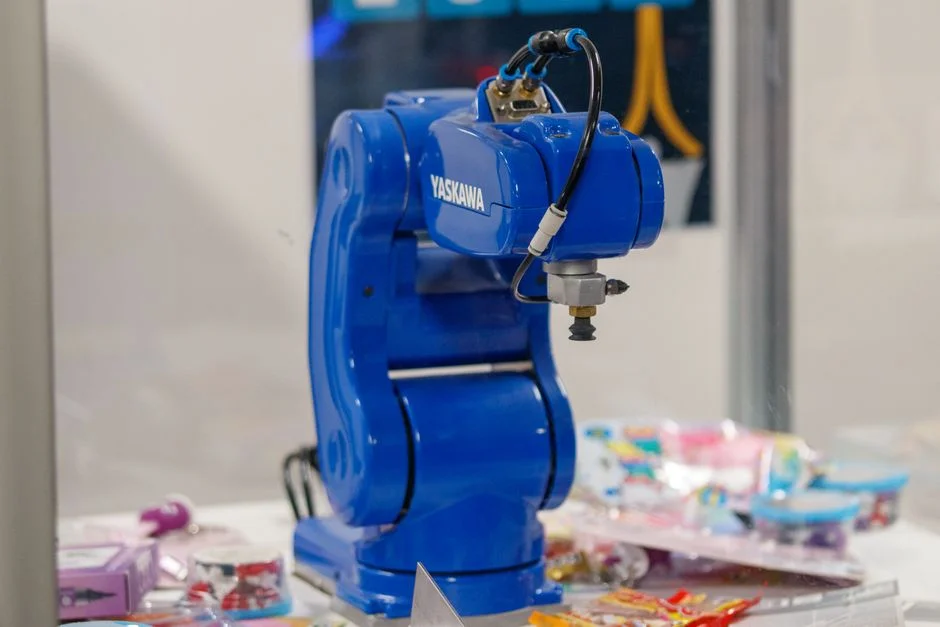
The cleanest data point comes from Dürr's January 13, 2025 press release announcing the equipment package for BYD's first European passenger-car paint line in Szeged, Hungary. The scope is concrete: more than 120 EcoBell3 robots across multiple painting lines, plus Dürr's pigging paint-recovery system that pushes residual paint back to the color changer and eliminates hose-flush waste. Dürr states this cuts paint and rinsing-agent consumption — a 40–70% rinse-water reduction at the color-change step is the typical operating range for this technology class. The reduction is real, but it is upstream of the wastewater plant, not a substitute for one. CED rinse, phosphate/nickel pretreatment, and overspray scrubber blowdown still need treatment before discharge.
Replicating a paint line in five jurisdictions means replicating the wastewater train under five different discharge regimes. That mapping — not the robots — is the design work EPC procurement leads need to scope first.
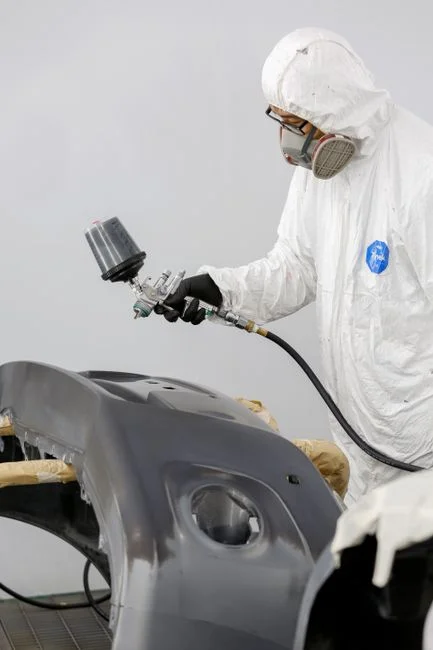
What actually comes out of an automotive paint shop
A modern automotive paint shop produces four segregated wastewater streams that drive every downstream design decision:
- Pretreatment rinse water — phosphate, nickel, and zirconium carryover from zinc-phosphating stages; low flow, high metal loading, pH 4–7.
- Cathodic electrodeposition (CED) rinse — solubilized epoxy-amine paint resin, low VOC but high COD, pH 8–10, emulsified.
- PVC and seam-sealer overspray — high TSS, oily, frequently separated at source as a concentrated sludge.
- Clear-coat and base-coat overspray — solvents, pigments, resin; the most variable stream by volume and the one Dürr's pigging system attacks directly.
Influent parameters to design for: COD 1,500–6,000 mg/L, TSS 500–3,000 mg/L, total phosphorus 30–120 mg/L, nickel 5–40 mg/L, zinc 10–50 mg/L, pH 8–11 (typical automotive industry figures, 2024–2026 design manuals). Hydraulic generation is 0.8–1.5 m³ per vehicle produced — a range that has held for two decades because robots cut water per car but added coating steps offset the gain. A 150,000-unit/yr plant therefore generates 120,000–225,000 m³/yr just from the paint shop, before counting general shop wastewater.
Dürr's pigging system specifically attacks the color-change rinse, which is the highest-strength stream in the booth. Field data from Dürr-equipped lines show 40–70% reductions in rinse-water volume and proportional cuts in solvent loading to the wastewater plant. That is meaningful — but the CED, pretreatment, and floor-scrubber streams still dominate the mass balance.
The standard automotive paint-shop treatment train
The unit operations below are listed in hydraulic order — the sequence a process engineer would draw on a PFD.
- Source segregation. Heavy-metal rinse (Ni, Zn, phosphate) is kept in a separate header from organic-paint rinse. Mixing them at the head of the plant chelates the metals and defeats downstream precipitation.
- pH equalization and chemical demulsification. The CED/clear-coat stream is an oil-in-water emulsion. Acid or alkali brings pH to 7–8.5, and a cationic coagulant (typically polyaluminum chloride or a cationic polymer at 50–200 mg/L) breaks the emulsion before flotation.
- Dissolved air flotation (DAF). This is the workhorse. A well-designed DAF delivers 85–95% TSS removal and 60–80% COD reduction on paint-shop wastewater, floating the de-emulsified paint solids as a concentrated sludge for pressing. A complete DAF system sized for a 100 m³/hr paint-shop line typically requires a 25–35 m³ contact zone with 4–6 bar recycle.
- Fenton oxidation or coagulation-flocculation. Fenton (Fe²⁺ + H₂O₂ at pH 3–3.5, 30–60 min reaction) is the standard polish for residual dissolved COD from the color-change stream; coagulation-flocculation with FeCl₃ or PAC is the lower-CapEx alternative when inlet COD stays below 2,000 mg/L.
- MBR biological treatment. A submerged PVDF hollow-fiber membrane module with nominal pore size ≤0.1 μm delivers a consistent TSS-free effluent and operates at MLSS 8,000–12,000 mg/L — roughly 60% of the footprint of conventional activated sludge at the same loading. The HydropureWater MBR system covers the 10–2,000 m³/day range that brackets every BYD overseas plant under discussion.
- Optional RO polishing. For sites targeting closed-loop rinse reuse, industrial RO polishing on the MBR permeate yields 90–95% recovery and conductivity below 50 µS/cm, suitable for feed back to the deionized rinse loop.
- Sludge handling. DAF float and waste activated sludge are dewatered on a plate-and-frame filter press to 30–40% DS cake for off-site disposal as hazardous waste (paint solids typically carry a low-level heavy-metal classification under EU waste codes 11 01 09*).
How each BYD overseas plant's discharge rules reshape the design
Regulatory mapping is the first design step, before equipment selection. The table below captures the binding discharge envelope at each announced BYD site. Limits are not exhaustive; they reflect the parameters that drive unit-operation choice (COD, TSS, oil & grease, total phosphorus, nickel, zinc).
| Plant / Country | Governing regulation | COD (mg/L) | TSS (mg/L) | Total P (mg/L) | Ni (mg/L) | Zn (mg/L) | Process implication |
|---|---|---|---|---|---|---|---|
| Szeged, Hungary | EU IED 2010/75/EU + BAT-AEL for Surface Treatment of Metals & Plastics (2024 update) | ≤160 | ≤30 | Site-specific, typically ≤2 | ≤0.5 | ≤1.0 | MBR + RO polishing; full chemical precipitation for Ni/Zn |
| Indonesia (planned) | PP 22/2021 (per the Indonesia PP 22/2021 phosphorus limits reference) | ≤100 | ≤30 | Site-specific per KLHK decree; phosphate line typically 2–5 | Hazardous-list annex; ≤0.5–1.0 | ≤1.0 | MBR + RO; biological phosphorus removal may be required |
| Brazil (planned) | CONAMA 430/2011 + state CETESB standard (e.g., São Paulo) | ≤200 (sewer); ≤150 typical for water-body | ≤150 (sewer); ≤50 stricter discharges | Site-specific, often 1–3 | ≤1.0–2.0 | ≤2.0 | MBR alone may suffice; RO optional for reuse |
| Turkey (planned) | SKKY (per industry compliance framework, 2024-2025) | ≤160 | ≤60 | Site-specific | ≤2.0 surface-treatment annex | ≤3.0 | MBR adequate; chemical precipitation mandatory |
| Pakistan (planned) | Pakistan EPA NEQS (industrial discharge) | ≤150 | ≤200 | Site-specific | ≤1.0 | ≤5.0 | Metals limits push design toward ion-exchange or strong precipitation stage after MBR |
Two design pivots follow directly. Hungary and Indonesia push the train to MBR + RO with full heavy-metal polishing. Brazil and Turkey can often stop at MBR, with precipitation sized to the BAT-AEL ceilings. Pakistan's metals ceilings are the binding constraint and typically force an additional ion-exchange or sulfide-precipitation stage after the biological step — a 15–25% CapEx premium versus the EU baseline.
Sizing the wastewater plant for a 150,000–200,000-unit-per-year paint shop
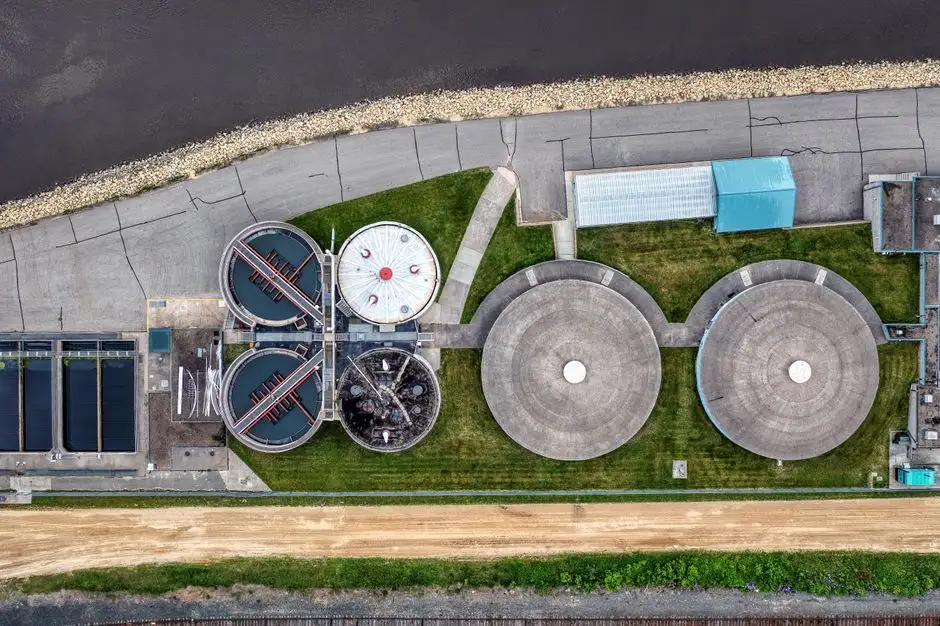
Hydraulic sizing is straightforward once per-vehicle flow and shift pattern are fixed. At 150,000 cars/yr × 1.0 m³/car ÷ ~2,000 production hours (two shifts), the paint shop generates 60–75 m³/hr average. Apply a peak factor of 1.5–2.0 to absorb color-change surges and weekend catch-up shifts, and the design flow is 90–150 m³/hr. Daily volume lands in the 1,200–1,800 m³/day band — squarely inside the working envelope of a standard HydropureWater MBR system with redundant membrane trains.
Footprint matters at every announced site. Hungary and Brazil charge industrial land at a premium; Pakistan and Indonesia face brownfield space constraints. MBR delivers roughly 60% of the footprint of conventional activated sludge at the same F:M loading, which is one of the structural reasons it has displaced CAS in new automotive paint shops since 2018. Containerization is the second lever: factory-tested, pre-wired skids for DAF, MBR, and RO cut on-site commissioning from 8–12 weeks to 3–4 weeks, a meaningful schedule saving when a greenfield plant has a fixed SOP target.
What equipment suppliers should be on the bid list
For a 150,000–200,000-unit/yr overseas paint shop, the bid list filters down to a shortlist by applying the criteria below. A vendor that fails two or more should not make the final round.
| Criterion | What "passes" looks like | Why it matters at BYD scale |
|---|---|---|
| Automotive-paint-shop references | At least 3 installed lines in automotive paint, not generic industrial DAF | Overspray chemistry and CED emulsion break behavior are not generic |
| Single-vendor integration | In-house DAF + dosing + MBR + sludge dewatering, not a multi-vendor consortium | Eliminates interface risk on a 6-month overseas build |
| Automation & remote monitoring | PLC with remote monitoring of overseas wastewater plants via cellular/SCADA, alarm forwarding, and trend logging | Local O&M talent is thin in Brazil, Indonesia, Pakistan — vendor must cover gaps |
| Pre-built compliance documentation | Performance test protocols pre-mapped to EU IED BAT-AEL, Indonesia PP 22/2021, Pakistan NEQS, Turkey SKKY | Reduces permitting risk in jurisdictions with unpredictable review timelines |
| Spare-parts logistics | Standard 20-ft containerized spare kits for DAF recycle pumps, membrane modules, dosing pumps | Critical for plants in Pakistan and Indonesia where customs clearance stretches parts lead times |
| Chemical dosing capability | An automatic chemical dosing package sized for the full precipitant + coagulant + pH-adjustment load, calibrated to the segregated stream chemistry | Demulsification and metals precipitation are dosing-controlled, not hardware-controlled |
For a procurement lead scoping a paint-shop WWTP package against a 2026–2027 overseas SOP, the shortlist is rarely longer than three vendors. The differentiator at bid stage is rarely headline price — it is the depth of automotive-paint references and the strength of the in-house integration story.
Frequently Asked Questions
What wastewater treatment train does BYD use at its overseas paint shops?
BYD replicates a standardized train: source segregation of phosphate/nickel rinse, demulsification plus DAF for overspray and CED paint, Fenton or coagulation-flocculation for dissolved organics, MBR biological treatment, and RO polishing for rinse-water reuse. Sludge is dewatered on a plate-and-frame filter press. The train is identical across plants; the discharge envelope is tuned per country.
How much wastewater does a 150,000-unit/yr automotive paint shop generate?
Typical automotive paint-shop flow is 0.8–1.5 m³ per vehicle (industry design manuals, 2024–2026). A 150,000-unit/yr plant on two shifts produces 60–75 m³/hr average and 1,200–1,800 m³/day, with a design peak of 90–150 m³/hr after applying a 1.5–2.0 peak factor for color-change surges.
Which discharge regulation applies to BYD's Hungary paint shop?
The Hungary plant discharges under EU Industrial Emissions Directive 2010/75/EU, with BAT-AEL ceilings for the Surface Treatment of Metals and Plastics BREF (2024 update): COD ≤160 mg/L, TSS ≤30 mg/L, and tight metal ceilings on nickel and zinc. Compliance typically requires MBR plus RO polishing with full chemical precipitation upstream.
Does Indonesia's PP 22/2021 affect automotive paint-shop design?
Yes. PP 22/2021 sets COD ≤100 mg/L and TSS ≤30 mg/L for many industrial discharge categories, with site-specific total phosphorus limits and hazardous-list annexes for nickel and zinc. Paint shops in Indonesia are pushed toward MBR + RO and may need biological phosphorus removal if the site-specific P limit is below 2 mg/L.
Does Dürr's pigging system eliminate the need for a wastewater treatment plant?
No. Pigging cuts paint and rinsing-agent consumption at the color-change step (40–70% rinse-water reduction is typical for this technology class), but CED rinse, pretreatment rinse, and scrubber blowdown still require full treatment. Pigging reduces the load on the WWTP — it does not replace it.