Why Metal Finishing Wastewater Is a Different Engineering Problem
Metal finishing wastewater is generated from rinse waters and spent process baths in electroplating, anodizing, electroless plating, etching, and pickling operations, with typical facility flows of 5-500 m³/day. The defining chemical reality is that most metallic ions in this stream form anionic coordination complexes in alkaline pH — Zn, Ni, Cu, Fe, and Al all shift from cations to negatively charged species once pH climbs above 7-8 (OALib 2002). That single behavior inverts the assumptions behind conventional cation-targeted treatment: ion exchange in the Na-form misses them, and hydroxide precipitation produces amphoteric redissolution above the optimum pH window.
Four contamination classes force stream segregation before any unit operation is selected. Heavy metals (Zn, Ni, Cu, Cr) drive the precipitation design. Free cyanide (CN⁻) is acutely toxic and incompatible with acid streams — mixing cyanide rinse with pickling acid liberates HCN gas at an LClo of 100 ppm in air. Hexavalent chromium (Cr⁶⁺) is a known carcinogen and must be reduced to Cr³⁺ before precipitation. Chelating agents (EDTA, NTA, gluconate) re-dissolve precipitated metals and routinely defeat otherwise well-designed trains; drag-out of 0.5-2 g/L EDTA from electroless nickel baths is enough to lift residual nickel back above 5 mg/L after precipitation.
Municipal treatment, which centers on carbon, nitrogen, and phosphorus removal with biological kinetics, has almost no overlap with this problem set. A metal finishing train is a chemistry-and-membrane train: pH control, oxidation/reduction, precipitation, solids separation, then polishing for either compliance or reuse. The article How to Treat High Salinity Wastewater in 2026 covers the closed-loop salinity angle, which intersects metal finishing where RO concentrate recirculation drives TDS above 5,000 mg/L.
The 2026 Regulatory Floor: EPA 40 CFR 433, EU IED, and China GB Standards
EPA 40 CFR 413 and 433 define the U.S. categorical pretreatment standards for metal finishing, with daily maximum and monthly average limits that govern what the plant can discharge to a POTW. The same numbers are non-negotiable design targets for any new treatment train built in 2026.
| Parameter | EPA 40 CFR 433 Daily Max (mg/L) | EPA 40 CFR 433 Monthly Avg (mg/L) | EU IED BAT-AEL (mg/L) | China GB 21900-2008 + 2024 amend. (mg/L) |
|---|---|---|---|---|
| Copper (Cu) | 1.1 | 0.86 | 0.1-0.5 | 0.5 |
| Nickel (Ni) | 0.43 | 0.32 | 0.1-0.5 | 0.5 |
| Total Chromium (Cr) | 1.0 | 0.60 | 0.1-0.5 | 1.0 |
| Hexavalent Cr (Cr⁶⁺) | 0.20 | 0.10 | 0.05-0.1 | 0.2 |
| Zinc (Zn) | 1.0 | 0.65 | 0.2-1.0 | 1.5 |
| Lead (Pb) | 0.10 | 0.06 | 0.05-0.2 | 0.2 |
| Cadmium (Cd) | 0.11 | 0.07 | 0.05-0.1 | 0.05 |
| Total Cyanide (CN⁻) | 0.20 | 0.10 | 0.05-0.1 | 0.3 |
EU Industrial Emissions Directive 2010/75/EU sets BAT-AEL ranges for surface treatment using electrochemical and chemical processes; the actual limit inside that range is set by the receiving water body and local authority (per EU IED 2010/75/EU). China's GB 21900-2008 was tightened through 2024 amendments in several provinces, with the values shown representing the most current published table for new discharges. Where a plant targets rinse-water reuse rather than discharge, the working target tightens to ≤0.1 mg/L per metal — that single number is what drives the polishing step to ion exchange or RO. For context on how regional limits diverge, the 2026 CONAMA compliance guide for Brazil covers a comparable jurisdiction but a different metals framework.
Step 1 — Segregation, Flow Equalization, and Cyanide Destruction
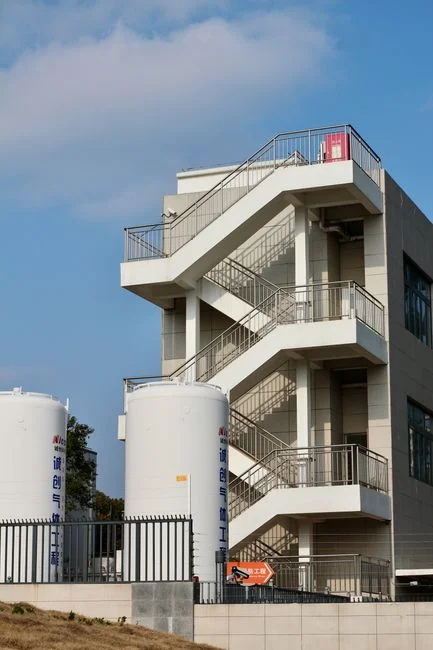
Segregate cyanide-bearing streams (zinc cyanide, copper cyanide plating rinses, cadmium cyanide) from acid pickling, bright dip, and hexavalent chromium lines. Mixing releases HCN gas with a 100 ppm air LClo — immediately dangerous to life and health. The simplest engineering control is two parallel equalization tanks with separate pH adjustment trains: alkaline-side at pH 11 for cyanide, acid-side at pH 2 for chrome/pickling.
Cyanide destruction by alkaline chlorination proceeds in two stages. First, raise pH to ≥11 with NaOH and dose NaOCl to maintain 50-100 mg/L free Cl₂ for 30-60 min HRT, converting CN⁻ to cyanate (OCN⁻). Second, lower pH to 8-9 and continue chlorination for an additional 30-60 min to hydrolyze cyanate to CO₂ and NH₃, with NH₃ subsequently stripped or chlorinated to N₂. The full reaction consumes roughly 2.73 g Cl₂ per g CN⁻ oxidized to cyanate, and 4.10 g Cl₂ per g CN⁻ fully oxidized — a stoichiometry that drives operating cost more than any other reagent in the train. A PLC-controlled chemical dosing system with ORP and free-chlorine probes is the only practical way to hold that residual within band manually.
Electrochemical oxidation is the main alternative: 3-5 V across graphite or dimensionally stable anodes (DSA) consumes 2-4 kWh/kg CN⁻ and produces no chlorine byproducts. It pays back at flows above ~20 m³/day of high-CN waste, or where residual chlorinated organics in the effluent are constrained. Equalization tank sizing is 8-24 hr HRT to dampen pH swings of 1-13 and concentration spikes from drag-out events; for a 100 m³/day plant, a 50-100 m³ tank is typical, sized to the largest batch dump rather than average flow.
Step 2 — Hexavalent Chromium Reduction and Heavy Metal Precipitation
Cr⁶⁺ is reduced in a dedicated reactor ahead of any hydroxide precipitation. Lower pH to 2.0-2.5 with H₂SO₄, dose NaHSO₃ (or SO₂ gas) at 2.5-3.0 g per g Cr⁶⁺, hold 20-40 min HRT with ORP below 250 mV (Ag/AgCl) to confirm completion, then raise pH to 8-9 with NaOH or lime to precipitate Cr(OH)₃. Ferrous sulfate (FeSO₄) is an alternative reducer at 2.5-3.0 g per g Cr⁶⁺ but co-precipitates iron hydroxide that roughly doubles sludge volume.
| Metal | Optimum Precipitation pH | Reagent | Typical Residual (mg/L) | Settling Time (min) |
|---|---|---|---|---|
| Cu²⁺ | 9.0-10.0 | NaOH or Mg(OH)₂ | 0.5-1.0 | 30-60 |
| Zn²⁺ | 9.0-10.0 | NaOH or Mg(OH)₂ | 0.5-2.0 | 30-60 |
| Ni²⁺ | 10.0-11.0 | NaOH or Mg(OH)₂ | 0.5-2.0 | 60-90 |
| Cd²⁺ | 10.0-11.0 | NaOH | 0.3-1.0 | 60-90 |
| Fe³⁺ | 8.0-9.0 | NaOH or lime | 0.5-1.0 | 20-40 |
| Cr³⁺ (post-reduction) | 8.0-9.0 | NaOH or lime | 0.5-1.0 | 30-60 |
| Cu/Zn (sulfide polish) | 7.0-8.0 | NaHS or Na₂S | <0.1 | 30-60 |
Optimum pH is metal-specific because each hydroxide has a different solubility minimum, and most are amphoteric — Zn(OH)₂ redissolves above pH 10.5, Cu(OH)₂ above 11.5. NaOH or Mg(OH)₂ are preferred over lime (Ca(OH)₂) when the receiving clarifier cannot tolerate the +20-30% sludge mass from calcium salts. A two-stage pH cascade (raise to 9 for Cu/Zn, then to 10.5 for Ni) produces lower residual nickel than single-stage pH 10 operation. The dedicated Copper Wastewater Treatment by Chemical Precipitation: 2026 Engineering Specs and Nickel Wastewater Treatment System: 2026 Hybrid DAF-RO-MBR Design articles cover the per-metal reagent and reactor sizing in detail.
Sulfide precipitation with NaHS or Na₂S at pH 7-8 drops residual metals to <0.1 mg/L but risks H₂S release at any pH excursion below 7, which is why sulfide polish is normally a second-stage option after hydroxide precipitation, not a replacement. Sludge yield across the precipitation stage is 4-8 kg dry solids per m³ of treated wastewater — that number, not the chemistry, drives dewatering equipment selection downstream.
Step 3 — Solids Separation: DAF vs Lamella Clarifier
Dissolved air flotation is the workhorse for metal finishing wastewater, particularly when the influent carries oils, greases, surfactants, emulsified cleaners, or bright-dip residues. A properly designed DAF system achieves 90-95% TSS removal at hydraulic loadings of 4-20 m/h, with float scraped at 2-5% solids. Recycle ratio is 20-50% of throughput, and air-to-solids ratio (A/S) is the key operating variable — 0.02-0.05 kg air/kg TSS for chemical sludges, 0.05-0.10 for oil-laden streams. Polymer dose is 0.5-5 mg/L anionic polyacrylamide (charge density 30-50%) injected just ahead of the DAF; coagulant (PAC 20-100 mg/L or ferric chloride 20-50 mg/L) is dosed 30-60 seconds upstream to neutralize colloidal charge.
Lamella clarifier selection wins when influent TSS is consistently above 2,000 mg/L with low oil/surfactant content, where the 20-40 m/h surface loading of inclined plates delivers 30% lower polymer consumption than DAF (per HydropureWater spec). The lamella clarifier configuration produces a thickened underflow at 2-4% solids rather than a float, which generally improves downstream filter press performance. Overflow from either unit is typically <30 mg/L TSS and <1 mg/L residual metal — that is the gate to the polishing step.
Selection logic: oil/surfactant present → DAF; high TSS, no oil → lamella; space-constrained retrofit → DAF (lower footprint at <10 m/h loading). Both are followed by a sludge holding tank with 4-12 hr HRT to even out flow to the dewatering press.
Step 4 — Polishing for Reuse: Ion Exchange or Reverse Osmosis
Once the clarifier overflow hits <1 mg/L per metal, the question is whether the plant must hit discharge limits (already met) or reuse limits (≤0.1 mg/L per metal for closed-loop rinse). That single decision drives a 5-10× increase in capital cost, so the engineer must confirm the actual reuse demand before specifying polishing.
Ion exchange with strong-acid cation resin in the Na-form polishes residual divalent metals to <0.1 mg/L. A typical cycle processes 50-200 bed volumes (BV) of feed before breakthrough, depending on hardness loading; regeneration with 5-10% HCl consumes 80-120 g HCl per liter of resin and produces a regenerant waste that must be returned to precipitation. Resin life is 3-5 years at metal finishing feed conditions. Ion exchange is the economic choice at flows below 50 m³/h where discharge to a POTW is not available and reuse demand is intermittent.
Reverse osmosis is the standard at larger flows and where the plant also needs to remove monovalent ions (Na, Cl, sulfate from process baths). A brackish RO system operates at 10-25 bar feed pressure with 95-98% rejection of multi-valent ions and 70-80% recovery on metal finishing streams; concentrate (20-30% of feed) is recirculated to the equalization tank to recover residual metals in precipitation. The industrial RO system becomes the reuse workhorse above 50 m³/h.
Electrodialysis is the third option, viable when feed TDS exceeds 5,000 mg/L — too high for RO without excessive pressure, but well-suited to selective ion transport through Nafion or Selemion membranes. The OALib 2002 study extracted Zn, Ni, Cu, and Al from alkaline metal finishing wastewater within 2-3 hours at the laboratory and pilot scale. CAPEX is 2-3× RO at equivalent capacity, but OPEX runs 30-50% lower at high salt load because there is no high-pressure pumping. The Electrodialysis System Operating Cost in 2026: Real OPEX Breakdown article gives the per-kWh and per-cubic-meter numbers. Selection driver in one line: feed TDS <5,000 mg/L → RO; >5,000 mg/L → electrodialysis; intermittent flow with strict residual targets → ion exchange.
Step 5 — Sludge Dewatering and Metal Recovery Options
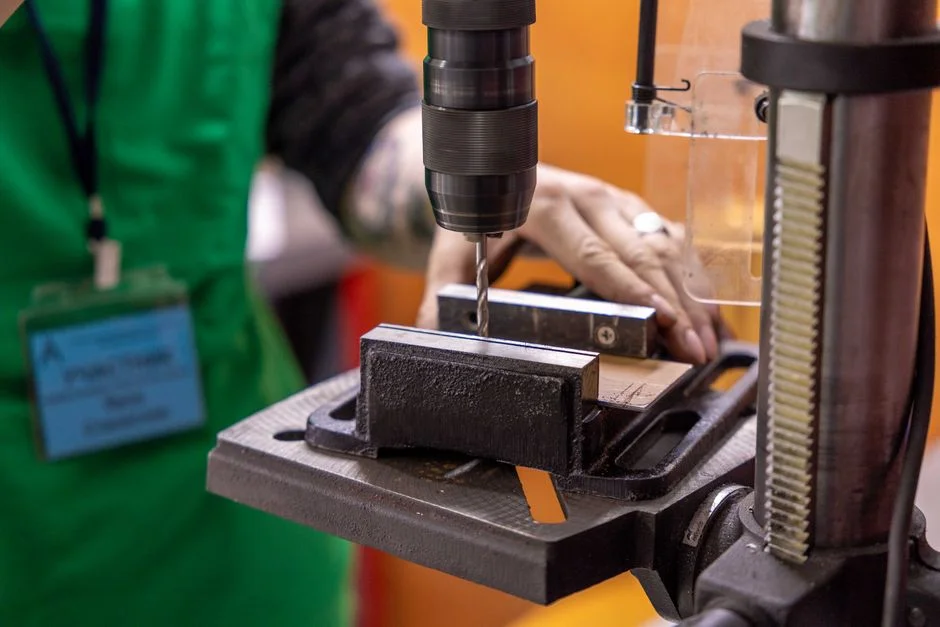
Metal finishing sludges carry RCRA waste code F006 (wastewater treatment sludges from electroplating operations) and require stabilization before landfill. The plate and frame filter press is the default dewatering unit: 1-3% feed solids concentrated to 30-35% cake, cycle 2-6 hours, filtration area sized at 0.5-2 m² per m³/day of feed flow. A plate and frame filter press in the 10-50 m² range covers 80% of metal finishing installations; PLC control with automatic plate shifting and cloth wash reduces operator labor by roughly 60% versus manual units.
Belt filter presses run continuously and produce 20-28% cake at lower CAPEX, but cake moisture runs 3-5% higher than a properly operated plate press — enough to push some sludges back above the paint-filter liquid test threshold and disqualify them from non-hazardous landfill. Belt presses are preferred at flows above 200 m³/day where continuous operation offsets the higher moisture; the Belt Filter Press engineering guide covers the unit operation in more detail.
Metal recovery is where 2026 best practice pulls ahead of 1990s baseline. Recovering Cu or Ni as metal sulfides from a sulfide-polish stage, or via electrolytic winning from a concentrated RO/ED stream, can offset 30-60% of treatment OPEX when feed metal exceeds 500 mg/L. At sub-100 mg/L feed, recovery economics fail and the sludge is destined for stabilization and secure landfill.
Frequently Asked Questions
What is the typical pH window for hydroxide precipitation of heavy metals in metal finishing wastewater?
Optimum pH is metal-specific: Cu 9-10, Zn 9-10, Ni 10-11, Cd 10-11, Fe³⁺ 8-9, and Cr³⁺ 8-9 after reduction. Operating above the upper bound redissolves amphoteric hydroxides (notably Zn above 10.5) and is the most common cause of failed compliance samples.
How is hexavalent chromium reduced before precipitation in 2026?
Lower pH to 2.0-2.5 with H₂SO₄, dose NaHSO₃ or SO₂ at 2.5-3.0 g per g Cr⁶⁺, hold 20-40 min HRT, then raise pH to 8-9 to precipitate Cr(OH)₃. ORP below 250 mV (Ag/AgCl) confirms complete reduction before the pH shift.
What does cyanide destruction by alkaline chlorination actually cost to operate?
Stoichiometry is 4.10 g Cl₂ per g CN⁻ for full oxidation to CO₂ and N₂, with NaOH consumption of roughly 1.5 g per g CN⁻. At NaOCl unit cost of $0.20-0.40 per kg available Cl₂, treatment cost is $1-2 per kg CN⁻ destroyed, exclusive of sludge handling.
When should a metal finishing plant select electrodialysis over reverse osmosis?
Feed TDS above 5,000 mg/L — typical when RO concentrate is being polished or where the influent carries concentrated process bath dumps. RO fouls and requires excessive pressure above that threshold; electrodialysis runs at 1-2 V per cell pair and handles the high-TDS stream at 30-50% lower OPEX despite 2-3× higher CAPEX.
Do metal finishing sludges always require hazardous-waste disposal?
Yes under RCRA F006 unless the sludge passes TCLP for all eight regulated metals (Cd, Cr, Pb, Hg, As, Se, Ag, Ba). A 30-35% cake from a plate and frame filter press typically passes TCLP when feed metals are below 50 mg/L; higher feed concentrations require sulfide stabilization before delisting.