What the Brazilian Color Discharge Limit Actually Is in 2026
Under CONAMA Resolution 430/2011, Annex I, Brazil's federal color discharge ceiling for effluents released to surface water bodies is ≤75 mg Pt/L true color, read on the platinum-cobalt (Pt-Co/Hazen) scale. The "true color" qualifier is non-negotiable in the field: the sample must be filtered through a 0.45 µm membrane before absorbance is read, stripping out suspended solids that would otherwise inflate the value. An unfiltered (apparent) reading of 200 mg Pt/L can drop to 60 mg Pt/L after filtration—a difference that decides whether you pass inspection. Resolution CONAMA 357/2005 layers a second test on top: the receiving water body itself must not have its natural background color altered, which inspectors check visually at the outfall. The standard analytical method is ADTM 2120 B/C (Standard Methods for the Examination of Water and Wastewater), reading absorbance at 450 nm against a stock solution of K2PtCl6 + CoCl2·6H2O calibrated so that 500 mg Pt/L = 500 Pt-Co units (per Standard Methods 23rd ed., 2017).
Why Brazilian Color Limits Differ from the U.S. ADMI Scale
Brazil's regulatory unit is mg Pt/L on the Pt-Co/Hazen scale, the same numeric scale used in ISO 7887-B and the EU platinum-cobalt method. Specifying ADMI-rated equipment for a Brazilian plant is one of the most expensive errors a foreign EPC can make. By convention 1 mg Pt/L = 1 Hazen unit = 1 Pt-Co unit—the three labels are interchangeable. ADMI (American Dye Manufacturers Institute) units, used in U.S. textile discharge permits, are not interchangeable with Pt-Co: they derive from a tristimulus filter calculation that weighs hue and brightness, not a single 450 nm absorbance. Empirically, ADMI values run roughly 3–10× the Pt-Co value for the same effluent, and the ratio shifts with hue—a red reactive dye bath and a black sulfur dye bath at the same Pt-Co number can read 4× and 9× on the ADMI scale, respectively. There is no linear conversion; each effluent needs its own ADMI-to-Pt-Co calibration curve if you must translate historical U.S. data. A second distinction trips up new engineers: true color (filtered at 0.45 µm) versus apparent color (unfiltered). A Brazilian kraft pulp effluent may report 4,200 mg Pt/L apparent but only 1,800 mg Pt/L true; the 75 mg Pt/L ceiling is enforced against the true value, so the design target is post-filtration, not raw (per Standard Methods 2120B, 2017).
Federal CONAMA 430/2011 vs. State Bodies (CETESB, INEA, COPAM)
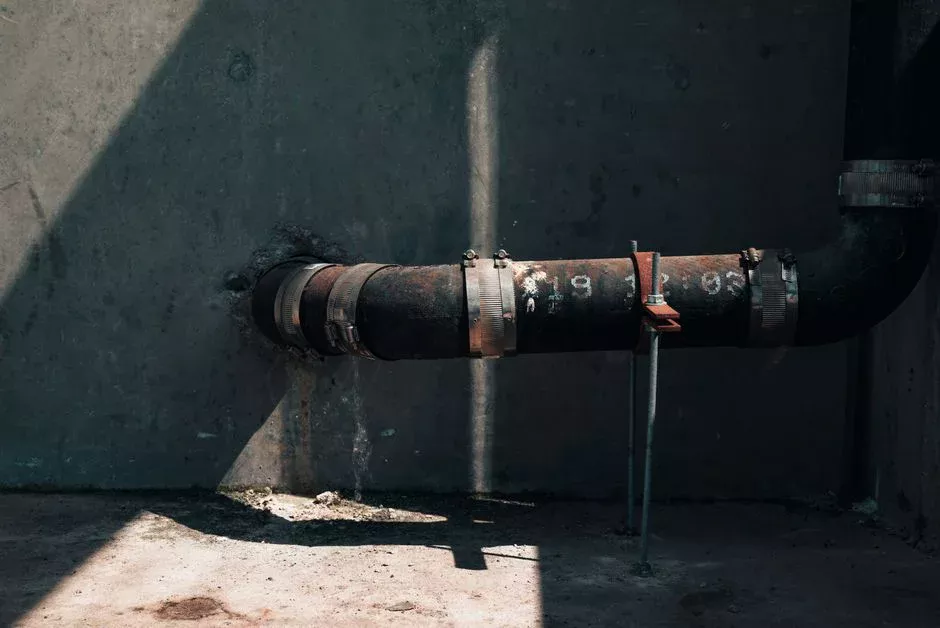
CONAMA 430/2011 sets the federal floor for color limits. Any state can be tighter; none can be looser. The four jurisdictions that matter most for a textile, paper, or dye project in 2026 are summarized below.
| Authority | Legal instrument | Color limit (true color) | Practical enforcement target |
|---|---|---|---|
| Federal (CONAMA) | Resolution 430/2011, Annex I | ≤75 mg Pt/L | 75 mg Pt/L |
| São Paulo (CETESB) | P4.221 (Decisão de Diretoria 367/2015, updated 2024-09) | No visible color change in receiving water | <30 mg Pt/L in practice |
| Rio de Janeiro (INEA) | NT-2022.R-10 | ≤75 mg Pt/L + "no chromatic alteration" clause | ~50 mg Pt/L |
| Minas Gerais (COPAM/CERH) | Deliberação Normativa COPAM 217/2017; NT-214 for sugar-ethanol | ≤75 mg Pt/L (industry-specific NT-214 for vinasse coprocessing) | 75 mg Pt/L, with vinasse dilution rules |
Engineer to the strictest applicable state—a design that meets only the federal 75 mg Pt/L will still fail in São Paulo or Rio. CETESB's "no visible change" rule is enforced by a visual comparison at the outfall, and operators who have watched that test fail consistently target ≤30 mg Pt/L true color on the spectrophotometer to leave a defensible margin (per CETESB P4.221, 2024-09 revision).
Industries in Brazil Affected by the Color Limit
Color is the parameter that most often triggers a CONAMA non-conformance for Brazilian industry. The four highest-load sectors, with typical influent apparent color, are: textile and apparel, generating roughly 175,000 m³/day of colored wastewater nationally, with reactive and disperse dye baths at 1,000–5,000 Pt-Co apparent (per ANA Atlas Irrigação 2024 and ABIT sectoral data, 2024); pulp and paper (kraft and recycled mills in Bahia, Paraná, São Paulo), where lignin and chromophore leaching push effluent apparent color to 2,000–6,000 Pt-Co; tanneries in the Rio Grande do Sul, Minas Gerais, and Bahia clusters, with chrome and vegetable tannin streams at 800–3,000 Pt-Co apparent; and sugar-ethanol mills in São Paulo and Minas Gerais, where melanoidin-rich vinasse runs 1,500–4,000 Pt-Co apparent and is governed by the NT-214 coprocessing rules. Dye and pigment manufacturers sit at the extreme: batch dumps can spike to 50,000 Pt-Co apparent, and any plant designing for this load needs equalization capacity sized for the worst slug, not the daily mean.
Treatment Train Engineering to Meet ≤75 mg Pt/L True Color
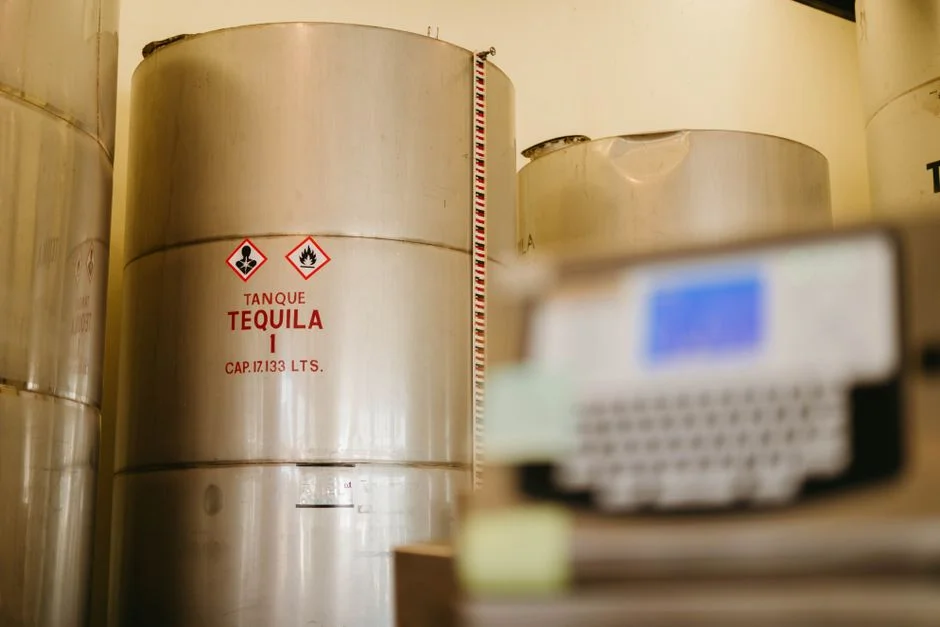
No single unit operation reliably hits the 75 mg Pt/L true color ceiling from textile or dye mill influent. The benchmarked 2026 process train stacks four to five stages, each with a known color-removal envelope, so the engineer can match equipment to permit conditions. The table below maps each technology to its typical effluent true color and removal efficiency, drawn from municipal and industrial commissioning data in southern Brazil (per HydropureWater field data, 2025-2026, plus peer-reviewed benchmarks in Journal of Environmental Management 331 (2023) 117289).
| Technology | Typical influent (true color, mg Pt/L) | Effluent true color (mg Pt/L) | Removal | Role in train |
|---|---|---|---|---|
| Coagulation/flocculation (FeCl₃ or PAC + anionic polymer) | 1,000–5,000 | 150–300 | 70–90% | Primary color knock-down; cheap |
| DAF (dissolved air flotation) | 150–500 | 120–200 | 50–70% | Colloidal dye removal, sludge thickening |
| Aerobic MBR (PVDF 0.1–0.4 µm) | 120–300 | 60–100 | 50–65% | Biological azo-bond reduction |
| GAC polish (granular activated carbon) | 60–120 | <15 | 85–95% | Compliance insurance |
| Ozone (1–3 mg O₃/mg color) | 60–150 | 10–40 | 70–90% | Azo/diazo bond cleavage |
| Fenton (H₂O₂/Fe²⁺, pH 3) | 200–800 | 40–100 | 75–90% | Recalcitrant dye oxidation |
| NF / RO membrane | 40–150 | <5 | >95% | Water reuse + color simultaneously |
The standard 2026 train for a Brazilian textile or dye plant is equalization → coagulation (with an automatic coagulant dosing system for stable jar-test transfer) → DAF system for color removal → MBR system for color decolorization → GAC polish → final pH adjust → discharge. CAPEX for a 1,000 m³/day plant of this configuration runs $180–$420/m³/day in 2026 dollars; OPEX runs $0.35–$0.95 per m³ treated, with GAC replacement typically dominating the operating cost (per HydropureWater field data, 2025-2026, and the parallel Brazil 2026 pH discharge limit guide for the chemistry envelope around pH 6–9). Plants chasing water reuse add an NF/RO stage and recover 60–75% of the polished water back to the dye house.
Sampling, Monitoring, and Reporting Requirements
A defensible compliance record in Brazil rests on four procedural points. Sample point: the final effluent must be taken after the last treatment unit and before any dilution from cooling-water bleed or stormwater, per CONAMA 430/2011 §5.2. Frequency: federal compliance requires a minimum of one 24-h composite sample per quarter; CETESB requires monthly composite sampling for textile, paper, and tannery discharges (per P4.221, 2024-09 revision). Method: 0.45 µm membrane filtration followed by absorbance at 450 nm against a Pt-Co standard, per Standard Methods 2120B/C—the ADTM visual comparator (2120C) is acceptable only for screening. Lab accreditation: the analysis must come from an ABLE/INMETRO-accredited laboratory, or an internal QC program with a third-party cross-check every six months. Reporting flows through the state environmental portal (FATMA in Santa Catarina, IMA in Alagoas, the respective Órgão Ambiental in each state) and into the federal CTF/IBAMA annual report. Missing the quarterly composite is treated as a non-conformance even if the result would have passed.
Frequently Asked Questions
What is Brazil's 2026 federal color discharge limit? ≤75 mg Pt/L true color, under CONAMA Resolution 430/2011, Annex I, for effluents discharged to surface waters. The value is read on the platinum-cobalt (Pt-Co/Hazen) scale after 0.45 µm membrane filtration.
Is the Brazilian limit measured as true or apparent color? True color only, after filtration through a 0.45 µm membrane and absorbance at 450 nm per Standard Methods 2120B/C. Apparent (unfiltered) color readings do not satisfy the federal permit.
Which Brazilian state has the strictest color limit? CETESB in São Paulo, under Norma Técnica P4.221. The instrument does not post a numeric mg Pt/L ceiling but enforces a "no