Brazil's 2026 pH Discharge Limit: The Core Rule and Why It Matters
Brazil's pH discharge limit is 5.0 to 9.0 for industrial effluents released to receiving water bodies, set by CONAMA Resolution 430/2011, Article 5, item I. Sewer discharges are typically tightened to 6.0–9.0 by state water utilities such as SABESP, COPASA, and CEDAE. The limit applies at the outfall using a 24-hour composite or grab sample, with monitoring frequency scaled to flow.
That single sentence is what every compliance engineer in Brazil needs to be able to recite from memory, because pH is the parameter most likely to be checked first by an inspector walking onto a plant floor with a handheld probe. It is also the parameter most often mishandled in design, since many facilities spec neutralization skids that hold the average inside 5–9 but allow excursions to slip past during batch dumps. CONAMA 430/2011 sits downstream of CONAMA Resolution 357/2005, which sets receiving-water-body quality targets; Class 2 freshwaters, the most common receiving body for industrial outfalls, must remain between pH 6.0 and 9.0. Article 5 of 430/2011 effectively hardens that range to 5.0–9.0 at the point of release, giving the regulator a 1.0-unit buffer against mixing-zone chemistry and providing the enforcement anchor for state agencies like CETESB, INEA, and FEAM.
pH is one of seven core parameters grouped in CONAMA 430 alongside temperature (≤40 °C at the outfall), settleable solids (≤1 mL/L via the Cone Imhoff test), oils and greases (≤100 mg/L), biochemical oxygen demand, chemical oxygen demand, and total suspended solids. Unlike BOD or COD, pH is instantaneous: a single slug of acid or caustic can put a facility out of compliance in under a minute. Under Brazilian Federal Law 9.605/1998 (the Environmental Crimes Law, known locally as Lei de Crimes Ambientais), a non-compliant pH reading at a licensed outfall can trigger administrative fines ranging from R$ 50 for a minor infraction to R$ 50,000,000 for willful or repeated violations, plus partial or full operational shutdown under CONAMA 491/2018 enforcement rules. The economic exposure alone makes pH the single most important parameter to instrument correctly.
Three pH Compliance Windows: Water Body, Sewer, and Cooling-Tower Blowdown
The 5.0–9.0 figure is the headline, but it is not the only window a Brazilian plant has to respect. The applicable pH range depends on where the effluent actually goes, and conflating these windows is one of the most common engineering mistakes in licensing submissions. The table below maps the four discharge paths a manufacturing facility is most likely to encounter, with the governing instrument and a defensible operating range.
| Discharge Path | Governing Instrument | pH Window | Rationale |
|---|---|---|---|
| Direct to water body (river, lake, coastal waters) | CONAMA 430/2011, Art. 5, I | 5.0 – 9.0 | 1.0-unit buffer around Class 2 freshwater band of 6.0–9.0 set by CONAMA 357/2005 |
| Public sewer (sanitary utility) | State utility standard | 6.0 – 9.0 (SABESP, COPASA) / 6.5 – 9.5 (CEDAE) | Tighter lower bound protects nitrification biology in the receiving WWTP |
| Cooling-tower blowdown | Manufacturer / plant engineering spec | 6.5 – 8.5 (typical) | Prevents calcite scaling above 8.3 and under-deposit corrosion below 6.5 on carbon-steel exchangers |
| Landfill leachate (treated) | CONAMA 491/2018 | 6.0 – 9.0 | Protects soil and groundwater receiving the leachate plume |
The sewer-discharge column is where the most aggressive tightening happens. SABESP (São Paulo) and COPASA (Minas Gerais) reject or surcharge any influent outside 6.0–9.0 because municipal activated-sludge systems operate at pH 6.8–7.2 for optimal nitrification; a slug of acid at pH 3 can knock a 50,000-PE plant into incomplete nitrification for 6–12 hours. CEDAE in Rio de Janeiro uses the slightly wider 6.5–9.5 band, but its industrial tariff schedule imposes a 30–80% surcharge for any monthly average outside 7.0–8.0. Cooling-tower blowdown sits in its own window because the constraint is asset protection, not environmental: Langelier Saturation Index calculations show that pH above 8.3 accelerates calcium carbonate scaling on condenser tubes, while pH below 6.5 drives under-deposit corrosion on carbon steel. Plant engineers typically target 7.0–8.0 in the recirculating water to balance both risks.
State environmental agencies retain authority to impose local limits tighter than CONAMA 430/2011 through licensing conditions (condicionantes de licença). CETESB in São Paulo, for example, has required pH 6.5–8.5 at outfalls discharging into the Tietê and Pinheiros rivers since 2018, citing cumulative low-pH loading from the basin. Any engineer filing a new outfall design should request the latest Licença de Operação review from the relevant state agency before sizing the neutralization skid.
How Brazilian Regulators Sample and Enforce pH at the Outfall
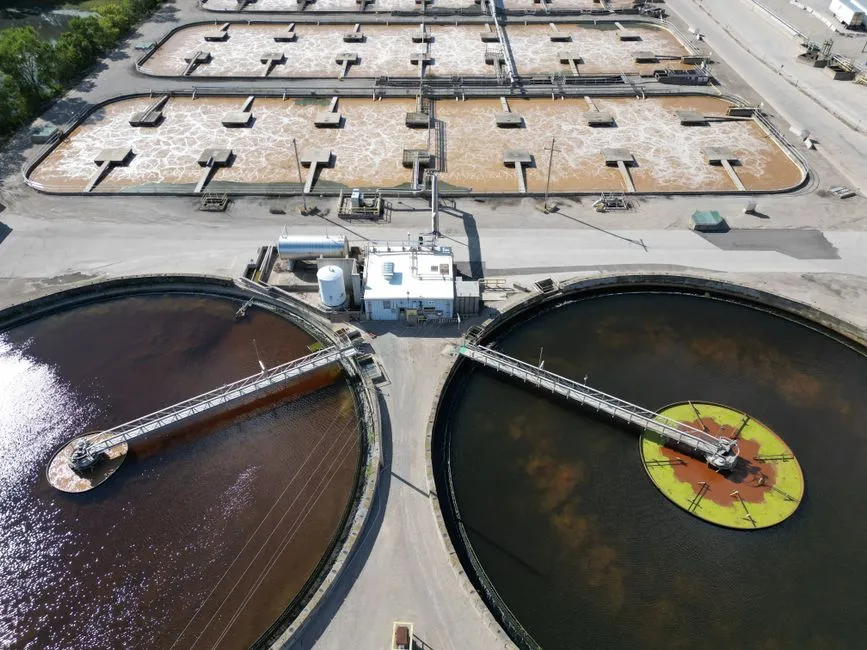
Compliance is not a spreadsheet number; it is whatever the inspector measures at the outfall manhole with a calibrated probe, at the time of the inspection. CONAMA 430/2011 Article 5 requires that all parameters be measured at the point of release using either a 24-hour composite sample (collected by an autosampler with flow-paced pacing) or a grab sample for facilities below the composite-sampling threshold. pH is one of the few parameters that must additionally be field-measured in situ at the moment of collection, because the value drifts within 30–60 minutes of sampling due to CO₂ degassing, biological activity, and temperature shift.
CETESB Standard NT-213 and ANA (National Water Agency) guidance require continuous pH monitoring with data logging at 15-minute intervals for any outfall exceeding 100 m³/day. The data logger must be tamper-sealed, time-stamped, and retained for a minimum of five years per CONAMA 491/2018 recordkeeping rules. Plants discharging below 100 m³/day typically use a portable probe with two-point calibration performed at the start of each shift, but the same single-excursion rule applies: any reading outside 5.0–9.0 is reportable as a non-compliance event, even if the 24-hour average lands inside the range. This is the most common compliance failure mode in Brazilian facilities, because equalization tanks are often undersized for batch-process peaks and a 15-minute spike from a CIP (clean-in-place) discharge can drag the average back into range while the instantaneous value sits at pH 4.5 for 8–12 minutes.
Probe calibration cadence is a frequent audit finding. The standard protocol is a two-buffer calibration using NIST-traceable solutions bracketing the operating range — typically pH 4, 7, and 10 — performed at the start of every sampling day and verified with a third buffer after measurement. Drift greater than 0.2 pH units triggers probe replacement or reconditioning. Combination electrodes with polymer reference junctions tolerate the high-TSS and oily matrices common in food and metal-finishing plants better than glass-body probes with ceramic junctions, which foul within 2–4 weeks in effluent service.
Designing a Neutralization System That Stays Inside 5.0–9.0
Holding pH inside the 5.0–9.0 envelope is a four-stage process: equalization → pH adjustment → flocculation/coagulation (if metals are present) → final pH trim. Each stage has a specific function and a typical design range, and skipping any one of them shows up within the first quarter of operation.
Stage 1 — Equalization. A mechanically mixed holding tank with 8–24 hours of hydraulic retention dampens the pH swings coming from batch processes. For a 50 m³/day food plant with two CIP dumps per shift, 16 hours of retention (≈ 33 m³ working volume) is the typical design point. Mixers run at 100–200 RPM with a specific power input of 5–10 W/m³ to prevent thermal or chemical stratification without emulsifying oils. A baffled inlet and an overflow weir at the outlet prevent short-circuiting.
Stage 2 — pH adjustment. Acidic streams (pH < 6) are dosed with sodium hydroxide (NaOH, typically 10–50% liquid) or lime (Ca(OH)₂ slurry at 5–15%). Alkaline streams (pH > 9) are dosed with sulfuric acid (H₂SO₄, 10–98%) or hydrochloric acid (HCl, 10–33%). The choice is mostly a freight-and-handling decision: H₂SO₄ is cheaper per kg of acid but adds sulfate loading to the effluent, which is a problem if the receiving WWTP has an anaerobic digester sensitive to sulfate. A worked example: 1 m³ of pH 12 sodium hydroxide waste at 10 g/L NaOH (≈ 0.25 mol/L OH⁻) requires roughly 0.25 × 0.98/2 ≈ 0.245 mol of H₂SO₄, or about 10 L of 10% H₂SO₄ to reach pH 7 — a useful starting point for dose-rate sizing before titration is run on the actual waste. (Stoichiometric check, HydropureWater field data, 2026.)
Stage 3 — Coagulation/flocculation. Required only when metal-bearing streams (metal finishing, pickling, anodizing) are present, since neutralization alone will precipitate hydroxides but not always at the right size for clarification. A typical dose of 50–200 mg/L FeCl₃ or 20–80 mg/L polyaluminum chloride (PAC) at pH 7–8 brings the metals out as settleable floc.
Stage 4 — Final pH trim. A second inline pH probe 30–90 seconds downstream of the primary dosing point drives a trim dose through a PLC/PID loop, holding the effluent at the setpoint (typically pH 7.0–7.5) with a control accuracy of ±0.1–0.3 pH units. An automatic chemical dosing system for pH neutralization with a PID controller is the standard hardware package for this loop, and the response time of 30–90 seconds is fast enough to reject most batch-induced disturbances before they reach the outfall.
Equipment Selection: pH Control Hardware for Brazilian Industrial Plants
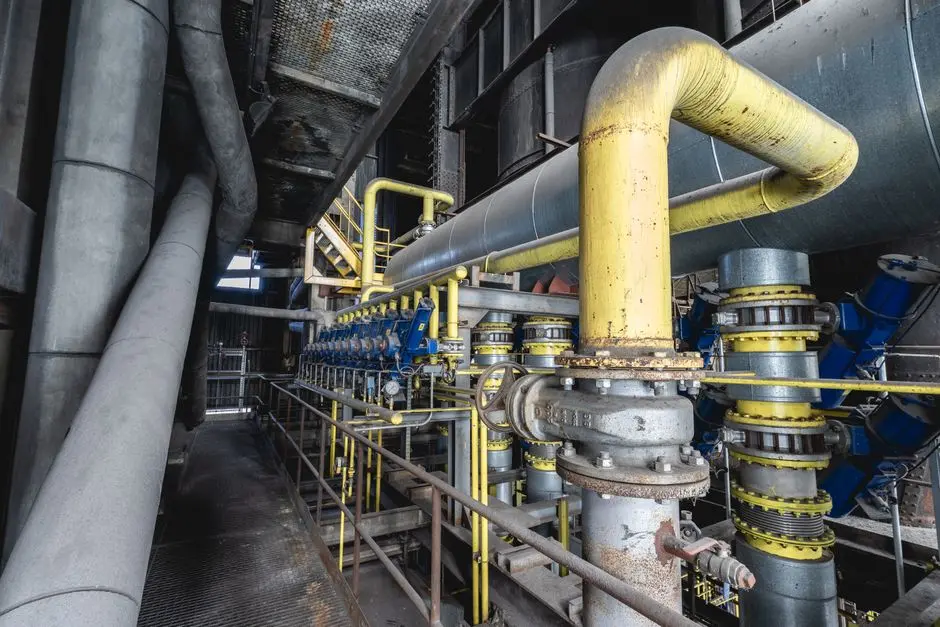
Matching the right hardware to the right flow regime is the last step before procurement. The matrix below maps three common plant profiles to the equipment categories that fit them, with the discharge flow as the primary sizing variable.
| Plant Profile | Flow Range | Recommended Configuration | Key Components |
|---|---|---|---|
| Small batch / intermittent discharge (textile dye house, craft food) | < 5 m³/h | Batch neutralization tank with manual dosing | HDPE tank (2–5 m³), mechanical mixer, handheld pH meter, pneumatic diaphragm pump |
| Mid-size continuous operation (metal finishing, dairy, pharma) | 5 – 50 m³/h | Inline equalization + automatic chemical dosing system with PLC | EQ tank, inline pH probe, PID controller, metering pump (0.5–500 L/h, PVDF or PTFE head for HCl/NaClO service) |
| Large continuous operation (> 100 m³/day, requiring 15-min logged data) | > 50 m³/h | Equalization + automatic dosing + online pH analyzer with data logging | EQ tank, differential pH probe (Endress+Hauser, Hamilton), PLC, online analyzer with 4–20 mA output, supervisory SCADA link |
Probe selection is the variable that decides whether the system stays in calibration or drifts into an excursion event. Differential pH probes (two measuring electrodes versus a single combination electrode) tolerate fouling better than combination electrodes in oily or high-TSS streams, because the reference junction is isolated from the process. In a Brazilian metal-finishing plant running 200 mg/L TSS and 50 mg/L oil, a combination electrode typically needs cleaning every 5–7 days; a differential probe runs 30–45 days between services. Dosing pump heads should be PVDF or PTFE for hydrochloric acid and sodium hypochlorite service, since polypropylene heads fail within 6–12 months under those chemicals. For plants with packaged sanitary discharge, an integrated package wastewater treatment plant with a built-in pH adjustment stage can simplify licensing for small flows.
For adjacent design decisions on nutrient and metals removal, the BOD and COD discharge limit comparison for industrial plants and the anodizing wastewater pH neutralization process guides cover parameter windows and chemistry in more detail. The pH control for chemical phosphorus precipitation guide is also useful for plants that need to drop total phosphorus below 1 mg/L, since alum and PAC precipitation only work inside pH 5.5–7.0.
Frequently Asked Questions
What is the pH limit for industrial wastewater discharge in Brazil?
The pH range for industrial effluents released to water bodies in Brazil is 5.0 to 9.0, per CONAMA Resolution 430/2011, Article 5, item I. Sampling is at the outfall using a 24-hour composite or grab sample. (Per CONAMA 430/2011.)
Does the pH limit change for sewer discharge versus water body discharge?
Yes. Sewer discharges are typically tightened to 6.0–9.0 by utilities such as SABESP and COPASA, while CEDAE allows 6.5–9.5. The sewer limit is tighter because municipal WWTPs need a stable biological process. (Per state utility standards, 2025-11.)
How is pH measured at the outfall for compliance purposes?
pH is field-measured in situ at the outfall manhole using a calibrated probe. Outfalls above 100 m³/day require continuous monitoring with 15-minute logged data per CETESB NT-213. A two-buffer calibration is performed at the start of each sampling day.
What is the single-excursion rule for pH compliance?
Any single pH reading outside 5.0–9.0 is reportable as a non-compliance event, even if the 24-hour average falls inside the range. This is the most common compliance failure mode in batch-process plants with undersized equalization. (Per CONAMA 430/2011 and CETESB enforcement guidance.)
What chemicals are used for industrial pH neutralization in Brazil?
Alkaline streams are neutralized with sulfuric acid (H₂SO₄) or hydrochloric acid (HCl); acidic streams are neutralized with sodium hydroxide (NaOH) or lime (Ca(OH)₂). Choice depends on freight cost, sulfate loading to the receiving WWTP, and storage safety. (HydropureWater field data, 2026.)
Can state agencies impose pH limits stricter than CONAMA 430?
Yes. CETESB (São Paulo), INEA (Rio de Janeiro), and FEAM (Minas Gerais) can impose tighter pH limits through licensing conditions. CETESB has required pH 6.5–8.5 at outfalls discharging into the Tietê basin since 2018. (Per CETESB licensing practice, 2025-08.)