What an Online TSS Sensor for Mixed Liquor Actually Does
An online TSS sensor for mixed liquor continuously measures total suspended solids in an aeration tank or MBR reactor, replacing slow lab grab samples. Modern dual-beam optical and ultrasonic probes deliver ±2% accuracy with 3-second response across a 0–15,000 mg/L range, and feed 4–20 mA or Modbus signals directly to PLC/SCADA for closed-loop aeration and F/M ratio control.
Mixed liquor is the homogeneous suspension of biomass, colloids, and inert particulates in an aeration basin or MBR bioreactor, quantified as total suspended solids in mg/L. Operating windows are well-defined: conventional activated sludge runs 2,000–4,000 mg/L; MBR bioreactors push 6,000–10,000 mg/L to feed the membranes at sustainable flux; sequencing batch reactors (SBR) sit between 4,000–8,000 mg/L during the react phase (per Metcalf & Eddy, 5th ed.).
The grab-sample problem is operational, not theoretical. Lab TSS analysis takes 4–24 hours from pull to result when you include filtration, drying, and weighing per Standard Methods 2540D. A 6-hour MLSS excursion that washes 3,000 mg/L of biomass out of the system is invisible to an operator waiting on a lab sheet. Online monitoring closes that loop: a probe in the tank reads every 1–3 seconds, so a sudden drop in MLSS after a toxic-inhibitor shock event shows up on the SCADA trend within seconds, and aeration trim logic responds before the bugs wash out.
For color-variable mixed liquor — common in industrial ETP influents — the dual-beam optical design (reference wavelength plus measurement wavelength) is the de facto industry reference, with the HACH SOLITAX sc being the most cited example. The reference channel cancels out ambient light and color interferences, which single-beam absorption probes cannot do.
Three Measurement Technologies Used in Mixed Liquor TSS Probes
Optical absorption, optical backscatter, ultrasonic attenuation, and NIR reflectance each solve a different part of the MLSS measurement problem. Matching the principle to the sludge is the highest-value decision a buyer makes; the wrong pairing forces weekly manual cleaning and constant calibration drift.
Optical absorption (single-beam) probes are the lowest-cost option, typically $2,500–$4,500 installed, and work on clear, low-color mixed liquor below about 5,000 mg/L. They lose accuracy once color or turbidity changes seasonally, because the single wavelength cannot distinguish suspended solids from dissolved color. Optical backscatter / dual-beam probes add a reference channel that subtracts color and ambient-light drift, extending usable range to 150 g/L with ±2% of reading accuracy (HACH SOLITAX sc datasheet, 2025). Ultrasonic probes measure density via sound attenuation — a frequency around 1–2 MHz is typical — and are completely immune to color, but bubble entrainment from coarse-bubble diffusers causes signal noise if the probe sits inside the upflow zone. NIR reflectance probes are an emerging class (700–1,100 nm) used in dense mixed liquor, but penetration depth drops sharply above 12,000 mg/L.
For reference, the Aquas suspended-solids density analyzer quotes a 3-second response time for inline MLSS monitoring (Aquas, 2025), and that 3-second figure is the practical benchmark buyers should expect from any modern immersion probe. Older transmission-style probes (light source on one side of a flow cell, detector on the other) foul rapidly at high MLSS and have largely been displaced by backscatter designs.
| Parameter | Optical Absorption (single-beam) | Optical Backscatter (dual-beam) | Ultrasonic |
|---|---|---|---|
| Typical range | 0–5,000 mg/L | 0–15,000 mg/L (0.001–150 g/L) | 0–50,000 mg/L |
| Accuracy | ±5% of reading | ±2% of reading | ±3% of reading |
| Response time | 5–10 s | 3 s | 1–3 s |
| Color sensitivity | High | Negligible (reference channel) | None |
| Bubble sensitivity | Low | Low | High (mount away from diffusers) |
| Cleaning interval | 3–7 days | 14–30 days (with wiper) | 14–60 days |
| Best-fit application | Low-color municipal aeration | Color-variable industrial ETP, MBR biological chamber | High-MLSS MBR, foaming reactors, RAS lines |
| 2026 CAPEX (probe + auto-clean + 10 m cable) | $2,500–$4,500 | $3,500–$6,500 | $4,000–$9,000 |
For a deeper price breakdown, see the MLSS analyzer cost 2026 buyer's guide.
Where to Mount the Probe in an Aeration Tank or MBR Reactor
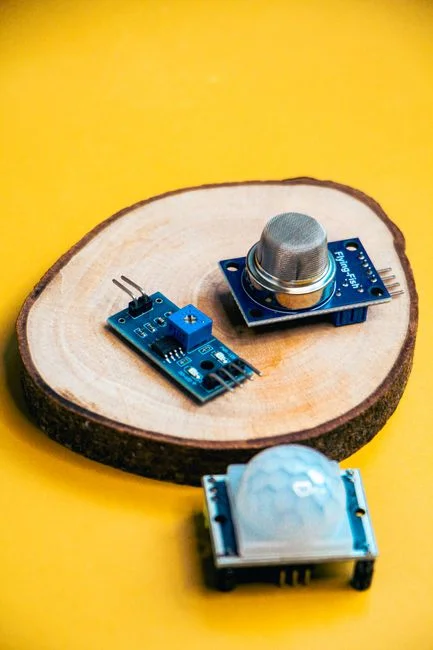
Bad placement is the single most common reason a correctly specified MLSS analyzer returns bad data. A probe installed in a corner eddy, directly under a coarse-bubble diffuser, or in the scum layer will read 30–60% off the true basin average even though the sensor itself is perfectly calibrated.
In a conventional aeration basin, mount the probe at the effluent end of the tank, mid-depth, typically 0.3–0.8 m below liquor surface, with ≥200 mm clearance from the tank wall and ≥500 mm from any aerator or diffuser drop. This position samples the most representative mixed liquor after plug-flow has homogenized the contents. In an MBR tank, install the probe in the biological chamber upstream of the membrane cassette; never mount it on the cassette itself, where air-scour backwash and bubble entrainment corrupt the signal. In return activated sludge (RAS) lines, clamp-on optical sensors or in-pipe ultrasonic sensors are typical, mounted on a straight pipe section at least 5 pipe diameters downstream of any pump or valve to avoid flow turbulence.
For any immersion installation at 6,000–10,000 mg/L, an automatic cleaning head — wiper, water-jet, or air-burst — is mandatory. Biofouling at those concentrations coats a probe window in 48–72 hours, and the resulting drift is indistinguishable from a real process excursion. Spec the cleaning cycle to fire at least every 6 hours in MBR duty, every 12–24 hours in conventional ASP.
Integrating the Sensor with PLC, SCADA, and Aeration Control
An MLSS probe that ends at a local display is a $5,000 paperweight. The point of online monitoring is closed-loop control, and that means getting the signal into the PLC cleanly. Output options to specify: 4–20 mA analog for simple loops, Modbus RTU over RS-485 for multi-drop sensor networks, Modbus TCP or Profinet for direct Ethernet into the plant SCADA, and HART for legacy systems. The probe must speak whichever protocol the existing PLC (Allen-Bradley CompactLogix, Siemens S7-1500, Schneider M580) already uses — protocol converters add latency and a second failure point.
Cable routing matters more than most datasheets admit. Use shielded twisted pair, ground the shield at the PLC end only, and keep the signal cable ≥300 mm from any VFD power cable. VFD-induced EMI is the most common cause of ultrasonic-probe noise on retrofit installations.
Closed-loop aeration is the first control application: combine the MLSS signal with a dissolved-oxygen (DO) probe in a cascaded loop that drives blower VFD speed. As MLSS rises, the controller increases the F/M target's aeration demand to maintain endogenous respiration rates. F/M ratio control is the second application: feed online MLSS plus influent BOD (from a parallel real time water quality monitoring system or a daily lab composite) into the PLC's wasting-decision logic, targeting 0.2–0.5 kg BOD/kg MLSS·day for conventional activated sludge (per EPA 40 CFR 133 process control guidance). On the cloud side, forward Modbus TCP data to a dashboard for trend logging and WAS-pump predictive maintenance, following the architecture in our cloud SCADA for water treatment plants guide.
2026 Pricing, OPEX, and Sensor Selection Matrix
2026 CAPEX for an immersion MLSS probe with auto-clean head and 10 m cable runs: optical single-beam $2,500–$4,500; optical dual-beam $3,500–$6,500; ultrasonic $4,000–$9,000; NIR $3,500–$7,000. OPEX lands at 0.3–0.8% of CAPEX annually for calibration standards, wiper seals, and lamp replacement on optical units. Total installed cost is typically 2.0–2.5× the probe CAPEX once shielded cabling, mounting hardware, PLC integration labor, and commissioning are included (HydropureWater field data, 2026).
| Selection criterion | Recommended technology | Rationale |
|---|---|---|
| MLSS > 8,000 mg/L (MBR biological chamber) | Ultrasonic | Color-immune, handles high density, no optical window to foul |
| Color-variable mixed liquor (industrial ETP) | Optical dual-beam | Reference channel cancels dye and humic-color drift |
| Low-color municipal aeration, budget-driven | Optical single-beam | Lowest CAPEX, adequate accuracy under stable conditions |
| Foaming reactor or scumming layer present | Ultrasonic with air-burst clean | Optical windows blind under foam; ultrasonic penetrates |
| RAS line (in-pipe, no immersion possible) | Clamp-on optical or in-pipe ultrasonic | Retractable designs unavailable; clamp-on avoids tank entry |
| Tight integration with existing dosing skid | Dual-beam optical with 4–20 mA + Modbus | Drops into an automatic chemical dosing system control loop with minimal rewiring |
Spec the unit with IP68 immersion rating as a minimum, a hazardous-area classification only if the tank is inside a classified zone, and a factory calibration certificate traceable to NIST or an equivalent national standard. For plants already operating an MBR membrane bioreactor system, pair the ultrasonic MLSS probe with a transmembrane-pressure sensor to get early warning of biomass viscosity shifts that foul the membranes.
Procurement Checklist and Forward Look
Take this checklist into the vendor meeting: full-scale range (must cover 1.5× your normal MLSS), accuracy spec as % of reading not just mg/L, response time ≤5 s, automatic cleaning method, output protocol match to your PLC, IP68 minimum for immersion service, hazardous-area certification if applicable, NIST-traceable calibration certificate, and a 2-year warranty that includes the auto-clean head.
Looking forward, AI-assisted soft-sensor models are the next step. They fuse online MLSS with flow, temperature, pH, and TSS data to predict waste-activated-sludge pump cycles, with documented energy savings of 10–20% at full-scale plants (Water Environment Federation, 2025). For plants that cannot justify a probe on every basin, the soft sensor is a defensible interim step — but it still needs at least one online MLSS feed as a calibration anchor, which keeps the immersion probe at the center of the control loop.
Frequently Asked Questions
What is the typical accuracy of an online MLSS analyzer in activated sludge?
Modern dual-beam optical probes deliver ±2% of reading accuracy across a 0–15,000 mg/L range, with a 3-second response time. Single-beam optical units drop to ±5%, and ultrasonic probes sit at ±3% but are color-immune. For compliance-grade monitoring, dual-beam optical is the most common specification (HACH SOLITAX sc, 2025).
How often should an immersion TSS probe be cleaned in an MBR tank?
At 6,000–10,000 mg/L MLSS, an automatic wiper or water-jet cycle every 6 hours is the practical minimum. Without auto-clean, biofouling coats the optical window in 48–72 hours and causes drift indistinguishable from a real process excursion (HydropureWater field data, 2026).
Can one MLSS sensor drive both aeration control and sludge wasting?
Yes. The 4–20 mA or Modbus TCP signal feeds a PLC where it is combined with a DO probe for cascaded aeration trim and with influent BOD for F/M ratio wasting logic, targeting 0.2–0.5 kg BOD/kg MLSS·day in conventional activated sludge per EPA 40 CFR 133 guidance.
What is the 2026 installed cost of an online TSS sensor for mixed liquor?
Probe plus auto-clean head plus 10 m cable runs $2,500–$9,000 in 2026 depending on technology. Total installed cost is 2.0–2.5× the probe CAPEX once shielded cabling, mounting hardware, and PLC integration labor are included.
Why does my grab-sample TSS always disagree with the online MLSS reading?
Grab samples are point-in-time, taken from one location, and represent 4–24-hour-old conditions by the time the lab returns the result. An online probe averages the basin every 1–3 seconds and exposes transient spikes a single grab will miss. Treat grab samples as weekly QA/QC checks, not as the primary control input.