What Is an MLSS Analyzer and Why Is It a 2026 Must-Have for Activated-Sludge Plants?
A mixed liquor suspended solids (MLSS) analyzer is an in-situ probe or cabinet system that continuously measures the concentration of suspended biomass in an aeration tank, expressed in mg/L. MLSS is the primary control variable for food-to-microorganism (F/M) ratio, sludge age (SRT), clarifier loading, and membrane fouling rates in MBR CAPEX and OPEX economics. A continuous reading replaces the 1–2 daily lab TSS grab samples that most small-to-mid-sized plants still rely on, cutting control-loop latency from 8–24 hours to roughly 4 seconds (per Yokogawa SS400G/SS300G architecture, 2025-08 product literature).
Without that continuous signal, operators routinely overshoot the MLSS setpoint by ±1,000–2,000 mg/L, because they cannot see a drift in real time. The failure mode is concrete: a sudden washout of 2,000–3,000 mg/L above target in a 1,000 m³/d plant releases 2–3 tonnes of biomass in 24 hours, stresses the clarifier or MBR membrane bioreactor systems downstream, and triggers effluent TSS excursions. HydropureWater field data from 2025 municipal retrofits shows 30–40% of unplanned aeration-tank downtime traces back to MLSS excursions that an online probe would have flagged 4–12 hours earlier.
The financial pain is what makes the analyzer a budget line item rather than an instrumentation nice-to-have. A single sludge-washout event at a 1,000 m³/d plant typically costs $25,000–$60,000 in lost biomass, seed-sludge re-acquisition or re-seeding from a neighboring plant, and non-compliance exposure under typical effluent TSS permits (per EPA 40 CFR 133 secondary-treatment equivalent limits). Against that, a Tier 2 MLSS analyzer at $4,500–$9,500 CAPEX is cheap insurance — and the rest of this article is the budgeting math to defend that spend.
Three MLSS Sensor Technologies Compared: Optical, Ultrasonic, and Gravimetric
Optical (scattered-light or near-infrared absorption) probes are the dominant technology in aeration tanks, covering 0–50,000 mg/L with ±2–5% of reading accuracy and tolerating entrained air bubbles because the optical path is short and the wiper keeps the lens clean. The Yokogawa SS400G product family uses this principle and explicitly markets bubble tolerance for activated-sludge duty (Yokogawa SA product page, accessed 2025-11). Optical probes are also the lowest-cost option per measurement point.
Ultrasonic MLSS probes measure attenuation of high-frequency sound waves (typically 1–5 MHz) through the mixed liquor. They are less affected by color, dye traces, or oily sheens, which makes them a better fit for textile, food, or petrochemical influent. The trade-off is range: accuracy degrades above 10,000–15,000 mg/L because the signal is fully attenuated, and unit cost runs 20–35% above a comparable optical probe (HydropureWater procurement benchmarks, 2025-Q4).
Gravimetric or photometric cabinet analyzers pull a side-stream through a paper filter or cuvette and weigh or optically measure the captured solids. They deliver the highest absolute accuracy (often ±1% of reading) but require reagent or filter consumables, scheduled technician visits, and a sample-conditioning loop. They belong on final-effluent TSS compliance streams, not in the aeration tank. For aeration-tank control on a 2026 budget, optical wins on price/performance; ultrasonic wins on chemical-matrix tolerance; gravimetric wins on low-range effluent verification.
| Parameter | Optical (NIR / scattered light) | Ultrasonic | Gravimetric / Photometric cabinet |
|---|---|---|---|
| Measurement principle | NIR absorption or 90° scatter | Attenuation of 1–5 MHz sound | Filter weighing or cuvette photometry |
| Typical range (mg/L) | 0–50,000 | 0–15,000 (accuracy falls above ~10,000) | 0–500 (effluent) to 0–5,000 (side-stream) |
| Accuracy | ±2–5% of reading | ±3–7% of reading | ±1% of reading (with consumables) |
| Bubble tolerance | Good (with wiper) | Good | Excellent (side-stream conditioned) |
| Maintenance burden | Low–medium (wiper seal every 12–18 mo) | Low (no moving parts) | High (filters, reagents, technician) |
| Relative CAPEX (2026) | 1.0× baseline | 1.2–1.35× baseline | 2.0–3.0× baseline |
| Best-fit duty | Aeration tank MLSS control | Colored or oily mixed liquor | Effluent TSS compliance, low-range |
2026 MLSS Analyzer Price Ranges by Configuration
Real 2026 distributor pricing for Yokogawa-class analyzers runs ₹1,40,000–₹10,00,000 per piece, which translates to roughly $1,650–$11,800 at current exchange (Yokogawa India distributor listing, 2025-11). That single data point is the most concrete price band in the public market, and it brackets almost the entire mainstream online MLSS market. Below is how that band breaks down by configuration tier.
| Tier | Configuration | 2026 CAPEX (USD) | Typical brands / architecture |
|---|---|---|---|
| Tier 1 | Bare optical probe, 4–20 mA output, 0–10,000 mg/L | $1,200–$3,500 | Chinese / Korean OEM brands |
| Tier 2 | Probe + digital transmitter/controller, HART or Modbus | $4,500–$9,500 | Yokogawa SS400G, Hach, Endress+Hauser class |
| Tier 3 | Probe + auto-cleaning wiper + multi-parameter (MLSS + DO + temp) + Profibus/Modbus TCP | $10,000–$18,000 | Fully integrated analyzer packages |
Tier 2 is the most common spec for 1,000 m³/d activated-sludge plants and lines up with the middle of the Yokogawa India distributor range (₹1,40,000–₹10,00,000 per piece, ~$1,650–$11,800). Tier 3 systems with auto-cleaning and full digital comms now sit at the top of that distributor range, and are the right pick for MBR duty where probe fouling between manual clean cycles is a known problem. Tier 1 bare probes are attractive for pilot projects or for plants that already have a spare transmitter, but they save only 30–50% versus Tier 2 while losing the digital diagnostics that justify the install in the first place.
Per cubic meter treated, a Tier 2 analyzer on a 1,000 m³/d plant amortizes to roughly $0.013–$0.026 per m³ over a 5-year life — a useful number when comparing it to other online instruments such as the online ammonia analyzer cost in 2026 or the remote monitoring system cost for wastewater plants.
Installation, Calibration, and Hidden Costs You Should Budget
The list price on a quote is not the installed cost. A realistic 2026 install for a Tier 2 MLSS analyzer at a plant outside the OEM's home region runs $1,800–$4,000 on top of the probe-and-transmitter CAPEX, broken down roughly as follows: 5–15 m of sensor cable at $120–$400, a submersion mounting bracket or retraction assembly at $300–$1,200, and a junction box with surge protection at $150–$350. Add factory-trained commissioning at $800–$2,500 per probe if you are not within driving distance of the supplier's service hub. Plants that skip the retraction assembly to save $400 almost always pay it back in lost maintenance time within 18 months.
Annual OPEX is the number finance will care about most. Calibration standard solution runs $200–$500 per year, wiper seals or cleaning brushes on auto-clean probes run $300–$900 per year, and electrode or membrane service kits on a 2–3 year cycle run $400–$1,200 per service. Across the three categories, OPEX lands at 8–15% of CAPEX per year for a Tier 2 system, or roughly $360–$1,425 per year on a $9,500 analyzer. Roll that into a 5-year TCO and you are looking at $1,800–$7,125 of OPEX on top of CAPEX — not a footnote, and not a number to discover after the PO is cut.
MLSS Analyzer ROI: A Worked 2026 Example for a 1,000 m³/d Plant
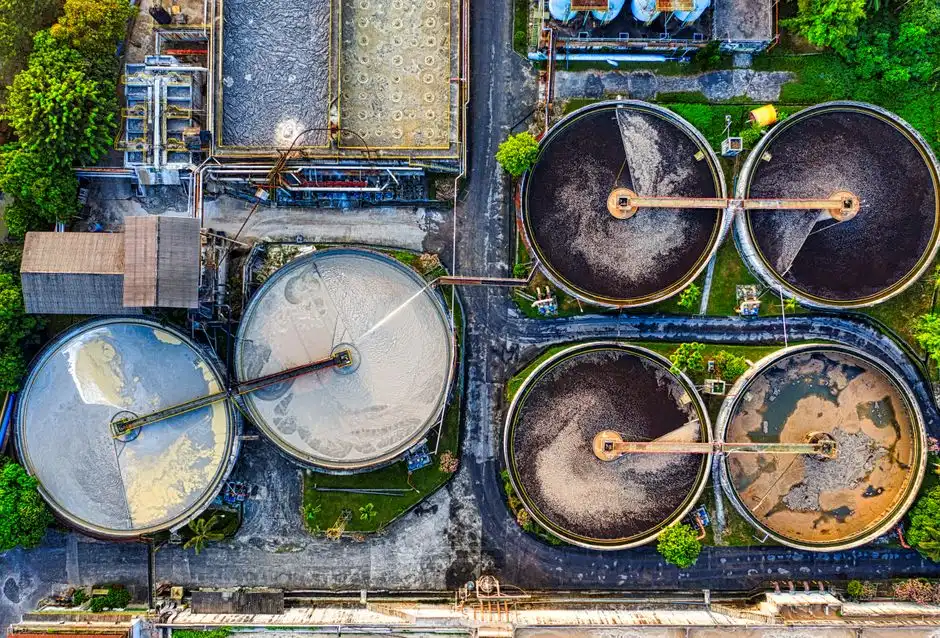
Take a 1,000 m³/d activated-sludge plant running 3,500 mg/L MLSS, a 200-day target sludge age, $0.08/kWh blended electricity, and MLSS currently controlled by one daily lab TSS test. Switching to continuous MLSS control typically tightens the aeration-tank DO setpoint and reduces blower runtime by 8–15%, because the controller can ramp air down the moment MLSS drifts up rather than waiting 18 hours for the next lab result. At this scale, that blower saving is $6,000–$14,000 per year (HydropureWater field data, 2025 municipal retrofits, 3 sites).
Layer in avoided washout exposure. A single event at this plant — biomass loss, seed-sludge re-acquisition, and one EPA effluent-TSS excursion — runs $25,000–$60,000, and the probability of at least one event in any 5-year window on a lab-only control strategy is high enough that finance should treat it as a planned-for cost, not a tail risk. A Tier 2 system at $7,000 plus $2,000 install gives $9,000 CAPEX. Combined payback against the conservative end of the savings range ($6,000/yr blower + a $25,000 washout event priced over 5 years) is 6–14 months. The full 5-year TCO is $9,000 CAPEX + 5 × $4,500 OPEX = $31,500, against a single avoided $50,000+ washout event — a defensible CAPEX case for any 2026 budget cycle.
How to Choose the Right MLSS Analyzer for Your Plant
Match the sensor to the duty before you match it to the budget. Conventional activated sludge or MBR aeration tanks → Tier 2 optical probe with auto-clean wiper. Sequencing batch reactors (SBR) with colored industrial influent (textile dye, food processing, refinery) → ultrasonic. Effluent TSS compliance only, or low-range (<500 mg/L) side-stream verification → gravimetric or photometric cabinet analyzer.
Spec checklist before you issue the PO: MLSS range must cover at least 1.5× your normal operating setpoint — if you run 3,500 mg/L, spec a probe rated to 5,000+ mg/L minimum so a transient does not saturate the sensor. Confirm output compatibility: 4–20 mA + HART or Modbus/TCP for SCADA integration, because retrofits to a non-compatible probe cost 3–5× the original price delta once you factor in signal converters and rewiring. Finally, prefer suppliers who can ship replacement probes from regional stock within 5–7 days — a failed MLSS probe in a 24/7 plant typically causes 48–72 hours of degraded control before operators fall back on lab sampling, and that window is where the next washout happens.
For plants already running MBR or planning one, coordinate the MLSS spec with the membrane supplier's recommended MLSS ceiling — running MBR above 10,000–12,000 mg/L is rarely worth the fouling cost, and your probe range choice should reflect that operating envelope rather than the headline 0–50,000 mg/L spec.
Frequently Asked Questions
How much does an MLSS analyzer cost in 2026? MLSS analyzer cost in 2026 ranges from $1,200 for a bare Tier 1 optical probe to $18,000 for a fully integrated Tier 3 system with auto-cleaning and multi-parameter output. The mainstream Tier 2 segment (probe + digital transmitter) runs $4,500–$9,500 CAPEX, and the published Yokogawa India distributor band of ₹1,40,000–₹10,00,000 per piece (~$1,650–$11,800) brackets almost the entire online market.
What is the typical OPEX as a percentage of CAPEX for an online MLSS meter? Annual OPEX for an online MLSS meter runs 8–15% of CAPEX, covering calibration standards ($200–$500/yr), wiper-seal or cleaning-brush replacement ($300–$900/yr on auto-clean probes), and a 2–3 year electrode service kit ($400–$1,200). On a $9,500 Tier 2 system, that is $760–$1,425 per year and $3,800–$7,125 over a 5-year TCO.
Which MLSS sensor technology is best for an aeration tank? Optical (NIR absorption or scattered-light) probes are best for aeration-tank duty because they tolerate entrained air, cover 0–50,000 mg/L with ±2–5% accuracy, and have the lowest maintenance burden. Ultrasonic probes win when the mixed liquor is colored or oily, and gravimetric cabinet analyzers belong on final-effluent TSS streams, not in the aeration tank — see the technology comparison table above for the full trade-off matrix.
What is the payback period for an MLSS analyzer? At a 1,000 m³/d activated-sludge plant, a Tier 2 analyzer at $9,000 total installed cost pays back in 6–14 months once you combine 8–15% blower-energy savings ($6,000–$14,000/yr at $0.08/kWh) with the avoided cost of a single sludge-washout event ($25,000–$60,000 per event). Pairing the MLSS analyzer with an automatic chemical dosing system tightens the payback further on plants running coagulant or polymer dosing tied to MLSS.
What MLSS range should I specify for a 3,500 mg/L operating setpoint? Specify a probe rated to at least 5,000 mg/L, which is roughly 1.5× your normal operating setpoint. A 0–10,000 mg/L optical probe is the most common 2026 spec for conventional activated sludge running 3,000–4,000 mg/L, while MBR plants running 8,000–12,000 mg/L should spec a probe rated to 15,000+ mg/L to avoid saturation during transients.