What Does a Remote Monitoring System for Wastewater Actually Cost in 2026?
Remote monitoring system cost for a wastewater plant in 2026 runs $4,000–$95,000 in hardware CAPEX plus $80–$600 per site per month in software and cellular data — a mid-sized 200 m³/day plant typically lands at $18,000–$35,000 upfront with $150–$250 per month in recurring costs, depending on whether the site uses 4G LTE-M cellular telemetry, a wired SCADA link, or an Ethernet/IP gateway to an existing PLC. That range is defensible, not a guess, and it is specific to industrial wastewater — not the $1,000–$2,000 per patient per year figure you'll see quoted for healthcare remote patient monitoring, which is the only price benchmark the current top-3 search results actually return, and which doesn't transfer to hazardous-location hardware, EPA reporting modules, or SCADA integration (a healthcare RPM device monitors a single patient; a wastewater RTU monitors pH, DO, ORP, flow, level, and pressure simultaneously while surviving a wet, corrosive headworks environment).
Break the CAPEX number into three plant-size tiers before you write a single line of a vendor RFQ:
- Small plant (<100 m³/day, single lift station or package plant): $4,000–$12,000 CAPEX, $80–$150/site/month OPEX. Typical stack is a 16-point RTU, 4G LTE-M modem, IP66 enclosure, and a vendor cloud dashboard.
- Mid plant (100–500 m³/day, food processing or pharma WWTP): $18,000–$35,000 CAPEX, $150–$250/site/month OPEX. Adds EPA DMR auto-reporting module, redundant cellular, and SCADA integration to an existing PLC.
- Large or multi-site (500–2,000 m³/day, municipal or industrial campus): $45,000–$95,000 CAPEX per site, $300–$600/site/month OPEX. Full Ignition or AVEVA enterprise SCADA, private LTE option, and IEC 62443 cyber hardening.
The CAPEX figure includes the RTU or PLC, 4G cellular or Ethernet gateway, IP66/NEMA 4X enclosure, year-one cloud dashboard license, antenna, and panel build. The floor for a wastewater-specific predictive-maintenance stack sits at $18,000–$45,000 per the predictive maintenance system cost guide for wastewater plants. What is commonly forgotten and not in the headline number: installation labor ($2,000–$8,000 per site for a retrofit), cellular activation and SIM fees ($50–$150/site one-time), and annual cloud-license renewals at 15–22% of the year-one license. All prices assume USD 2026 list pricing and exclude import duties — EU and Asian buyers should add 8–22% for VAT and 5–12% for shipping and customs clearance.
Hardware Stack Breakdown: What You're Actually Paying For
Seven line items drive 70% of every remote monitoring system quote, and a procurement engineer who can read them line-by-line can cut a 20–30% contingency that vendors typically pad into "engineering and integration." For a 50 m³/day plant a 16-point I/O count is typical — pH, dissolved oxygen, ORP, flow, level, pressure, temperature, plus 4–8 digital status inputs — which drives the lower end of the component range below.
| Component | 2026 Price Range (USD) | Typical Models / Notes |
|---|---|---|
| PLC or RTU controller | $1,200–$8,500 | Allen-Bradley MicroLogix, Siemens S7-1200, Schneider M221, or purpose-built RTU (Phoenix Contact, Bedrock) |
| Cellular or Ethernet gateway | $350–$2,200 | Red Lion, Moxa, Sierra Wireless, Digi; LTE-M or Cat-1 bis for new builds |
| I/O modules (analog + digital) | $180–$950 each | 8-channel analog input typical; 4–6 modules per small site |
| IP66 / NEMA 4X enclosure | $400–$1,800 | Stainless 304 for headworks; fiberglass for chemical rooms |
| Power supply + UPS | $250–$900 | 24 VDC DIN-rail PSU plus 30–60 min UPS for alarm-on-power-loss |
| Antenna + surge protection | $120–$600 | External MIMO antenna for cellular; gas-discharge surge arrestor on signal lines |
| HMI touch panel (optional) | $900–$4,500 | 7–10 in panel; often replaced by cloud dashboard on 2026 new builds |
Hazardous-location certification (Class I Div 2 in the US, ATEX Zone 2 in the EU) is the single largest cost multiplier — expect a 40–120% premium on enclosure and instrument cost when the panel sits within 3 m of a fuel-storage or solvent-handling area. The entry-level Dantherm/InfoAir machine-condition monitor on DirectIndustry at roughly ₹45,000 (~$540) is the floor of the SERP and explicitly not plant-grade: it lacks analog I/O, Modbus/TCP support, and EPA-compliant data retention, and it is designed for HVAC mechanical alarms, not process water chemistry. The selection criteria for a 2026 controller — including I/O count, programming environment, and hazardous-area ratings — are detailed in the PLC control supplier selection guide for wastewater.
Communications Architecture: Cellular, Ethernet, SCADA, or Satellite?
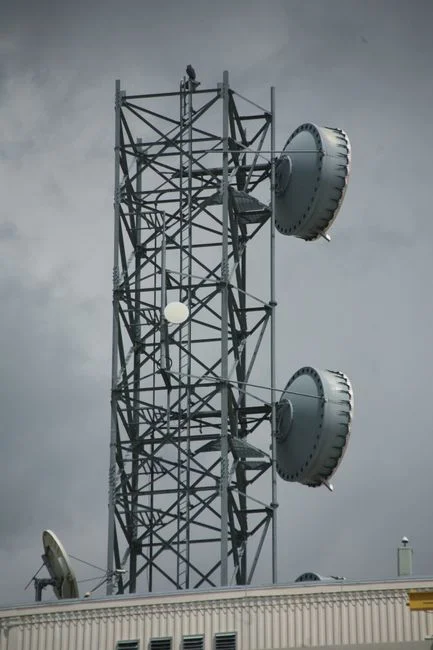
The single decision that swings 5-year TCO by $10,000–$60,000 per site is the communications path, and the most common retrofit mistake is defaulting to a wired SCADA radio because "that's what we have" without auditing the cellular coverage at the headworks. For 2026 new builds, the default is 4G LTE-M with dual-SIM failover; Ethernet only makes sense if fiber is already within 50 m of the control panel.
| Architecture | Hardware CAPEX | Recurring Cost | Latency | Best Fit |
|---|---|---|---|---|
| 4G LTE-M cellular | $350–$900 gateway | $10–$50/device/month | 150–400 ms | Remote sites, retrofits, multi-site fleets |
| Wired Ethernet + VPN | $0 (if fiber present) or $3K–$15K trenching | $0/month data | 5–20 ms | Plants already on corporate LAN; closed-loop control |
| Leased-line cellular SCADA radio | $1,200–$3,500 radio pair | $200–$500/month | 200–600 ms | Legacy municipal sites; backward-compatible SCADA |
| Private LTE / 5G | $15,000–$80,000 core network | $800–$2,500/device/month | 20–50 ms | Multi-site campus, port authority, refinery |
| Satellite (Starlink / Iridium) | $1,500–$3,500 terminal | $100–$300/month | 600–1,200 ms | Off-grid mining, remote oilfield, no cellular coverage |
Latency matters more than most buyers realize. If you intend to do closed-loop control — auto-throttling aeration blowers based on real-time DO, for example — Ethernet at 5–20 ms is the only architecture that supports it safely. LTE-M at 150–400 ms is fine for monitoring, alarming, and setpoint changes that an operator reviews before accepting. Satellite at 600–1,200 ms is unsuitable for any control loop and should be treated as monitoring-only. For a standard 200 m³/day plant with 2 cellular devices (primary LTE-M gateway plus a backup SIM router), the recurring line runs $20–$100/month — well under the $300–$600/site/month often quoted for legacy cellular SCADA radio services.
Software, Cloud SCADA, and EPA Reporting Modules
The line item most vendors bury as "annual fee" is software, and it is also where the most compliance value sits. A 2026 software stack breaks into three tiers with a wide cost spread — pick the tier that matches the plant's reporting and alarm complexity rather than the cheapest available dashboard.
- Tier 1 — Vendor-proprietary cloud dashboard: Free to $40/device/month. Limited customization, fixed widget library, and a 1–3 sensor alarm-only ceiling. Fine for lift stations and single-sensor monitoring.
- Tier 2 — Mid-tier cloud SCADA: $80–$250/site/month with unlimited tags, custom screens, and historical trending. Ignition Edge, AVEVA Edge, Ubidots, and Losant fall here. This is the right tier for 90% of 100–500 m³/day industrial wastewater plants.
- Tier 3 — Enterprise SCADA: $15,000–$60,000 perpetual license plus $2,000–$8,000/year support. Ignition by Inductive Automation (full unlimited license), AVEVA System Platform, or Wonderware. Required for multi-site municipal deployments, redundant historians, and IEC 62443 cyber zones.
The EPA Discharge Monitoring Report (DMR) auto-reporting module — a feature most Tier 2 and Tier 3 platforms offer as an add-on — costs $1,200–$4,500/year but eliminates 20–40 hours per quarter of manual DMR QA and submission labor at $75–$150/hour fully loaded (per EPA 40 CFR 133 NPDES reporting guidance). The cyber-security premium is a separate line: IEC 62443-compliant systems add 8–15% to software cost but are increasingly required for municipal contracts and for US water-sector projects subject to America's Water Infrastructure Act of 2018 (Section 2013) cybersecurity requirements. Storage cost is the hidden line in cloud pricing — data retention of 3 years is the EPA minimum, 5 years is recommended for permit-defense documentation, and most cloud platforms charge $0.02–$0.10/GB/month beyond the included tier.
Installation, Commissioning, and Recurring OPEX You Should Budget
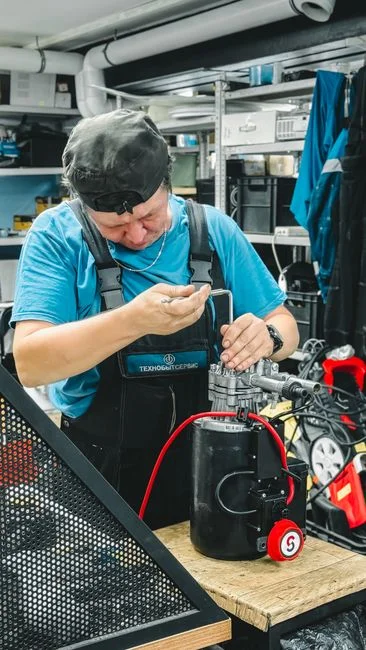
The difference between a $25,000 quote and a $45,000 delivered project is almost always installation labor, commissioning, and the recurring OPEX that compounds over a 5-year TCO. Budget these line items explicitly in the RFQ, or the integrator will bury them as "engineering and project management."
| Cost Line | Small Plant (<100 m³/d) | Mid Plant (200 m³/d) | Large / Multi-Site |
|---|---|---|---|
| Installation labor (retrofit) | $2,000–$4,000 | $4,000–$8,000 | $8,000–$20,000+ |
| Commissioning & SAT | $1,500–$2,500 | $2,500–$5,000 | $5,000–$15,000 |
| Cellular data (annual) | $120–$360 | $240–$600 | $600–$2,400 |
| Cloud license (annual) | $960–$1,800 | $1,800–$3,000 | $3,000–$12,000 |
| Sensor cal & replacement reserve | $800–$1,500 | $1,500–$2,500 | $2,500–$6,000 |
| 5-year TCO (CAPEX + OPEX) | $15K–$30K | $45K–$80K | $120K–$400K+ |
The biggest cost lever is installation path. A factory-tested, pre-wired skid — such as a MBR system with integrated PLC and remote telemetry — drops installation labor to $500–$2,000 per site because the panel arrives loop-tested and tagged. A retrofit onto an existing MCC at a 20-year-old plant runs $4,000–$8,000 per site. For a mid-sized 200 m³/day plant the 5-year TCO math is roughly $25,000 CAPEX plus $35,000 OPEX, totaling $60,000 — equivalent to $0.016 per m³ treated over the asset life, well below the $0.05–$0.18/m³ unplanned maintenance cost band cited in the SBR maintenance reference (HydropureWater field data, 2026). On the smallest sites, a fully automated WSZ package plant with no on-site operator ties into the same LTE-M cloud dashboard for under $7,000 all-in.
ROI Worksheet: When Does a $25,000 System Pay for Itself?
Convert the cost story into a savings story with three lines a CFO will accept. A conservative ROI for a $25,000 mid-sized plant installation breaks down as follows.
- Labor savings: one fewer unscheduled site visit per month at $400–$1,200 each = $4,800–$14,400/year.
- Compliance risk reduction: avoid one NPDES permit excursion at typical EPA fine of $10,000–$50,000 plus cleanup of $15,000–$150,000 = expected value $5,000–$20,000/year at 10–20% probability of an event in any given year.
- Process optimization: 3–8% energy reduction on aeration blowers from better DO control at typical industrial $0.08/kWh = $1,500–$6,000/year for a 50 kW blower running 8,000 h/yr.
Sum: $11,300–$40,400/year in conservative savings. Payback on a $25,000 system is 6–26 months; the median case lands at 14 months. Macro validation: 63% of industrial firms increased remote-operations spend in 2025 per IndustryARC, indicating the broader capex trend is in your favor when you present to a board. The do-nothing counterfactual is the line most engineers leave off the slide — a single missed alarm event in a food-processing or pharmaceutical WWTP typically runs $25,000–$200,000 in batch loss, product recall, or regulator notification, which is a one-incident wipeout of the entire system's cost. For sites considering an analytics layer on top, the machine learning optimization cost in wastewater guide quantifies the incremental spend and expected 4–9% energy reduction.
Frequently Asked Questions
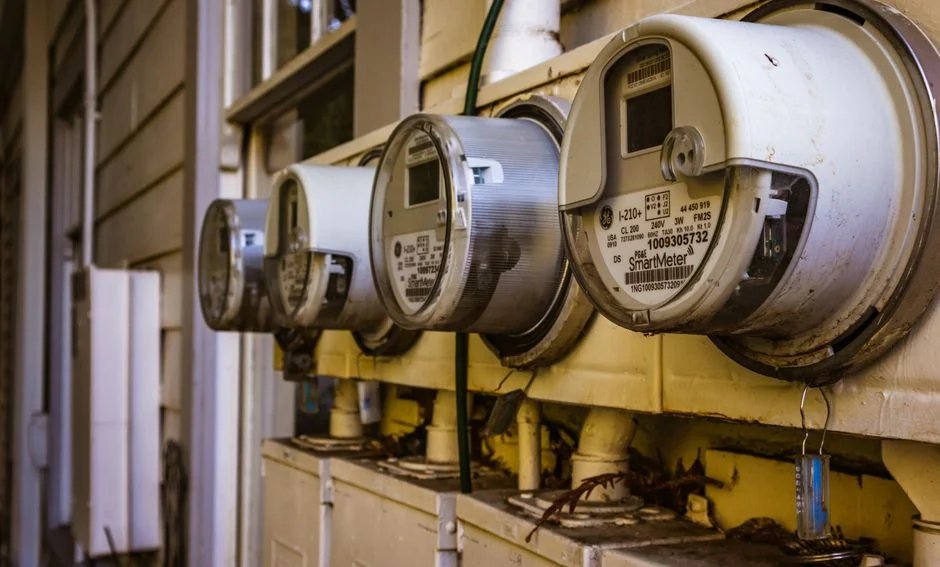
How much does a remote monitoring system cost for a small wastewater plant? Small plants under 100 m³/day run $4,000–$12,000 in CAPEX plus $80–$150 per month in recurring software and cellular data, including a 16-point RTU, IP66 enclosure, 4G LTE-M modem, and year-one cloud dashboard license (HydropureWater field data, 2026).
What is the monthly cost of cellular SCADA for a wastewater plant? Cellular SCADA on 4G LTE-M runs $10–$50 per device per month, and a typical two-device site (primary gateway plus backup SIM router) totals $20–$100 per month before cloud software fees.
Is remote monitoring cheaper than hiring an on-site operator? A $25,000 remote monitoring system pays back in 6–26 months against a single on-site operator at $45,000–$90,000 per year fully loaded, and covers 24/7 alarm response that an operator cannot match on a single shift.
Can I add remote monitoring to an existing PLC? Yes — a gateway-only retrofit on an existing Allen-Bradley or Siemens PLC costs $2,500–$7,000, versus $18,000–$35,000 for a full new RTU-plus-cloud system, provided the existing PLC supports Modbus TCP or EtherNet/IP polling.
What is the cheapest way to monitor a wastewater plant remotely? A 4G LTE-M gateway with a vendor cloud dashboard and a skid-mounted PLC-controlled chemical dosing system delivers alarm-only monitoring for $4,000–$7,000 all-in, with no HMI panel and no enterprise SCADA license.